
Your cart is currently empty!
Seven US States Have Banned Lab-Grown Meat as America Battles Over the Future of Food
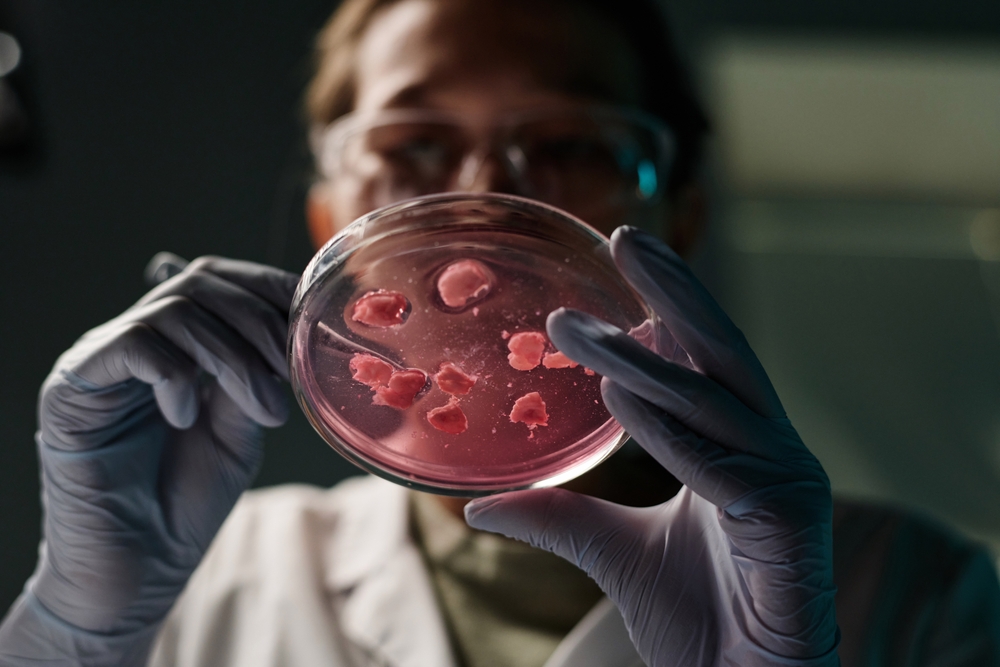
Lab-grown meat could eventually sit alongside traditional beef, chicken and pork in supermarkets across America. But before that happens, seven states have already taken a firm position against the emerging technology, banning its manufacture, sale or distribution.
Contents
show
The battle is becoming increasingly heated. Supporters believe cultivated meat could give consumers another food choice while helping address food security and pressure on natural resources. Opponents see something very different: a threat to traditional ranchers and an industry they believe should be protected.
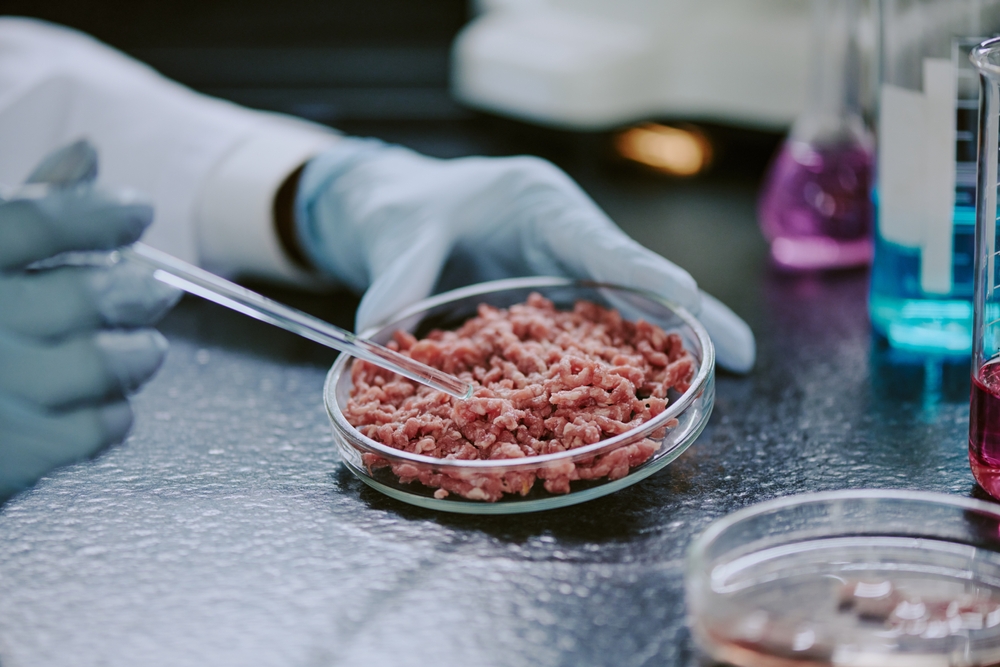
Seven States Have Already Banned Cultivated Meat
Seven states have now banned the manufacturing, sale or distribution of lab-grown meat, while other states have moved to restrict how these products can be labeled. A significant number of these actions came during 2025 as lawmakers across the country debated how the new technology should be regulated.
The restrictions have also become part of the broader “Make America Healthy Again” movement associated with Health and Human Services Secretary Robert F. Kennedy. The federal department has highlighted state actions involving cultivated meat as examples of the movement’s approach to food and public health.
For companies developing cultivated meat, the growing number of restrictions creates a major obstacle before the industry has even reached widespread supermarket distribution. The technology is still developing, yet lawmakers are already deciding whether it should be allowed to compete with conventional meat.
The issue has also moved into the courts. Lawsuits challenging bans have been filed in Texas and Florida, setting up a legal fight that could influence how states regulate cultivated meat in the years ahead.
Texas Has Taken One Of The Toughest Positions
Texas recently put its own ban into effect, and the law is scheduled to remain in place for two years. Lawmakers could choose to extend it, while businesses that violate the restrictions could face civil and criminal penalties.
Texas Agriculture Commissioner Sid Miller welcomed the legislation and described it as a major victory for the state’s agricultural producers and consumers. “This ban is a massive win for Texas ranchers, producers and consumers,” Miller said.
Miller also made clear that he views traditional ranching as a central part of the state’s identity. “Texans have a God-given right to know what’s on their plate, and for millions of Texans, it better come from a pasture, not a lab,” he said.
His comments reflect the argument driving many of the restrictions. Supporters of the bans believe consumers should know exactly where their meat comes from, while traditional producers should not have to compete against a new category of food under rules they believe could put them at a disadvantage.
Cultivated Meat Companies Are Fighting Back
The companies developing lab-grown meat are challenging the restrictions rather than accepting them. In Texas, the Institute for Justice joined cultivated food producers Wildtype and UPSIDE Foods in filing a lawsuit against the state’s ban.
The groups argue that Texas has gone too far by preventing consumers from choosing cultivated meat. Their lawsuit describes the ban as “nothing more than unconstitutional economic protectionism.”
Wildtype co-founder Aryé Elfenbein also criticized the law, saying, “This ban slams the door on choice, when all we’re asking is the freedom for Texans to decide for themselves.”
The legal argument could become just as important as the food debate itself. If courts reject state restrictions, cultivated meat companies could gain greater freedom to develop and sell their products. If the bans stand, other states could have more confidence in adopting similar measures.
What Exactly Is Lab-Grown Meat?
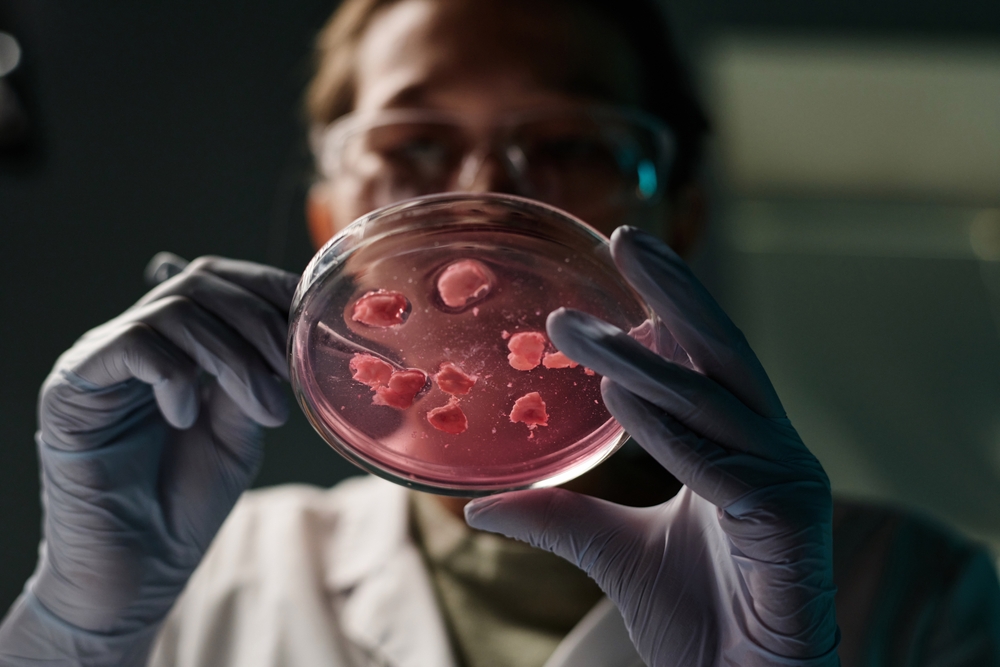
Lab-grown meat can sound like a futuristic substitute for conventional meat, but the process starts with animal cells. That makes it fundamentally different from plant-based products such as the Impossible Burger.
Animal stem cells are placed inside bioreactors, where they are supplied with nutrients needed for growth. The process can involve water, sugar, fats, vitamins, growth factors and other proteins that help the cells multiply.
As the cells grow, they can form muscle and fat similar to the tissue that develops inside an animal. Those cells are eventually harvested and shaped into food products, such as chicken fillets.
The Good Food Institute describes cultivated meat as “identical to conventional meat at the cellular level.” The technology has already moved beyond the laboratory concept stage, with cultivated products involving chicken, salmon and pork fat receiving regulatory approval.
Scientists Say Safety Data Supports The Products
Safety remains one of the biggest questions surrounding cultivated meat. David Kaplan, a professor of biomedical engineering at Tufts University, believes the available evidence supports the safety of products that have gone through the regulatory process.
The Food and Drug Administration has approved products from five cultivated meat companies. Those products include offerings involving chicken, salmon and pork fat.
Kaplan points to the information submitted during the approval process as evidence that consumers have access to substantial safety data. “All their data is publicly available through their filings, and there’s nothing in there that says it’s anything but at least as good, if not better, than what consumers eat today,” he said.
That does not settle the wider political argument. Questions about safety exist alongside debates about labeling, agriculture, consumer choice and whether state governments should be able to prevent a new food technology from competing with established producers.
Supermarkets Could Still Be 10 To 15 Years Away
Despite all the political attention, shoppers should not expect cultivated meat to suddenly fill supermarket shelves. The biggest challenge may be scaling up production to levels that can support widespread retail sales.
David Block, a professor at the University of California, estimates that lab-grown meat could be widely available in supermarkets within 10 to 15 years. Reaching that point would require companies to build large manufacturing facilities and solve problems that have never been tested at the necessary scale.
The industry has already demonstrated that animal cells can be grown and turned into food. The much harder question is whether that process can be repeated efficiently on a massive commercial scale.
“I would argue that nobody has done this at a really large scale yet, so nobody knows exactly what they want to see in a very large-scale facility,” Block said. That uncertainty could have a major effect on how quickly cultivated meat reaches ordinary shoppers.
Five Questions Could Decide The Industry’s Future
The fight over lab-grown meat is now centered around several competing concerns:
- Consumer choice: Should shoppers be free to decide whether cultivated meat belongs in their diet?
- Traditional agriculture: Could cultivated products put ranchers and conventional meat producers at an economic disadvantage?
- Food security: Could another source of meat help meet growing demand?
- Environmental pressure: Could cultivated production reduce some of the resources required by conventional meat production?
- Government regulation: How much authority should states have over the production, sale and labeling of cultivated food?
Each question points toward a different vision for America’s food system. Supporters see cultivated meat as another option that could eventually complement existing food production. Opponents believe traditional agriculture should not be forced to compete with laboratory-produced alternatives.
The lawsuits in Texas and Florida could help determine which side has more legal ground. Meanwhile, companies will continue working on the technical problem that could prove just as difficult as the political one: producing cultivated meat cheaply and consistently at enormous scale.
The Meat Aisle Could Look Very Different One Day
The technology still has a long road ahead before cultivated meat becomes a routine supermarket purchase. A 10 to 15-year timeline for widespread availability leaves plenty of time for production methods, regulations and consumer attitudes to change.
For now, the biggest fight is happening before most Americans have even had the chance to decide whether they want to eat cultivated meat. Seven states have already made that decision for their residents through bans, while companies are taking the question to court.
The next few years will determine whether lab-grown meat becomes a genuine competitor in America’s food industry or remains a technology that struggles to make it beyond limited markets. Either way, the fight over what qualifies as meat has already moved from the laboratory into statehouses and courtrooms.