
Your cart is currently empty!
She Had Stage 4 Cancer With No Symptoms. A Friend’s Liver Donation Just Gave Her a Second Chance.

In May 2024, Amy Piccioli drove herself to an emergency room near her home in Los Angeles, expecting to be treated for dehydration. A stomach bug had swept through her family, and at 39, she was otherwise healthy, active, and by every outward measure fine. She was a mother of three, a CPA, someone who spent weekends biking to the beach and going to Dodgers games with her kids. She had no symptoms that pointed to anything serious, no family history that might have put her on alert, and no reason to expect that a routine scan would change the entire course of her life.
Contents
show
It did. A CT scan performed during that visit revealed a mass in her colon and multiple lesions on her liver. A biopsy confirmed what the imaging suggested: stage 4 colorectal cancer. What came next, over the following eighteen months, was a story about chemotherapy, immunotherapy, an extraordinary act of friendship, and a surgical program that most cancer patients have never heard of.
A Disease That Is No Longer Just an Older Person’s Problem
Piccioli’s experience, as shocking as it felt to her personally, reflects a pattern that oncologists and researchers have been tracking with growing concern. Colorectal cancer is the third most common cancer in the world and has become the leading cause of cancer-related deaths among people under 50 in the United States. While overall rates have declined over the past decade in older adults, rates in people younger than 50 have been rising by approximately 2% per year, and recent data from the American Cancer Society indicates that one in five people now diagnosed with colon cancer is under 55.
What makes the trend particularly dangerous is that the disease can spread substantially before a patient feels anything wrong. Symptoms, when they appear, can include changes in bowel habits, rectal bleeding, abdominal cramping, unexplained weight loss, and persistent fatigue, but as Piccioli’s case illustrates, none of those symptoms are guaranteed. She had none of them. Her cancer was discovered by accident, during a visit she made for an entirely unrelated reason.
The American Cancer Society recommends that adults begin regular colorectal cancer screenings at age 45, either through stool tests or colonoscopy. The reasoning is straightforward: people with colorectal cancer fare significantly better when the disease is caught before it leaves the colon or rectum. Screening matters precisely because by the time symptoms make themselves known, the window for early intervention may already have closed.
Chemotherapy, Immunotherapy, and a Question That Changed Her Path
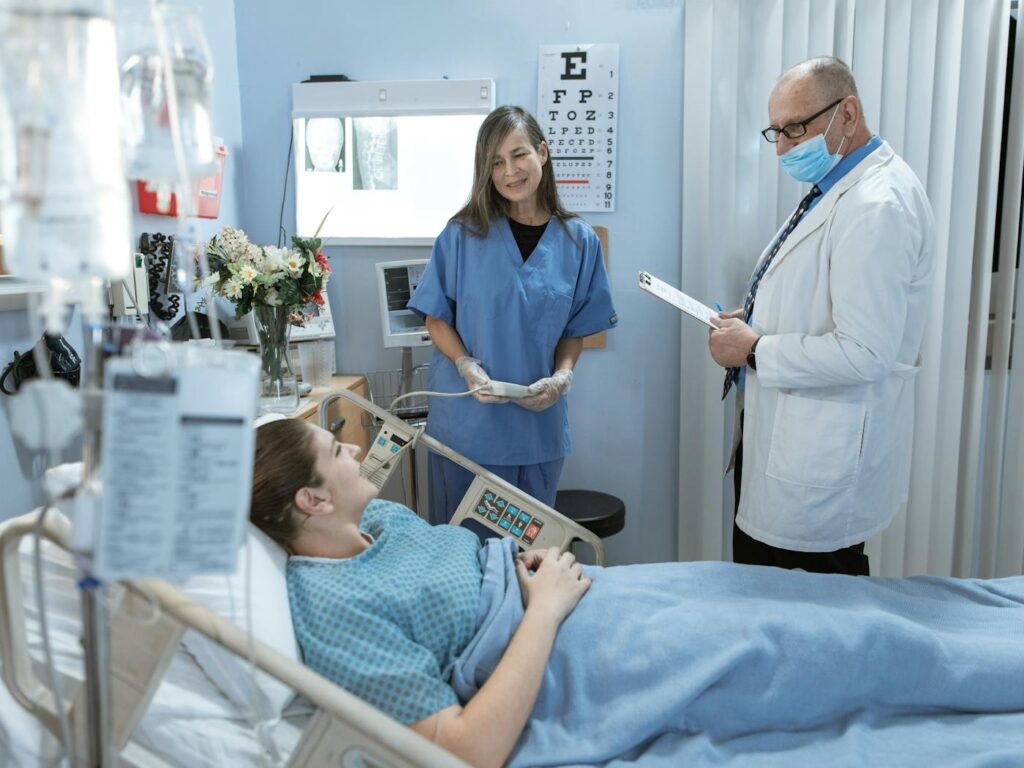
After her diagnosis, Piccioli began chemotherapy immediately, undergoing multiple rounds while also starting immunotherapy medication. Her medical team in California worked to shrink the disease, and over the months that followed, the treatment produced a meaningful response. But Piccioli was also asking questions that her doctors had not yet raised with her, specifically about whether a liver transplant might be an option.
That question eventually led her doctors to refer her to Northwestern Medicine in Chicago, which runs one of the only programs in the United States offering liver transplants specifically for patients whose colorectal cancer has spread to the liver. In September 2025, Piccioli flew to Chicago, where a multidisciplinary team including transplant surgeons, hepatologists, and oncologists evaluated her case and determined she was a strong candidate for a living-donor liver transplant.
The distinction between being a candidate and simply having the disease is important. Northwestern Medicine’s program, which launched a dedicated clinical initiative called CLEAR in 2025 to expand liver transplant access for colorectal cancer patients, does not take everyone. According to Dr. Andres Duarte-Rojo, section chief of hepatology and director of liver transplant at the Northwestern Medicine Comprehensive Transplant Center, the program only enrolls patients in whom the team believes complete eradication of the cancer is achievable: those with disease confined to the liver and no invasion of surrounding structures, whose chemotherapy, imaging, and liver-directed therapy can be precisely coordinated to make transplant viable. That level of coordination, he said, is the strength of the program.
The Numbers Behind the Decision
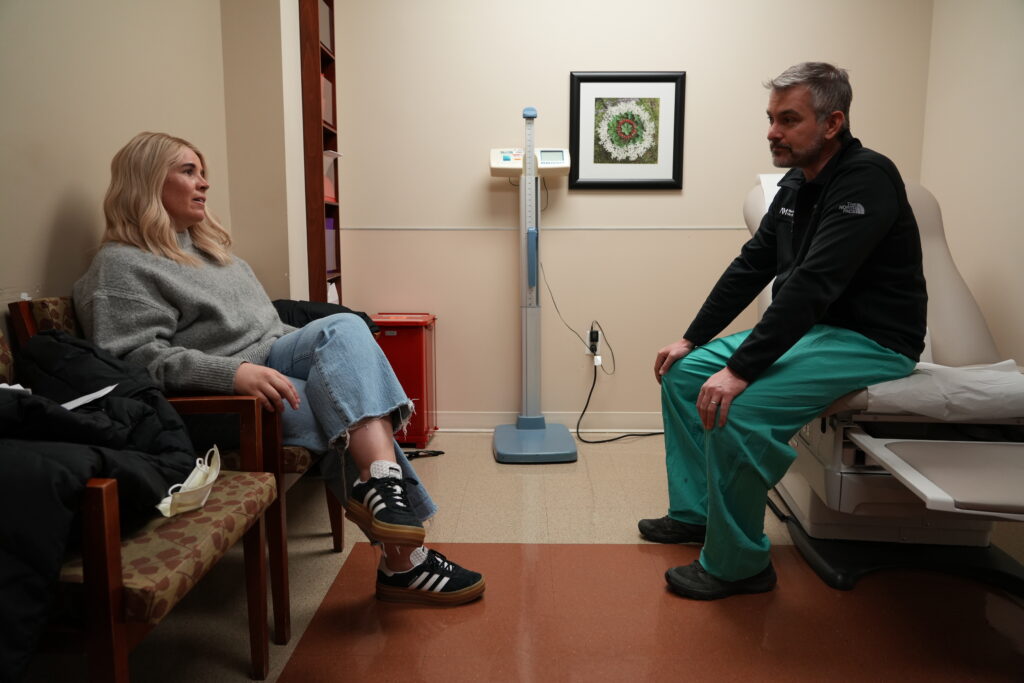
For patients and families weighing a transplant against continuing with chemotherapy alone, the survival statistics make a striking case. Dr. Zachary Dietch, the transplant surgeon at Northwestern Medicine who treated Piccioli, described the difference in outcomes with considerable clarity. “For patients with unresectable colorectal liver metastases, chemotherapy alone historically results in a 10% five-year survival. But in carefully selected patients who undergo liver transplantation, five-year survival can reach 60% to 80%, and some patients achieve long-term cure.”
That gap between 10% and up to 80% is not a minor clinical footnote. For patients who meet the criteria, it represents the difference between a treatment plan aimed at buying time and one aimed at a cure. The challenge, as Dr. Satish Nadig, director of Northwestern Medicine’s Comprehensive Transplant Center, has noted, is that this option remains largely unknown outside of the small number of centers currently offering it. Many oncologists and their patients simply have not encountered it, which means that eligible patients may be going without it not because they were assessed and ruled out, but because nobody told them it existed.
The Friend Who Stepped Forward

Once Piccioli was approved as a transplant candidate, the next challenge was finding a living donor. She shared a screening link with friends and family, not knowing what would come of it. What came of it was Lauren Prior, 37, the daughter of longtime family friends who had known Piccioli since she was a young child. Prior came forward, went through the screening process, and turned out to be a match.
The timing carried its own particular quality. Prior’s family had already offered their Chicago home as a place for Piccioli to recover after surgery, before anyone knew Prior would be the one donating. When the match was confirmed, Piccioli described it as feeling like fate. She said that by the time her surgical date arrived, she had so much confidence in her team that the prospect of a Chicago winter worried her more than the transplant itself.
Prior has spoken about her decision to donate with characteristic directness. “It’s such a small sacrifice to make that could potentially save someone’s life, or at least improve their quality of life,” she told ABC News. “The impact you can have on someone else is incredible, and it’s worth it.”
On December 17, 2025, both women underwent their surgeries at Northwestern Medicine. Surgeons removed a portion of Prior’s liver and transferred it to Piccioli, who had her original liver removed entirely. Living-donor liver transplants work because the liver is one of the few organs capable of regenerating; both the donated portion and the remaining portion in the donor can grow back to near-normal size over time.
Three Months Later
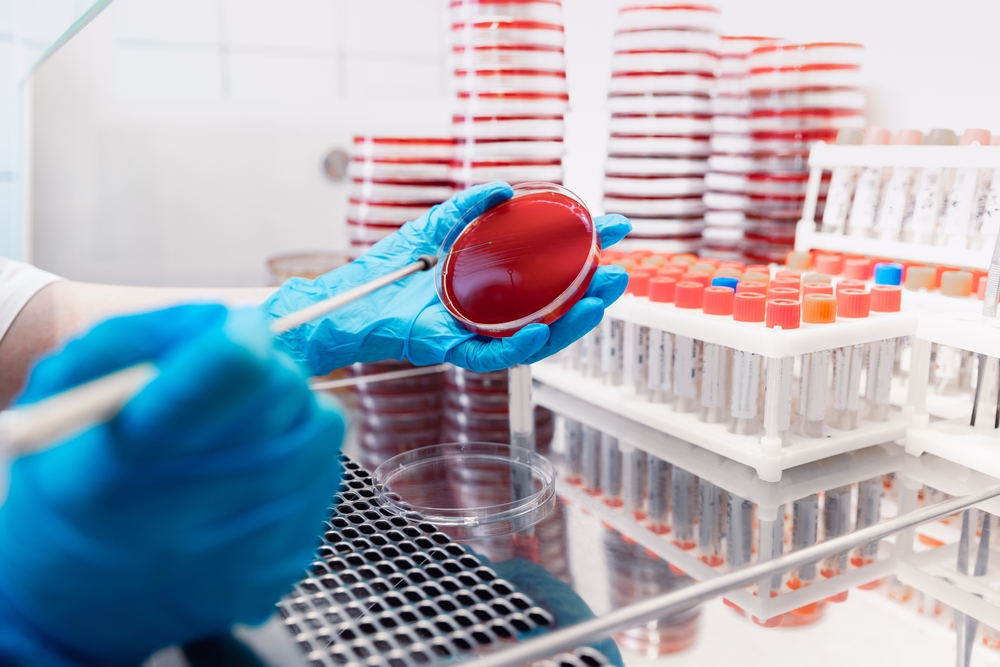
Three months after the surgery, a blood test that detects residual cancer cells came back negative. Piccioli’s doctors confirmed she has no evidence of disease. Both she and Prior are recovering well, and Dietch reported that Piccioli has been doing fantastic.
Piccioli is taking anti-rejection medication, as all transplant recipients do, and undergoes more intensive follow-up monitoring than patients who receive transplants for non-cancer reasons. Unlike standard liver transplant care, patients transplanted for colorectal liver metastases receive CT or MRI scans of the chest, abdomen, and pelvis every three months to detect any sign of recurrence as early as possible. The monitoring is demanding, but Piccioli said she otherwise feels completely back to normal.
She was remaining in Chicago through the end of March for continued close monitoring before returning to Los Angeles and her three children.
What She Wants Other Patients to Know
Piccioli chose to share her story publicly during Colorectal Cancer Awareness Month, and her motivation has little to do with seeking attention and a great deal to do with the knowledge that other patients in situations similar to hers may not know that a transplant option exists. Her message to anyone whose colorectal cancer has spread to the liver is simple and direct: ask your doctor about a transplant. It might be an option nobody has mentioned yet. That conversation could matter enormously.
Dr. Nadig framed the institutional version of the same goal, describing Northwestern Medicine’s aim as expanding awareness among both patients and physicians so that transplant can be considered in situations where, until recently, only palliative care was available. The program now evaluates patients from across the country and has received inquiries from international patients as well.
For Piccioli herself, the experience has shifted something beyond her medical situation. She has described her diagnosis, as frightening as it was, as having changed her perspective on life in ways she values. “I’m just looking forward to living my life again without cancer being at the forefront of my mind,” she told Good Morning America. She was 39 when she walked into that emergency room for a stomach bug. She is 41 now, with a clear blood test, a liver donated by a friend who called it a small sacrifice, and a surgical team that offered her an option she had not known to ask for.
Featured image Source: Northwestern Medicine https://news.nm.org/los-angeles-mom-of-three-travels-to-chicago-for-lifesaving-liver-transplant-after-silent-colorectal-cancer-spreads-to-her-liver
Amy Piccioli, Cancer Recovery, Cancer Survival, chemotherapy, Chicago Medicine, CLEAR Program, Colon Cancer Screening, Colorectal Cancer Awareness, Colorectal Cancer in Young Adults, Dr. Zachary Dietch, Human Interest, immunotherapy, Lauren Prior, Liver Transplant, Living Donor Transplant, medical breakthrough, No Evidence of Disease, Northwestern Medicine, Stage 4 Colorectal Cancer, Transplant Oncology