
Your cart is currently empty!
Should There Be an Age Limit on the U.S. Presidency? Thousands of People Just Weighed In

At some point over the last several years, a question that once felt hypothetical became unavoidable. Two consecutive U.S. presidents were the oldest ever to hold the office. Both had their mental sharpness questioned publicly while in power. Both were well past the age at which most Americans leave the workforce. And yet both were elected, one of them twice, by tens of millions of voters who made their choice knowing full well how old the man on the ballot was.
Contents
show
What followed was not a clean national reckoning but something messier and more interesting: a sprawling, ongoing argument about age, fitness, experience, democracy, and what exactly voters are entitled to expect from the people asking to lead them. When someone on Reddit posed the question directly, asking whether limiting the presidential age to 65 was something people would support and why, thousands of responses came in. What made the thread worth paying attention to was not just the volume but the quality. By the standards of online political discussion, it was remarkably civil. People made actual arguments, acknowledged trade-offs, and pushed back on each other with reasoning rather than outrage. Both sides had points worth hearing.
A Debate the Constitution Was Never Designed to Settle
Before getting into whether an age cap makes sense, it helps to understand what changing the rules would actually require. Presidential eligibility is set in the Constitution, which currently mandates a minimum age of 35 for presidents, 30 for senators, and 25 for House representatives, with no upper limit on any of them. Supreme Court justices face no age requirement at all in either direction.
Adding a maximum age threshold would mean amending the Constitution, and that is not a casual undertaking. Any amendment requires a two-thirds vote in both chambers of Congress, followed by ratification by 38 out of 50 state legislatures. Political consensus at that scale is rare under any circumstances, and on a question with clear partisan implications, it would be extraordinary. So while public appetite for change is genuinely broad, the structural barriers to acting on it are formidable.
Public appetite, it turns out, is very broad. A Pew Research Center survey found that 79% of Americans support maximum age limits for elected federal officials, with 82% of Republicans and 76% of Democrats in agreement. Only 3% of Americans said they thought it was best for a president to be in their 70s or older, while roughly half said the ideal presidential age range was the 50s. Whatever disagreement exists about the mechanism, there is a strong national intuition that something about recent presidential demographics has been off.
What Neuroscience Says, and What It Does Not
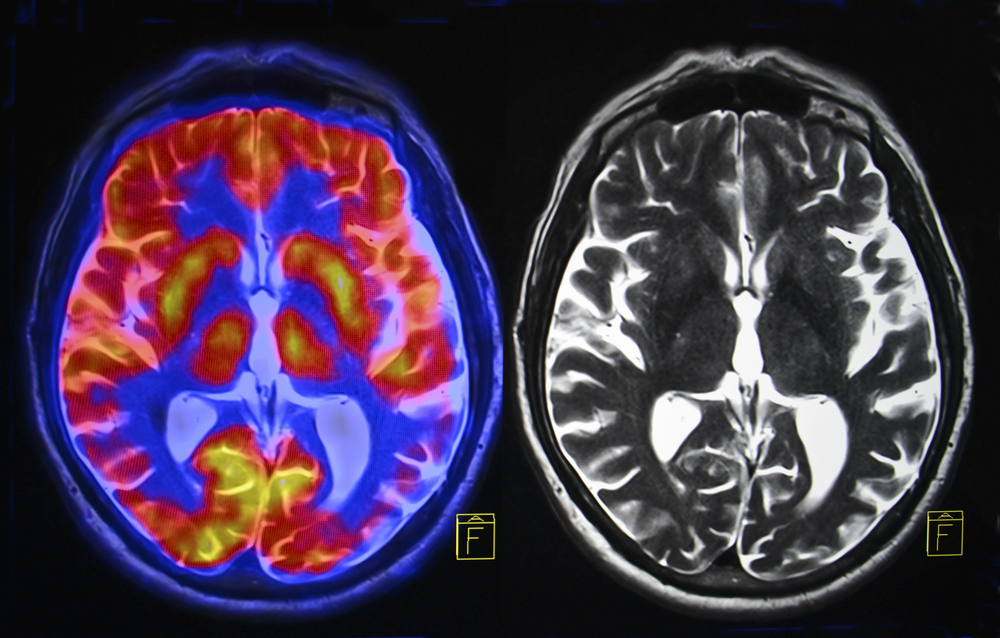
Science can inform this debate without resolving it, and the honest version of what science says is more complicated than either side tends to acknowledge. Brain volume decreases with age, and the prefrontal cortex, which manages executive function, including problem-solving, goal-setting, and impulse control, loses roughly 5% of its volume per decade in healthy people. Executive function begins declining gradually from a person’s 30s and accelerates noticeably from the 70s onward. White matter disease, a group of conditions caused by damage to the brain’s white matter, affects approximately a third of people aged 65 and older and contributes further to difficulties with impulse control and repetitive thinking.
Mark Fisher, who directs the Center for Neuropolitics at the University of California, Irvine, describes 65 as a reasonable general break point, noting that other structural changes in the brain solidify around this age and that mental processing speed has been shown to decline from around 60. He is careful, however, to flag what that threshold does and does not mean. “The battery of testing would be the best way to formally determine one’s executive function,” he says, “but there is going to be wide variation in terms of how individuals function.”
That variation is where the argument gets complicated. Cognitive decline is real and age-associated, but it is not uniform. Comorbidities, particularly hypertension, often matter more than age alone in determining how a brain ages. Some people in their 80s maintain the mental acuity of someone decades younger. Others begin showing meaningful decline well before 65. Any fixed age threshold will inevitably catch some people it should not and miss some people it should.
There is also something important that the decline narrative tends to obscure. Older brains, for all their vulnerabilities, develop genuine strengths. Vocabulary and the ability to direct and act on information can improve well into a person’s 70s. Rose McDermott, who specialises in political psychology at Brown University, describes this as crystallised intelligence: “You have these kind of established schemas and ways of thinking about things. And you’re able to integrate new information into existing structures much more readily and in many cases creatively than you can when you’re younger because you don’t sit on the same degree of knowledge base.” For a role that involves synthesising vast quantities of complex information and drawing on decades of accumulated relationships and context, that is not a trivial advantage.
Why People Support a Cap
Among the thousands of people who weighed in on the Reddit thread, those who favoured an upper age limit made their case in several different ways, and not all of them centred on cognitive decline. One of the most frequently cited arguments was about accountability and consequences: leaders who make decisions affecting the next thirty years should be people who will be alive and affected by those decisions. Several respondents framed it as a matter of fairness, noting that a lower age limit already exists and that the logic for having one is essentially the same as the logic for having the other.
Others focused on the specific demands of the presidency as distinct from almost any other senior position. One respondent put it plainly: a major corporation’s board of directors would not tolerate the late-career tenures that American politics has come to accept, and unlike a chief executive of a large company, a president controls nuclear weapons, manages international crises in real time, and makes decisions that affect hundreds of millions of people with no meaningful checks on their daily functioning. Presidents Reagan, Biden, and Trump all showed signs of age-related cognitive concerns while in office, and in none of those cases did the formal mechanism for addressing presidential incapacity, the 25th Amendment, result in any action.
Several commenters were willing to argue about where exactly a cap should sit. A number suggested 70 or 75 as more defensible thresholds than 65, because a president elected at 70 would complete a term at 74, keeping the outer edge of increased cognitive risk visible without cutting off candidates in what is still, for many people, a highly productive decade of life. The argument for 65 specifically tended to track with retirement norms: if that is the age at which Americans are broadly expected to step back from working life, the thinking goes, it is reasonable to apply the same standard to the most demanding job in the country.
Why Others Push Back
People opposed to an age limit made a different set of arguments, and several of them are hard to dismiss. Cognitive decline happens on a spectrum and at different rates, and there is no biological law that makes 65, 70, or 75 a meaningful universal threshold. People in their 50s can show serious cognitive impairment. People in their late 80s can be sharper than colleagues half their age. An arbitrary cutoff, critics argued, would exclude genuinely capable leaders and tell elderly voters that someone like them is constitutionally unfit to represent them.
Others pushed back on the premise from a democratic standpoint, arguing that voters already have the power to reject a candidate they judge to be unfit, and that adding a legal ceiling removes a category of choice from the electorate without resolving the underlying problem. If voters keep electing older candidates, the argument runs, that is a signal about what the electorate values, not a malfunction in the system that requires a constitutional patch.
Among the most substantive counterarguments was the one centred on experience, particularly in foreign policy. Building the kind of deep, personal, and trusted relationships with foreign leaders that allow a president to operate effectively on the world stage takes decades. A leader who came of age during periods of significant geopolitical change, who has been personally involved in the decisions that shaped the current global order, and who can call on those relationships in a crisis has something a 45-year-old with strong domestic instincts simply does not. One detailed Reddit response argued that a younger president with only a textbook understanding of Cold War history would face serious disadvantages at the negotiating table with leaders who were actually present for the events in question.
Several respondents on the anti-cap side converged on a different kind of solution: cognitive testing, conducted annually and with independently verified results made publicly available. This approach has obvious intuitive appeal because it targets the actual concern rather than using age as a proxy. If the worry is that a president might be experiencing cognitive decline, the argument goes, then test for cognitive decline directly rather than drawing a line based on a birth year.
The Alternative Nobody Has Figured Out
Cognitive testing sounds like a clean solution until you start asking practical questions about it. Who administers the tests? Who interprets the results? Who decides what standard of performance is sufficient for the most powerful office in the world, and what happens when a sitting president performs poorly? How do you prevent the process from becoming a political weapon wielded by opposition parties? None of these questions has an obvious answer, and the track record of voluntary medical transparency among presidential candidates is not encouraging. Candidates have historically disclosed as little health information as they can manage, and there is no mechanism to compel more.
Leaving the matter entirely to voters, meanwhile, assumes that voters have access to accurate and complete information about a candidate’s cognitive health, which recent history suggests is not guaranteed. Neither of the two oldest presidents in American history was fully forthcoming about the extent of his age-related difficulties while running for office.
What seems clear, from the science, from the public opinion data, and from the sheer volume of people who feel strongly enough about it to argue the point at length on a Saturday afternoon, is that the last two presidencies made this question genuinely urgent. Whether the answer is a constitutional amendment, mandatory testing, or something else entirely, the era of treating presidential age as a minor footnote appears to be over.
Aging and Leadership, Brain Aging, cognitive decline, Constitutional Amendment, Donald Trump, Executive Function, Gerontocracy, Joe Biden, Pew Research Center, Political Debate, Political Reform, Presidential Age Limit, Presidential Fitness, Senate Age, Supreme Court Age, Term Limits, U.S. Constitution, U.S. politics, U.S. Presidential Election, voter rights