
Your cart is currently empty!
Starmer Gave a Defiant Speech on Monday Morning. By Nightfall, His Home Secretary Was Calling for Him to Go.
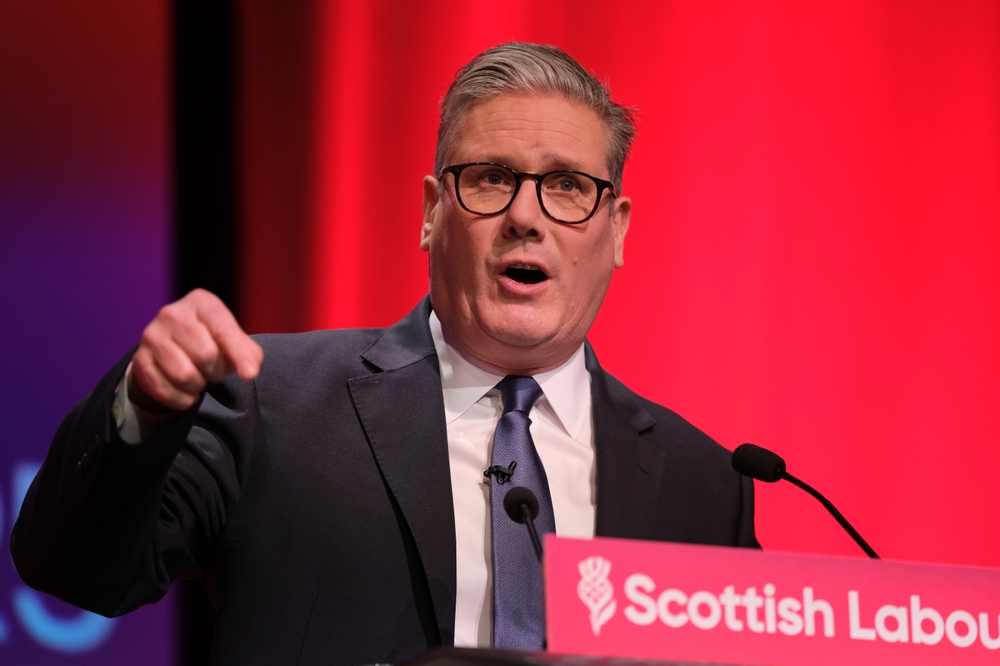
On Monday morning, Keir Starmer stood before a room of supporters in central London and told them he would prove the doubters wrong. He was cheered. He was defiant. He spoke about the soul of the nation, about not walking away, about getting the big choices right, even when the smaller ones had fallen short. For a prime minister whose party had just suffered one of its most punishing electoral nights in living memory, it was the kind of speech designed to project stability, to signal that the man at the top of government had heard the message and intended to answer it with resolve rather than retreat.
Contents
show
By Monday night, his Home Secretary had called for him to set a timetable for his own departure. By the time Westminster went to sleep, more than 80 Labour MPs had joined that call. And on Tuesday morning, his cabinet was due to meet formally, with at least some of its members expected to say publicly what several had already said privately: that the prime minister’s time was running out, and that the party needed to start planning for what came next.
What happened in the hours between that morning speech and the cabinet meeting the following day is a story about how quickly a government can lose its footing, and how little a defiant address can accomplish when the people who are supposed to be behind you have already started looking past you.
The Results That Broke the Arithmetic
To understand why Monday arrived with the weight it carried, it is necessary to go back to the local election results from the previous week that produced the crisis in the first place. Labour lost almost 1,500 councillors across England, a figure that represented not merely a bad night but a collapse of the kind that changes how a party thinks about its own future. Reform UK surged in areas that had been Labour strongholds for decades. The Greens cut into Labour’s urban base in London and other cities. In Wales, Labour lost control of a political arena it had dominated for a century. In Scotland, the party returned only 17 seats in the Holyrood election, its worst result there on record.
New analysis by RRD made the personal stakes visible in a way that abstract tallies of council seats could not. Had those local results been replicated in a general election, prominent cabinet ministers would have lost their parliamentary seats. Foreign Secretary Yvette Cooper, Culture Secretary Lisa Nandy, Business Secretary Jonathan Reynolds, and Angela Rayner, the former deputy prime minister, would all have fallen to Reform. Deputy leader Lucy Powell, David Lammy, and veteran MP Diane Abbott would have lost to the Greens. For Labour MPs already anxious about their own futures, those projections were not background noise. They were an alarm.
A Speech That Satisfied Nobody Outside the Room
Starmer’s response to the results took the form of a set-piece address at the Coin Community Centre in the City of London on Monday morning. The audience inside the room received it warmly. The audience outside did not.
He admitted mistakes, took responsibility for the government’s difficulties, and framed the challenge ahead in terms of a battle for the nation’s direction. He announced that British Steel would be nationalised, with legislation to come that week, and signaled a desire for closer relations with the European Union, though without providing the policy detail that might have given his commitment substance. He declined to say whether he would try to block Greater Manchester Mayor Andy Burnham from returning to Parliament to stand as a potential leadership contender, a silence that the party’s left flank read as deliberately evasive.
Among those who were not in the room, the reaction was far less accommodating. Jonathan Hinder, MP for Pendle and Clitheroe and co-leader of the Blue Labour caucus, told BBC Newsnight that the speech had been tone deaf and, at its worst, downright insulting. He said Starmer had never been an electoral asset and drew a pointed contrast between the prime minister’s emphasis on European relations and the concerns of voters in Labour’s heartlands.
“We’re being swept away in our heartlands,” he said, “and to come out in response to that and start talking about Brexit and having free movement again… those people are more bothered about what’s going on here.”
Fred Thomas, MP for Plymouth Moor View and previously a loyalist, captured the broader mood among MPs who had stayed quiet until Monday. He said he had nothing but respect for what Starmer had achieved in transforming the party and winning the election, and then delivered the kind of tribute that functions as a political obituary: that the time had come to look to a new leader to deliver on the promises that had been made.
The Cabinet Begins to Splinter

The most significant development of Monday did not come from the backbenches. It came from within the cabinet itself.
Shabana Mahmood, the Home Secretary, was identified as among the senior ministers who had called on Starmer to set out a timetable for his resignation. Mahmood’s standing in the cabinet made her position particularly significant. Appointed justice secretary and lord chancellor when Starmer came to power, she had moved to the Home Office and retained a prominent place at the top of government. Her decision to join the calls for a timetable placed the pressure on the prime minister at a level that backbench dissent alone could not reach.
Foreign Secretary Yvette Cooper was also understood to be among those pressing for a timetable. Junior health minister Stephen Kinnock, speaking to Newsnight, acknowledged what was visible to anyone paying attention. “It is clear for everybody to see that a lot of people are either coming out and calling for Keir to resign or whatever it might be, and it is possible that members of the cabinet might do that.”
Mahmood was understood to be in the minority within the cabinet overall, with most senior ministers not yet prepared to publicly break with the prime minister. But the minority she represented was not a fringe. It was a fracture at the very top of government, and its presence made Tuesday’s formal cabinet meeting something more fraught than a routine weekly gathering of ministers.
Six Aides Gone by Nightfall
Below cabinet level, the exits were more numerous and, in their accumulation, equally damaging to Starmer’s position. Four ministerial aides resigned on Monday. Joe Morris, parliamentary private secretary to Health Secretary Wes Streeting, was among them. Tom Rutland, PPS to Environment Secretary Emma Reynolds, also quit. Melanie Ward, who served as PPS to Deputy Prime Minister David Lammy, and Naushabah Khan, PPS to Cabinet Office Minister Darren Jones, completed the group. Two others, Gordon McKee and Sally Jameson, stopped short of resigning but joined calls for a departure timetable. No 10 replaced all six.
Morris’s statement set out the case against the prime minister in terms that were carefully constructed but unambiguous in their conclusion. Labour councillors and candidates had ended up taking the blame for decisions that were not theirs. The prime minister had made his best efforts, but voters had reached a judgment.
“It is in the best interests of the country and the party that the Prime Minister sets out a swift timetable to ensure that a new leader is in place to regain the confidence of the public and to ensure that the government can deliver on the commitments it has made.” Morris said.
The significance of Morris’s departure extended beyond the personal. He served a minister, Wes Streeting, who was widely expected to launch a leadership bid. His resignation signaled, at minimum, that Streeting’s closest allies had concluded that the prime minister’s position was no longer tenable, and that a contest was coming regardless of what Starmer said in speeches.
Who Is Waiting in the Wings
By Monday night, Westminster was less focused on whether a leadership contest would happen than on who would shape it and how quickly it would begin. Three potential successors occupied different parts of the conversation, each with their own complications.
Wes Streeting was the most openly anticipated candidate. His allies had been among the most vocal in calling for the prime minister’s departure. One senior Labour source said that things were going to kick off on Tuesday, a formulation that most in Westminster understood to be a reference to an imminent announcement from Streeting’s direction.
Andy Burnham’s name generated the most warmth among the Labour MPs who had already signed letters and made statements, but his situation was the most logistically constrained. Burnham left Parliament in 2017 to become Mayor of Greater Manchester, and any path back to a leadership contest required him to first return as an MP, which meant an existing MP triggering a by-election for him to stand in. The Labour Party’s National Executive Committee had already blocked him from standing in the Gorton and Denton by-election earlier in the year. Sally Jameson, in calling for a timetable, specifically said she hoped it would allow all potential candidates to stand, language widely read as a signal that the timetable question and the Burnham question were inseparable.
Angela Rayner’s allies were said to be preparing their own bid. Rayner herself, addressing a Communication Workers Union conference, told delegates that the party had to do better, and reiterated her call for Burnham to be allowed to return to Westminster.
The Loyalists Hold, for Now
Not every Labour MP spent Monday joining the calls for Starmer’s removal. Banbury MP Sean Woodcock shared publicly the email he sent to Catherine West, who had over the weekend threatened to trigger a leadership contest by putting her own name forward before pulling back after the speech and instead calling for a September timetable. Woodcock asked her to stop and argued that this was not how the government of a major economy and nuclear power should be decided.
West’s shift from potential candidate to timetable advocate was, in its own way, a measure of where things stood. She had not found enough support for a direct challenge, but she had found, by Monday night, the backing of around 80 MPs for her demand that Starmer set out a departure date by September.
The prime minister, for his part, was not signaling any intention to oblige. He had said he would not walk away. He had said that doing so would plunge the country into chaos. He had said he would prove the doubters wrong. On Tuesday morning, he would sit across the cabinet table from ministers who had spent Monday evening saying, in one form or another, that they were not sure he could.
Andy Burnham Labour leader, Angela Rayner leadership, Catherine West Labour, Joe Morris resignation, Keir Starmer resign, Labour heartlands collapse, Labour leadership crisis, Labour local elections 2026, Labour MPs resign, Labour Wales Scotland results, Reform UK surge, Shabana Mahmood Starmer, Stephen Kinnock Labour, UK cabinet split 2026, UK political crisis, Wes Streeting leadership bid, Yvette Cooper Starmer