
Your cart is currently empty!
Professor Stephen Hawking Pictured with Two Women in Swimwear in Unsealed Epstein Files
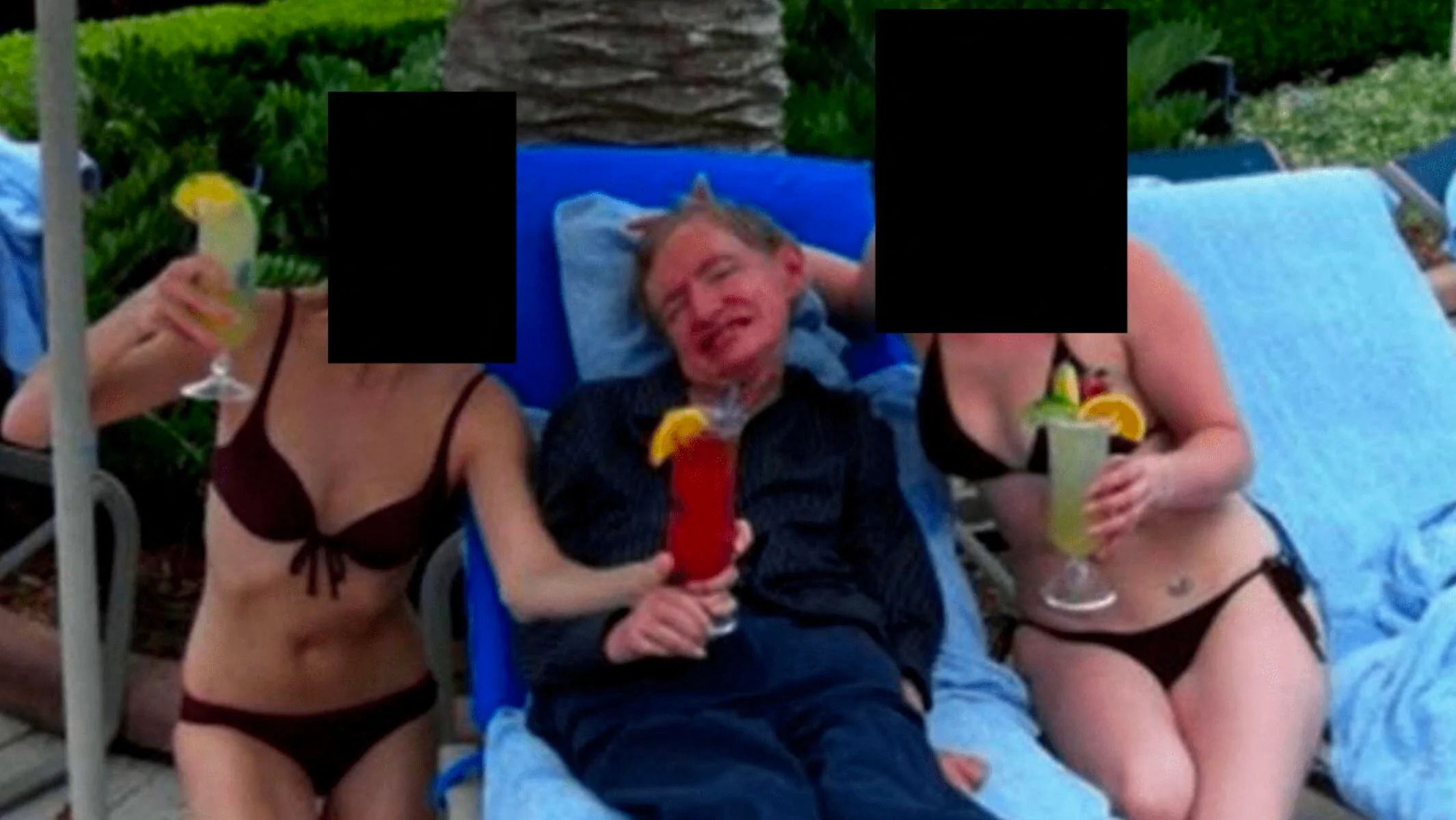
Seeing a widely respected genius suddenly linked to a dark legal scandal is always jarring. When court documents from the Jeffrey Epstein investigation were recently unsealed, the public was shocked to find the late physicist Stephen Hawking mentioned in the files.
Contents
show
A 2006 photograph of the famous scientist relaxing on an island with a tropical drink and two women quickly went viral and sparked a wave of internet rumors. But looking past the sensational headlines reveals a surprising truth about the heavy physical toll of his daily life and the hidden ways private money influences scientific research.
The Context Behind the Caribbean Photograph
In late January, the Department of Justice unsealed millions of documents related to the investigation of convicted sex offender Jeffrey Epstein. Among the newly released files, a photograph of the late theoretical physicist Stephen Hawking drew immediate public attention. Taken in 2006, the image shows the renowned scientist lounging outdoors at the Ritz-Carlton Hotel in St. Thomas alongside two women in swimwear holding tropical drinks.
Given the dark legacy of the Epstein case, the photograph sparked rapid speculation. However, the context surrounding the image provides a crucial counter-narrative. The photograph was captured during a legitimate scientific symposium on the Caribbean island. Hawking, alongside twenty other distinguished scientists, was invited to deliver a presentation on Quantum Cosmology.
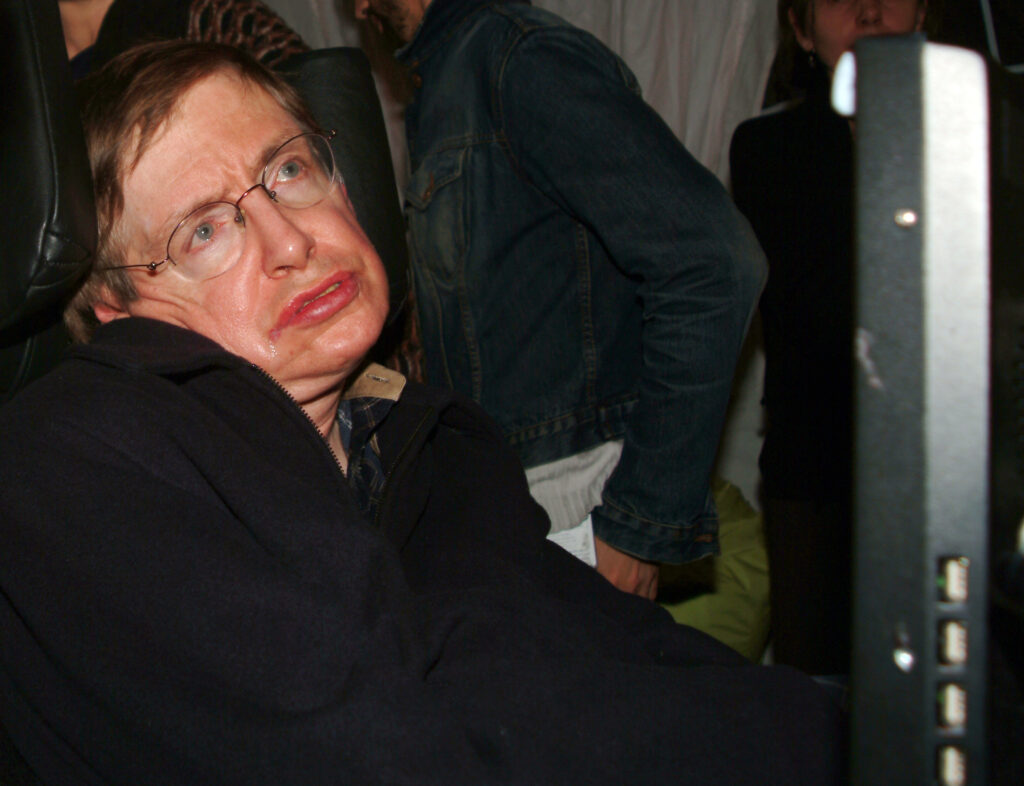
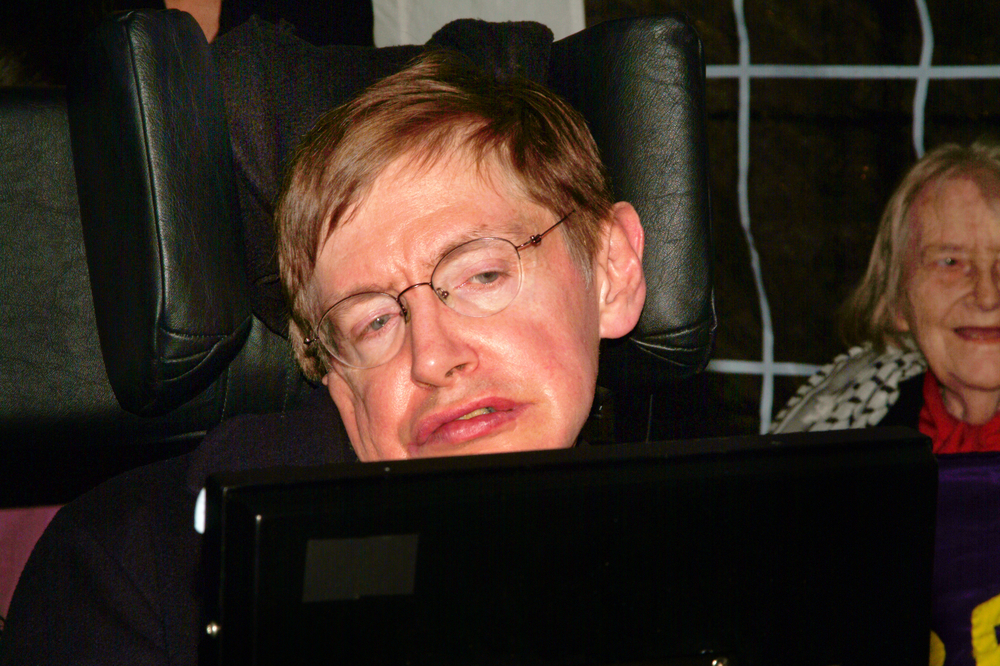
In response to the growing public scrutiny, Hawking’s family and estate provided a firm clarification regarding the image. They identified the two women as his dedicated, long-term carers from the United Kingdom. Living with a severe form of motor neurone disease for over five decades, Hawking required constant, round-the-clock medical attention and relied entirely on a wheelchair, a voice synthesizer, and a ventilator.
A spokesperson for the family issued a definitive statement addressing the rumors: “Any insinuation of inappropriate conduct on his part is wrong and far-fetched in the extreme.” They emphasized that while his name appears in the expansive document release, mere proximity to the financier at a sponsored academic conference does not equate to participation in illicit activities.
Science in the Shadow of Private Fortunes

Why would a respected physicist end up at an event funded by a disgraced financier? The answer often lies in the daily reality of scientific research. Funding is notoriously difficult to secure, making private wealth highly attractive to the academic world.
In 2006, Jeffrey Epstein sponsored a science conference on the island of St. Thomas. The gathering brought together 21 esteemed researchers, including Hawking and future Nobel laureate Phillip Peebles. The stated goal of the event was to discuss gravity and quantum cosmology. To accommodate his high-profile guest, Epstein even paid to modify a submarine so Hawking could safely experience a tour of the ocean floor.
On the surface, it looked like a standard academic retreat. Yet, looking back, other attendees recall unsettling details. Peebles told The Times that during coffee breaks, a group of young women suddenly appeared. He noted they were significantly younger than the female scientists at the event. “Were they 25? Were they 15? I had no idea,” Peebles recalled, adding that while the situation was unusual, it did not raise immediate alarms. Today, he fears those young women were victims.
Epstein actively pursued relationships with top scientists because of his deep interest in transhumanism and genetics. By hosting universally respected figures, he gained a shield of intellectual prestige.
The Weight of Association
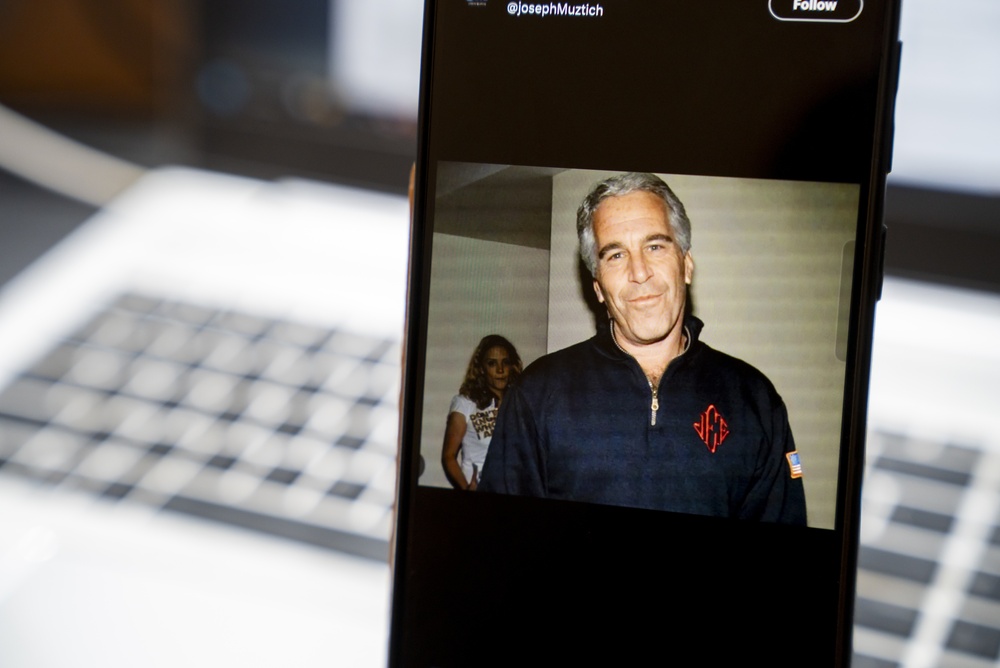
The release of the Epstein documents highlights how easily a person’s reputation can be challenged by mere association. Stephen Hawking is mentioned in the files hundreds of times. However, legal experts are quick to point out that simply being identified in these documents does not mean a crime was committed.
Some of the most alarming details involving the physicist stem from unverified claims rather than concrete evidence. In a 2015 email, Jeffrey Epstein suggested to his accomplice, Ghislaine Maxwell, that they offer a financial reward to the friends and family of his main accuser, Virginia Giuffre. The goal was to find people who could help prove her allegations were false. One specific claim Epstein wanted to discredit was an accusation that Hawking had participated in an underage orgy while visiting the Virgin Islands. Maxwell quickly replied that offering money for this purpose was a seriously bad idea.
Additionally, an unproven FBI tip from 2011 claimed the financier and the scientist attended an all-male gay club together. None of these allegations have ever been substantiated. Hawking was never accused of any wrongdoing by authorities.
When unsealed court documents are released to the public, there is often a rush to judge every name on the list. This creates a dangerous environment where rumors overshadow the facts. The physicist, who passed away in 2018, cannot defend himself against these implied acts. His family continues to firmly deny any inappropriate conduct, pointing out his total reliance on ventilators and medical staff just to survive on a daily basis.
The Human Story Behind a Scientific Icon
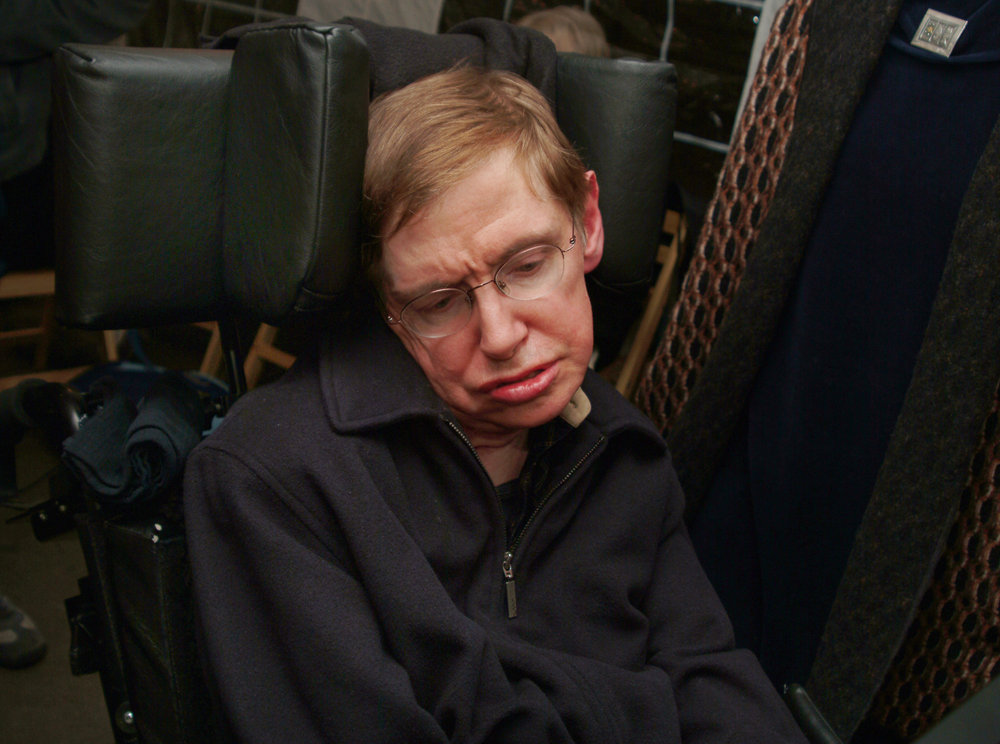
Society often elevates brilliant minds into flawless heroes, especially those who overcome severe physical challenges. Professor Hawking became a global symbol of intellect triumphing over physical limitations. Nobel Prize winning physicist Sir Roger Penrose once noted that the cosmologist “caught the public imagination, as a true symbol of the triumph of mind over matter.” However, Penrose also pointed out that this romanticized view hid the reality of a “real human being” with “normal human weaknesses.”
Behind the acclaimed theories and blockbuster movies lay a deeply complicated domestic life. The daily reality of motor neuron disease placed immense strain on his family. His first wife, Jane, candidly admitted in 2015 that the intense physical and mental exhaustion of being a full time caregiver sometimes made life feel dreadful.
As his need for constant medical support grew, the boundaries between his family and his medical staff blurred. The physicist eventually left his first marriage to wed one of his nurses, Elaine Mason, a relationship that also ended in divorce. Close friends and former colleagues often described him as a humorous but highly difficult individual to navigate.
Historian Hélène Mialet observed that society turned him into the mythical figure of the lone genius. In doing so, the public ignored the massive network of caregivers and complex emotional dynamics required to sustain his life and work. Recognizing these human realities does not erase his scientific achievements. Instead, it offers a more honest look at the heavy toll severe chronic illness takes on both patients and their loved ones.
Taking Famous Figures Off Their Pedestals
When a famous name pops up in a scandalous document dump, the public reaction usually splits into two camps: instant outrage or blind defense. But the truth of these situations is rarely that simple.
Being brilliant in a specific field does not mean a person makes perfect choices in their daily life. History shows time and again that the people who change the world are just as flawed and complicated as anyone else. Expecting absolute perfection from public figures only leads to massive disappointment.
Processing these kinds of stories requires slowing down and looking closely at what is proven fact versus what is just a rumor. It also means keeping the focus on the serious harm caused by the actual criminals at the center of the investigation, rather than getting lost in celebrity gossip.
A person’s scientific breakthroughs remain real, even if they had questionable friends or a messy personal life. Taking cultural icons off their pedestals provides a much healthier and honest way to look at history and the people who shape it.
Featured Image Source: US department of justice