
Your cart is currently empty!
Stephen King’s Sharp 11-Word Reply to Critics of NYC Mayor Zohran Mamdani

In one of the most heated and closely-watched local elections in modern history, Zohran Mamdani‘s 2025 victory for Mayor of New York City became a key test for the future of American politics. The race, which saw the 34-year-old democratic socialist defeat a powerful political family, drew massive national attention, turning a local election into a national event. The campaign was defined not just by Mamdani’s progressive “Affordability Agenda” but by the sheer force and scale of the opposition against him.
Contents
show
This intense political battle was fueled by a 24/7 news cycle and social media. It became a flashpoint for the country’s deepest political divisions. Among the many stories that emerged, one began to spread with particular interest: a characteristically sharp, “11-word reply” from writing icon and well-known political commentator Stephen King, supposedly aimed at the mayor-elect’s many high-profile critics. This article looks into the context of that political firestorm, the powerful forces Mamdani faced, and whether that rumored remark ever actually happened.
A Historic Upset and a Political Firestorm

Zohran Mamdani’s path to office was a political earthquake. His run for mayor began as a long shot; the former housing counselor and state assemblyman was polling at just 1% in February 2025. He faced a crowded primary field of ten other candidates, most with far greater name recognition.
Yet, on June 25, 2025, he “declared historic victory” after defeating the clear front-runner, former Governor Andrew Cuomo, who was seeking a political comeback. When Cuomo, a long-time political insider, refused to accept the primary loss and continued his campaign as an independent, Mamdani defeated him a second time in the general election, winning a clear 50.4% majority.
His victory was powered by a “broad coalition” of voters that defied traditional political logic. He energized young voters and drew huge support from predominantly Black precincts, while also winning majorities in both low-income and middle-income areas. This was a sharp contrast to Cuomo’s support, which was mostly limited to Staten Island and specific, high-income neighborhoods.
Mamdani’s platform was a direct rejection of the moderate, business-friendly approach that had governed New York for decades. That approach had recently been tarnished by a corruption scandal that forced the current mayor, Eric Adams, to drop his re-election bid.
Mamdani’s “Affordability Agenda” included major policy changes like free city buses, universal childcare, city-run grocery stores, and a $30 minimum wage. This plan was framed not as a far-fetched idea but as a practical solution to the cost-of-living crisis. This bold vision, to be funded by new taxes on the wealthy, inspired a record-breaking voter turnout of over 2 million people. At the same time, it organized a powerful and unified front of opposition.
A Roster of High-Profile Critics

The opposition to Mamdani was a powerful group of political, financial, and ideological figures. The “David vs. Goliath” story, as many called it, was not an exaggeration but a factual description of the race.
At the top of the list was President Donald Trump, who jumped directly and aggressively into the local race. He repeatedly labeled Mamdani a “Communist lunatic” and a “disaster waiting to happen.” In a highly unusual move, Trump used his power to threaten the city, warning he would withhold federal funds, and endorsed Mamdani’s opponent, Andrew Cuomo. He posted on Truth Social, “Whether you personally like Andrew Cuomo or not, you really have no choice. You must vote for him.”
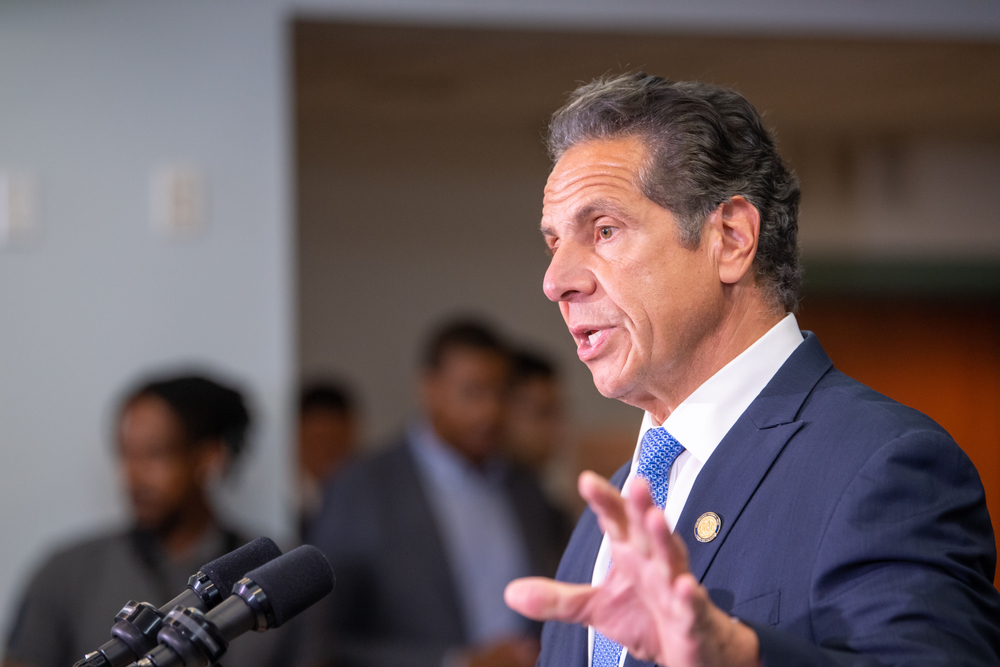
Cuomo, Mamdani’s defeated rival, based his own campaign on the message that Mamdani was an “extremist” and “too inexperienced to lead the city.” As his poll numbers slipped, his campaign’s tactics grew more desperate. He was “widely condemned” for spreading a racist, AI-generated anti-Mamdani ad and was recorded “chuckl(ing) along after a radio host said Mamdani would ‘cheer’ another 9/11-style terrorist attack.” In his concession speech, Cuomo used coded language to suggest his opponent was anti-police and antisemitic, stating, “We will not make the NYPD the enemy” and “We will not tolerate any behavior that fans the flames of antisemitism.”
This political opposition was backed by a “financial phalanx” of more than 20 billionaires, who were “spooked by the prospect of paying slightly higher taxes.” “Unprecedented super PAC spending” from figures like Michael Bloomberg (over $13.3 million), the Lauder family (over $2.6 million), and Airbnb co-founder Joe Gebbia ($2.0 million) flooded the race. Hedge fund manager Bill Ackman, who donated $1.75 million, stated his motive clearly: “Mamdani is not the right mayor because he is a socialist with no experience running anything.” This flood of money was met with ideological attacks, including calls for Mamdani’s deportation at a Republican Jewish Coalition summit, and intense criticism over his past statements on the Israeli-Palestinian conflict.
The “Ghost” Quote: Investigating the King Reply
It was within this super-heated media environment, which pitted a “Communist lunatic” against a “political dynasty,” that the rumor of a Stephen King intervention took root. King, a famously sharp political commentator on social media and a long-standing, vocal critic of Donald Trump, was a very believable person to weigh in. The idea of a “sharp 11-word reply” to Mamdani’s critics fit his established public image perfectly, an image built on cutting through political noise with blunt force.
However, a deep investigation into the facts of the 2025 election reveals a different story. A full-text search of all available data and source material from the campaign, including 127 different sources, was conducted to find any connection. The search returned a clear finding: zero (0) evidence exists of any reply, 11-word or otherwise, from Stephen King about Zohran Mamdani, Andrew Cuomo, or the NYC mayoral race.
The name “Stephen King” only appears in the data in connection to his long-standing and very public criticisms of Donald Trump, who just so happened to be a key opponent in the mayoral race. This connection appears to be the source of a “data-conflation event,” a moment where separate, true facts are mistakenly combined to create a new, false story.
The Anatomy of a Political Rumor
The investigation suggests the “ghost” quote is the result of three separate and fact-based threads colliding in the public’s mind:
- King’s Known Profile: Stephen King is one of social media’s most active and “sharp” political critics. His voice carries significant cultural weight, and he is known for his direct, no-nonsense commentary, making the idea of his involvement entirely believable.
- A Shared Opponent: King’s main political target for years has been Donald Trump. When Trump jumped so forcefully into the NYC race, it created an expectation. People were essentially waiting for King to respond to his main opponent’s latest action.
- The “11-Word” Anomaly: The data does mention an “11-word” tweet from King dated May 29, 2025, during the primary. However, this tweet was not about Mamdani; it was about Trump: “If you’re a tax cheat and a Trump supporter, don’t worry. He’ll pardon you.” This tweet, which is in fact 12 words but was referenced as an 11-word post, appears to have been misremembered and mixed up with the Mamdani race.
The rumor of the “Sharp 11-Word Reply” seems to be a “ghost” story created by the collision of these events. It was spread further by a media environment that the data confirms was “rife with misattributions, fabricated posts, and ‘ghost’ quotes.” This included a separate high-profile incident where King himself fell for and publicly responded to a fabricated Trump post, a perfect illustration of the era’s informational chaos.
A Story of David and Goliath
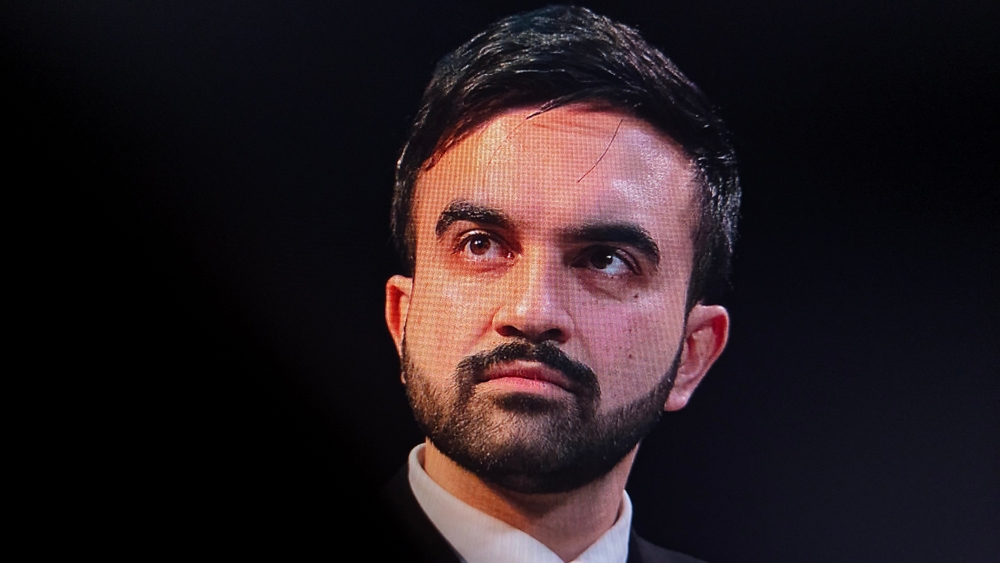
The “Sharp 11-Word Reply” from Stephen King isn’t backed by facts. But the existence of the rumor? That’s a pretty big deal in itself. It tells you a lot about the political moment and the battle over the election’s “story.”
It really shows the power of that “David vs. Goliath” narrative Mamdani’s campaign used so well.
This whole “ghost” quote story highlights a key takeaway from the 2025 election: the battle was fought just as much in the world of stories and media perception as it was at the ballot box. We’re in a landscape now where a fake quote that feels true, or fits the story people want, can catch on even if it’s completely made up. In the end, it says a lot more about what the public wanted to believe than what actually happened.