
Your cart is currently empty!
Sweden Trains Crows to Collect Cigarette Butts and Help Clean City Streets

Cities around the world spend enormous amounts of money trying to keep their streets clean. Among the most stubborn forms of litter is the cigarette butt, a tiny object that millions of smokers casually flick onto sidewalks each day. Individually they seem insignificant, but collectively they form one of the largest sources of urban waste. In Sweden, where environmental awareness is often strong, the scale of the problem still surprises many people. Research cited by the Keep Sweden Tidy Foundation estimates that more than one billion cigarette butts are discarded on Swedish streets every year. These small pieces of waste make up roughly sixty two percent of all litter found in public spaces.
Contents
show
In the city of Södertälje, just outside Stockholm, officials have been experimenting with an unusual response. Instead of relying solely on street cleaners and municipal workers, they have explored a partnership with an unexpected workforce. The city has been testing a pilot project in which wild crows collect cigarette butts and drop them into a special machine. When the birds deposit the litter into the device, it releases a small food reward. Over time, the crows learn the connection between the discarded trash and the reward waiting inside the machine.
The concept was developed by a Swedish startup called Corvid Cleaning, founded by entrepreneur Christian Günther-Hanssen. The idea quickly captured global attention because it blends urban environmental policy with animal intelligence in a way that feels both creative and controversial. Supporters see it as an imaginative solution that could cut costs and reduce pollution. Critics worry about the practical limits of training wild birds and the ethical questions raised when wildlife becomes part of a municipal cleanup strategy.
The Litter Problem That Sparked the Idea
Cigarette waste is not only unsightly but also surprisingly expensive to manage. Each filter contains plastic fibers that break down slowly, meaning the butts can persist in the environment for years. They also absorb chemicals from tobacco smoke, leaving traces of toxins that can seep into soil and waterways.
For cities, the main challenge is scale. Street cleaners can sweep up visible trash, but cigarette filters are small and scattered across pavements, parks, bus stops, and drainage systems. Cleaning them requires careful manual work that can take far more time than collecting larger waste items.
Municipal records cited in several reports suggest that Södertälje spends around 20 million Swedish kronor each year on street cleaning. That amount reflects the cost of labor, equipment, and waste processing.
According to Christian Günther-Hanssen, collecting cigarette butts alone can cost around 80 öre per piece, and sometimes as much as two kronor depending on the method used.
These numbers led to an unusual question. If cigarette butts are so small and widely scattered, could animals that naturally forage for tiny objects be trained to collect them instead of humans?
The question may sound whimsical at first, but it is grounded in well known facts about a particular group of birds. Corvids, the family that includes crows, ravens, and magpies, are widely recognized as some of the most intelligent animals in the world.
Why Crows Are Considered Nature’s Problem Solvers
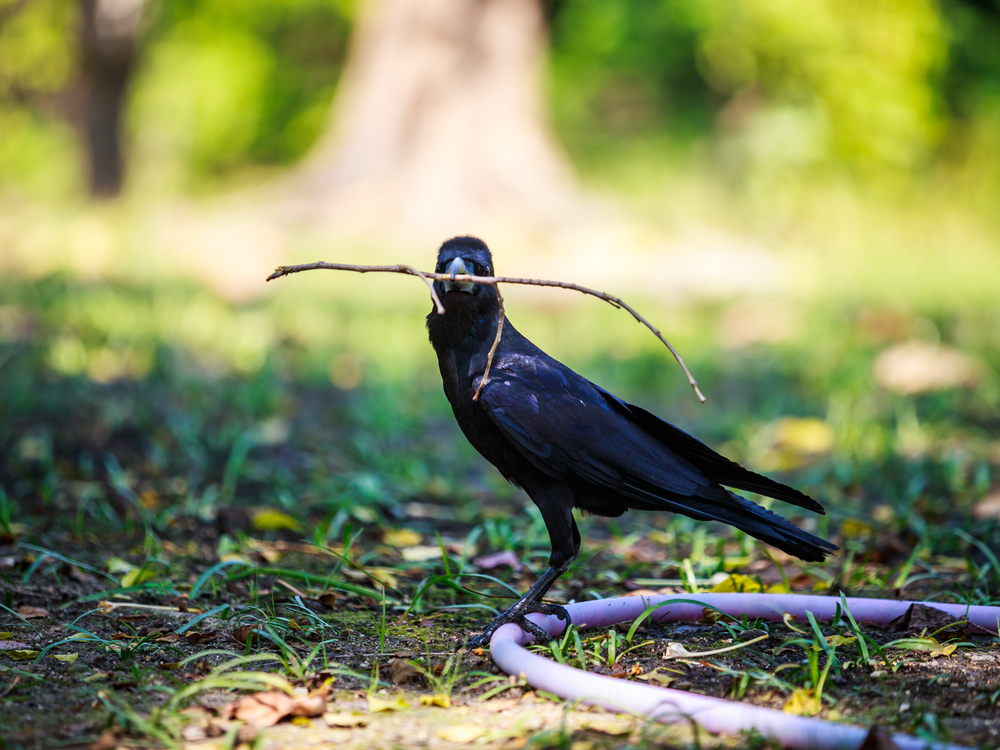
Crows have long fascinated scientists because of their remarkable cognitive abilities. Studies on corvid intelligence have shown that certain species can use tools, recognize human faces, and solve complex puzzles. New Caledonian crows in particular are known for crafting sticks and leaves into tools that help them retrieve insects hidden inside tree bark.
Research has suggested that the reasoning ability of these birds can resemble the problem solving capacity of a young child. This reputation made them appealing candidates for a project that depends on learning patterns and repeating a specific behavior.
According to Günther-Hanssen, the training concept builds on several traits that crows naturally possess. They are quick learners and highly curious. They also learn socially, meaning that one bird discovering a food source can lead others to copy the behavior. In theory this could allow the behavior to spread naturally through local crow populations.
Another advantage is their precision. Crows have sharp beaks and strong coordination that allow them to pick up small objects from the ground. Compared with other birds, they are less likely to swallow random debris while searching for food. That reduces the risk that they might accidentally ingest litter while interacting with the machines.
These characteristics led the startup to design a system that uses positive reinforcement rather than strict training. The birds are not captured or confined. They remain wild and approach the machines voluntarily. If they discover the reward mechanism and connect it with cigarette butts, they can continue using the device whenever they choose.
How the Crow Vending Machines Work
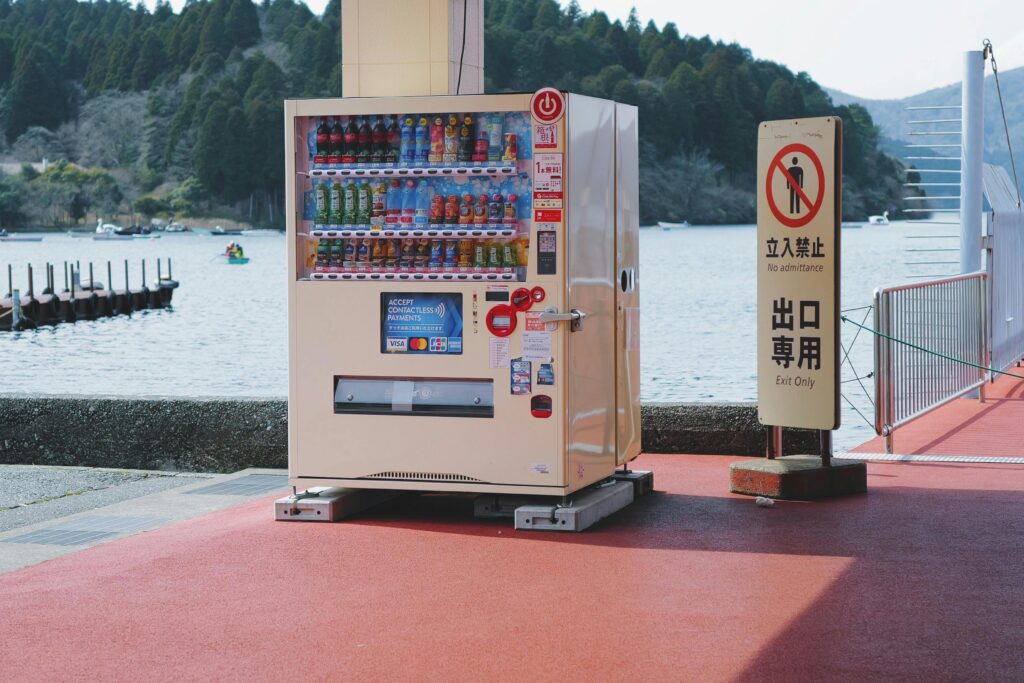
The device created by Corvid Cleaning resembles a small automated feeder. Inside the machine is a container holding food such as seeds or peanuts. The opening allows a crow to drop an object into the system. When the machine detects a cigarette butt or similar piece of litter, it releases a small amount of food.
Training follows a gradual process designed to help the birds understand the connection between the litter and the reward. Early stages involve placing cigarette butts near feeding areas so the birds begin associating the objects with food. Once that link forms, the birds are encouraged to interact with the machine itself.
Eventually the mechanism only releases food when a crow deposits a cigarette butt into the correct slot. The bird experiences the reward and repeats the behavior. Over time the system relies on habit and learning rather than direct human supervision.
The approach resembles conditioning techniques used in many animal behavior studies. The difference is that the participants are wild birds operating in a public environment rather than animals inside a controlled laboratory setting.
Supporters of the project believe that this design could transform ordinary city streets into informal training grounds. If enough birds participate, cigarette butts scattered across sidewalks could become a valuable resource rather than a nuisance.
The Financial Promise Behind the Experiment

One of the main reasons the project gained attention is the potential for significant cost savings. Günther-Hanssen has suggested that crow assisted cleanup could reduce cigarette butt collection costs by as much as seventy five percent.
His estimates suggest that if humans collect a cigarette butt for roughly 80 öre or more, a crow performing the same task through the machine might reduce the cost to around 20 öre per piece. The difference could save municipalities large amounts of money over time, especially in cities with heavy foot traffic.
If the system proved reliable, multiple machines could be placed across parks, plazas, and transit areas where smokers often gather. Each machine would act as a small recycling station that exchanges litter for food.
The concept also fits neatly with broader environmental narratives about working with nature rather than against it. Instead of deploying more vehicles or mechanical street sweepers, the city would be using the intelligence of animals that already live within the urban ecosystem.
Local officials in Södertälje have approached the idea cautiously. Waste strategist Tomas Thernström has indicated that the pilot project must first prove its practicality and safety before any wider rollout can be considered. Financing also plays a role, since developing and maintaining the machines would require investment.
Still, the idea sparked curiosity among city planners who constantly search for creative ways to reduce waste management costs.
Public Fascination and Viral Attention

As news of the crow cleanup experiment spread online, it quickly attracted attention on social media platforms. Many people reacted with amazement at the idea that birds could be trained to help solve an urban pollution problem.
Images and descriptions of the machines circulated widely, often accompanied by comments praising the intelligence of crows. For many readers, the story offered a refreshing example of creative thinking in environmental policy. The image of clever birds earning peanuts by tidying city streets captured the imagination.
At the same time, the story sparked debate about what it reveals about human behavior. Several observers pointed out the irony that cities might rely on wildlife to fix a mess created by people who casually discard cigarette filters on the ground.
Thernström himself expressed a similar reflection when discussing the project. Teaching crows to pick up cigarette butts may be easier, he suggested, than persuading people to stop littering in the first place.
The conversation highlights a broader tension in environmental policy. Technological solutions and clever experiments can help manage waste, but they do not always address the underlying habits that create the problem.
Skepticism From Scientists and Wildlife Observers
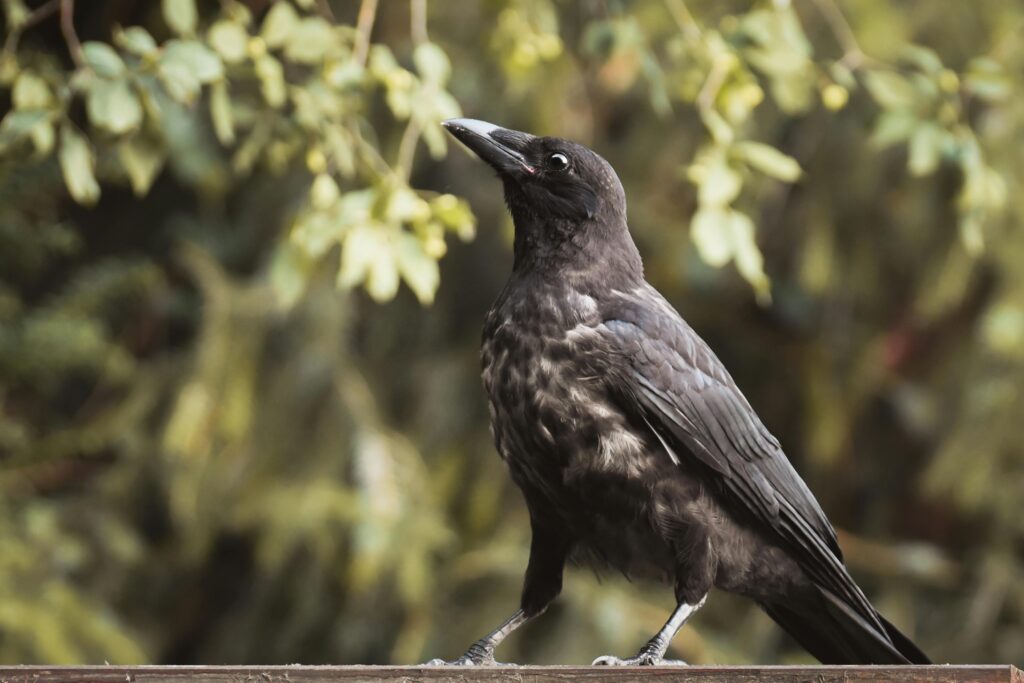
Not everyone believes the crow cleaning concept will succeed at a meaningful scale. Some researchers and bird experts have expressed doubts about the long term sustainability of the idea.
One concern centers on motivation. While crows are capable of learning complex tasks, maintaining their interest over time may prove difficult. Food rewards such as peanuts can attract birds initially, but animals may lose interest once the novelty fades or if other food sources become easier to obtain.
There is also the challenge of consistency. Training a few birds to perform a behavior does not necessarily mean that large numbers will adopt it. Wild populations behave unpredictably, and individual birds may approach the machines in different ways.
Previous attempts to create similar systems illustrate these difficulties. In 2008 a well known experiment called the Crow Box attempted to train crows to collect coins and exchange them for food rewards. While the idea attracted significant public interest, no large scale implementation ever emerged.
Another project proposed in the Netherlands in 2017 also aimed to recruit crows as urban cleaners. That initiative was eventually shelved after researchers struggled to evaluate the environmental effects and practical outcomes.
These earlier experiences suggest that the leap from a clever demonstration to a sustainable public program may be larger than it first appears.
Ethical Concerns About Wildlife Involvement
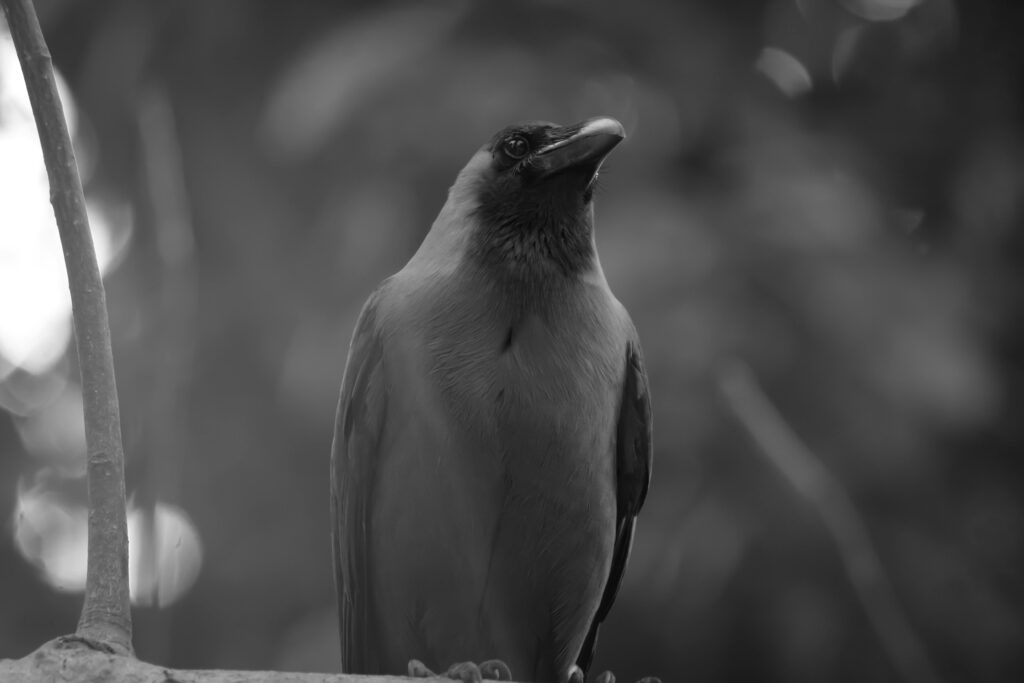
Beyond practical challenges, critics have raised ethical questions about using wild animals in a cleanup system connected to toxic waste. Cigarette butts contain nicotine and other harmful substances that can affect wildlife if ingested.
Even though the birds are expected to handle the filters rather than eat them, repeated contact could still expose them to chemical residues. Scientists note that nicotine is highly toxic to birds at certain concentrations. While a crow would not ingest enough from a single cigarette butt to cause immediate harm, the long term effects of repeated exposure remain uncertain.
Another issue involves the food dispensers themselves. Machines that store peanuts or seeds outdoors may attract other animals such as rats or insects. If the containers are not carefully maintained, the food could spoil or spread pests in nearby areas.
The startup behind the project has acknowledged these concerns and states that the health of the birds is an important part of the pilot evaluation. Because the birds remain wild, participation is voluntary and they can simply ignore the machines if they choose.
Still, critics argue that intentionally encouraging wildlife to interact with toxic litter requires careful scientific monitoring before the concept expands.
What the Experiment Reveals About Human Solutions

Whether the crow cleanup project ultimately succeeds or not, it reflects a broader trend in how societies approach environmental problems. Modern cities are increasingly willing to test unconventional ideas that combine technology, ecology, and behavioral science.
Sometimes these experiments succeed in surprising ways. At other times they reveal limitations that help refine future approaches.
The crow machines in Södertälje exist somewhere in the middle of that spectrum. They represent a bold attempt to rethink how urban waste might be managed. At the same time, they highlight the complexity of solving problems created by everyday human habits.
If the machines prove effective, they could inspire similar programs in other cities facing cigarette litter problems. If they fail, they may still provide valuable insights about animal intelligence, urban ecosystems, and the challenges of behavioral change.
Either outcome contributes to a deeper understanding of how cities can balance creativity with responsibility.
A Small Experiment With Big Symbolism
For now the project remains in its pilot stage. The machines have not yet expanded into a full city wide network, and officials continue to monitor both the economic and ecological outcomes.
Yet the story of the crow cleanup experiment continues to capture global attention because it touches on several themes at once. It highlights the intelligence of animals that often live unnoticed in urban spaces. It reflects the growing urgency of dealing with everyday pollution. And it raises subtle questions about how far humans should go in seeking clever solutions to problems of their own making.
The image of a crow dropping a cigarette butt into a machine in exchange for a peanut is both charming and thought provoking. It suggests that nature sometimes offers unexpected partners in solving human challenges. At the same time it quietly reminds us that the simplest solution may still be the most obvious one.
Cities might invent machines, train birds, and design new systems to collect litter. But the ultimate change begins with people choosing not to drop the cigarette butt in the first place.