
Your cart is currently empty!
How One French Teen Built A Memory Palace Inside Her Mind

Most people struggle to remember what they ate for dinner three nights ago. Birthdays blur together. School days dissolve into fragments. Faces, conversations, and places fade at the edges. Memory, for most of us, is imperfect and constantly shifting.
Contents
show
But for a 17-year-old girl in France, every personal moment of her life is preserved with extraordinary clarity. Known only as TL to protect her privacy, she is one of fewer than 100 people worldwide believed to have hyperthymesia, a rare condition also known as highly superior autobiographical memory. Her ability allows her to mentally travel backward into her past with vivid sensory detail. Even more remarkably, she can project herself forward into imagined future events with a realism that researchers describe as unusually rich and immersive.
Her case, recently published in the scientific journal Neurocase by researchers from Paris Cité University and the Paris Brain Institute, is offering scientists a rare window into how the human brain organizes memory, constructs identity, and creates the feeling of continuity across time.
A Life Lived Inside a Memory Palace
When TL describes how she stores her memories, she does not speak in metaphors. She speaks in architecture.
In her mind exists what she calls a white room. It is large, rectangular, and has a low ceiling. Inside it, the events of her life are carefully cataloged and arranged. Childhood toys sit on display, each tagged with the date she received them and the person who gave them to her. Family photographs appear as though mounted on walls, every detail preserved. Important documents are filed away in binders, organized by themes such as vacations, family life, and friendships.
Researchers describe this structure as a kind of memory palace, a mental technique historically used to improve recall. Yet in TL’s case, this intricate system was not consciously built as a strategy. It seems to have developed naturally as part of how her brain encodes autobiographical experience.
She can move through this room voluntarily. If she wishes to revisit a birthday party from years ago, she mentally retrieves the relevant file and steps back into the scene. She does not simply remember what happened. She relives it. Sounds, textures, emotional states, even subtle background details, reappear with striking intensity.
Her memories are arranged chronologically. Recent days are clear and easy to separate from one another. Months from the past two years remain distinct. Older memories blur slightly, but they remain accessible at the level of years. This structured organization is one of the key characteristics that distinguishes hyperthymesia from ordinary strong memory.
What Is Hyperthymesia
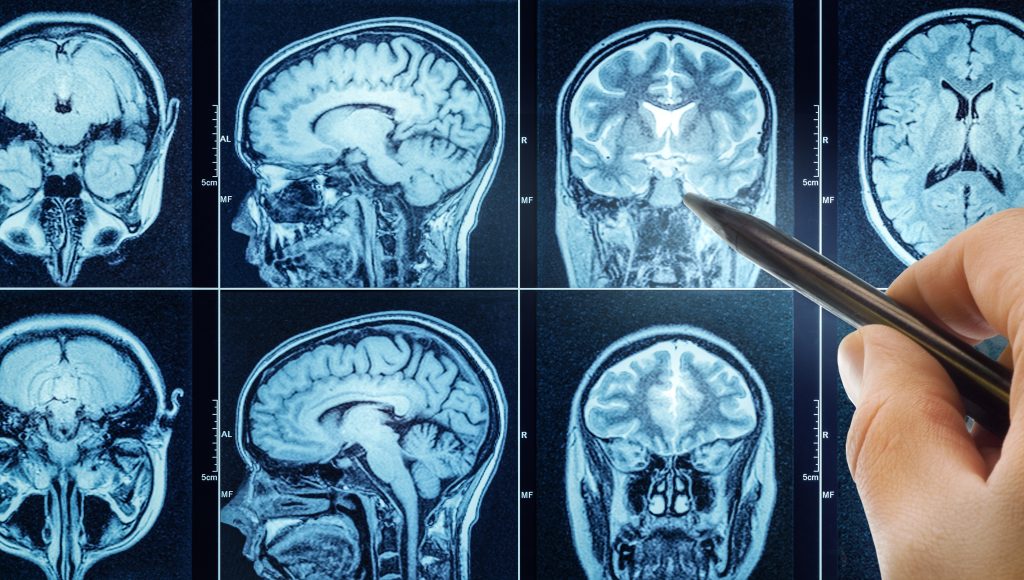
Hyperthymesia was first described in scientific literature in 2006. It refers specifically to highly superior autobiographical memory. This is different from having a high IQ or being able to memorize textbooks quickly. Individuals with hyperthymesia do not necessarily excel at learning random information. Their extraordinary ability is focused on personal life events.
Neuropsychologist Valentina La Corte, lead author of the recent case study, explains that hyperthymestic individuals can often describe in detail what they did on a specific date years or even decades earlier, along with the emotions and sensations they experienced that day.
Autobiographical memory plays a critical role in shaping our sense of self. It allows us to construct a personal narrative. Psychologists refer to this self aware time traveling ability as autonoetic consciousness. It is the mental capacity to place ourselves back into past experiences or forward into imagined scenarios.
For most people, this capacity fades with distance. Details soften. Emotions lose their sharpness. For TL, that fading process appears significantly reduced. Her recollections are rich in contextual and phenomenological detail, meaning they contain the sights, sounds, spatial layouts, and internal feelings associated with the original experience.
In laboratory tests designed to evaluate autobiographical memory, TL performed at the very top of normative averages. While researchers cannot fully verify the factual accuracy of distant memories, the depth and coherence of her descriptions strongly suggest genuine episodic recall rather than simple knowledge of past events.
The Emotional Weight of Never Forgetting

Hyperthymesia is often portrayed as a gift. The idea of never forgetting a cherished moment sounds appealing. But memory is not selective in its kindness.
Painful experiences are also preserved.
TL has developed coping mechanisms within her mental architecture to manage this reality. In her white room, negative memories are stored in a chest. The death of her grandfather, for example, is placed inside that container. She can choose when to open it. This gives her a degree of control over how frequently she revisits painful episodes.
She also describes additional adjoining mental spaces. There is a pack ice room where she goes to cool down when anger rises. There is a small problems room, empty and distraction free, where she reflects on challenges. When her father left home to pursue his military career, a military themed room appeared in her mental landscape. She finds herself there when feelings of guilt resurface.
Other hyperthymestic individuals have reported that their memories feel non stop and automatic, sometimes overwhelming. Streams of recollections can intrude without warning. Although TL’s case study does not deeply explore psychological distress, researchers acknowledge that constant access to emotionally charged memories can be exhausting.
Memory is dynamic in most people. It softens trauma over time. It edits and rewrites. For someone with hyperthymesia, that natural fading may be less pronounced, raising questions about emotional resilience and long term mental health.
Traveling Forward in Time

Perhaps the most extraordinary aspect of TL’s case is not her ability to revisit the past, but her ability to pre-experience the future.
Researchers asked her to imagine personal events that had not yet occurred. Her descriptions contained an unusual richness of temporal, spatial, and perceptual details. She did not simply outline abstract plans. She described scenes with a strong sense of lived experience, as though remembering something that had already happened.
This phenomenon is known as episodic future thinking. Cognitive science suggests that imagining the future relies on many of the same neural mechanisms used in recalling the past. The brain recombines stored elements of prior experiences to construct possible scenarios.
In TL’s case, this construction appears especially vivid. Her imagined futures evoke a deep sense of pre-experience. Researchers suggest that studying her brain could illuminate how memory supports decision making, planning, and identity formation.
If our sense of self is built partly from the stories we tell about our past, it is also shaped by the futures we imagine. Goals, fears, and expectations influence present choices. TL’s case highlights how tightly interwoven past and future are within the architecture of the mind.
The Science Behind the Mystery
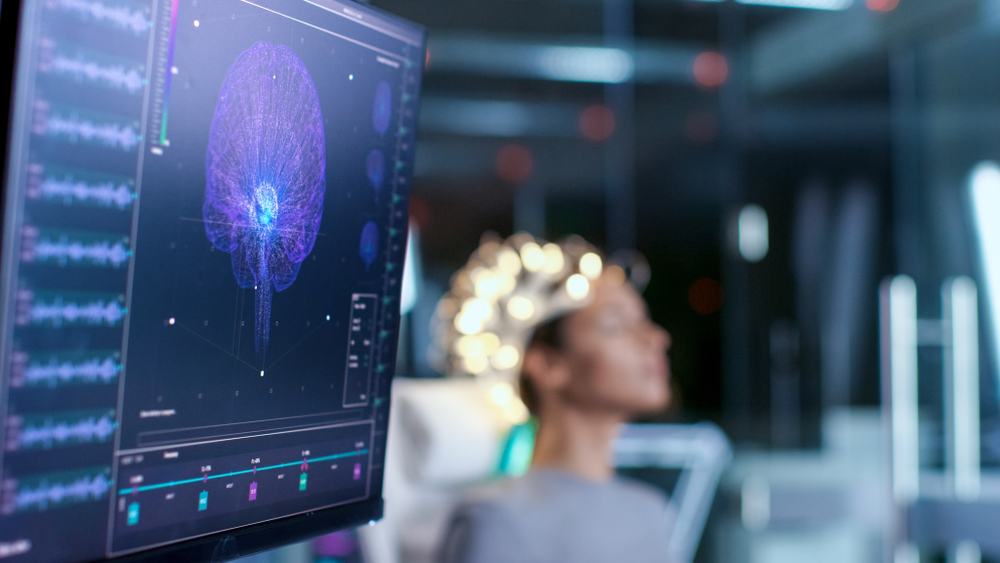
Despite growing fascination, hyperthymesia remains poorly understood. Only a small number of cases have been documented in peer reviewed research. This makes it difficult to generalize findings.
Some studies suggest that hyperthymesia may involve overactivation of brain networks responsible for autobiographical memory and visual imagery. Others propose links to obsessive tendencies or enhanced emotional processing. So far, no clear structural differences in brain anatomy have been consistently identified.
Researchers also note intriguing connections between hyperthymesia and other rare cognitive traits. In TL’s family, several members exhibit synesthesia or perfect pitch. Synesthesia is a condition in which stimulation of one sense triggers experiences in another, such as seeing colors when hearing music. While TL herself is not synesthetic, the presence of unusual perceptual traits in her family raises questions about shared neurological foundations.
The research team used established tools such as the Episodic Test of Autobiographical Memory and the Temporal Extended Autobiographical Memory Task to evaluate her abilities. These assessments measure the richness of recalled details and the ease with which individuals mentally navigate across time.
Her performance reinforced the idea that mental travel into the future relies on mechanisms similar to those involved in exploring the past. Sensory information appears central in both directions.
Yet many questions remain unanswered. Does hyperthymesia change with age. Will TL’s memory remain equally vivid decades from now? Can individuals with this condition learn to intentionally dampen or filter their recollections? Researchers emphasize that everything remains to be discovered.
Identity Written in Memory

Why does this matter beyond scientific curiosity?
Autobiographical memory is not simply a storage system. It is the foundation of identity. The narrative we build about who we are depends on what we remember and how we interpret those memories.
For most of us, forgetting is part of that process. It allows us to heal, to revise, to move forward. Our identities shift partly because the past softens.
TL’s experience challenges assumptions about how much forgetting is necessary for psychological growth. If every emotional nuance remains accessible, how does that influence self-perception? Does it strengthen continuity, or make it harder to distance oneself from earlier versions of the self?
Her structured mental rooms suggest that identity can be consciously organized. She does not float in a chaotic sea of recollections. Instead, she navigates a curated internal landscape. The presence of labeled objects, chronological binders, and emotional containment spaces points to an active relationship with memory rather than passive immersion.
Studying individuals like TL may also shed light on neurological disorders that impair memory, such as Alzheimer’s disease or certain forms of amnesia. By understanding what happens when autobiographical memory is amplified, scientists may gain insight into what occurs when it deteriorates.
The Human Fascination With Time Travel

Stories about time travel have captivated human imagination for centuries. From literature to cinema, the idea of revisiting the past or glimpsing the future speaks to a deep psychological desire to understand causality and control.
TL’s ability is not science fiction. She does not physically move through time. Yet her subjective experience reveals that the brain itself is a time machine. Every person engages in mental time travel daily, recalling conversations or anticipating tomorrow’s plans.
Her case magnifies this universal trait to an extreme degree. It reminds us that memory is not a static recording device. It is a creative, reconstructive process that shapes how we experience reality.
At the same time, her story invites reflection. If we had access to every detail of our past, would we want it. Would constant clarity enrich our lives, or burden them.
Living With an Extraordinary Mind
TL first noticed her unusual abilities as a child. When she described them to friends at the age of eight, she was accused of lying. For years, she kept her experiences private, sharing them only with family out of fear of seeming strange. At 17, she chose to participate in formal research, opening a rare window into her internal world.
She is described as a successful high school student. Interestingly, she distinguishes between emotionally meaningful autobiographical memories and what she calls black memories. These are pieces of factual or scholarly information that carry no emotional weight and require deliberate effort to memorize. They are not stored in the white room.
This distinction highlights an important principle. Emotion appears to be a key factor in how memories are encoded and retained. Even for individuals without hyperthymesia, emotionally charged events are more likely to be remembered.
For TL, emotion is the organizing glue of her mental architecture. Joyful memories can be revisited like favorite books. Painful ones are stored carefully but not erased. Future scenarios are constructed with sensory realism that reflects the brain’s reliance on past experiences.
Her life raises practical and philosophical questions. How will relationships evolve when nothing significant is forgotten? How will she navigate grief, forgiveness, and change across decades?
A Window Into the Future of Neuroscience

Researchers emphasize that each documented case of hyperthymesia expands scientific understanding. Because so few individuals are known, every new study contributes valuable data.
There is interest in exploring whether hyperthymesia involves particular patterns of neural connectivity, whether it can be moderated through training, and how it interacts with aging. Longitudinal studies may reveal whether the vividness of memory remains stable or shifts over time.
Beyond the laboratory, TL’s story resonates because it illuminates something universal. Memory binds our experiences into a coherent life story. It allows us to learn, to anticipate, to regret, to hope.
Her white room may be unique in its clarity and organization, but each of us carries our own internal archive. It may be less detailed, less structured, more prone to fading. Yet it shapes every decision we make.
In studying one teenager who can mentally travel across time with extraordinary ease, scientists are not only investigating a rare neurological condition. They are probing the very mechanisms that make us human.
The Mind As A Time Machine
TL’s case invites both awe and humility. It demonstrates the astonishing flexibility of the human brain. It also reminds us that forgetting, often viewed as a flaw, may be an essential feature of psychological balance.
For fewer than 100 people on Earth, the past remains strikingly alive. For the rest of us, memory flickers and fades. Somewhere between those extremes lies the delicate equilibrium that allows identity to evolve while preserving continuity.
As researchers continue to explore hyperthymesia, they move closer to answering fundamental questions about consciousness, time, and the architecture of the self. TL’s mental journeys across years and imagined tomorrows offer a rare glimpse into the depths of autobiographical memory.
Her story is not just about an extraordinary teenager in France. It is about the intricate landscape inside every human mind, where the past is stored, the future is imagined, and the narrative of who we are quietly unfolds.