
Your cart is currently empty!
The First Bus to Escape Hurricane Katrina Was Driven by a 20-Year-Old With No License
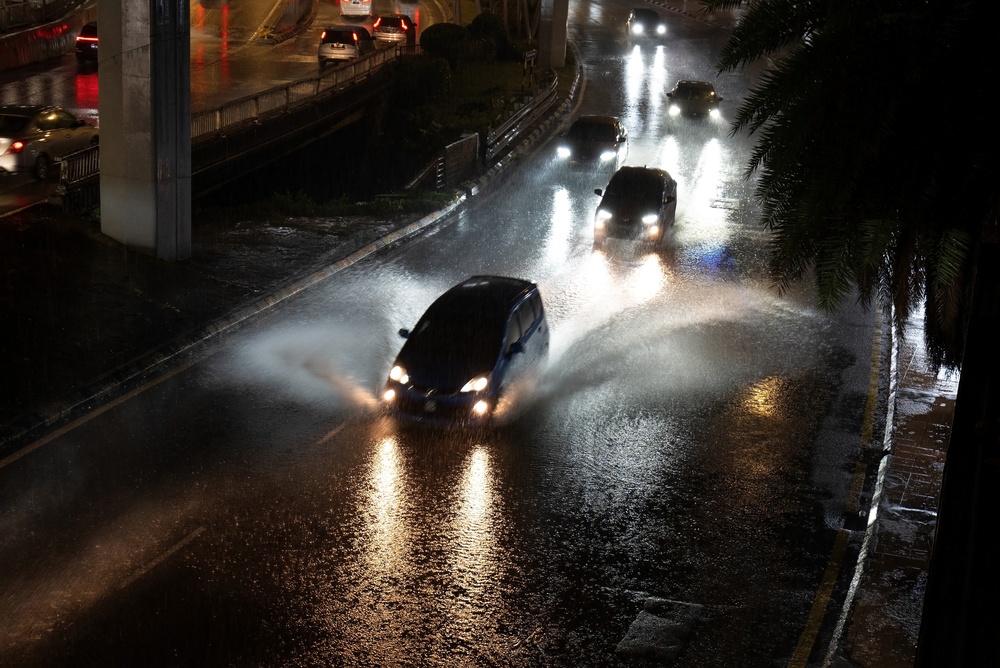
When Hurricane Katrina devastated New Orleans in August 2005, tens of thousands of residents found themselves stranded with no electricity, no food, and little indication that help was on the way. Rescue efforts struggled to keep pace with the scale of the disaster, leaving entire neighborhoods isolated as floodwaters continued to rise. Amid the confusion and desperation, one of the earliest successful evacuations wasn’t organized by emergency officials or government agencies. Instead, it began with a 20-year-old resident who made an extraordinary decision after realizing that waiting for rescue was no longer an option.
Contents
show
Jabbar Gibson had never driven a school bus, never held a commercial driver’s license, and had no official role in disaster response. Yet after discovering a row of abandoned school buses, he climbed behind the wheel, gathered dozens of frightened neighbors, and embarked on a dangerous 13-hour journey through one of America’s worst natural disasters. By the time he reached Houston, more than 70 people had escaped New Orleans because one young man refused to leave them behind. Nearly two decades later, his remarkable story continues to stand as one of Hurricane Katrina’s most powerful examples of courage, compassion, and decisive action.
A Neighborhood Left Waiting for Help
For many residents of New Orleans’ Fischer housing project, evacuating before Hurricane Katrina struck simply wasn’t possible. While city officials had issued mandatory evacuation orders before the storm made landfall, thousands of families lacked reliable transportation, financial resources, or somewhere safe to go. Others were reluctant to abandon homes that had sheltered multiple generations of their families. Like many of his neighbors, Jabbar Gibson stayed behind as Katrina approached, believing they would somehow weather the storm together.
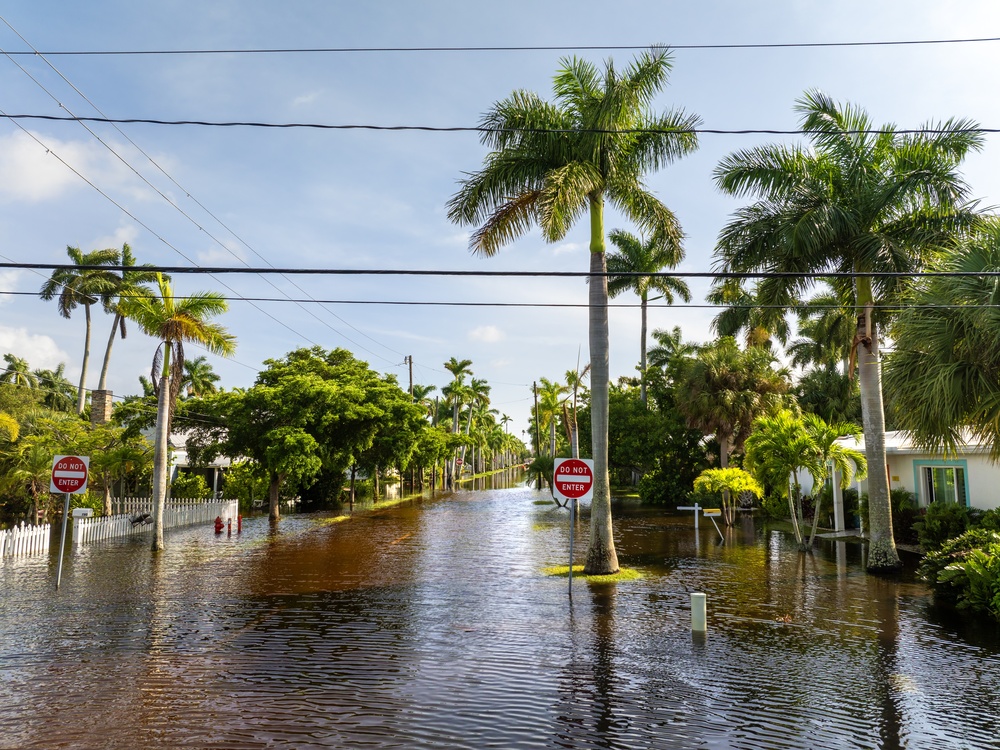
The hurricane itself caused widespread destruction, but the catastrophe escalated after the city’s levees failed. Water poured into neighborhoods across New Orleans, swallowing streets, homes, and businesses. Although the Fischer housing project sat on the west bank of the Mississippi River and escaped the worst flooding seen elsewhere, it suffered extensive storm damage. Strong winds ripped sections from rooftops, shattered windows, knocked down trees, and destroyed fencing throughout the complex. Electricity disappeared almost immediately, leaving residents without lights, refrigeration, or communication.
For two days after the storm, Gibson and hundreds of others waited in increasingly desperate conditions. Food supplies dwindled, clean drinking water became scarce, and there was no certainty that emergency responders would arrive anytime soon. News spread through the community that neighborhoods like the Lower Ninth Ward, Bywater, and Mid-City were rapidly disappearing beneath floodwaters. Each new rumor made the situation feel more urgent, and many residents began to fear they would become trapped if they delayed any longer.
Longtime Fischer resident Kerry Lavinette later described just how hopeless those hours had become. “We were desperate,” he recalled. “It was either that or we were going to drown.” His words reflected the growing realization shared throughout the neighborhood: waiting for outside help was no longer a strategy. If they wanted to survive, someone would have to find another way.
An Unlikely Discovery Offered One Last Chance
Determined to find a solution, Gibson left the housing project with several friends to search for transportation. They had no detailed plan and no guarantee they would find anything useful, but remaining where they were no longer seemed like an option. During their search, they came across a nearby barn containing roughly a dozen abandoned school buses. The vehicles appeared untouched, offering the first real possibility of escaping the city.
Inside an unlocked office, the group discovered a collection of bus keys. They began trying different combinations until, after nearly half an hour, one of the buses finally roared to life. The discovery transformed what had seemed like an impossible situation into an opportunity. There was only one significant obstacle standing between them and freedom: nobody present actually knew how to drive a school bus.
For Gibson, the challenge was even greater. He didn’t own a car and had never earned a driver’s license, much less the certification required to operate a bus carrying dozens of passengers. Faced with that reality, he made a decision that would alter the lives of everyone around him. “I learned right then and there,” Gibson later recalled. “I was driving alright for the first time.”
Rather than using the bus to save only himself, Gibson immediately turned back toward the Fischer housing project. He and his friends began loading families, elderly residents, children, and anyone else who needed transportation. Word spread quickly through the neighborhood, and before long, dozens of anxious survivors were climbing aboard, believing they had finally found a way out of the disaster.
Police Tried to Stop the Evacuation
Just as the evacuation was gaining momentum, police officers arrived at the scene and ordered everyone off the bus. The officers demanded that Gibson surrender the keys, bringing the rescue effort to an abrupt halt. For the frightened residents who had finally believed they had an escape route, the interruption threatened to erase what little hope remained.
Gibson’s mother, Bernice, refused to let that happen. She stepped forward and pleaded with the officers, explaining that there were no other buses, no organized rescue teams, and no realistic alternative for the people gathered around them. Families had already spent days without basic necessities, and many feared that remaining in the city any longer would put their lives at even greater risk.
The officers recognized the severity of the crisis unfolding around them. Although they couldn’t officially organize an evacuation themselves, they understood that preventing Gibson from leaving would strand dozens of vulnerable people with no immediate means of escape. After a tense discussion, they made a remarkable decision. They handed the keys back to Gibson and instructed him to get everyone out of New Orleans.
With roughly 60 people packed inside the school bus, Gibson eased the vehicle onto the road and began driving away from the Fischer housing project. None of the passengers knew exactly what lay ahead, but they shared one overwhelming feeling as the city disappeared behind them: relief that they were finally moving toward safety.
A 13-Hour Journey Through Chaos
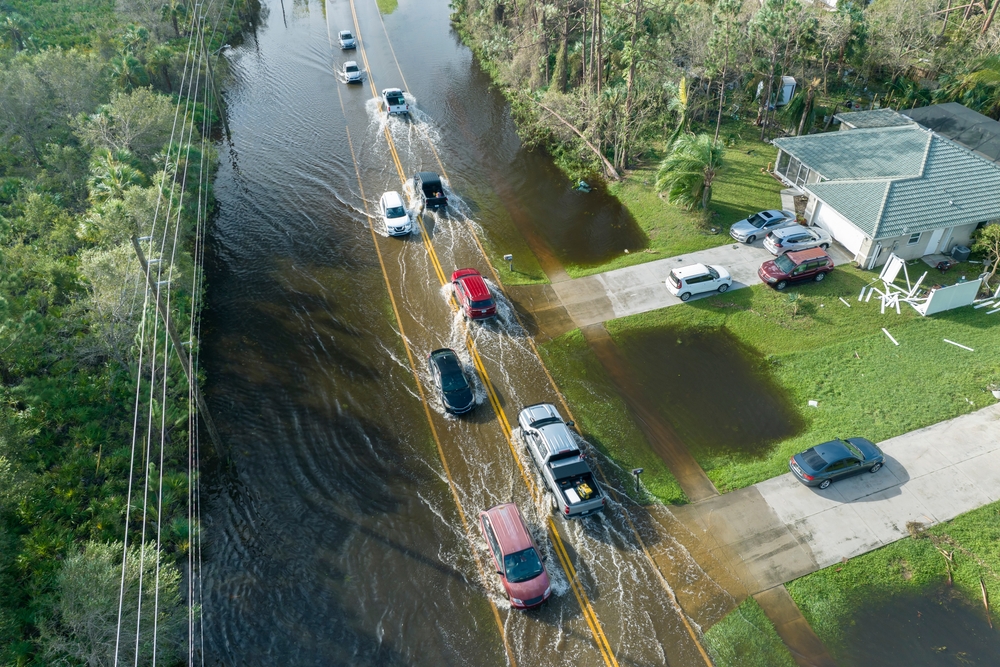
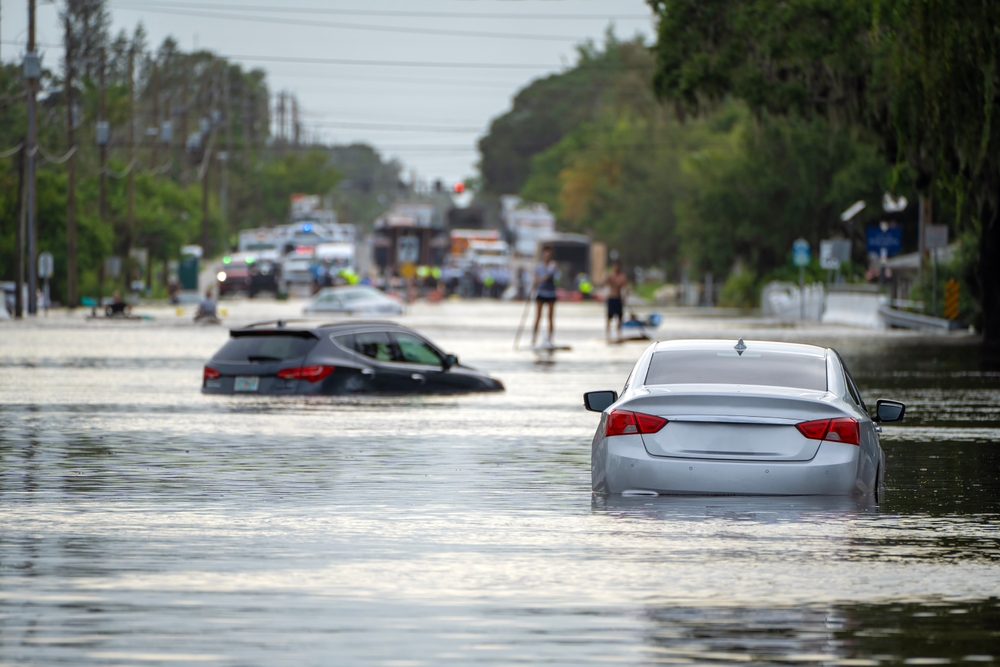
Leaving New Orleans was only the beginning of the ordeal. The roads were clogged with traffic, debris, and people desperately trying to escape on foot. As Gibson steered the crowded school bus through the destruction, passengers witnessed scenes they would never forget. Floodwaters covered entire neighborhoods, homes sat partially submerged, and in some areas bodies could be seen floating in the water. Every mile reinforced just how devastating Hurricane Katrina had become.
Although the bus was already packed with survivors from the Fischer housing project, Gibson couldn’t ignore the people stranded along Highway 90. Time after time, he pulled over whenever he spotted families waving for help. Some had been walking for hours with children in their arms, while others were elderly or physically unable to continue much farther. Each stop meant squeezing more people into an already overcrowded bus, but leaving them behind was never an option in Gibson’s mind.
“I just couldn’t leave them behind,” Gibson later said while reflecting on the journey. By the time the bus crossed farther into Louisiana, more than 70 people were onboard. Among them were elderly residents, children, people with disabilities, several passengers requiring medical attention, and at least two pregnant women. Many had never met before that day, yet they were united by the same hope of reaching safety.
The trip that normally takes around five and a half hours stretched into roughly 13 exhausting hours. Gibson had never driven a bus before Hurricane Katrina, yet he remained behind the wheel for the entire journey, carrying the responsibility of dozens of lives while navigating damaged roads and one of the largest evacuation efforts in American history.
Help Came From Unexpected Places
As the bus approached Lake Charles, another problem emerged. Fuel was running dangerously low, and without diesel, everyone onboard would be stranded once again. The passengers searched through their pockets and bags, pooling together whatever cash they still had after fleeing New Orleans. Together, they managed to pay for enough fuel to continue the trip.
The stop proved to be about far more than gasoline. A compassionate gas station attendant filled two large ice chests with ice, handed the group two cases of bottled water, and shared a crucial piece of information. The Houston Astrodome had just been opened to receive Hurricane Katrina evacuees. Until that moment, Gibson and his passengers had simply been driving away from danger. Now, for the first time, they knew exactly where they were headed.
That small act of kindness lifted the spirits of everyone on the bus. After hours of uncertainty, exhaustion, and fear, they finally had both a destination and the supplies needed to finish the journey. It reminded many passengers that even amid one of the nation’s darkest disasters, compassion could still be found in unexpected places.
Even Safety Wasn’t Guaranteed
When Gibson finally pulled into Houston around 10:30 p.m., many believed the nightmare was finally over. Instead, another obstacle stood in their way. Officials at the Astrodome initially refused to allow the passengers inside because the school bus was not part of the official evacuation convoy expected to arrive that evening. Despite surviving the journey, the exhausted group suddenly found themselves facing another uncertainty.
The decision sparked confusion and frustration among the passengers. Many had spent days without proper food, water, or medical care before enduring more than 13 hours on an overcrowded school bus. Makivia Horton, who had been five months pregnant during the evacuation, later remembered feeling that officials overlooked their situation. “They were not worried about us,” she said, recalling the tense moments outside the shelter.
After roughly 20 minutes of discussions and growing outrage, authorities finally reversed their decision. Gibson and every passenger on board were allowed to enter the Astrodome, where they joined thousands of other Hurricane Katrina survivors seeking refuge. For the people who had climbed aboard an abandoned school bus in New Orleans, the journey had finally come to an end.
The arrival also surprised officials, who reportedly did not expect to see a 20-year-old civilian sitting behind the wheel of one of the first buses to reach Houston. Gibson had accomplished what many believed impossible by transporting more than 70 people safely across two states without any formal training or official support.
A Hero Whose Story Deserves to Be Remembered
The years following Hurricane Katrina were difficult for Jabbar Gibson, like so many others whose lives had been forever changed by the disaster. Yet for the passengers who escaped New Orleans aboard his bus, his actions remained unforgettable. What began as a desperate attempt to save his own community became one of the most remarkable individual rescue efforts of the entire catastrophe.
His story also exposed the reality faced by many underserved communities during Hurricane Katrina. Thousands of residents lacked transportation, resources, or immediate access to organized evacuations, forcing ordinary people to make extraordinary decisions. Gibson’s actions highlighted both the failures of the emergency response and the strength that emerged from neighbors refusing to abandon one another.
Several moments from Gibson’s journey continue to stand out nearly two decades later:
- He had never driven a school bus before finding the abandoned vehicle.
- He evacuated more than 70 people, many of whom were complete strangers.
- He repeatedly stopped to rescue additional survivors despite limited space.
- He drove for roughly 13 hours through dangerous post-hurricane conditions.
- His bus became one of the first to reach the Houston Astrodome after it opened to evacuees.
Gibson’s mother, Bernice, perhaps captured his legacy better than anyone else. Reflecting on what her son accomplished, she said, “He saved my whole family’s life, and he saved everyone in the Fischer. And the world should know it.”
Nearly 20 years later, Hurricane Katrina remains one of the most devastating disasters in American history. Amid the stories of loss and failure, Jabbar Gibson’s decision to climb behind the wheel of an abandoned school bus reminds us that extraordinary acts of courage often come from ordinary people. When no rescue seemed to be coming, one young man chose to become the rescue himself.
Black history, community heroes, Disaster Response, emergency evacuation, emergency heroes, Heroic Acts, Houston Astrodome, Human Interest, Hurricane Katrina, Hurricane Katrina rescue, Hurricane Katrina survivors, Inspiring Stories, Jabbar Gibson, natural disasters, New Orleans, school bus rescue, survival story, true story, viral news