
Your cart is currently empty!
The Genius Secret Behind McDonald’s Coke, According to Actual Scientists

It’s one of those small mysteries that somehow unites the world: why does Coke from McDonald’s taste so unbelievably good? You can pour yourself a Coke at home, crack open a can straight from the fridge, or buy a bottle from a vending machine and still, nothing compares to that first sip from a McDonald’s cup. It’s crisper, bubblier, and perfectly balanced, a sensory experience so distinct that entire TikTok threads and Reddit debates have been devoted to uncovering the reason behind its superiority. And now, thanks to food scientists, engineers, and some good old-fashioned chemistry, we finally know the truth: it isn’t magic or nostalgia it’s science.
Contents
show
McDonald’s has taken what might seem like a simple fountain drink and turned it into a miniature masterpiece of engineering. Behind the counter, every element of that beverage from the water filtration system to the thickness of the straw has been obsessively optimized. The result? A drink that not only tastes fresher than bottled Coke but maintains its carbonation longer, stays colder throughout your meal, and somehow delivers the exact same level of satisfaction no matter where in the world you order it. To understand why, we have to pull back the lid on what happens long before that cup hits your hand.
The Cool Science of Carbonation
At the heart of McDonald’s superior soda experience lies a principle straight from the chemistry classroom: Henry’s Law. This law explains how gases dissolve in liquids and it turns out to be the golden rule of great fizz. According to Brown University professor Roberto Zenit, who has spent years studying the physics of bubbly drinks, the colder the liquid, the more carbon dioxide it can hold. That’s the key to McDonald’s Coke magic. While most restaurants mix syrup and tap water at room temperature, McDonald’s pre-chills both its water and syrup before they even enter the dispenser. This seemingly minor detail ensures that the soda holds more CO2, meaning more bubbles, more bite, and that irresistible sharpness you feel on your tongue.
The beauty of carbonation is its dual effect: it not only delivers the fizzy texture but also amplifies the drink’s taste. When those bubbles burst in your mouth, they trigger pain receptors that create a slight stinging sensation a kind of pleasurable irritation that our brains interpret as refreshing.
The colder temperature at McDonald’s also suppresses bitterness and enhances sweetness, further sharpening the flavor balance. This is why their Coke tastes both smoother and more intense than the one from your supermarket shelf. In essence, McDonald’s isn’t just serving soda; it’s controlling a delicate chemical reaction for maximum sensory reward.
It’s this precise temperature control that gives McDonald’s Coke its lasting sparkle. Cold water means tighter gas bonds, and tighter gas bonds mean fizz that sticks around longer. Even as your fries cool and the ice begins to melt, that Coke still dances on your tongue with the same effervescence it had at first pour. What seems like simple refreshment is, in fact, the result of serious thermodynamic strategy.
Stainless Steel and the Art of Freshness

But carbonation is just one side of the story. The other is freshness something McDonald’s has quietly perfected. While most restaurants receive their Coke syrup in plastic bags housed in cardboard boxes, McDonald’s insists on stainless steel tanks. These industrial-grade containers, which can hold up to 80 gallons of syrup, act like miniature fortresses against air, light, and temperature changes. Light and oxygen are enemies of flavor; they can cause subtle chemical reactions that dull the syrup’s sweetness or introduce off-notes. By shielding their syrup in stainless steel, McDonald’s ensures that the Coke you sip tastes exactly as Coca-Cola’s chemists intended.
The stainless steel system also offers another scientific advantage: thermal consistency. Metal conducts temperature far more effectively than plastic, which means the syrup remains cold from storage to serving. That constant coolness keeps the syrup dense and fresh, reducing the risk of microbial growth and oxidation. It also allows for perfect blending when it meets the pre-chilled water no sudden temperature shocks, no loss of carbonation, no flavor compromise. The result is an exceptionally stable, freshly carbonated beverage every single time.
If you’ve ever noticed that Coke from a bottle can taste slightly flat or metallic after sitting for a few weeks, that’s because plastic (specifically polyethylene terephthalate, or PET) allows tiny amounts of CO2 to escape over time while letting oxygen seep in. This slow exchange dulls the crispness and shortens shelf life. McDonald’s bypasses this entirely by carbonating the drink on-site, right before it hits your cup. In other words, you’re not drinking stored soda; you’re drinking a freshly made concoction, calibrated for peak performance.
The Purest Ingredient of All: Water
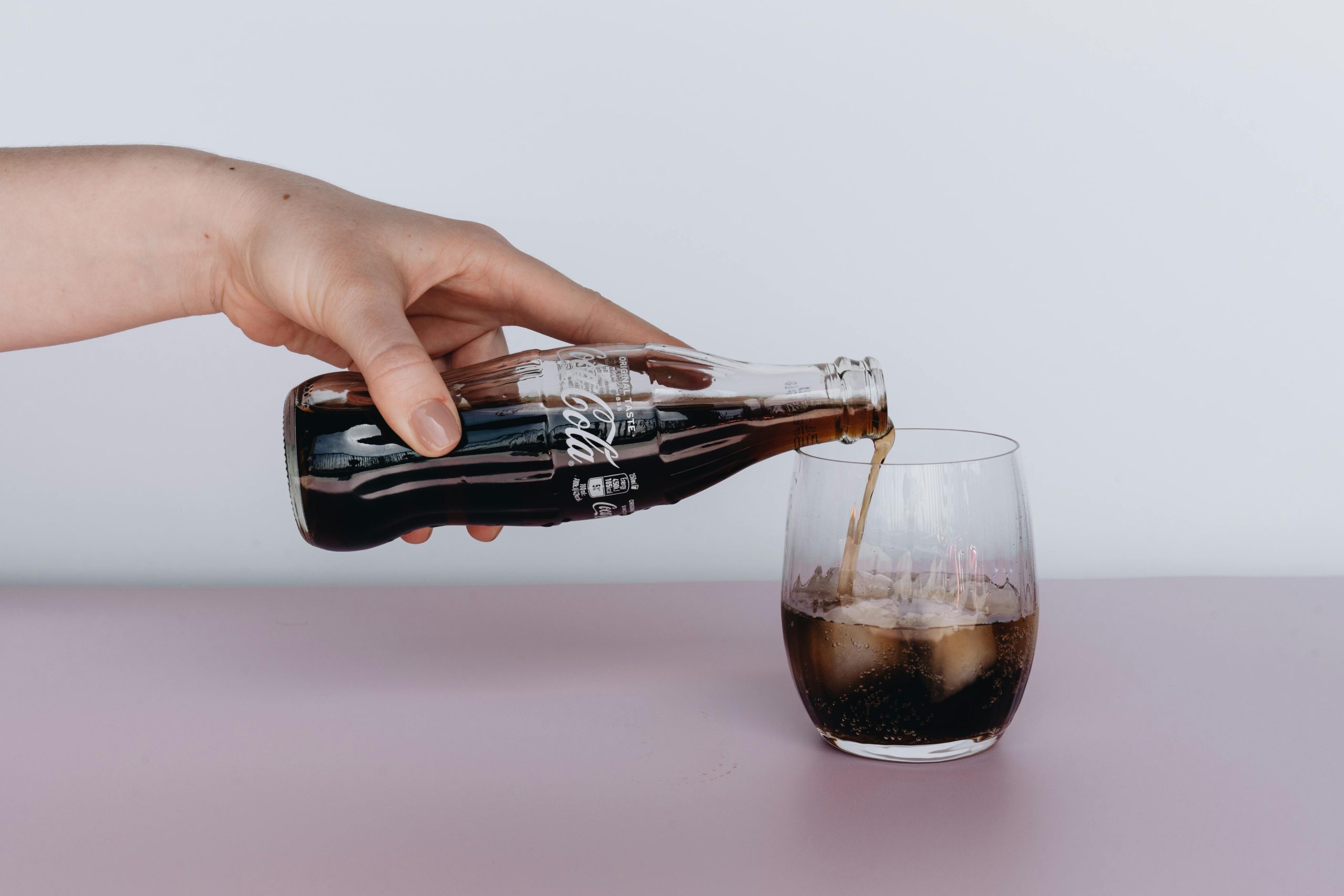
Water makes up nearly 90 percent of any soft drink, so it’s no surprise that its quality is critical. McDonald’s treats water with the same care as fine dining restaurants treat wine through rigorous filtration and standardization. Depending on where you are in the world, tap water can vary dramatically in mineral content and taste. Some cities have chlorine-treated supplies that leave a faint disinfectant flavor; others have hard water rich in calcium and magnesium that can interfere with acidity. McDonald’s knows that inconsistency kills brand magic, so every restaurant runs its water through a high-end filtration system designed to strip away these variables.
Food scientist Abby Thiel explains that this process removes chlorine, iron, and other trace elements that can cause off-flavors or discoloration. The filtration creates a kind of blank canvas pure, neutral water that allows the Coca-Cola syrup’s distinct blend of sugars and acids to shine exactly as intended. This is why a Coke from McDonald’s tastes the same whether you’re in Miami or Melbourne. Consistency isn’t just a business principle for the brand; it’s a biochemical commitment.
Temperature again plays a role here. The filtered water isn’t just clean it’s chilled before mixing. This double-cold system (cold syrup + cold water) ensures that the drink hits your cup at the optimal temperature for carbonation and taste. The precision is astonishing: every fountain is calibrated to maintain that balance no matter the climate or location. It’s beverage engineering disguised as fast food service.
The Golden Ratio: Syrup, Ice, and Sweet Science

Here’s where McDonald’s shows true genius. When most restaurants prepare fountain soda, they follow a general ratio one part syrup to about five parts water. But McDonald’s goes further, adjusting that ratio to account for one sneaky variable: melting ice. As your drink sits, the ice inevitably dilutes it, turning an initially perfect soda into a weak imitation. McDonald’s counteracts this by using a slightly higher syrup concentration from the start. That way, as the ice melts, the flavor remains balanced from first sip to last.
It sounds simple, but it’s the product of detailed experimentation. Coca-Cola and McDonald’s technicians work together to determine the precise syrup-to-water ratio that accounts for different climates, ice sizes, and serving conditions. A Coke poured in Arizona heat needs a slightly different ratio than one served in Norway. This calibration ensures that every McDonald’s Coke tastes identically rich and sweet worldwide a consistency so reliable that it’s become a cornerstone of the brand’s global appeal.
Even the way McDonald’s dispenses the soda matters. The syrup and carbonated water are mixed right at the nozzle, not beforehand. This on-demand mixing keeps the carbonation intact and guarantees the freshest possible fizz. Bottled and canned sodas, by contrast, are mixed and sealed weeks before you open them. By then, the carbon dioxide has already begun to escape, dulling that first-sip sparkle. McDonald’s system resets that clock every single pour.
The Straw That Rules Them All

Of all the subtle design decisions behind McDonald’s Coke, perhaps the most unexpectedly brilliant is the straw. McDonald’s straws are slightly wider than standard ones by about 0.02 inches a difference so small you wouldn’t notice unless you compared them side by side. But that extra width changes how you experience the drink. A wider straw delivers more liquid and carbonation to your tongue at once, hitting more taste buds and amplifying both flavor and fizz.
From a sensory standpoint, this wider flow intensifies the cold shock and the fizzy sting, creating a fuller, more satisfying experience. McDonald’s even admitted that the straws were designed this way “so all that Coke taste can hit your taste buds.” It’s a playful piece of design that taps directly into human perception our brains equate greater mouthfeel with greater flavor. By engineering the way you sip, McDonald’s effectively engineers the way you feel.
There’s a psychological twist too. The act of sipping through that striped straw is deeply tied to nostalgia. For many, it recalls the comfort of childhood meals or late-night drives under golden arches. The taste is enhanced by memory, familiarity, and even ritual but without the science, that nostalgia wouldn’t be nearly as satisfying. The straw is the final, delightful flourish in an orchestra of engineering.
The Obsession Behind the Golden Arches
McDonald’s didn’t stumble upon this perfection by accident. Their partnership with Coca-Cola dates back to 1955, when Ray Kroc, McDonald’s pioneering franchise builder, struck a deal with Coca-Cola’s fountain division. Since then, the two companies have grown symbiotically, refining every step of the beverage delivery process. From syrup formulation to fountain calibration, each element has been tested, retested, and fine-tuned across decades.
This attention to detail might seem excessive for a fast-food chain, but it’s part of what makes McDonald’s a global phenomenon. The company’s approach to its Coke mirrors the philosophy behind its fries or its Big Mac sauce: absolute control over variables. Whether you’re drinking a Coke in Tokyo, Toronto, or Texas, the sensory experience is the same a feat of logistical and scientific precision that few brands on Earth can match.
And it’s not just about flavor. The McDonald’s Coke experience has become a cultural icon, a kind of fizzy comfort ritual for millions