

Giving the internet the power to name something has a history of producing results that nobody involved can quite control. From the infamous Boaty McBoatface controversy to bizarre online naming competitions, people have repeatedly demonstrated that a public vote can take an unexpected turn. Now, a proposed NASA mission heading to one of the Solar System‘s most distant planets has become the latest target of the internet’s unusual sense of humor, and some of the suggestions are difficult to read without laughing.
The whole thing began when an unofficial space-focused Twitter account invited people to suggest names for a proposed Uranus Orbiter and Probe mission. What followed was a collection of suggestions ranging from surprisingly clever scientific acronyms to names that would probably make an official NASA announcement rather awkward. Operation Butt Plug, Seymore Butts, Suppository and Proby McProbeface all made appearances. However, among the obvious jokes were also some genuinely thoughtful suggestions inspired by mythology, giving the unusual online naming exercise a surprisingly interesting twist.
An Unofficial NASA Naming Campaign Quickly Got Out Of Hand
The unusual episode began when an account called Ice Giant Missions asked its followers what they would name a proposed spacecraft designed to explore Uranus. The account shared an official-looking promotional poster alongside its question, which led some people to believe NASA itself was organizing a public naming competition. Given the scientific importance of the proposed mission, the idea of allowing an internet vote to determine its official name was already an amusing prospect.
There was just one problem with that assumption. Ice Giant Missions was not an official NASA account, and the agency had not announced any public competition to name the spacecraft. The proposed Uranus Orbiter and Probe mission was still at the planning stage, making an official naming campaign particularly unlikely at that point. Nevertheless, the question had already reached an audience that clearly understood the comedic possibilities of sending a spacecraft to Uranus.
The account’s request was simple enough to attract plenty of attention. Followers were invited to share their own ideas, and the responses quickly demonstrated that not everybody was approaching the question with scientific seriousness. Some people attempted to create names that sounded like legitimate space missions, while others seemed determined to see just how ridiculous they could make the final result.
The distinction between an unofficial online poll and an actual NASA competition is important. None of the suggestions had any official standing, and there was no indication that the agency would use the winning internet suggestion. Still, the episode offered a familiar lesson about public naming exercises: once the internet gets involved, the original purpose can quickly become secondary to the entertainment.
Some Of The Proposed Names Were Almost Too Ridiculous
A particularly entertaining part of the exercise was the effort some participants made to turn their jokes into convincing scientific acronyms. NASA has a long tradition of giving missions carefully constructed names and abbreviations, so contributors clearly decided to use that approach to their advantage. The results were creative enough to sound like something that might appear on a presentation slide, provided nobody stopped to examine what the letters actually meant.
Two suggestions stood out from the collection. One was A.N.U.S, expanded as Advanced New Uranus Space Mission. Another was R.E.C.T.U.M, which stood for Research Education Charging Towards Uranus Mission. Both attempted to imitate the formal naming conventions associated with space exploration while making absolutely no effort to avoid the obvious jokes.
Other suggestions were considerably less subtle. Among the names shared were:
- Operation Butt Plug: A suggestion that made its intentions fairly obvious from the beginning.
- Seymore Butts: A familiar comedy-style name that fitted the theme perfectly.
- Suppository: Perhaps one of the more unusual suggestions for a spacecraft expected to travel billions of miles.
- Pegassus: A playful alternative that borrowed from the familiar mythological name.
- Proby McProbeface: A clear reference to the internet’s previous obsession with giving important projects ridiculous names.
The suggestions showed how quickly a straightforward question could turn into a competition for the funniest possible answer. Some contributors clearly wanted their ideas to sound scientifically convincing, while others were perfectly happy to abandon any attempt at seriousness. The resulting collection was exactly the kind of list that would make an ordinary NASA mission announcement considerably more entertaining.

Boaty McBoatface Had Already Shown What Can Happen
The Uranus naming exercise also brought back memories of one of the internet’s most famous naming controversies. In 2016, the British public was invited to suggest a name for a new polar research ship, and an online poll quickly attracted widespread attention. Among the suggestions was Boaty McBoatface, a name that became so popular it eventually overshadowed the original purpose of the competition.
The name received overwhelming support from online voters, leaving organizers with an awkward decision. The research vessel eventually received the official name RRS Sir David Attenborough, but Boaty McBoatface was not completely abandoned. Instead, the name was given to one of the ship’s remotely operated underwater vehicles, allowing the public’s favorite suggestion to become part of the project after all.
That incident demonstrated how difficult it can be to predict what happens when a large online audience is invited to name something important. A competition might begin with serious intentions, but the opportunity to submit a funny suggestion can quickly become more attractive than following the original brief. The more unusual the subject, the greater the temptation to come up with something memorable.
The proposed Uranus mission had an obvious disadvantage from the beginning. Its destination already has a name that attracts jokes in everyday conversation, making it almost impossible to expect an entirely serious response from everyone. With Boaty McBoatface still fresh in internet memory, Proby McProbeface felt like a natural addition to the growing collection of questionable naming suggestions.
The Real Mission Could Answer Some Major Questions About Uranus
Behind all the jokes is a proposed scientific mission that could significantly improve what researchers know about one of the least explored planets in our Solar System. Uranus is classified as an ice giant, a type of planet with a different composition and internal structure from the gas giants Jupiter and Saturn. It has an unusual atmosphere, a complex magnetic field and a collection of moons and rings that scientists still want to understand in greater detail.
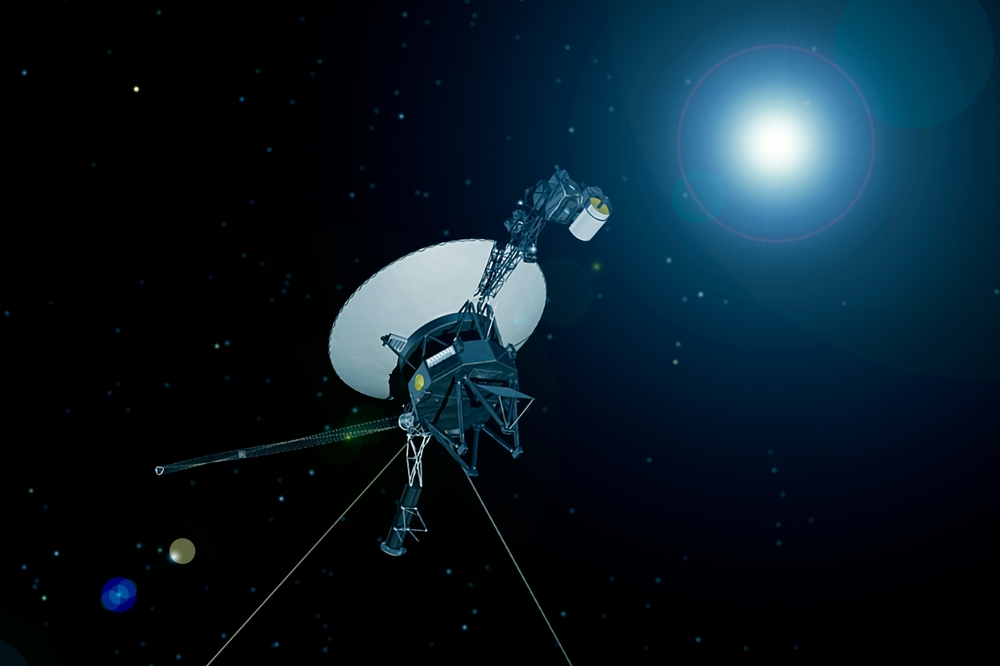
One of the most fascinating characteristics of Uranus is its extreme axial tilt. The planet rotates almost on its side, producing unusual seasonal patterns that differ dramatically from those experienced on Earth. Its atmosphere also contains hydrogen, helium and methane, with methane contributing to the planet’s distinctive blue-green appearance. Despite these interesting features, much of what researchers know about Uranus comes from limited observations and the brief encounter made by Voyager 2 in 1986.
The proposed Uranus Orbiter and Probe mission would provide a much closer examination of the planet. Rather than simply passing by, the spacecraft would spend several years orbiting Uranus while studying its atmosphere, interior, magnetic environment and surrounding moons. A separate atmospheric probe could descend into the planet’s atmosphere, collecting measurements that would help researchers understand its composition and physical conditions.
The scientific objectives would include several major areas of investigation:
- Planetary formation: Studying Uranus could help scientists understand how ice giants developed and how planets formed throughout the Solar System.
- Atmospheric composition: Measurements could reveal more about the gases and chemical processes operating within the planet’s atmosphere.
- Magnetic field: Uranus has an unusually complex magnetic environment that researchers want to examine more closely.
- Rings and moons: Detailed observations could reveal how these surrounding objects formed and evolved.
- Planetary interiors: Studying the planet’s internal structure could help explain how its unusual physical characteristics developed.
These questions make Uranus an important destination for planetary science. Ice giants are also believed to be common among the planets discovered around other stars, meaning a better understanding of Uranus could help scientists interpret distant planetary systems.
Getting A Spacecraft To Uranus Is No Simple Undertaking
One reason the proposed mission is such a significant scientific project is the enormous distance involved. Uranus is approximately 1.8 billion miles from the Sun, and a spacecraft traveling there would need years to reach its destination. Designing a mission capable of entering orbit around the planet requires careful planning involving propulsion, trajectory calculations, spacecraft equipment and communication systems.
The proposed mission concept has examined launch opportunities in the early 2030s, followed by a lengthy journey through the outer Solar System. Depending on the final design and launch opportunity, reaching Uranus could take more than a decade. Once there, the spacecraft would need to operate reliably in an environment that is extremely far from Earth, where receiving instructions and transmitting scientific information would involve substantial delays.
An atmospheric probe would introduce another layer of engineering difficulty. It would need to survive the conditions encountered while descending through the planet’s atmosphere and transmit measurements before reaching the limits of its operating capability. The main orbiter would also need to carry enough fuel and equipment to perform its scientific observations over an extended period.
This explains why the project requires years of research and preparation before a spacecraft can even begin its journey. Every component must be designed around the mission’s scientific objectives, and even small engineering decisions can influence the amount of information eventually collected. Compared with the simplicity of suggesting a funny name online, getting a working probe to Uranus is a considerably more demanding challenge.
The More Serious Suggestions Drew Inspiration From Mythology
Although the funniest suggestions attracted plenty of attention, the naming exercise also produced some alternatives that sounded far more suitable for an official space mission. Among the ideas highlighted by Ice Giant Missions were Odin and Boreas, both of which have connections to mythology and the cold, distant world that the proposed spacecraft would investigate.
Odin is one of the most important figures in Norse mythology. Associated with wisdom, knowledge and leadership, he is the ruler of Asgard and a central figure in stories involving the gods and their conflicts with the giants. The suggestion offered a connection to the mythological themes often used when naming astronomical objects and scientific missions.
Boreas was another interesting proposal. In Greek mythology, Boreas represents the north wind and is associated with winter and cold weather. The name seemed particularly appropriate for a spacecraft heading toward a distant ice giant, where extremely low temperatures and unusual atmospheric conditions form part of the scientific challenge.
Both suggestions demonstrated that a mission name could have a meaningful connection to its destination without relying on the obvious jokes. Mythological references have long played a role in astronomy, with planets, moons and other celestial objects carrying names drawn from ancient traditions. A name such as Boreas or Odin would also give the spacecraft an identity that could remain appropriate throughout years of scientific research.
Of course, none of these suggestions became official simply because they appeared in the online discussion. The exercise remained unofficial, leaving NASA free to follow its own naming procedures if the mission progressed toward development. Still, the more thoughtful entries provided an interesting contrast to the increasingly ridiculous alternatives circulating alongside them.
Uranus May Finally Get The Scientific Attention It Deserves
The online naming episode was entertaining, but the proposed mission represents something much more significant for planetary exploration. Uranus remains one of the least studied planets in our Solar System, despite offering scientists an opportunity to investigate a type of world that appears to be common beyond our own planetary neighborhood. A dedicated orbiter and atmospheric probe could provide years of observations that would fundamentally improve our understanding of ice giants.
The internet may have delivered Operation Butt Plug, R.E.C.T.U.M and Proby McProbeface, but the spacecraft’s eventual identity will depend on official decisions and the progress of the mission itself. For now, the funniest suggestions can remain part of an unofficial naming exercise, while scientists continue working toward a much more serious goal: finally getting a closer look at Uranus.