
Your cart is currently empty!
The US Government Just Published Its UFO Files Online. Anyone Can Read Them. Here’s What They Say.
On the morning of May 8, 2026, a government website went live that millions of Americans had been waiting years to see. No login required, no security clearance, no Freedom of Information Act request. Just a public URL, a retro aesthetic built around black-and-white military imagery and typewriter-style font, and 162 files that the United States government had decided, after decades of classification, that the public was ready to read.
Contents
show
Whether what those files contain justifies the wait is a question that depends entirely on what you were hoping to find. For some, any release from a government that has spent eighty years deflecting questions about unexplained aerial phenomena is a meaningful step. For others, the gap between what Donald Trump has been promising and what arrived on Friday morning is already telling its own story.
What is not in dispute is that something has changed. A president has put his name on a formal declassification program, multiple agencies are coordinating a rolling release of UAP materials, and whatever comes next, the official posture of the United States government toward this subject has shifted in ways that have no modern precedent.
Months of Buildup, One February Directive
To understand what happened on May 8, it helps to go back to February, when Trump posted a directive on Truth Social ordering the Pentagon and relevant agencies to begin identifying and releasing government records related to, in his words, “alien and extraterrestrial life, unidentified aerial phenomena (UAP), and unidentified flying objects (UFOs), and any other information connected to these highly complex, but extremely interesting and important, matters.”
That directive came just days after former President Barack Obama told a podcast audience that aliens are real, a comment that briefly ignited public conversation before Obama clarified that he had seen no evidence of extraterrestrial contact during his presidency and had meant only that the statistical odds of life existing somewhere in the universe seemed reasonable.
Trump, characteristically, seized the moment. Over the months that followed, he teased the forthcoming release at a series of public events, telling a Turning Point USA crowd in Phoenix that first releases would begin “very, very soon” and encouraging the audience to draw their own conclusions. At a White House event celebrating NASA astronauts in late April, he offered a similar tease, suggesting some of what was coming would be “very interesting to people.” He seemed to relish the role of the president who finally opens the vault, framing the releases in the same language of transparency he had used when ordering the declassification of JFK assassination records earlier in his term.
Those JFK files, it is worth noting, revealed little that was not already known. The pattern has not gone unnoticed by people who follow this subject closely.
What PURSUE Is and How It Works

Rather than a single document dump, the Trump administration built a formal interagency program around the release. Operating under the acronym PURSUE, or the Presidential Unsealing and Reporting System for UAP Encounters, the effort coordinates the White House, the Office of the Director of National Intelligence, the Department of Energy, NASA, the FBI, and the Pentagon’s All-domain Anomaly Resolution Office.
All materials are being housed on a dedicated public website at war.gov/UFO, accessible to anyone without restriction. New files will be added in rolling tranches every few weeks, a deliberate structural departure from the data-dump model used for the JFK and Epstein file releases, both of which generated criticism for releasing large volumes of material with little contextual guidance.
Secretary of War Pete Hegseth, Director of National Intelligence Tulsi Gabbard, FBI Director Kash Patel, and NASA Administrator Jared Isaacman all issued statements applauding the release. Isaacman’s framing was perhaps the most measured of the four, positioning NASA’s role as following data wherever it leads and remaining candid about what remains unknown. The Pentagon’s own statement acknowledged that while all files had been reviewed for security purposes, many had not yet been analyzed to resolve the anomalies they document. Members of the public, the statement said, were welcome to draw their own conclusions.
What the First 162 Files Actually Show
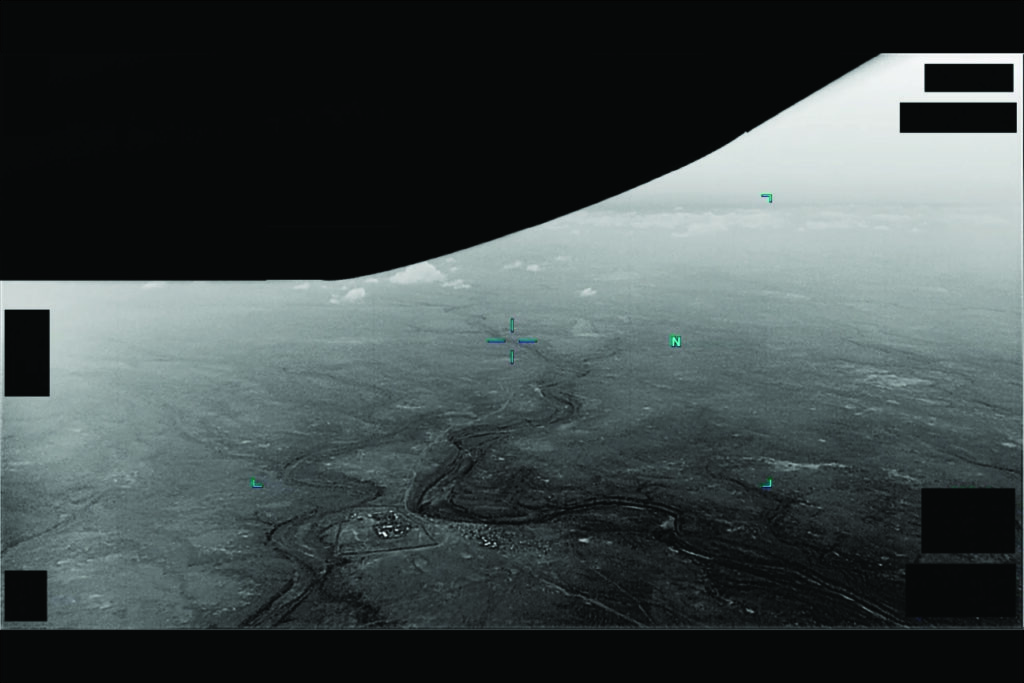
Opening the first release and reading through its contents produces an experience that is neither as dramatic as the buildup suggested nor as unremarkable as the skeptics predicted. Old State Department cables sit alongside FBI documents and NASA transcripts from crewed space missions. Some materials are decades old. Others are recent.
Among the more discussed items is an FBI interview with a drone pilot who, in September 2023, reported an encounter with a linear object emitting an unusually intense light while on a flight over an undisclosed location in the United States.
“The object was visible for five to ten seconds and then the light went out and the object vanished,” according to the FBI interview.
Whether that account represents something genuinely unexplained or something with a mundane technological explanation is precisely the kind of question the release does not answer. That ambiguity runs through much of the first batch.
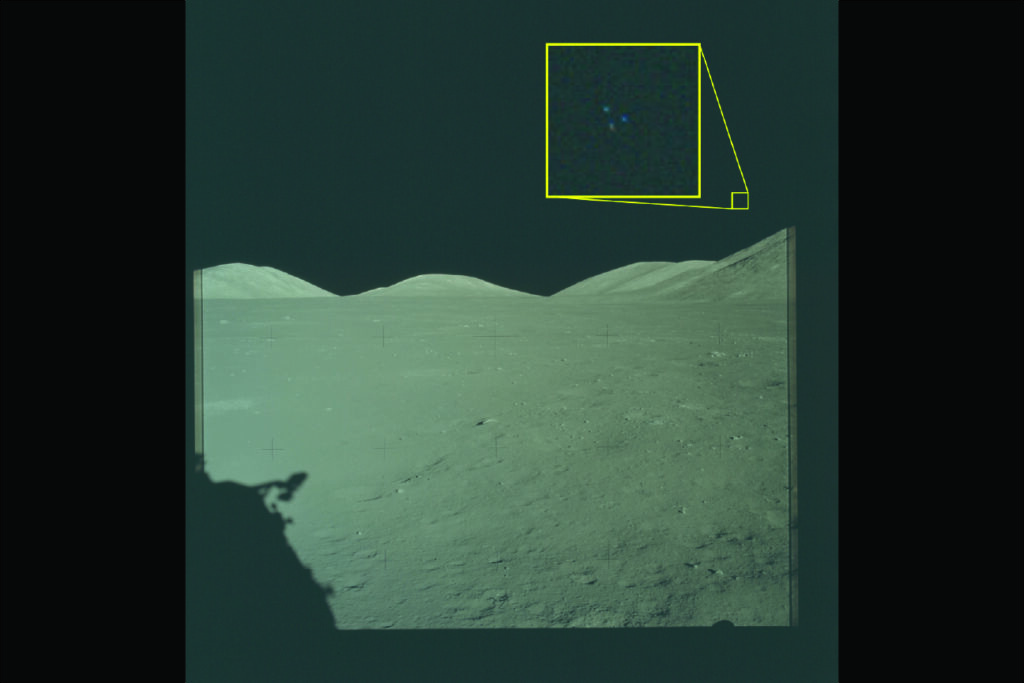
A NASA photograph from the Apollo 17 mission in 1972, included in the release, shows three dots arranged in a triangular formation against a dark background. Pentagon officials noted in an accompanying caption that there is no consensus about the nature of what appears in the image, and that a preliminary new analysis suggests it could be a physical object. What kind of physical object, under what circumstances, remains unresolved?
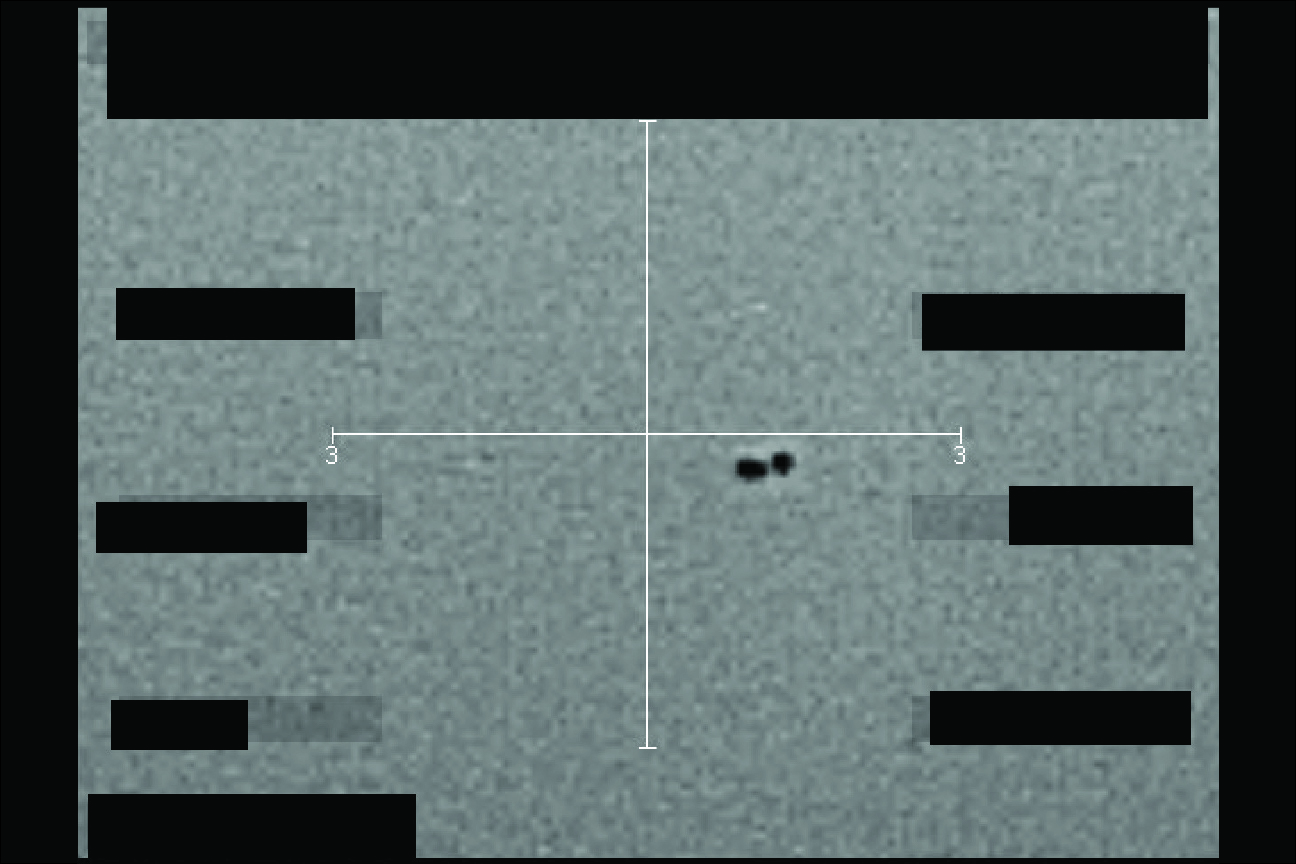
An infrared still image captured over the western United States in December 2025, submitted by the US Indo-Pacific Command, is among the more recent materials. Multiple short video clips from military infrared sensors, submitted by various US regional commands, round out a first release that feels more like an opening filing than a final answer.
What Is Still Being Withheld
For members of Congress who have pushed hardest on this issue, the first release is notable as much for what it does not contain as for what it does.
Rep. Anna Paulina Luna of Florida, an Air Force veteran who co-chairs the House Oversight Committee’s task force on the declassification of federal secrets, has spent months pressing the Pentagon for 46 specific UAP videos identified by whistleblowers, videos with labels like “Spherical UAP in clouds” and other descriptors that suggest classified footage of unresolved aerial encounters. Luna’s March letter to Hegseth demanding those videos came and went without a response. She has previously told podcaster Joe Rogan that she has seen evidence of what she described as interdimensional beings, a claim that sits well outside mainstream scientific framing but reflects the conviction with which she has pursued this issue.
Following Friday’s release, Luna indicated on social media that the 46 videos are expected to appear in a later tranche. Rep. Tim Burchett of Tennessee, who confirmed the Friday release timeline a day in advance after attending a West Wing meeting on the subject, offered a note of patience alongside his praise for the administration’s follow-through. “I would like to remind people that transparency won’t all happen at once, it will take some time.”
Vice President JD Vance has been among the most publicly committed figures in the administration on this subject, describing himself as obsessed with UFO files and pledging to investigate Area 51 before his term ends. Invoking his Christian faith, Vance has suggested that some reported alien sightings may represent spiritual phenomena rather than extraterrestrial ones, a framing that has drawn both support and bewilderment depending on the audience.
The Experts Who Are Not Holding Their Breath
Not everyone watching Friday’s release arrived with enthusiasm. Sean Kirkpatrick, a physicist and former career intelligence officer who served as the first director of the All-domain Anomaly Resolution Office until 2023, has consistently pushed back on the expectation that any significant revelations are coming. Kirkpatrick told reporters ahead of the release that Trump’s promises amounted to what he called a shiny object designed to distract from the administration’s ongoing military engagement with Iran.
More pointedly, he addressed the question that sits at the center of public interest around these files. “Readers should not get their hopes up that there’s going to be some document with photos, interviewing the aliens when they came down. Because that just doesn’t exist.”
Kirkpatrick spent years reviewing the government’s actual UAP holdings and concluded that the most viral UAP footage, including pill-shaped objects appearing to move at extraordinary speeds in infrared military footage, has explanations rooted in how modern military cameras work. Thermal cameras capture hot objects like jet engines in elongated blooms that can produce the appearance of anomalous shapes and movements when viewed without technical context.
Greg Eghigian, a professor at Pennsylvania State University who wrote a book on the history of UFO sightings and the public fascination surrounding them, offered a broader caution. For the community of people who have followed this subject most closely, he noted, the gap between promised revelations and delivered ones has repeated itself often enough that disappointment is nearly built into the experience regardless of what any given release contains.
A Subject With Deep Roots and a Cultural Moment
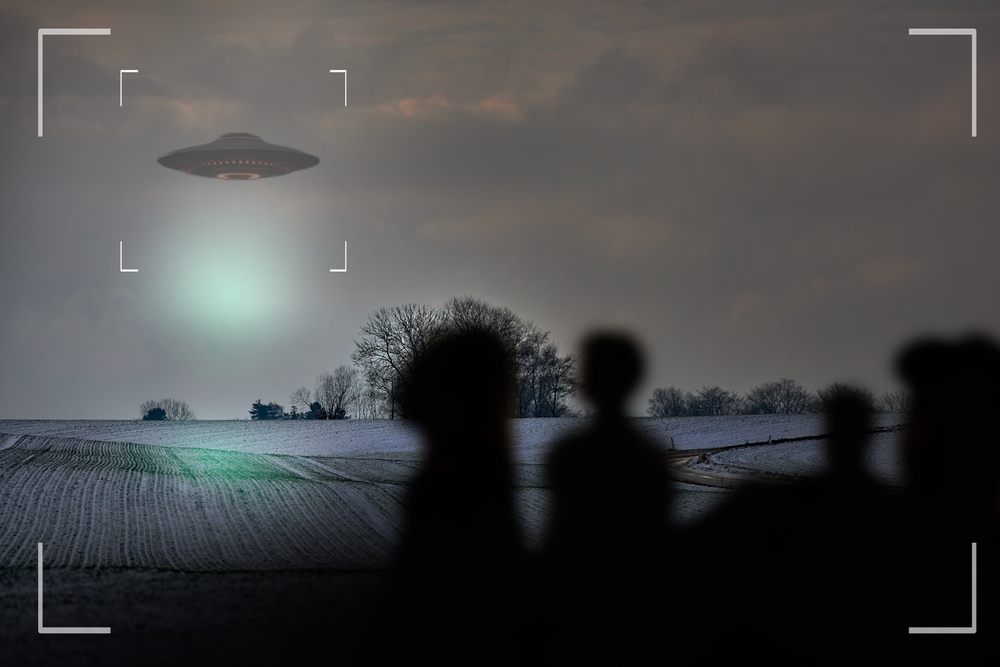
What makes the current moment different from previous cycles of UFO disclosure enthusiasm is partly the scale of institutional involvement and partly the cultural timing. Steven Spielberg has a film called Disclosure Day in production. Obama’s offhand podcast comment reignited mainstream conversation about the subject in February. A sitting vice president is publicly describing himself as obsessed with government UFO files and has pledged to visit Area 51.
Trump is not the first president to be drawn to the subject. Bill Clinton ordered a review of the 1947 Roswell Incident around its fiftieth anniversary. Jimmy Carter and Ronald Reagan both claimed to have personally witnessed unexplained aerial objects before taking office. The US government has been conducting formal UFO investigations since the 1940s, motivated in part by Cold War concerns about whether unidentified aircraft might represent advanced technology from adversary nations.
What no investigation, across eight decades of government inquiry, has produced is confirmed evidence of off-world technology or contact with extraterrestrial intelligence. The Pentagon’s own 2024 report, the first formal public product of the All-domain Anomaly Resolution Office, documented hundreds of new UAP incidents and found no such evidence. A second report covering more recent sightings is expected to follow.
Friday’s release is the beginning of a process that will continue in tranches for an indeterminate period. What those future releases contain, whether the 46 congressional-demanded videos arrive, and whether anything in the accumulated material moves the needle beyond where eight decades of investigation have left it, are questions that will not be answered today.
alien life US government, Anna Paulina Luna UAP, Apollo 17 UFO photograph, extraterrestrial life files, FBI UFO documents, JD Vance Area 51, Pentagon UAP files, Pete Hegseth UFO, PURSUE program, Sean Kirkpatrick AARO, Tim Burchett UFO, Trump UFO disclosure, UAP declassified, UAP transparency, UFO declassification, UFO files release 2026, UFO news 2026, war.gov UFO