
Your cart is currently empty!
This Cow Learned How To Use a Broom and Scientists Are Calling It Historic

A cow living in the Austrian Alps has become the center of a scientific breakthrough after researchers confirmed she can use tools in a way never officially documented in cattle before. The 13-year-old cow, named Veronika, stunned scientists by picking up a wooden broom with her tongue and using it to scratch different parts of her body with remarkable precision. What first looked like a funny farmyard habit quickly turned into a serious scientific discovery after researchers realized the animal was deliberately changing how she used the broom depending on where she needed relief.
Contents
show
The discovery has now sparked wider conversations about animal intelligence, particularly in livestock animals that humans often dismiss as unintelligent. Scientists studying Veronika say her behavior showed signs of flexible tool use, something considered extremely rare in the animal kingdom. Even more surprising, researchers noticed the cow appeared to understand that different parts of the broom served different purposes. According to the team behind the study, that level of behavior has previously only been documented in humans and chimpanzees.
A cow named Veronika shocked scientists with a new skill — proving they’re a lot smarter than we thought: ‘Not accidental’ https://t.co/HRExqFElG9 pic.twitter.com/ynhJT2iuPZ
— New York Post (@nypost) January 21, 2026
Veronika Lives a Life Most Cows Never Experience
Veronika lives in Nötsch im Gailtal, a scenic town in Austria surrounded by mountains, lakes, and open countryside. Unlike most cattle, she has never been treated as a production animal. Her owner, baker and farmer Witgar Wiegele, raised her more like a family pet than livestock, allowing her to roam freely across fields and around the family property. Researchers believe that an unusual environment may explain why Veronika developed behaviors rarely seen in farm animals.
Alice Auersperg, a cognitive biologist at the University of Veterinary Medicine Vienna, said society has long underestimated cows and other livestock animals. “We use them as a synonym for silliness and stupidity,” she said while discussing the study. Researchers became interested in Veronika after a filmmaker scouting locations captured footage of the cow scratching herself with an old rake. The clip immediately stood out because the behavior looked deliberate rather than random.
Auersperg and her colleague, Antonio Osuna-Mascaró, traveled five hours to meet Veronika and observe her behavior firsthand. What they found surprised them almost immediately. According to the researchers, Veronika greeted her owner loudly and comfortably interacted with people around her. “When Witgar is around, she greets him with a loud moo,” Osuna-Mascaró explained.
The researchers also learned that Veronika had reportedly been using sticks to scratch herself for nearly a decade. Wiegele told them he never trained her to do it. Over the years, he noticed her technique slowly becoming more advanced. Instead of simply rubbing against objects, she learned how to manipulate sticks, rakes, and broom handles with her tongue.
Are cows evolving? These animals turned out to be smarter than commonly believed
— NEXTA (@nexta_tv) January 20, 2026
In Austria, the first scientifically documented case has been recorded of a cow learning to use a tool.
A cow named Veronika deliberately uses a brush to scratch herself.
According to The… pic.twitter.com/pKNG9ViVLJ
Scientists Wanted To Test Whether It Counted as Real Tool Use
Animal behavior researchers often receive strange claims from pet owners who believe their animals are doing something intelligent. Most examples fail scientific standards because the behavior lacks clear intention or control. Auersperg explained that researchers have to be careful when labeling something as tool use because many behaviors only appear intelligent on the surface.
“One paper claimed that when dogs chew on sticks, they are using them as tools to brush their teeth,” Auersperg said. “They’re probably just playing.” Researchers believed Veronika’s behavior looked fundamentally different because she appeared to intentionally manipulate objects to achieve a specific goal.
Scientists generally use several criteria when deciding whether an animal is using a tool. The object must function as an extension of the animal’s body, help accomplish something difficult to do naturally, and be deliberately controlled or oriented for a purpose. According to the researchers, Veronika satisfied every requirement during testing.
To study her abilities more carefully, researchers introduced a heavy-duty deck broom with stiff bristles on one side and a smooth wooden handle on the other. The scientists believed the broom would allow them to observe whether Veronika understood the difference between the two ends.
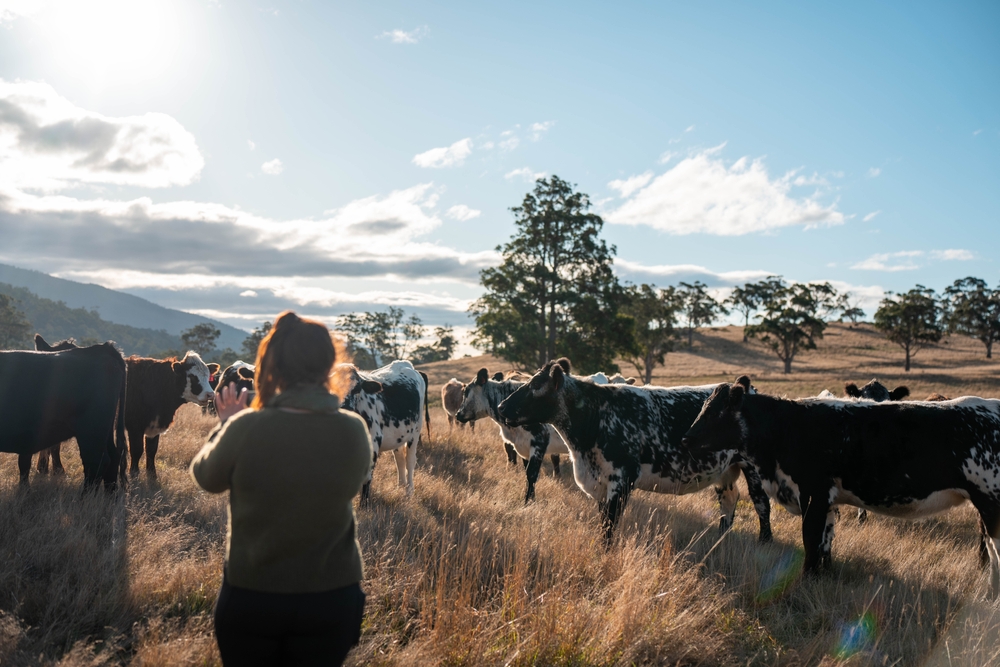
The Cow Completed 70 Trials Using the Broom
During the experiments, researchers repeatedly placed the broom on the ground in front of Veronika across multiple days. The cow consistently wrapped her long tongue around the handle, secured it with her teeth, and lifted the object into position against her body. Over 70 trials, Veronika used the broom to scratch herself 76 different times.
Researchers believed horseflies buzzing around during the summer likely motivated the behavior. According to Osuna-Mascaró, Veronika appeared highly focused whenever the broom was introduced. “So for her, using this tool to scratch herself was something that she was really, really looking for,” he explained.
At first, scientists assumed Veronika would mainly use the bristled end because it was better suited for scratching rough areas like her back. That prediction proved correct in many cases. She repeatedly rubbed the rough bristles against harder sections of her body where stronger scratching pressure was useful.
Then researchers noticed something unexpected happening during several trials. Veronika occasionally flipped the broom around and pressed the smooth wooden handle against softer parts of her body, including her udder and underside. Scientists originally believed she was making mistakes while repositioning the object.
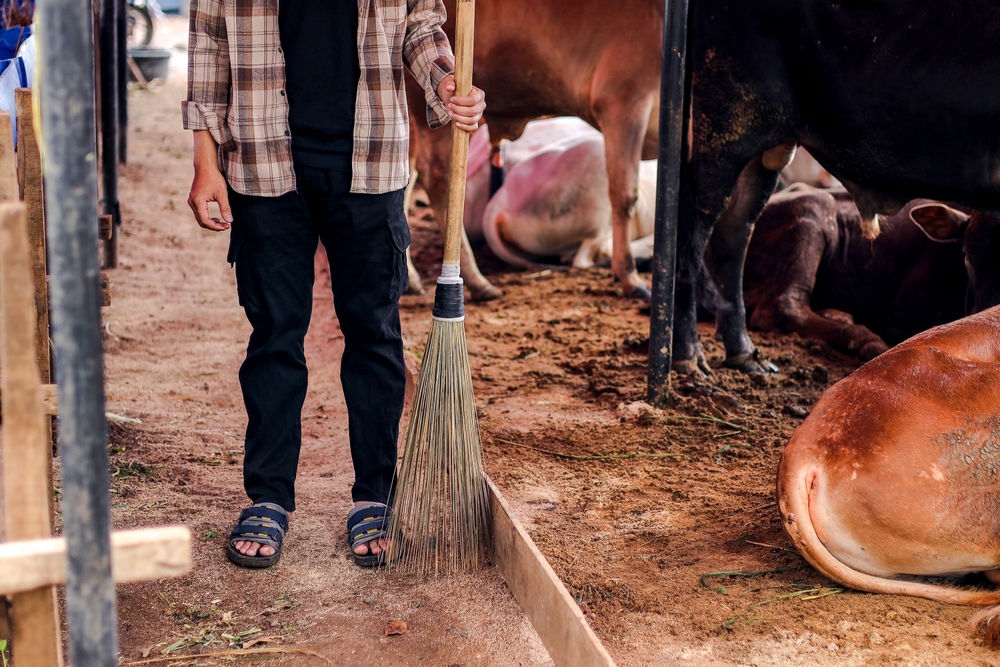
Researchers Realized the Behavior Was Intentional
As the experiments continued, the pattern became impossible to ignore. Veronika consistently used the rough bristles on tougher skin while choosing the smooth wooden handle for more sensitive areas. Researchers realized the behavior was not random at all.
“We thought at the beginning that perhaps Veronika was not careful enough when choosing which end to use against her body,” Osuna-Mascaró said. Over time, however, the researchers understood that the cow appeared fully aware of the difference between the broom’s two ends.
“She was using a way more careful approach,” Osuna-Mascaró explained. “It wasn’t an error. It was a meaningful use of the handle end of the tool.” Scientists say that the level of flexible tool use is exceptionally uncommon in animals.
The discovery became even more surprising when researchers compared Veronika’s actions with known examples of advanced animal cognition. Auersperg explained that chimpanzees have demonstrated similar behavior in the wild by using different ends of sticks for different tasks while hunting termites. According to the research team, flexible tool use involving multiple functions has previously only been clearly documented in humans and chimpanzees.
“It’s totally unexpected to see this in cattle,” Auersperg said. That conclusion quickly transformed Veronika from a local curiosity into the subject of an internationally discussed scientific study.
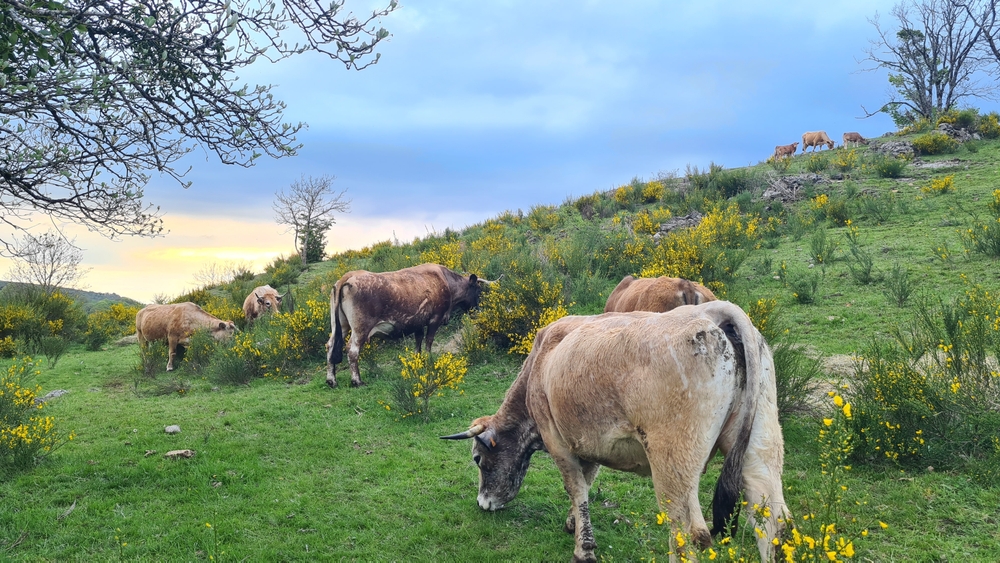
Scientists Say Humans May Have Misjudged Cows for Decades
Researchers studying farm animal cognition believe Veronika’s case could change how people think about livestock intelligence. Christian Nawroth, who studies farm animal cognition at the Research Institute for Farm Animal Biology in Germany, described the findings as highly convincing.
“We know that they have emotions,” Nawroth said, “that they have sophisticated problem-solving behavior.” He added that there is still “this big mismatch of what we anticipate that these animals can do and what they actually do.”
Scientists involved in the study believe one major reason cows appear less intelligent than other animals may be that they rarely receive opportunities to explore or manipulate objects in stimulating environments. Most cattle live in highly controlled spaces where there are few objects available for experimentation or play.
Jan Langbein, another researcher specializing in farm animal behavior, believes the environment may be the key factor. “You can’t become a tool user if there are no tools available,” he explained. Researchers say Veronika’s freedom to explore her surroundings likely played a huge role in the development of her unusual skills.
Auersperg also pushed back against the idea that Veronika is simply an extraordinary outlier. “One thing that makes Veronika different from other cows is perhaps not that she’s, like, the bovine Einstein but that Veronika is being kept as a pet,” she explained. “She has the opportunity to interact with her environment and to learn about her environment, and that is perhaps the greatest difference.”

Researchers Think Other Cows May Be Capable of the Same Thing
After the findings were published in Current Biology, researchers began examining reports of similar behavior in other cattle. Osuna-Mascaró said he found videos online showing cows and bulls appearing to use branches and sticks to scratch themselves in comparable ways.
Some of the animals reportedly belonged to Brahman cattle, a species that diverged from European cattle hundreds of thousands of years ago. Researchers say that detail matters because it suggests the ability may exist much deeper within cattle behavior than previously believed.
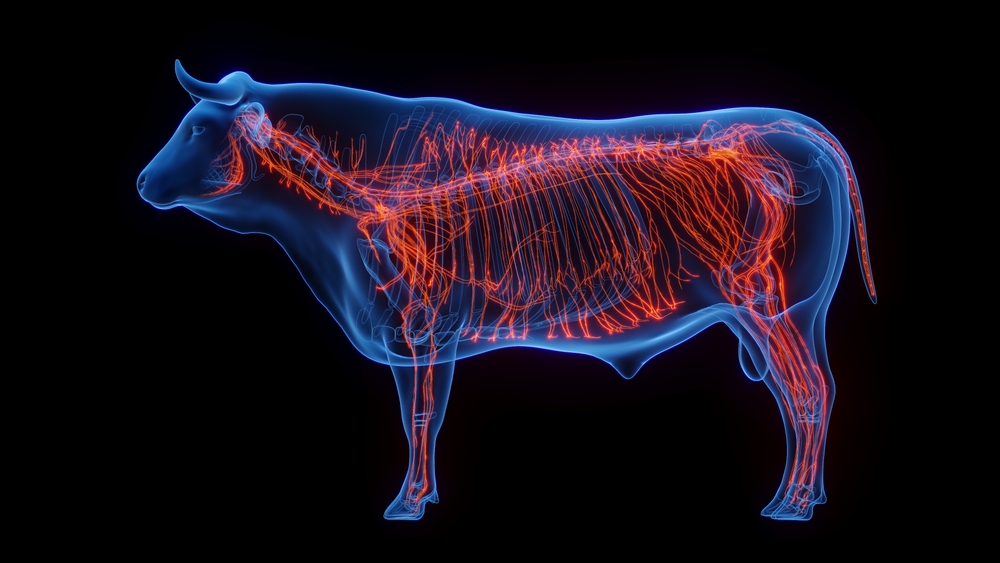
“That suggests that the ability to use tools is something that lies really deep within the nature of these animals,’” Osuna-Mascaró said. Scientists now believe humans may simply have failed to pay close enough attention to cattle intelligence for generations.
Auersperg believes the real surprise is not that a cow can use tools, but that people never seriously considered the possibility before. “We haven’t been looking well enough at these animals,” she said. Humans have lived alongside cattle for thousands of years, yet scientific research into their intelligence remains limited compared with animals like dolphins, apes, or crows.
Veronika is still spending her days peacefully wandering the Austrian countryside and scratching herself whenever horseflies become annoying. The difference now is that scientists around the world are watching a cow with a broom very differently than they did before.
Sources:
- Osuna-Mascaró, A. J., & Auersperg, A. M. I. (2025). Flexible use of a multi-purpose tool by a cow. Current Biology. https://www.cell.com/current-biology/fulltext/S0960-9822(25)01597-0
- Morelle, R. (2025). No bull: Austrian cow has learned to use tools. Science. https://www.science.org/content/article/no-bull-austrian-cow-has-learned-use-tools
- Nature. (2026). Cow tool-use discovery challenges assumptions about livestock intelligence. Nature Briefing. https://www.nature.com/articles/d41586-026-00217-4