
Your cart is currently empty!
This New York School Is Letting a Humanoid Robot Teach Students, But There’s One Rule It Can’t Break
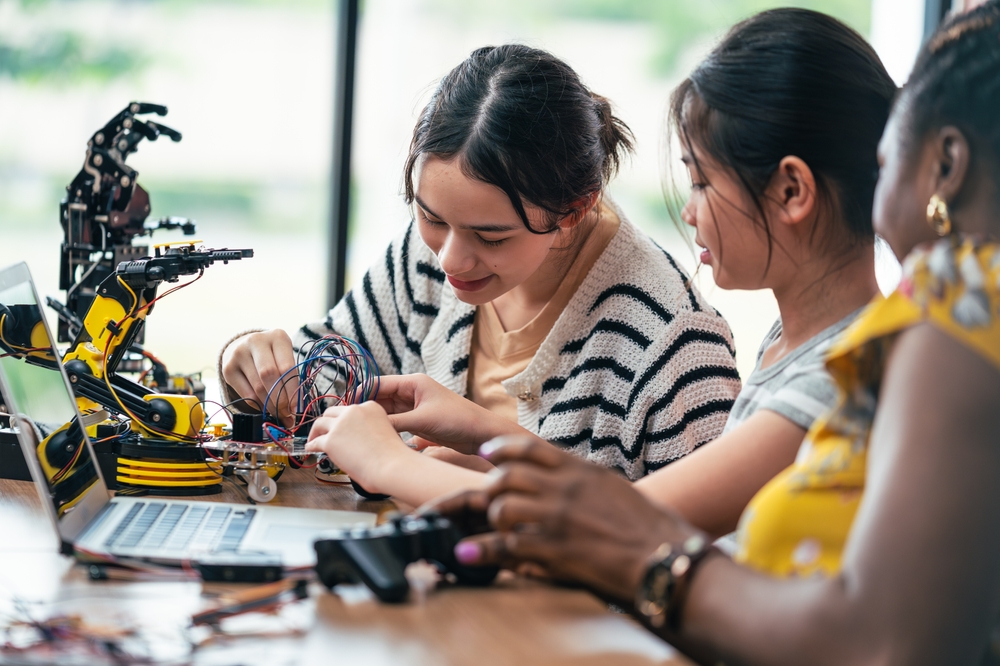
The idea of a robot standing at the front of a classroom has long belonged to science fiction. For decades, futuristic movies imagined students learning from intelligent machines instead of human teachers. That vision now appears to be edging closer to reality after a school district in upstate New York announced plans to introduce a lifelike humanoid robot into its classrooms this fall. While artificial intelligence has rapidly transformed everything from customer service to healthcare, bringing a human-like robot directly into an American school marks a significant moment in how technology could reshape education.
Contents
show
The announcement has already generated plenty of discussion. Some see the move as an innovative way to prepare students for an AI-driven future, while others immediately questioned whether educators could eventually be replaced by machines. School officials have moved quickly to address those concerns, stressing that the robot, named Sally, is designed to support teachers rather than compete with them. Instead of taking over lessons, Sally will help students explore coding, robotics, and artificial intelligence through hands-on interaction, offering a glimpse into what classrooms of the future may look like without removing the human element that schools say remains essential.
A Rural New York School Is Taking a National First
Beginning in September, students at Salamanca High School will become some of the first in the United States to regularly interact with a humanoid robot inside a classroom. The Salamanca City Central School District, located on Seneca Nation territory in western New York, announced that it has partnered with Nevada-based robotics company Realbotix to launch the pilot program.
The district has invested approximately $57,000 in the project, purchasing Sally along with an artificial intelligence teaching assistant platform that students will also be able to access from their laptops. Rather than introducing the technology across every grade level, school leaders have chosen a gradual rollout that focuses on juniors and seniors enrolled in specialized STEM classes.
According to Superintendent Dr. Mark Beehler, the decision reflects a belief that artificial intelligence is becoming too important to ignore. While some schools have chosen to restrict AI tools because of concerns over cheating or misuse, Salamanca believes students should instead learn how to use the technology responsibly before entering college or the workforce.
Speaking about the initiative, Beehler acknowledged that introducing a humanoid robot into a classroom is unfamiliar territory for many parents and educators. “It’s exciting but also a bit nerve wracking,” he said, noting that significant technological changes in education have often been met with skepticism before eventually becoming standard practice.
Meet Sally, The Robot Joining The Classroom
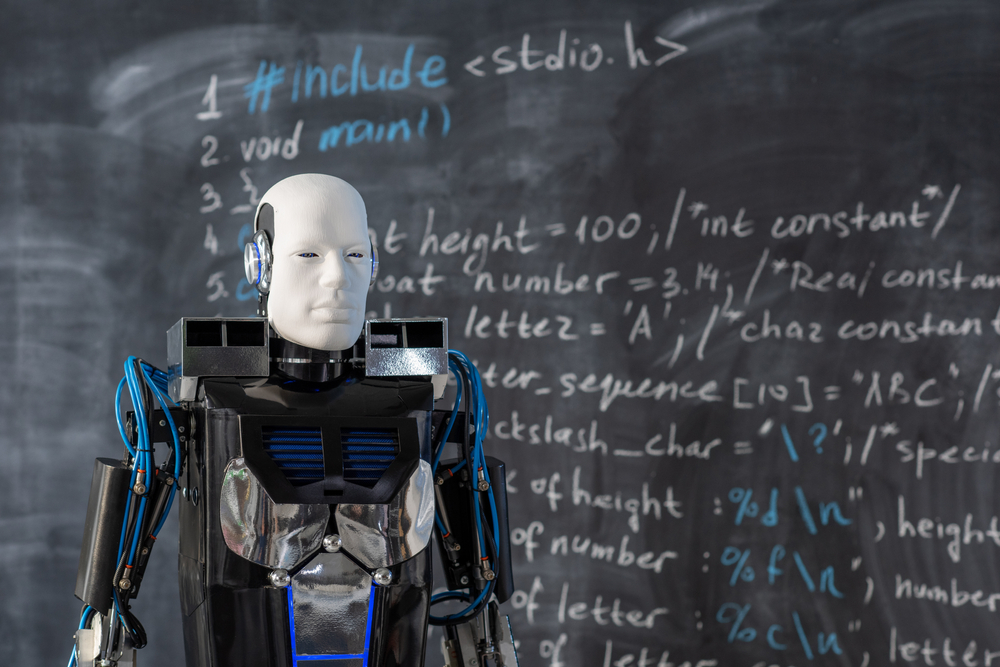
Unlike the industrial robots commonly seen in factories, Sally was designed to resemble a human being as closely as possible. She has long brown hair, realistic latex and silicone skin, expressive facial features, and movable arms and hands that allow her to gesture naturally while interacting with students.
Although her appearance is strikingly lifelike, Sally will remain seated throughout the school day. The robot does not have functioning legs capable of walking around the classroom, meaning teachers will continue leading lessons while Sally operates from a designated location.
School officials also wanted the robot to feel familiar rather than intimidating. At the district’s request, Sally has been programmed with a Western New York accent, a feature Beehler jokingly compared to the speech patterns heard around Buffalo.
“We don’t really hear the accent,” he said with a laugh. “We think it sounds neutral.”
Built Specifically For Education
Sally is far more than a talking robot placed inside a classroom for demonstration purposes. She has been customized specifically for educational settings, allowing students to ask questions, participate in discussions, and receive guidance while working through coding exercises and robotics projects.
Realbotix CEO Andrew Kiguel described the deployment as a milestone for educational technology, saying the Salamanca partnership represents “a landmark moment for both AI and humanoid robotics.” He added that the district is helping pioneer what could eventually become a common classroom tool across STEM education.
What Students Will Actually Use Sally For
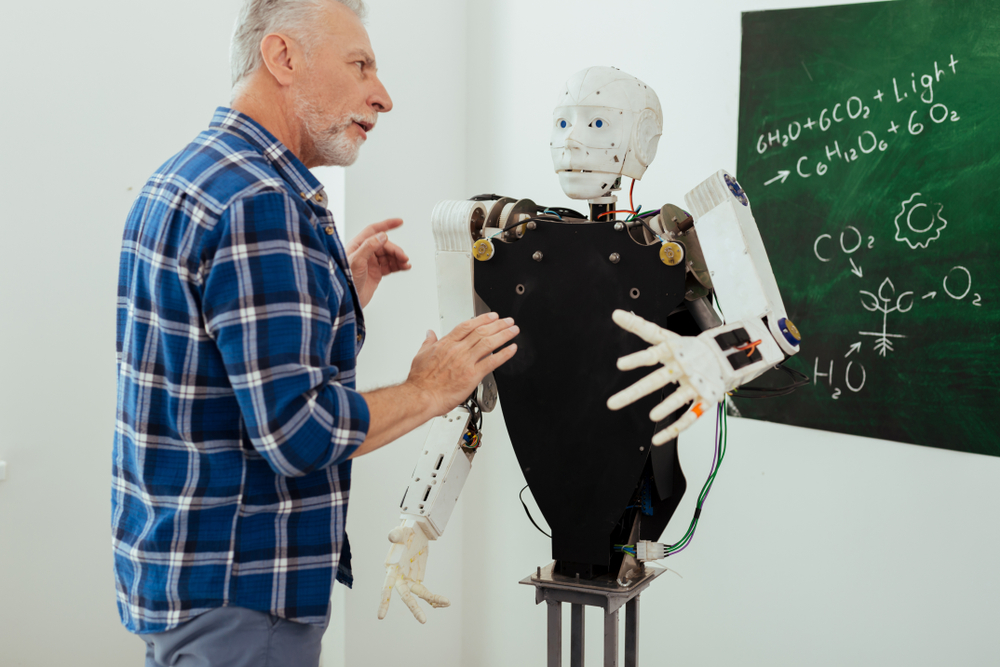
Despite the attention surrounding her human appearance, Sally’s role inside the classroom is deliberately limited. She will initially assist students taking courses focused on coding, robotics, artificial intelligence, and Woz Ed Science, Technology, Engineering, Arts, and Mathematics (STEAM), a curriculum developed by Apple co-founder Steve Wozniak.
Rather than replacing classroom instruction, Sally will reinforce lessons taught by teachers. Students can ask questions during activities, explore programming concepts, and receive prompts that encourage critical thinking while completing assignments. The goal is to expose students to emerging technology by letting them interact directly with it instead of simply reading about it in textbooks.
The district believes this hands-on approach could better prepare graduates for careers where artificial intelligence will likely play an increasingly important role. From software development to engineering and healthcare, AI-powered tools are rapidly becoming part of everyday professional life, making early familiarity a valuable skill.
School administrators also believe introducing students to AI in a supervised classroom environment creates opportunities to discuss ethics, responsible use, and the limitations of artificial intelligence alongside its potential benefits.
School Leaders Say One Thing Is Non-Negotiable
Almost immediately after the announcement, one question dominated public conversation: Is this the beginning of robots replacing teachers?
Salamanca officials have repeatedly insisted the answer is no.
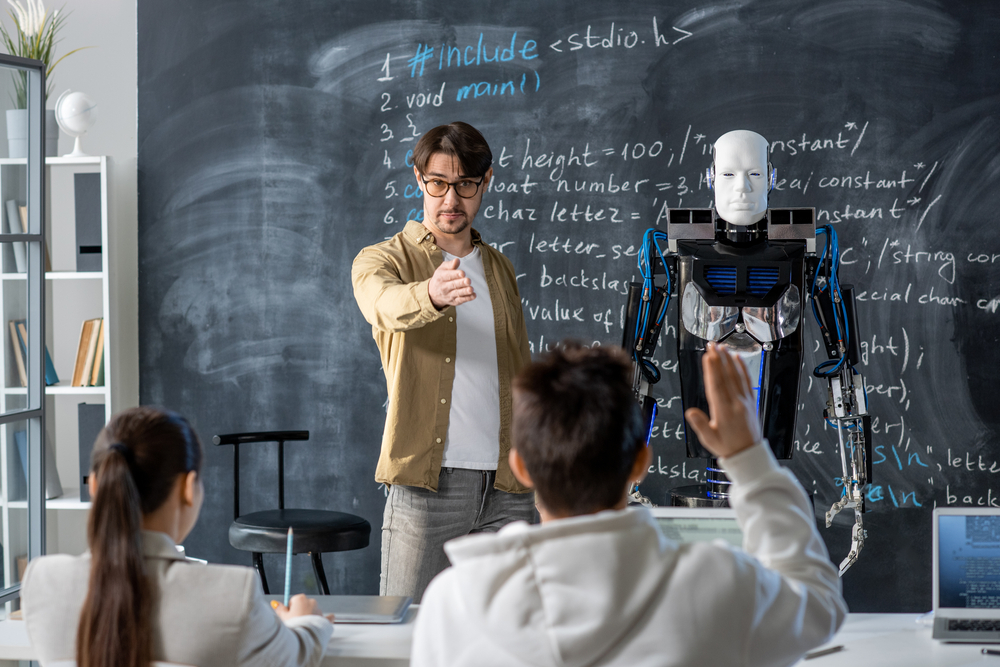
In a statement announcing the program, the district said, “The Realbotix educational robot will never replace teachers, staff members, or meaningful human interaction.” Instead, officials described Sally as another instructional resource that educators can choose to use alongside existing teaching methods.
The district compared the robot to other technological advances that once seemed controversial before becoming routine in classrooms. Computers, smartboards, internet access, and even email were all met with resistance when first introduced into schools. Administrators believe artificial intelligence represents the next stage of that technological evolution rather than a replacement for the people who guide students every day.
How Sally’s Artificial Intelligence Will Work
One of the biggest concerns surrounding AI in education is whether students will simply use it to generate answers without learning the material themselves. Salamanca officials say Sally has been built to avoid exactly that problem. Unlike many public AI chatbots that instantly provide complete responses, the robot has been designed to encourage students to think through problems rather than handing them ready-made solutions.
According to Superintendent Mark Beehler, Sally operates on a closed, offline artificial intelligence system created specifically for educational environments. Because it is not connected to the open internet, the system offers greater control over the information students receive while also addressing concerns about privacy and data security. The robot also consumes roughly the same amount of electricity as a standard laptop, making it practical for everyday classroom use.
Instead of solving assignments for students, Sally responds with prompts and follow-up questions intended to guide their thinking. “It will provide data but will encourage the student to think for themselves and demonstrate a comprehension of the material,” Beehler explained. The district believes this approach keeps the focus on learning rather than allowing AI to become a shortcut around the educational process.
Realbotix has also incorporated personalized learning features into the system. Students will log in using individual identification numbers, allowing Sally to remember previous conversations and continue discussions from earlier classes. If a student struggled with a coding concept one week, the robot can recognize that history and build on it during future interactions, creating a more customized learning experience.
Why This School Chose To Embrace AI Instead Of Ban It
As artificial intelligence becomes more common, many schools across the United States have responded by restricting or banning AI tools altogether. Teachers have raised concerns about plagiarism, declining writing skills, and students relying too heavily on chatbots instead of developing their own critical thinking abilities. Salamanca’s leadership, however, believes prohibition is no longer a realistic solution.
Beehler argues that students are already using artificial intelligence outside the classroom, whether schools approve or not. Rather than pretending the technology does not exist, he believes educators have a responsibility to teach students how to use it responsibly and ethically before they enter higher education or the workforce.
“Many schools are taking the easy solution of simply banning it,” Beehler told Syracuse.com. “I have found that students will find a way around most rules that schools put in place. I also believe it is critical for schools to teach proper use of technology, not simply exclude it.”
That philosophy became one of the driving forces behind Salamanca’s partnership with Realbotix. Instead of allowing students to explore AI entirely on their own, the district wants them to learn within a supervised environment where teachers remain in control of how the technology is used.
Built With Privacy Safeguards
Realbotix says the educational version of Sally includes several protections that distinguish it from consumer AI products.
Among the safeguards are:
- A closed AI environment rather than unrestricted internet access.
- Teacher oversight during classroom activities.
- Education-specific guardrails that limit inappropriate responses.
- Individual student logins that personalize learning without sharing data externally.
- Company assurances that Realbotix will not have access to student information.
CEO Andrew Kiguel said the collaboration has focused on supporting educators rather than replacing traditional instruction. “We are providing custom-built educational robots that prioritize both student engagement and robust safety and privacy protections,” he said.
A Small Pilot Could Shape A Much Bigger Conversation
Although Sally will initially work with only a small group of students, education experts will likely be watching the program closely. Schools across the country are still trying to determine how artificial intelligence should fit into classrooms, and there is little agreement about the best approach.
Supporters believe AI assistants could eventually help personalize learning, answer routine questions, and give teachers more time to focus on individual students who need additional support. Technologies capable of adapting lessons to each student’s pace could also improve learning outcomes in subjects such as mathematics, computer science, and engineering.
Critics remain cautious, pointing to concerns about privacy, student dependence on AI, and the possibility that technology could slowly replace valuable face-to-face interaction between teachers and students. Even supporters generally agree that artificial intelligence should remain a classroom tool rather than becoming the primary instructor.
Salamanca’s experiment may offer one of the earliest opportunities to see how students respond when a humanoid robot becomes part of everyday learning. If the pilot proves successful, similar systems could eventually appear in schools across the country. If challenges emerge, educators elsewhere may rethink how quickly they adopt comparable technology.
The Classroom Of The Future May Look Different, But Teachers Remain At Its Center
Artificial intelligence is changing workplaces at a rapid pace, and education is beginning to experience that transformation as well. Sally’s arrival represents another step in that evolution, placing advanced AI directly alongside students instead of keeping it behind a computer screen.
For Salamanca City Central School District, however, the experiment is not about replacing educators with machines. It is about preparing students for a future where working alongside artificial intelligence will likely become as common as using a laptop or searching the internet. Whether Sally becomes the first of many classroom robots or remains a unique pilot project, one thing is already clear: the conversation about AI in education has moved beyond theory and into the classroom itself.