
Your cart is currently empty!
One Eyed Lion Defies Death By Changing The Way He Hunts
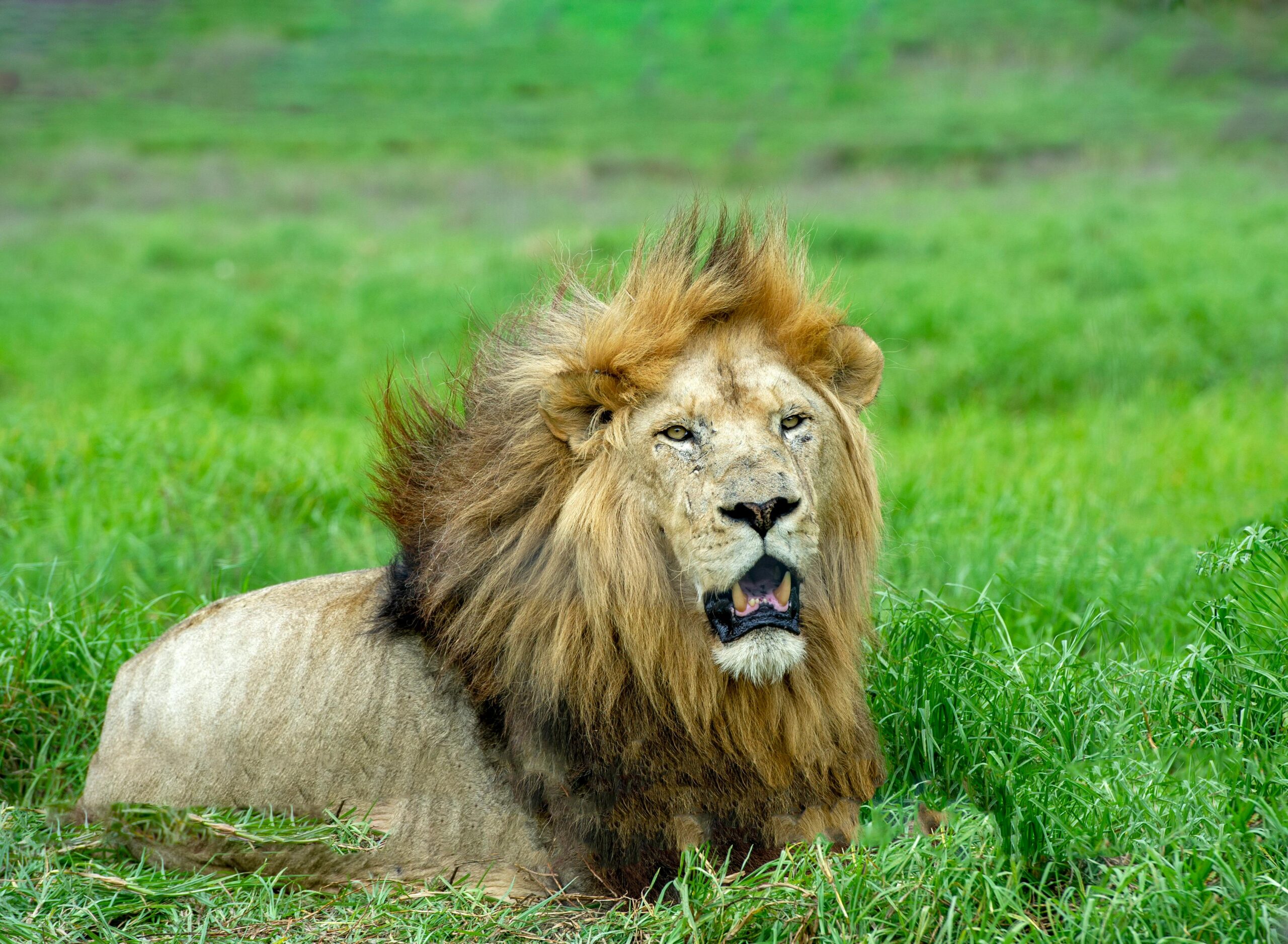
In the tall grasses and fig trees of Uganda’s Queen Elizabeth National Park, survival is usually reserved for the strongest, fastest, and fiercest. Lions dominate this landscape with coordinated hunts and explosive chases that can reach breathtaking speeds. But one lion rewrote those rules entirely.
Contents
show
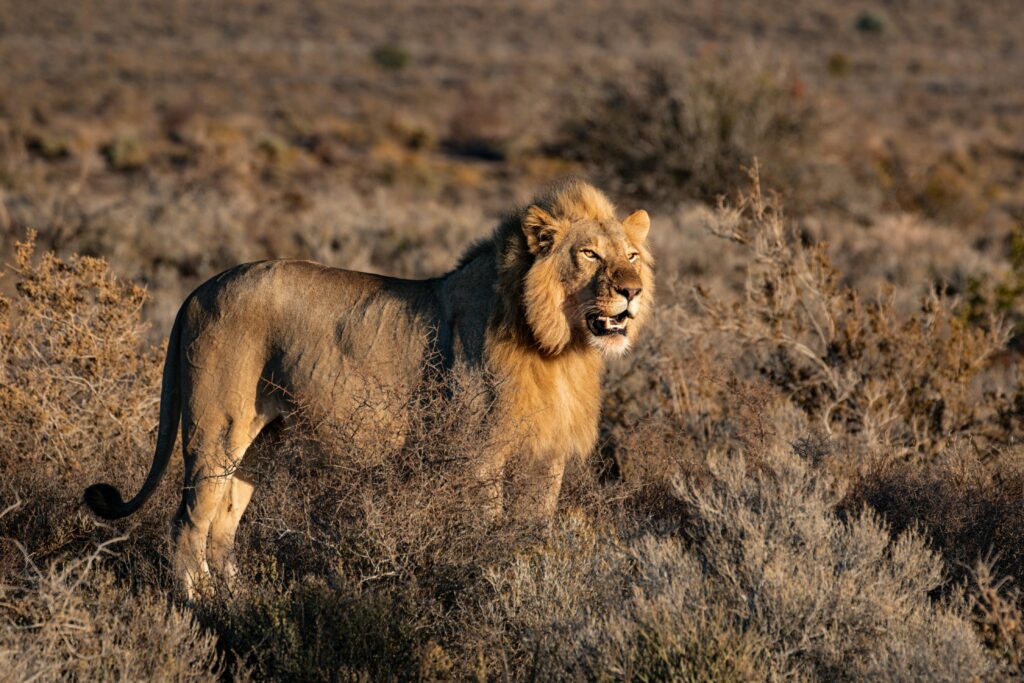
Jacob, a now eleven-year-old male, has only three legs and one functioning eye. By every conventional standard of the wild, he should not be alive. And yet he is not only surviving, but adapting in ways that have left scientists stunned. New thermal drone footage has revealed that Jacob did something few would have thought possible. He invented a new way to hunt.
His story is not simply about endurance. It is about innovation under pressure, the limits of animal intelligence, and what resilience can look like in a world increasingly shaped by human interference.
A Lion Written Off By Nature
Jacob’s early life showed little sign that he would become a symbol of survival. Born into a population already under strain, he grew up among the tree-climbing lions of Queen Elizabeth National Park, a rare cultural group known for resting in large fig trees. Researchers who followed him describe him as curious and agile.
Then the injuries began.
His first encounter with danger came in the form of a wire snare, set illegally by poachers targeting other wildlife for bushmeat. Wildlife veterinarians were able to free him before permanent damage was done. But the reprieve did not last.
In 2020, Jacob stepped into a heavy steel trap while roaming near Virunga National Park. The device crushed his lower limb. Though he managed to pull himself free, the damage was catastrophic. Veterinarians later treated him multiple times, but the injury ultimately cost him his left hind leg.
Not long after that, he suffered another devastating blow. During a confrontation with a Cape buffalo, one of the most dangerous animals in Africa, Jacob was gored. The horn pierced his eye and inflicted severe wounds to his chest and abdomen. Researchers later described the injuries as life-threatening.
Most lions that lose a limb do not last long in the wild. Biologists often refer to them as tripod lions. Studies suggest that such individuals typically rely heavily on pride members to bring down prey, and even then survival is uncertain. A lion missing an eye and a leg faces enormous disadvantages. Depth perception is compromised. Speed and balance are reduced. Hunting success drops dramatically.
Many experts quietly assumed Jacob’s time was limited.
Defying the Statistics
Lions already face steep challenges across Africa. Over the past few decades, populations have declined significantly due to habitat loss, prey depletion, and poaching. Estimates suggest that roughly 20,000 lions remain in the wild today, occupying only a fraction of their historic range.
In Queen Elizabeth National Park, pressures are particularly acute. Around 60,000 people live within or near the protected area. Snares intended for antelope or buffalo often catch lions instead. In 2020, several members of Jacob’s pride were poisoned. Prey scarcity has forced lions in the region to travel far greater distances than those in more stable ecosystems like Kenya’s Maasai Mara.
Within this context, Jacob’s survival became even more improbable.
He continued moving. He healed. He rejoined his brother Tibu. He was seen mating. And then he began doing something extraordinary.
The Record-Breaking Swim
In early February, researchers watched as Jacob and Tibu approached the Kazinga Channel, a broad waterway linking Lake George and Lake Edward. The channel is notorious for its dense populations of Nile crocodiles and hippos. Lions are capable swimmers, but typically only cross short distances of around 100 meters.
Jacob and his brother attempted the crossing multiple times. Hippos blocked their path. Crocodiles lurked in the current. Eventually, they committed.
The swim stretched nearly 1.5 kilometers, making it the longest recorded swim for a lion. Thermal drone footage captured the moment. Jacob lagged behind his brother, moving more slowly with only three legs powering him through the water. But he did not turn back.
Researchers believe the brothers were searching for females. The local population suffers from an unusual sex ratio imbalance, with significantly more males than females. Competition for territory and mating rights is intense. At one point, after reaching the opposite bank, the brothers clashed with rival males and were forced to retreat across the same dangerous waters.
For Jacob, the swim was more than a dramatic spectacle. It was proof that physical limitations had not extinguished his drive to reproduce and secure territory. His genes still had a chance to continue.
Yet the most remarkable adaptation was still unfolding on land.
A New Hunting Strategy Emerges
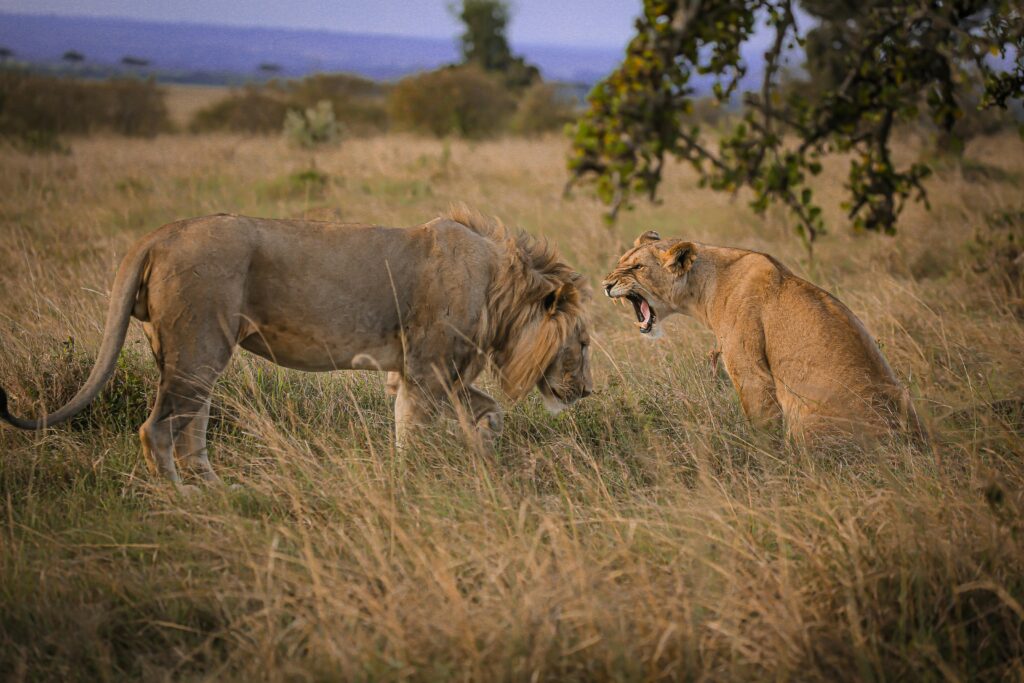
For years, researchers struggled to understand how Jacob was feeding himself. A lion missing a hind leg cannot sprint effectively. The classic lion hunt relies on bursts of speed and coordinated ambushes across open savannah. Jacob could not chase down antelope or zebra in the traditional way.
Thermal drone footage finally revealed his secret.
Instead of operating like a typical adult male lion, Jacob had shifted tactics entirely. He hunted more like a leopard.
Leopards rely heavily on stealth and close-range ambush rather than prolonged pursuit. They use dense vegetation for cover, approach silently, and explode forward in short, decisive lunges. Jacob adopted a similar method. He concealed himself in thick brush. He targeted prey at extremely close distances. He minimized the need for sustained chases.
Most surprisingly, he began targeting animals that lions rarely prioritize. Warthogs became a primary focus. Weighing up to 200 kilograms, these animals are formidable, equipped with sharp tusks and surprising speed. Yet they often retreat into burrows, offering opportunities for ambush.
Drone footage showed Jacob digging prey out of burrows and launching sudden attacks from hidden positions. Sometimes Tibu assisted him. Other times he hunted alone.
Researchers described the behavior as revolutionary for an adult lion. Rather than depending entirely on pride cooperation, Jacob recalibrated his diet and tactics to match his physical capabilities. He accepted greater risk in exchange for higher reward.
The shift required not only instinct, but learning. Behavioral flexibility in large carnivores is documented, yet rarely observed so clearly in response to severe disability.
Intelligence, Culture, and Adaptation
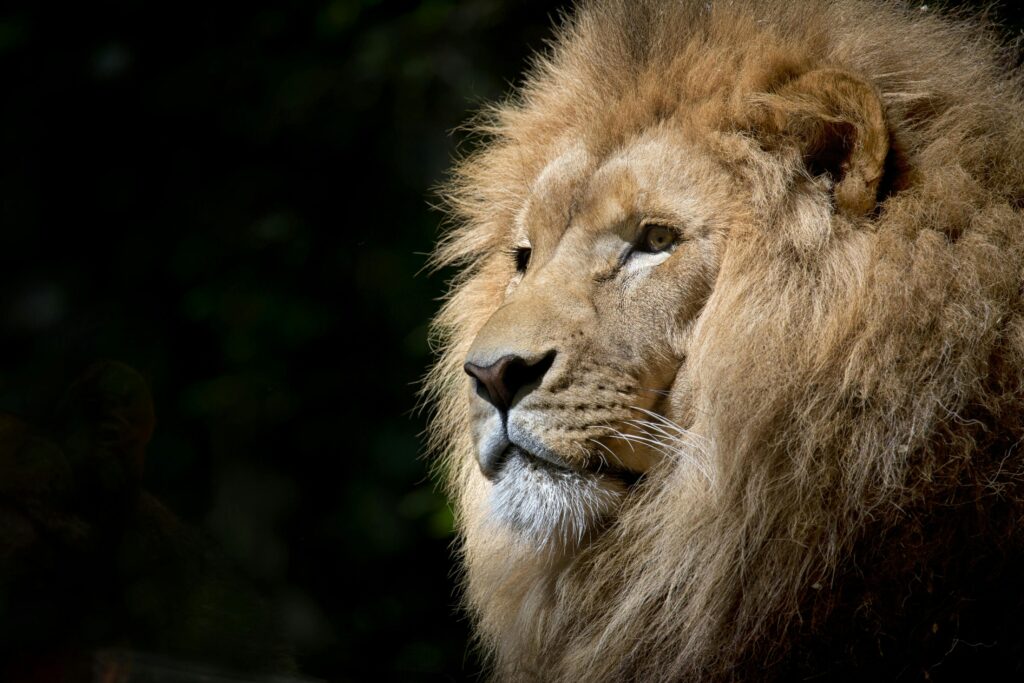
Wildlife biologists have long debated the role of culture and learning in lion populations. Certain prides exhibit unique traditions, such as the tree-climbing lions of Queen Elizabeth. These behaviors are not strictly genetic. They are passed through observation and social reinforcement.
Jacob’s leopard-like hunting raises intriguing possibilities. Could such innovation spread to other lions? Some researchers speculate that adaptive strategies, especially those that improve survival under pressure, might gradually influence neighboring individuals.
However, most lions in the region continue to target larger, faster prey in open terrain. Jacob remains an outlier.
His case underscores a broader truth about predators. While instinct shapes baseline behavior, necessity can drive experimentation. In ecosystems under stress from climate change and human encroachment, flexibility may become increasingly valuable.
Jacob’s adaptation may represent a glimpse into how large carnivores cope with shrinking habitats and shifting prey availability.
The Human Shadow Over the Savanna
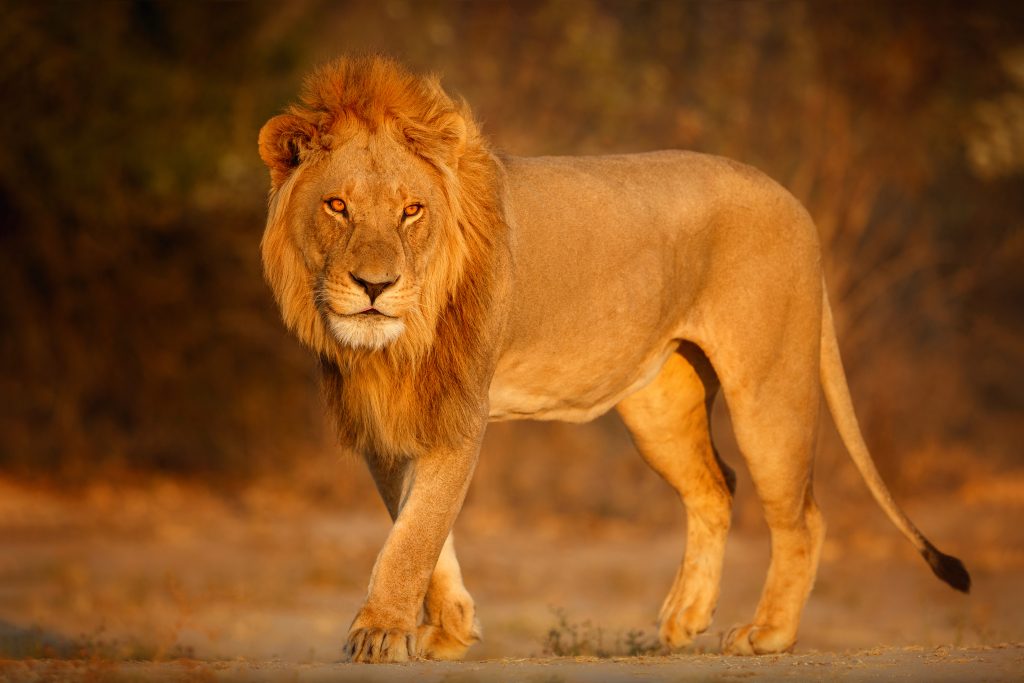
Jacob’s injuries were not accidents of nature alone. Poaching and snaring are pervasive threats across Africa. Lions are targeted for body parts used in traditional medicine and as status symbols in some markets. Even when lions are not the intended victims, indiscriminate snares catch them.
Conservationists warn that illegal trade and bushmeat hunting could drive already fragile populations to local extinction. Only a portion of remaining lion habitats are considered well protected. Funding shortages hamper anti-poaching patrols and community engagement efforts.
In Queen Elizabeth National Park, collaborations between the Uganda Wildlife Authority and conservation organizations have been critical to Jacob’s survival. He wears a radio collar that alerts authorities if he stops moving for extended periods, signaling possible injury. Veterinary interventions following his trap injury were swift and coordinated.
Yet many lions are not so fortunate.
Jacob’s survival story often inspires hope, but it also highlights the thin margin separating life and death for Africa’s iconic predators.
A Symbol Larger Than One Lion
Researchers who have followed Jacob for years describe him in almost mythic terms. They compare his resilience to that of a prizefighter who refuses to stay down. But beneath the metaphor lies a biological reality. Jacob is genetically valuable. In a shrinking population with skewed sex ratios, every breeding male matters.
He continues to patrol territory, covering more than a kilometer each day despite his injuries. He continues to cross the Kazinga Channel. He continues to seek mates.
For conservationists, his story provides both a rallying point and a warning. Public fascination with individual animals can galvanize support for funding and policy changes. At the same time, focusing solely on one remarkable lion risks obscuring systemic challenges.
Across Africa, lions have declined by roughly half over the past 25 years. They now occupy only about eight percent of their historical range. Habitat fragmentation isolates populations. Human-wildlife conflict escalates as communities expand. Climate variability alters prey dynamics.
Jacob’s ability to innovate does not eliminate these pressures. It demonstrates what is possible when animals are given even limited chances to recover.
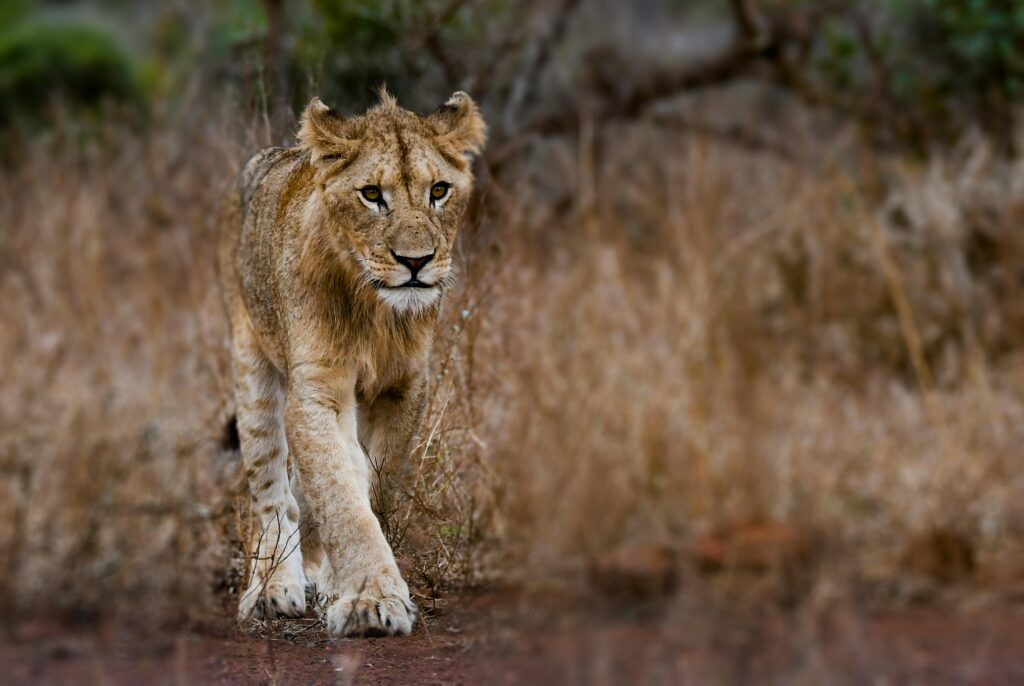
What Jacob Teaches Us About Survival
Jacob’s story resonates far beyond wildlife circles because it mirrors a fundamental principle of life. Adaptation is often the difference between extinction and endurance.
He could not outrun prey. So he stopped trying to outrun them.
He could not rely solely on pride strength. So he refined stealth.
He could not avoid every threat. But he continued moving forward.
There is scientific significance in this narrative. It challenges assumptions about the limits of injured predators. It encourages further research into behavioral plasticity. It may even inform rehabilitation strategies for other wildlife.
There is also a human dimension. Much of the adversity Jacob faced originated from human activity. Yet humans also intervened to save him, treat him, and monitor his recovery. His life sits at the intersection of harm and help.
Conservation success increasingly depends on this dual recognition. Communities living alongside lions need support, alternative livelihoods, and incentives to reduce snaring. Governments require sustained funding for park management. International collaboration must address illegal wildlife trade networks.
Jacob’s survival should not be an anomaly. It should be a reminder of what becomes possible when protection aligns with resilience.
The Future of Africa’s Lions
The question facing conservationists is not whether lions can adapt. Jacob has shown they can. The deeper issue is whether adaptation can outpace accelerating threats.
If prey populations continue to decline, lions may be forced into new hunting strategies. If sex ratios remain skewed, risky dispersal behaviors such as long-distance swims may become more common. If habitats fragment further, cultural traditions within prides could be disrupted.
Yet there are reasons for cautious optimism. Targeted funding initiatives, stronger anti-poaching enforcement, and community-based conservation models have stabilized or even increased lion numbers in certain regions of southern and East Africa. Where protections are consistent, lions demonstrate remarkable recovery potential.
Jacob embodies that potential. He stands, quite literally, on three legs as evidence that survival is not always dictated by physical perfection.
A Fighter in the Grass
On any given evening in Queen Elizabeth National Park, visitors might glimpse him resting in the branches of a fig tree, his missing limb visible against the bark. They might see him limping through tall grass, scanning the horizon with one eye. Or, if they are fortunate, they might witness the silent precision of his ambush, the culmination of a strategy born from necessity.
He is not invincible. He is vulnerable, aging, and living in a landscape fraught with danger. But he is alive because he changed.
In a time when biodiversity faces unprecedented strain, Jacob’s story invites reflection. Resilience alone is not enough without protection. Innovation cannot substitute for habitat. But when given even a fraction of opportunity, life finds ways to persist.
Jacob did not merely survive injury. He redefined what survival looked like for him. And in doing so, he offered scientists rare insight into the adaptive capacity of one of the planet’s most iconic species.
The savanna remains unforgiving. Crocodiles still patrol the channel. Snares still hide in tall grass. Rival males still challenge territory. Yet somewhere in the brush, a three-legged, one-eyed lion crouches low, waiting patiently for the right moment to strike.
Against expectation, against probability, and against the weight of statistics, he continues to hunt.
And for now, that is enough.