
Your cart is currently empty!
Scientists Create Tiny Magnetic Robots That Could Help Fight Strokes

Scientists in Switzerland have developed tiny magnetic robots that could one day help doctors fight strokes by delivering medication directly to dangerous blood clots. Measuring less than two millimetres across, the capsules are designed to travel through blood vessels under external magnetic control before releasing their drug payload at a targeted location.
Contents
show
The technology could address one of the biggest challenges in treating certain strokes: getting enough medication to a blockage without exposing the rest of the body to unnecessarily high doses. Early experiments have produced encouraging results in artificial blood vessel models and large animals, although the microrobots have not yet been tested in human clinical trials.
Tiny Robots Could Change How Doctors Treat Blood Clots
Researchers at ETH Zurich developed the microrobots to improve the precision of drug delivery inside the human body. Their research, published in the scientific journal Science, describes spherical capsules that can be guided through complex vascular pathways using electromagnetic navigation.
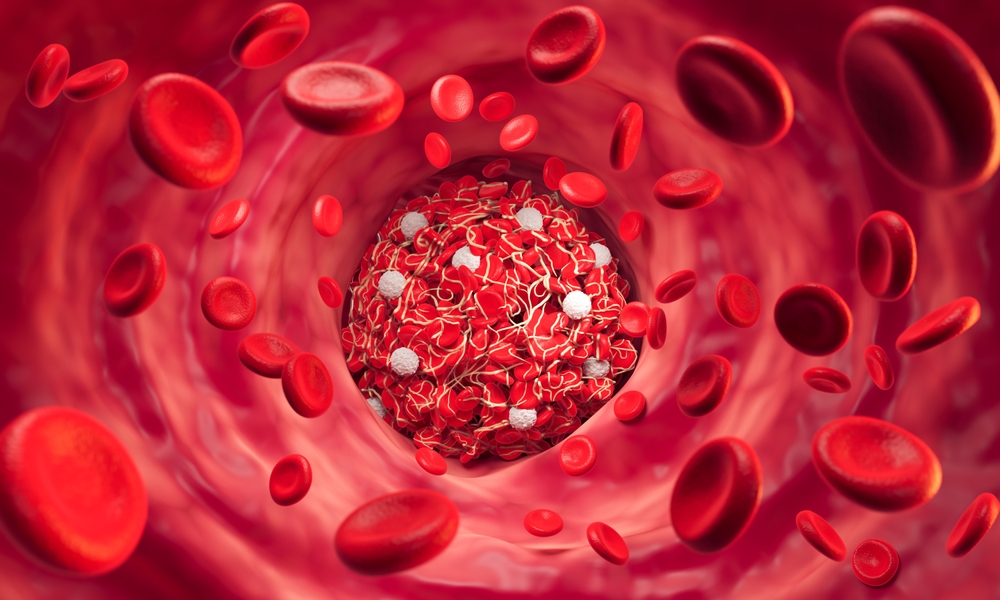
The technology focuses on a problem faced by doctors treating strokes caused by blood clots. These blockages can interrupt the supply of oxygen-rich blood to parts of the brain, potentially causing permanent damage when treatment does not restore circulation quickly enough.
Certain stroke treatments use thrombolytic drugs, which help dissolve blood clots and restore blood flow. However, medication introduced into the bloodstream travels throughout the body, meaning doctors may need to administer enough to ensure that an effective amount reaches the blockage.
That approach carries risks, including serious bleeding. The ETH Zurich team hopes that delivering medication closer to the clot could eventually help reduce unnecessary exposure elsewhere in the body.
The capsules are designed to carry medication directly towards a specific target. Rather than relying entirely on the bloodstream to transport a drug, the researchers use magnetic fields to influence the capsule’s movement and guide it through blood vessels.
The distinction is important because the technology remains experimental. The researchers have demonstrated that their system can reach intended locations under test conditions, but further studies must establish whether it can offer a safe and effective treatment for patients.
Why Delivering Medication Directly To A Stroke Matters

A stroke can occur when a blood clot blocks an artery supplying the brain, a condition known as an ischemic stroke. Without sufficient blood flow, brain cells begin to suffer damage, making timely diagnosis and treatment essential.
Clot-dissolving medication can help reopen blocked vessels in suitable patients. However, the treatment must be administered carefully because the same drugs that help dissolve a dangerous clot can also increase the risk of bleeding.
Delivering medication throughout the bloodstream creates a challenge for targeted treatment. A drug may reach many parts of the body even though its intended destination is a single blockage, and doctors must balance the potential benefits against the risks.
The microrobots aim to change that delivery process by carrying the active ingredient inside a small capsule. If doctors could reliably guide the capsule to the clot, they might be able to release medication close to the blockage instead of depending entirely on a drug circulating through the wider vascular system.
The potential benefit is straightforward: more precise delivery could help researchers investigate whether treatment can become more effective while limiting unwanted effects. However, that outcome has not yet been demonstrated in human patients, and the safety of the approach remains to be established.
The researchers also face a difficult engineering problem. Blood vessels vary in size, shape and flow speed, while the vessels supplying the brain can be especially narrow, leaving little room for a device that must carry medication and respond to magnetic fields.
What Makes The Microrobots So Unusual?
The capsules measure less than two millimetres in width and combine several materials inside a dissolvable gel shell. Each component serves a different function, allowing the device to carry medicine, respond to magnetic control and remain visible during navigation.
Iron Oxide Allows Magnetic Steering
The researchers incorporated iron oxide nanoparticles into the capsules to give them magnetic properties. An external electromagnetic navigation system can then influence their movement and guide them towards a selected destination.
Magnetic steering offers a potential advantage in medical procedures because the capsule does not need to carry a conventional motor or operate as an independent machine. Instead, researchers control its movement from outside the body by adjusting the applied magnetic fields.
This arrangement is particularly useful when a capsule must travel through a changing vascular environment. Different sections of the circulatory system experience different flow conditions, so a single navigation technique may not work equally well everywhere.
Fabian Landers, the lead author of the research and a postdoctoral researcher at ETH Zurich’s Multi-Scale Robotics Lab, explained one of the main challenges in a statement: “The technical challenge is to ensure that a capsule this small also has sufficient magnetic properties.”
The team needed to make the capsule small enough to travel through narrow vessels while retaining enough magnetic material to respond reliably to the navigation system.
Tantalum Helps Doctors See The Capsule
The capsules also contain tantalum nanoparticles, which help make them visible under X-ray imaging. This allows researchers to track their movement and monitor their position while guiding them through complex vascular pathways.
Visibility is a critical part of the design because magnetic control alone would not tell doctors precisely where a capsule had travelled. Imaging gives the medical team a way to observe its progress and determine whether it is approaching the intended target.
The researchers had to combine the magnetic properties of iron oxide with the imaging capabilities provided by tantalum. They also needed a gel structure that could hold the medication during transit and dissolve when the capsule reached its destination.
ETH Zurich professor Bradley Nelson described the development process in a statement: “Combining magnetic functionality, imaging visibility and precise control in a single microrobot required perfect synergy between materials science and robotics engineering, which has taken us many years to successfully achieve.”
The combination of these features is what distinguishes the technology from a simple drug-filled particle. The capsule is designed to be guided, tracked and triggered to release its contents when it reaches the intended location.
How Scientists Guide The Robots Through Blood Vessels
The capsules do not independently search the body for disease. Instead, researchers introduce them through a catheter and use an external electromagnetic system to guide their movement through the surrounding fluid.
The research describes a specialized catheter based on a commercially available design. An internal guidewire connects to a flexible polymer gripper, which opens when pushed beyond the external guide to release the capsule.
After release, the navigation system helps steer the microrobot towards its destination. The researchers developed three magnetic strategies because blood flow varies across different regions of the arteries supplying the head.
The first method uses a rotating magnetic field to guide the capsule along a vessel wall. Under the conditions tested, the team could move the device at speeds of up to four millimetres per second using this approach.
The second method uses a magnetic field gradient to pull the capsule towards a stronger magnetic field. This technique can help the device move against the direction of blood flow, with the researchers reporting speeds exceeding 20 centimetres per second under suitable conditions.
The third method addresses complicated junctions where the capsule might otherwise enter the wrong vessel. By directing the magnetic gradient towards a vessel wall, researchers can influence the capsule’s path and help it enter the correct branch.
Together, the strategies allow the navigation system to respond to different vascular conditions rather than relying on one steering method for every situation. The team reported that the capsule reached the intended location in more than 95% of the tested delivery attempts.
What Happens When A Microrobot Reaches Its Target?

Guiding a capsule towards a blood clot is only one part of the procedure. The device must also release its medication at the intended location without losing its payload too early during the journey.
The researchers designed the capsules with a soluble gel shell that responds to a high-frequency magnetic field. When that field heats the magnetic nanoparticles inside the capsule, the gel structure dissolves and releases the medication.
This creates a controlled delivery process in which the capsule carries the drug towards the target before triggering its release. The researchers hope that this approach could eventually help concentrate treatment where it is needed rather than exposing the entire body to the same amount of medication.
The team demonstrated that the capsules could carry several types of drugs during its research. These included a thrombus-dissolving agent, an antibiotic and medication intended for tumour treatment.
The different payloads suggest that the technology could eventually support several medical applications. However, each application would need its own evidence showing that the capsule reaches the correct location, releases an appropriate amount of medication and does not cause unacceptable harm.
For stroke treatment, the central goal is to deliver a clot-dissolving drug close to the blockage. If future research establishes that this can be done safely and effectively in patients, the approach could offer doctors another method for treating selected vascular emergencies.
Animal Experiments Produced Encouraging Results

Before testing the capsules in animals, the researchers used silicone models designed to reproduce the structure of human and animal blood vessels. These models allowed the team to refine the navigation strategies and test whether the microrobots could reach a simulated blood clot.
The researchers reported successful drug delivery and clot dissolution in their experimental vessel models. The models were designed to resemble real vascular anatomy closely enough to help the team practise navigation and evaluate the components before moving to animal experiments.
The team then tested the navigation system in pigs. The experiments demonstrated that the three steering strategies could operate in the animals’ vascular systems, while X-ray imaging allowed researchers to follow the capsules during the procedure.
According to the reported findings, more than 95% of the tested delivery attempts reached the intended location. That result indicates that the navigation system performed reliably under the experimental conditions, although it should not be interpreted as a prediction of success in human treatment.
Researchers also navigated the capsules through the cerebrospinal fluid of a sheep. This fluid surrounds the brain and spinal cord, and the experiment showed that the technology could operate in another complex anatomical environment.
Landers described the sheep experiment in a statement: “This complex anatomical environment has enormous potential for further therapeutic interventions, which is why we were so excited that the microrobot was able to find its way in this environment, too.”
The animal experiments provide useful evidence about navigation and visibility, but they do not settle the questions that matter most for future patients. Human anatomy, clinical conditions and treatment risks require further investigation before the technology can be considered a viable medical option.
The Technology Could Have Uses Beyond Stroke Treatment

Although the research highlights blood clot treatment as a key application, the capsules could potentially transport medication to other locations where precise delivery is desirable. The team has already demonstrated that different drug payloads can be incorporated into the gel structure.
One possible application is the treatment of localized infections. Researchers could investigate whether a microrobot can carry an antibiotic towards a specific infection site, although its effectiveness would depend on the condition being treated and whether the capsule can reach the relevant tissue.
Tumour treatment is another potential direction. The researchers loaded capsules with tumour medication, suggesting that the delivery system could be studied for treatments that benefit from directing drugs towards a particular target.
The sheep experiment also suggests that navigation through cerebrospinal fluid deserves further investigation. This could help researchers explore future applications involving the brain and spinal cord, although no specific human treatment has been established through the reported tests.
These possibilities depend on much more than successful navigation. Researchers would need to determine how different drugs behave inside the capsule, how much medication can be delivered, how the materials interact with the body and whether the procedure offers a meaningful advantage over existing treatments.
For now, stroke treatment remains the clearest example of why precise delivery could be useful. The experiments show how a small capsule might be directed towards a defined target and triggered to release medication once it arrives.
Why Human Trials Remain The Biggest Hurdle
The microrobots have not yet been tested in human clinical trials, and the technology is not an established treatment available to stroke patients. The reported experiments demonstrate technical progress, but further research is required before doctors can assess its safety and effectiveness in people.
Researchers must establish whether the capsules can be controlled consistently in human blood vessels and whether their materials are suitable for use inside the body. They must also evaluate the drug-release process, the reliability of imaging and the risks associated with introducing and retrieving or dissolving the device.
Another major question is whether targeted delivery actually improves patient outcomes. Even if a capsule reaches a clot successfully, clinical studies would need to establish whether the medication restores blood flow effectively and whether the approach reduces complications compared with existing treatments.
The practical demands of hospital use will also matter. Medical teams would need equipment, training and reliable procedures to control the capsules and monitor their movement during treatment.
The researchers have therefore demonstrated an important proof of concept rather than a ready-to-use medical technology. Further testing will determine whether the microrobots can move from experimental models and animal studies into clinical research.
If the approach eventually proves safe and effective, doctors could gain another way to deliver medication precisely inside the body. For now, the most significant achievement is that researchers have demonstrated how magnetic control, medical imaging and targeted drug release can work together inside a capsule small enough to travel through complex vascular pathways.