
Your cart is currently empty!
Researchers Find Surprising Brain Effects After People Eat Tomato Paste For 90 Days

A food found in kitchens around the world has caught the attention of brain researchers after a new trial linked daily tomato paste consumption with changes in attention, memory, and brain activity.
Contents
show
Scientists in Spain asked healthy middle-aged adults to eat concentrated tomato paste every day for three months. When the study ended, researchers found improvements in specific cognitive tests and detected changes in how certain brain networks communicated.
The findings do not mean tomatoes can suddenly transform brain function, but they add to growing research exploring how everyday foods may influence the brain.
The Tomato Paste Trial Followed Healthy Adults For Three Months
The study was designed to investigate whether tomatoes could affect cognitive performance through lycopene, a natural antioxidant that gives tomatoes their red color.
Researchers recruited healthy adults between the ages of 40 and 55 for a randomized crossover clinical trial. This type of study allows participants to experience different conditions while researchers compare changes within the same individuals.
A total of 47 people joined the trial, with 42 completing both dietary phases. Participants had no major chronic diseases or mental health conditions and were selected to represent healthy middle-aged adults rather than people already experiencing cognitive decline.

The participants followed two separate three-month periods. During one phase, they consumed concentrated tomato paste every day while maintaining their normal lifestyle. During the other phase, they followed a low-lycopene diet that limited foods such as tomatoes, watermelon, papaya, grapefruit, and guava.
The two interventions were separated by a one-month washout period. This allowed researchers to reduce the influence of the first diet before participants moved into the second phase.
The average amount of tomato paste consumed was about 35 grams per day, providing approximately 38 milligrams of lycopene. Blood tests later confirmed that participants had significantly higher lycopene levels during the tomato intervention.
Researchers Saw Improvements In Attention And Processing Speed

After three months of daily tomato paste consumption, participants showed improvements in several measures of cognitive performance.
The strongest effects appeared in selective attention and processing speed. These skills help people focus on relevant information, ignore distractions, and quickly process what they see and hear.
Researchers used the d2-R test to measure attention, concentration, visual processing speed, and impulsive responses. Participants performed better after the tomato intervention, showing improved concentration scores and faster processing speeds compared with the low-lycopene period.
The improvements were not seen across every type of cognitive ability. Executive function, which includes skills such as adapting strategies and changing responses, did not show significant changes during the trial.
This suggests the effect of tomato consumption may be linked to specific brain functions rather than creating a broad increase in every area of thinking.
Memory Tests Also Showed A Positive Shift

Researchers also examined associative memory, a type of memory involved in connecting related pieces of information.
Participants completed the Face-Name Associative Memory Exam, where they learned connections between faces and names and were later tested on their ability to remember those pairings.
After the tomato paste phase, participants showed improvements in face-name matching and their overall associative memory score.
The researchers said these findings were consistent with previous studies that have linked higher tomato or lycopene intake with better cognitive outcomes, although earlier research was often observational or involved multiple nutrients rather than tomatoes alone.
Why Scientists Are Studying Lycopene In Tomatoes

The main compound attracting attention is lycopene, a carotenoid antioxidant found in high amounts in tomatoes.
Lycopene has been studied because of its ability to reduce oxidative stress, a process that occurs when unstable molecules damage cells. Scientists have also investigated its possible role in reducing inflammation, including processes connected with brain aging.
One reason researchers are interested in lycopene is that it can cross the blood-brain barrier. This protective system controls which substances can move from the bloodstream into brain tissue.
The ability to reach the brain has made lycopene a focus of research examining whether diet can influence neurological processes.
Tomatoes also contain many other nutrients and plant compounds that may contribute to their effects.
- Carotenoids: Tomatoes contain several carotenoids, including lycopene, beta-carotene, and phytoene.
- Vitamins: They provide nutrients such as vitamins A, C, and E.
- Polyphenols: These plant compounds have antioxidant properties that may influence inflammation pathways.
Researchers noted that the observed changes cannot be attributed only to lycopene because tomatoes contain a mixture of bioactive compounds.
The Study Looked Beyond Memory Tests With Brain Scans
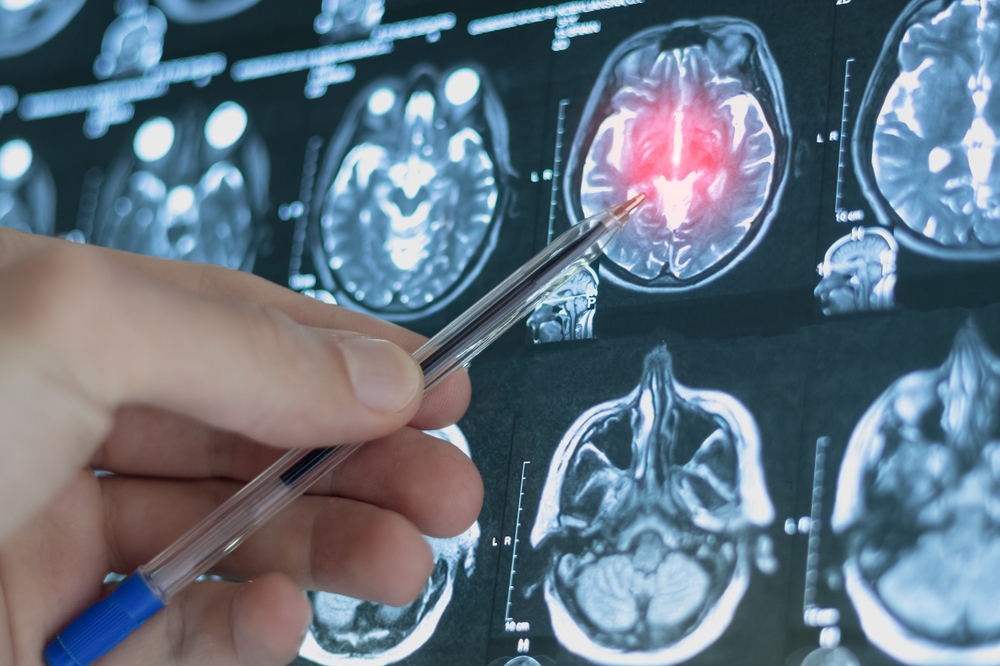
The researchers did not stop at cognitive testing. A smaller group of participants also underwent brain scans to examine whether tomato intake was linked with changes in brain activity.
Fourteen participants completed resting-state functional MRI scans, a technique that measures communication between different areas of the brain while a person is not performing a specific task.
The scans revealed changes in several large-scale brain networks after the tomato intervention.
Researchers observed differences in networks involved with attention, sensory processing, and cognitive control. These networks help the brain manage information, focus on important signals, and coordinate activity between different regions.
Brain Scans Revealed Changes In How Regions Communicated

The brain imaging portion of the study produced some of the most interesting findings, although researchers stressed that these results were exploratory because the scan group was much smaller than the main trial.
Fourteen participants underwent resting-state functional MRI scans after completing the dietary interventions. The researchers examined whether tomato consumption was associated with changes in communication between large-scale brain networks.
After the tomato paste intervention, scientists observed altered connectivity patterns in networks involved with attention, sensory processing, and cognitive control. These included changes in the right frontoparietal network and auditory network.
The researchers suggested that these differences may reflect adjustments in how the brain organizes information processing. They described the possibility that tomato intake could support more efficient communication between brain regions, although the findings require confirmation through larger studies.
The Researchers Found A Link Between Lycopene And Brain Activity
Blood tests showed that participants had a significant rise in plasma lycopene after consuming tomato paste.
When researchers compared these changes with cognitive results, higher increases in lycopene levels were associated with better concentration performance and faster processing speed.
The study also found relationships between lycopene changes and certain brain connectivity patterns. These results added another layer of evidence suggesting that tomato compounds may influence brain function through biological pathways connected with attention and memory.
However, the researchers did not claim that lycopene alone was responsible for the improvements. Tomatoes contain multiple nutrients, and the study was designed to examine the effects of tomato consumption rather than isolate one individual compound.
Tomato Intake May Influence A Protein Linked To Brain Health

Alongside cognitive tests and brain scans, scientists measured levels of brain-derived neurotrophic factor, commonly called BDNF.
BDNF supports the growth, maintenance, and communication of brain cells. Because of its role in brain plasticity, researchers often study it when examining factors that may influence learning, memory, and neurological health.
The tomato intervention was linked with an increase in plasma BDNF compared with the low-lycopene diet. However, the researchers described this finding as borderline and said it should be interpreted carefully because of variability between participants and possible carry-over effects from the crossover design.
The relationship between tomato consumption, lycopene levels, BDNF, and brain connectivity remains an area where scientists are looking for stronger evidence.
Future research may help determine whether changes in BDNF are a consistent effect of tomato intake or whether other biological pathways play a larger role.
Scientists Say The Results Are Promising But Preliminary

Although the findings attracted attention, the researchers emphasized that the study has important limitations.
The trial included a relatively small number of participants, all of whom were healthy middle-aged adults. This means the results may not apply to older adults, people with existing cognitive conditions, or broader populations.
The study was also unblinded. Participants knew whether they were consuming tomato paste or following the low-lycopene diet, and researchers involved in the intervention were aware of the assignments.
Because of this, scientists cannot completely rule out the possibility that expectations influenced some aspects of performance during cognitive testing.
The brain imaging findings also need additional research. The MRI analysis involved only 14 participants, making it useful as an early signal but not enough to establish a confirmed effect.
More Research Is Needed Before Bigger Claims

The researchers identified several areas that future studies should investigate:
- Larger participant groups: More people would help determine whether the findings apply across different ages and backgrounds.
- Longer studies: Researchers need to know whether the cognitive changes remain after months or years of regular tomato consumption.
- Different tomato products: Future trials could compare tomato paste, fresh tomatoes, juices, and other preparations.
- Specific compounds: Scientists may investigate whether lycopene or the combination of tomato nutrients produces the strongest effects.
The current evidence suggests a connection between tomato intake and certain measures of brain function, but it does not prove that tomatoes can prevent dementia, reverse cognitive decline, or replace medical treatments.
A Familiar Food Gains New Attention From Scientists
Tomatoes have long been recognized as a source of vitamins, minerals, and plant compounds, but this study adds another possible benefit to the list.
The researchers showed that a simple dietary change was associated with improvements in attention and some memory measures, while also producing measurable biological changes in the body and brain.
The findings fit into a larger area of research examining how nutrition affects the brain. Foods rich in antioxidants and anti-inflammatory compounds have been studied for their possible role in supporting healthy aging.
Cooking may also affect how the body uses tomato compounds. Heat can break down tomato cell structures, which may help make lycopene easier for the body to absorb.
For now, tomato paste remains a simple ingredient rather than a proven brain-enhancing treatment. The study offers scientists a new direction to explore how ordinary foods may interact with the complex systems that shape memory, attention, and brain health.