
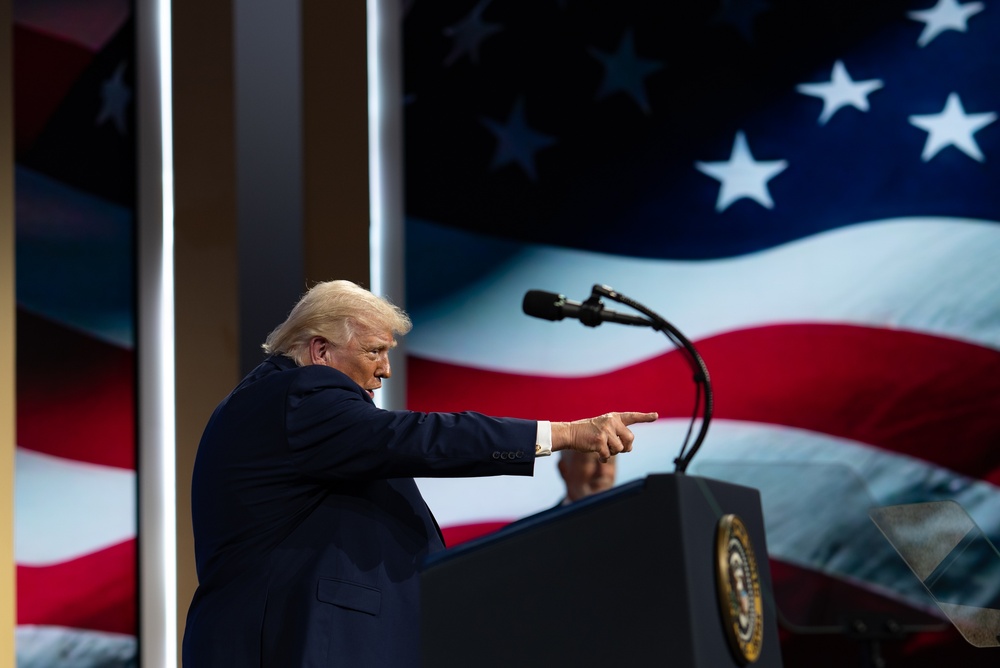
Thousands of passengers across the United States faced travel chaos after a rare nationwide flight grounding exposed serious problems within the country’s air traffic control system. Now, President Donald Trump is demanding $50 billion from Congress to overhaul the aging infrastructure, but the enormous price tag has triggered a political fight over government spending and accountability.
The administration says America’s aviation network needs urgent modernization after decades of neglect. Democrats, however, want answers about billions of dollars Congress has already approved and why another massive funding request has suddenly become necessary.
Trump Calls For $50 Billion After Nationwide Flight Grounding
President Donald Trump has urged Congress to approve billions in additional funding for America’s air traffic control system following a nationwide ground stop that disrupted thousands of flights on Friday. The Federal Aviation Administration (FAA) issued the order after communications problems affected its network, forcing aircraft to remain grounded for approximately four hours.
The incident created widespread disruption for passengers and airlines, bringing renewed attention to the condition of infrastructure responsible for keeping aircraft moving safely across American airspace. It also gave the Trump administration another opportunity to push for a major modernization programme that transportation officials have been advocating.
Trump addressed the situation publicly on Sunday through a series of posts on Truth Social. He argued that the existing system was far too old and that Congress needed to provide the money required to replace it.
“If Congress approves the desperately needed money for Air Traffic Control, we can get it built quickly and efficiently. It will be the BEST SYSTEM anywhere in the World,” Trump wrote.
The president also criticized the age of the technology currently used by the FAA, claiming that much of the infrastructure was approximately 50 years old. He argued that modernization should happen through a coordinated effort rather than smaller improvements spread across several years.
“We have already started the work, but it should be done all at once, not in drips and drabs. Congress must approve,” Trump added.
His comments also included criticism of former President Joe Biden’s administration, which Trump accused of mishandling aviation infrastructure investments.
“The Biden Administration was an FAA disaster. Everything they touched turned bad. Big money spent unwisely, making an old and broken system worse than when they began,” Trump wrote in another Truth Social post.
The political dispute quickly became a central part of the discussion surrounding the flight disruption. While the administration wants Congress to move quickly, Democrats are questioning whether officials have adequately explained the money already allocated to the FAA.
What Actually Caused The Nationwide Flight Disruption?
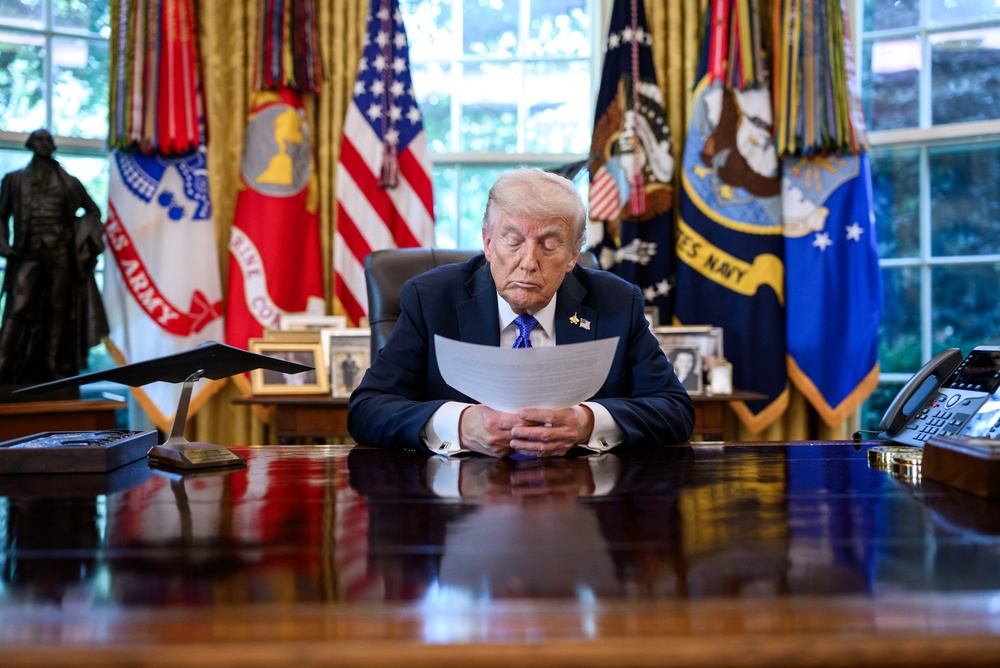
The nationwide ground stop followed problems involving the FAA’s telecommunications network, which supports communication between air traffic control facilities and aircraft. Transportation Secretary Sean Duffy provided an explanation of the incident during television appearances and social media updates over the weekend.
According to Duffy, the problem began when a federal contractor was replacing an aging section of copper wiring with modern fiber-optic infrastructure. The work was taking place at a location in El Dorado, Arkansas, as part of ongoing efforts to upgrade the network.
After the replacement was completed and the router was switched on, a problem reportedly emerged at another facility in Amarillo, Texas. The resulting communications disruption affected the wider network and eventually led officials to order the nationwide ground stop.
The FAA explained that excessive data was flooding the system, creating instability that affected important aviation functions. In its statement, the agency described the problem as a surge of “1,000 connection attempts every 4 to 5 seconds.”
That unusual volume of connection attempts affected aircraft communications and radar feeds, according to the agency. Officials subsequently blocked the two affected locations in Arkansas and Texas, which helped stabilize the network.
However, the precise technical failure had not been conclusively established in the initial investigation. Duffy had previously raised questions about whether the incident involved installation mistakes, user error, or faulty equipment supplied during the telecommunications work.
The investigation also examined whether a cyberattack could have caused the disruption. Duffy said intelligence agencies had not identified the usual signs associated with malicious activity, making a deliberate attack appear less likely.
Homeland Security Secretary Markwayne Mullin also rejected suggestions that a hostile actor was responsible, although investigators had not completed their work.
“There was no indication as of yet that this was a nefarious attack against us,” Mullin told reporters outside the White House.
There was also speculation about whether the FAA’s new AI technology, known as Strategic Management of Airspace, Routes and Trajectories (SMART), had contributed to the incident. However, Air Space Intelligence, the company behind the system, denied any involvement.
“The current ground stop is not based on or a result of the SMART system, any product of ASI or our integration with FAA and ATC [air traffic control],” the company stated on social media.
Democrats Demand Answers About Previously Approved FAA Funding

The Trump administration’s request for another $50 billion has raised questions among congressional Democrats, who argue that the government already has substantial funding available for aviation modernization.
Democrats have repeatedly acknowledged the need to improve America’s aging air traffic control infrastructure. Their objection centres on the administration’s explanation of how existing appropriations have been used and why the latest funding request has increased so dramatically.
Under former President Joe Biden, Congress approved a major infrastructure package that included $25 billion over five years for airport and air traffic control improvements. Much of that funding was directed towards airport construction and infrastructure projects, including new runways, taxiways, and refurbished terminals.
A Republican-led Congress subsequently approved another $12.5 billion in 2025 specifically for modernizing the FAA’s air traffic control system and increasing the hiring of air traffic controllers.
Democrats now argue that the administration should explain the progress made using those funds before asking lawmakers to approve another enormous investment.
Representatives Rick Larsen and André Carson, two leading Democrats on House transportation panels, directly challenged the administration’s request in a statement.
“Explain to Congress, again, why they need more money?” they asked.
Representative Rosa DeLauro, the leading Democrat on the House Appropriations Committee, also questioned whether the Department of Transportation could manage the funding responsibly.
DeLauro acknowledged that Congress had demonstrated its willingness to invest in aviation modernization. However, she argued that the department needed to provide greater transparency and demonstrate that it could carry out the work effectively.
“But we need a competent partner at the Department of Transportation to carry this out in a sustainable, transparent manner. Right now, it is clear that we lack such a partner,” DeLauro said.
Duffy has responded by arguing that the $12.5 billion already approved by Congress will be spent by the end of 2028. He also said restrictions placed on the funding prevented the department from using it for certain telecommunications infrastructure improvements.
That distinction is central to the disagreement. The administration says the existing allocation does not cover every part of the modernization effort, while Democrats want a clearer explanation of how the money is being distributed.
America’s Air Traffic Control System Has Faced Problems For Years
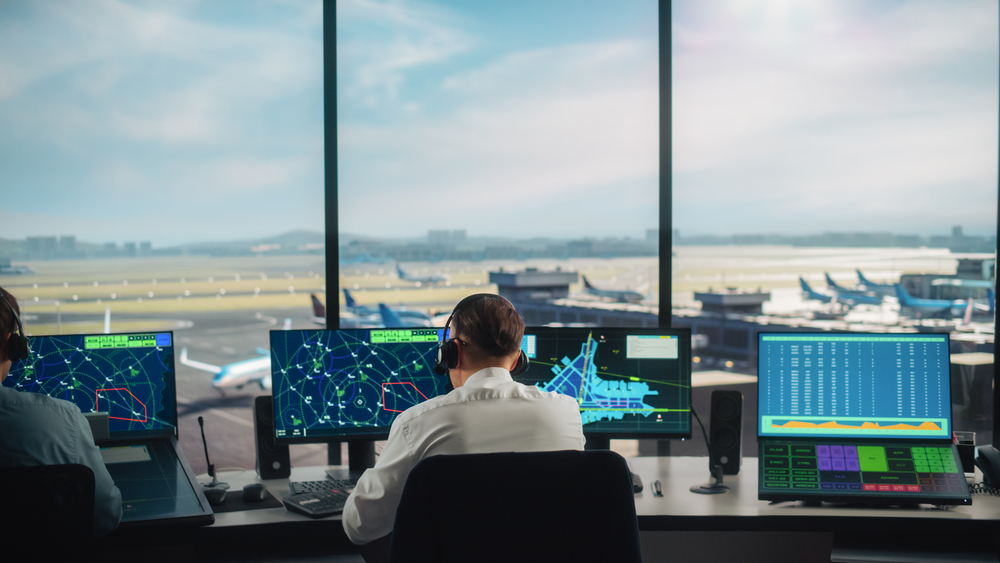
The latest disruption has exposed vulnerabilities in infrastructure that lawmakers and aviation officials have been discussing for years. America’s air traffic control system relies on a complicated network of computers, communications equipment, radar technology, and control facilities.
Some of that equipment is decades old, creating difficulties when agencies attempt to maintain and modernize systems that remain essential to daily aviation operations.
The FAA has previously acknowledged that outdated technology needs replacement. Last week, the agency said it planned to eliminate the use of floppy disks for weather information and other critical data at more than 400 air traffic control facilities by the end of 2028.
The technology may seem outdated to ordinary computer users, but replacing equipment across hundreds of facilities requires substantial planning and coordination. Any modernization programme must also ensure that existing operations continue while new systems are introduced.
The First Modernization Phase Has A December 2028 Deadline

The $12.5 billion approved in 2025 is intended to support the first phase of the FAA’s modernization programme. This includes replacing outdated radar systems, upgrading traffic control centres, and improving the technology used by air traffic controllers.
The administration has identified December 2028 as the target for completing this phase. During a congressional hearing on September 15, FAA Administrator Bryan Bedford defended the progress being made with the allocated funding.
“We are executing on the most ambitious modernization and delivering it in record time,” Bedford told lawmakers.
His statement provides an important part of the administration’s argument that modernization work is already underway. However, Democrats remain concerned about how much of the approved funding has actually been spent and whether the department is meeting its commitments.
A Second Phase Could Cost At Least Another $10 Billion

The modernization programme also includes a second phase involving more advanced systems for tracking aircraft and optimizing air traffic. Bedford previously told lawmakers that this stage would require at least another $10 billion.
Senator Eric Schmitt, a Republican from Missouri, introduced legislation in September proposing approximately $30 billion in additional investment in the nation’s aviation infrastructure.
His proposal includes funding for the second modernization phase, improvements to as many as three medium-sized airports, and various airport infrastructure projects.
These would include new air traffic control towers, terminal improvements, and other upgrades intended to strengthen the country’s aviation network.
The proposal adds another layer to the funding debate, as lawmakers now face several different estimates for what a complete modernization programme could cost.
What Is Included In The Trump Administration’s Funding Request?

The administration initially requested $30.1 billion for improvements to airports and air traffic control infrastructure. That request was subsequently increased to $50 billion following Friday’s nationwide disruption.
A letter from Transportation Secretary Sean Duffy and White House Office of Management and Budget Director Russell Vought outlined the earlier $30.1 billion proposal and identified several major spending priorities.
The administration’s proposed allocation included:
- $10.1 billion for air traffic control modernization: This would support improvements to the national air traffic control system and its underlying infrastructure.
- $7.2 billion for automation and controller workstations: The proposal includes a common automation platform and modern workstations for air traffic controllers.
- $2 billion for cloud computing: The funding would support updated computing infrastructure as part of the modernization programme.
- $2 billion for control towers: This money would be directed towards replacing and improving outdated FAA air traffic control towers.
- $18 billion for airport-related projects: The allocation includes $10 billion intended to modernize or replace aging airport terminals.
The administration also wants to improve the telecommunications backbone connecting different air traffic control facilities. Duffy and Vought argued that the investment would provide modern hardware, software, communications infrastructure, and improved airport facilities.
In their letter to lawmakers, they described the proposed investment as critical to completing modernization of the national airspace system.
However, the available funding breakdown does not fully explain how the additional amount bringing the request to $50 billion would be distributed.
That leaves lawmakers with an important issue to resolve before approving the larger proposal. The administration must explain exactly what the additional money would cover and how it differs from funding already approved.
Major Airlines Support The Push For Modernization
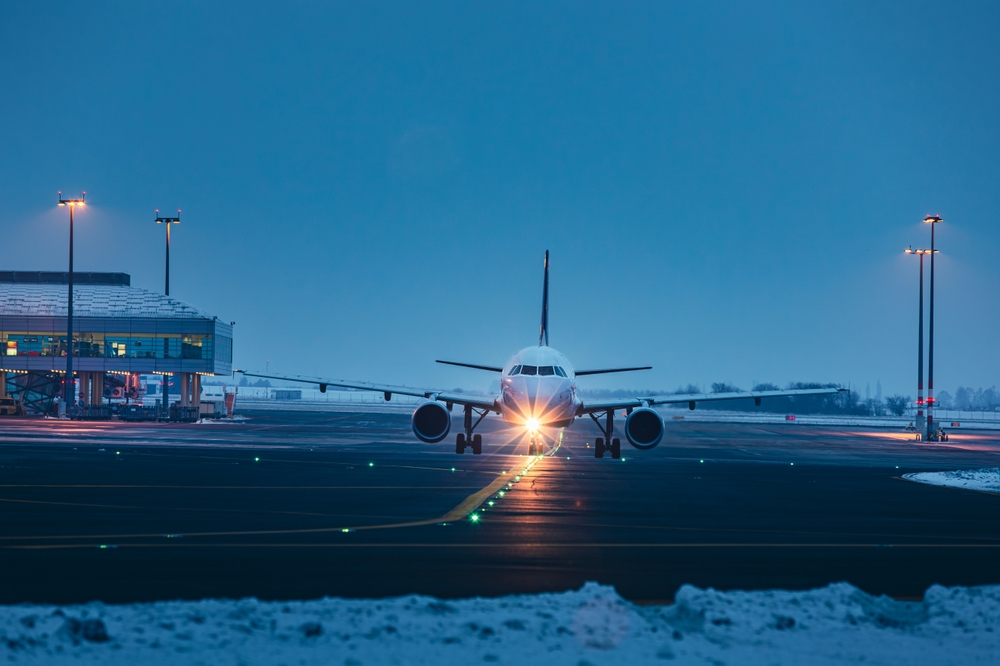
The Trump administration’s proposal has received support from some of America’s largest airlines, including American Airlines, Delta Air Lines, United Airlines, and Southwest Airlines.
These companies have a direct interest in the reliability of the national aviation network. Outdated technology, airport congestion, staffing shortages, and communications failures can all contribute to disruptions affecting passengers and airline operations.
Friday’s nationwide ground stop demonstrated how a technical problem involving communications infrastructure can affect flights across the country.
The incident also followed other disruptions involving aviation technology and telecommunications equipment.
In September, failures involving a circuit at a Philadelphia air traffic facility and the accidental severing of a fiber-optic cable in New Jersey caused thousands of flight delays and cancellations across the densely populated Northeast.
Those incidents added to concerns about the resilience of the country’s air traffic control network.
The FAA’s continued reliance on older equipment has also become part of the argument for faster investment. Replacing aging technology could reduce dependence on systems that are increasingly difficult to maintain.
However, support from major airlines does not settle the political disagreement over the administration’s funding request. Congress must still determine whether the proposed spending is justified and whether the Department of Transportation can demonstrate sufficient accountability.
Congress Faces A Political Fight Over Aviation Spending

The timing of the funding request could make negotiations particularly difficult. Democrats are preparing to take control of Congress in January, potentially increasing scrutiny of the Trump administration’s transportation spending decisions.
The Republican administration wants lawmakers to approve the funding during the final weeks of the year. Duffy has argued that companies including AT&T, Verizon, and Lumen are ready to begin deploying the necessary infrastructure if the money becomes available.
He has also described the proposed overhaul as an opportunity to replace the existing network with a completely new architecture rather than continuing with smaller repairs.
House Speaker Mike Johnson has supported additional investment and dismissed demands for an investigation into the incident.
Speaking to Fox News on Saturday, Johnson acknowledged that some of the equipment required modernization and said Congress had a responsibility to address the problem.
“I mean, some of this equipment dates back to the ’80s so it’s gotta be updated and that’s our responsibility. We’re gonna work to get it done,” Johnson said.
His comments reflect the Republican leadership’s preference for prioritizing modernization, although Democrats are continuing to demand explanations about the department’s spending.
The administration must now present a more detailed funding request while defending its management of existing appropriations. Congress will have to weigh the urgency of replacing aging aviation infrastructure against the need for transparency over taxpayer money.
Passengers Wait For Normal Operations As Funding Debate Continues
For travelers affected by Friday’s disruption, the immediate priority was getting flights operating normally again. Duffy said the administration expected the aviation network to recover and return to full capacity by Monday.
“As we look to the end of the day and into tomorrow, we should be running at full capacity,” the transportation secretary said.
He also expressed confidence that the incident was unlikely to have resulted from a deliberate cyberattack, although investigators were still examining the technical cause.
The disruption has nevertheless placed America’s air traffic control infrastructure under renewed scrutiny. A system responsible for coordinating thousands of flights depends on reliable communications equipment, and failures can quickly affect passengers far beyond the facilities where problems begin.
The administration believes a major investment is needed to prevent future disruptions. Democrats want to see a detailed accounting of existing funding before agreeing to another multibillion-dollar commitment.
With the proposed $50 billion request now at the centre of a growing political dispute, the administration will need to convince Congress that its modernization plan is both necessary and financially credible. The next decision will determine how much taxpayers are asked to contribute and what improvements the aviation system can actually deliver.