
Your cart is currently empty!
Trump Gold Card Visa Sees Only One Approval So Far

The promise sounded almost cinematic. A golden ticket to the United States, priced at one million dollars, offering a fast track to living and working in the country. When introduced the so called gold card visa, it was presented as a bold reimagining of immigration policy. It would attract global talent, inject massive funds into government coffers, and reshape how the country approached high value migration.
Contents
show
Months later, the reality has taken a quieter turn.
According to statements made by “Howard Lutnick”, during a congressional hearing, only one applicant has actually been approved under the program so far. At the same time, officials insist that hundreds remain in the pipeline. The contrast between early expectations and current outcomes has sparked conversation about whether the gold card is an ambitious innovation still finding its footing or a policy that may struggle to deliver on its headline promises.
A Vision Built on Wealth and Speed
From the outset, the gold card visa was designed to stand apart from traditional immigration pathways. Instead of navigating years of paperwork or employer sponsorship, applicants would be able to pay a substantial sum directly to the US government in exchange for residency rights.
The idea itself was not entirely new. Countries such as the United Kingdom, Spain, Greece, and Canada have long offered versions of golden visa programs that allow wealthy individuals to gain residency through financial contribution. The United States already had its own version through the EB 5 Immigrant Investor Program, which required foreign nationals to invest around one million dollars into businesses that create jobs.
What made the gold card different was its simplicity. Rather than investing in a company or creating employment, applicants would make a direct payment. In theory, this removed layers of complexity while accelerating the process.
Trump framed it as a win for both sides. Wealthy individuals would gain access to life in America, while the government would receive large sums of money that could be used to address national priorities.
Early Claims and the Billion Dollar Narrative

Shortly after the program launched, Lutnick suggested that the initiative had already generated around 1.3 billion dollars in commitments. The figure created an impression of overwhelming demand. It reinforced the idea that there was a global market of affluent individuals eager to buy into the American dream.
At the time, the program was also linked to even more ambitious projections. Lutnick had previously stated that the gold card could generate as much as one trillion dollars in revenue and potentially help balance the federal budget.
These claims stood out against the broader fiscal context. The United States currently carries a publicly held debt exceeding 31 trillion dollars, while projections from the Committee for a Responsible Federal Budget estimate an annual deficit of roughly 2 trillion dollars. Against such figures, even a trillion dollar program would represent only part of a much larger financial challenge.
Still, the messaging was clear. The gold card was not just an immigration policy. It was presented as an economic tool capable of delivering meaningful impact at a national scale.
One Approval and a Growing Queue

The latest update from Lutnick introduces a more grounded picture. While hundreds of applicants are reportedly in line, only one has successfully cleared the process so far.
Officials have framed this not as a failure but as a reflection of caution. According to Lutnick, the administration is prioritizing thorough vetting to ensure the program is implemented correctly. Each applicant must pay an additional 15000 dollar processing fee, which is intended to fund detailed background checks and compliance reviews.
This emphasis on scrutiny highlights a key tension within the program. On one hand, it promises speed and efficiency. On the other, it must maintain the integrity and security standards expected of any immigration pathway.
The gap between initial demand claims and actual approvals has not been fully explained. Lutnick did not directly address the discrepancy during the congressional hearing, leaving observers to interpret whether the earlier figures reflected applications, expressions of interest, or something else entirely.
How the Gold Card Actually Works
Behind the headlines, the structure of the gold card program reveals a more complex reality than its marketing might suggest.
Applicants are required to make a non refundable payment of at least one million dollars to the US government. They must also submit documentation demonstrating eligibility under existing immigration categories such as EB 1 or EB 2, which are typically reserved for individuals with extraordinary ability or advanced qualifications.
This means that the gold card does not create an entirely new pathway. Instead, it appears to operate within the framework of existing immigration law, potentially accelerating or supplementing the process rather than replacing it outright.
Companies are also given a role in the system. Businesses can sponsor foreign born employees by contributing two million dollars, along with an annual maintenance fee. This introduces a corporate dimension to the program, aligning it with broader efforts to attract global talent.
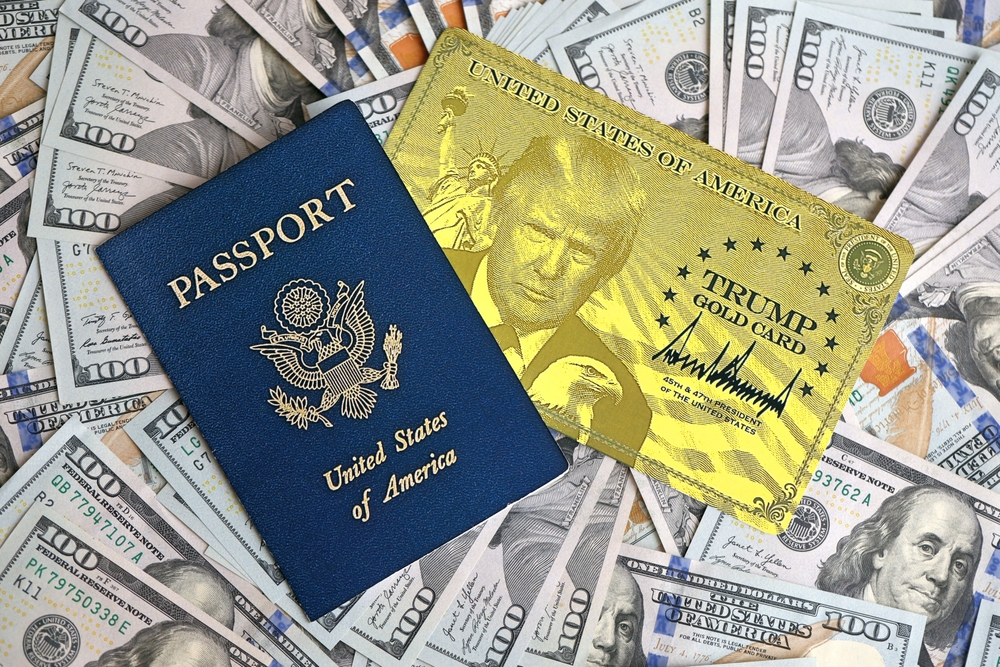
The official website presents the initiative with a polished image. A gold colored card featuring Trump’s likeness, alongside symbols such as the bald eagle and the Statue of Liberty, reinforces the idea of exclusivity and prestige. The slogan invites applicants to unlock life in America, appealing directly to ambition and aspiration.
Legal Questions and Structural Limits

Despite its bold framing, the gold card has raised questions among immigration experts.
Some legal analysts argue that the program relies on creative interpretation of existing laws rather than new legislation. This could leave it vulnerable to challenges in federal court, particularly if critics argue that it bypasses the role of Congress in setting immigration policy.
New York based immigration lawyer Cyrus D Mehta described the program as an example of executive maneuvering. While acknowledging its ingenuity, he suggested that it may face legal scrutiny.
Other experts have focused on its practical limitations. Immigration attorney Prashant Ajmera pointed out that the program does not eliminate key constraints such as per country quotas or visa caps. For applicants from countries with long waiting lists, including India, paying one million dollars does not necessarily guarantee faster processing.
Ajmera emphasized that the payment functions as a fee rather than an investment. Unlike the EB 5 program, which ties immigration benefits to job creation, the gold card does not require economic contribution in the same sense. This distinction could influence how the program is perceived both politically and economically.
Risks for Applicants

For those considering the gold card, the stakes are significant.
The financial commitment is substantial and non refundable. If the program were to face legal challenges or policy changes, applicants might find themselves without recourse.
Experts have also highlighted the complexity of compliance requirements. Applicants may need to provide detailed financial records, tax documentation, and proof of adherence to international regulations.
The absence of a fully transparent checklist from authorities adds another layer of uncertainty. Without clear guidelines, applicants must navigate a process that is still evolving.
These factors suggest that while the gold card offers potential benefits, it also carries considerable risk. It is not simply a transaction but a high stakes decision with legal and financial implications.
Politics, Messaging, and Contradictions
The gold card program sits within a broader political context that adds another dimension to the discussion.
Trump has built much of his political identity around strict immigration enforcement, particularly targeting undocumented migration. At the same time, he has consistently expressed support for skilled and high value immigration.
The gold card reflects this dual approach. It emphasizes selectivity and economic contribution, aligning with the idea of prioritizing migrants who can bring measurable benefits to the country.
Critics have pointed to the optics of a system that appears to place a price tag on residency. The contrast between strict enforcement for some groups and expedited access for wealthy individuals raises questions about fairness and values.
Supporters argue that the program is pragmatic. By attracting global wealth and talent, it could strengthen the economy and enhance competitiveness. They see it as an extension of policies already adopted by other nations.
A Global Trend with Local Challenges
Golden visa programs are not unique to the United States. Many countries have implemented similar initiatives to attract investment and high net worth individuals.
However, these programs have also faced criticism and reform. Concerns about transparency, housing markets, and economic impact have led some governments to redesign their offerings.
In this context, the US gold card enters a landscape that is both established and contested. It benefits from existing models but must also navigate the lessons learned from them.
The scale of the American economy and immigration system adds further complexity. Implementing a program of this nature in the United States involves legal, political, and administrative challenges that may not be present elsewhere.

The Road Ahead
With only one approval so far, the gold card visa remains in its early stages. The presence of hundreds of applicants in the queue suggests that interest exists, even if the pace of approvals is slower than anticipated.
The coming months will likely determine whether the program can gain momentum. Key factors include the efficiency of processing, clarity of guidelines, and the outcome of any legal challenges.
The administration’s approach to using the funds generated by the program will also be closely watched. Lutnick has indicated that decisions about spending will be made by the administration with the goal of benefiting the country, but specific plans have not been detailed.
A Policy Between Vision and Reality
The story of the gold card visa captures a broader theme in modern policymaking. Ambitious ideas often generate excitement and headlines, but their success ultimately depends on implementation.
In this case, the concept of monetizing immigration to attract wealth and talent is both intriguing and controversial. It reflects a willingness to experiment with new approaches while also raising questions about equity and effectiveness.
For now, the gap between early claims and current outcomes serves as a reminder that policy is rarely as simple as its initial pitch. The gold card may still evolve into a significant tool, or it may remain a niche experiment within a much larger system.
Either way, it offers a glimpse into how governments are rethinking immigration in an increasingly competitive and interconnected world. The balance between opportunity, fairness, and practicality will continue to shape not only this program but the broader future of global mobility.