
Your cart is currently empty!
Why Trumps New One Dollar Coin Is Facing Legal Challenges
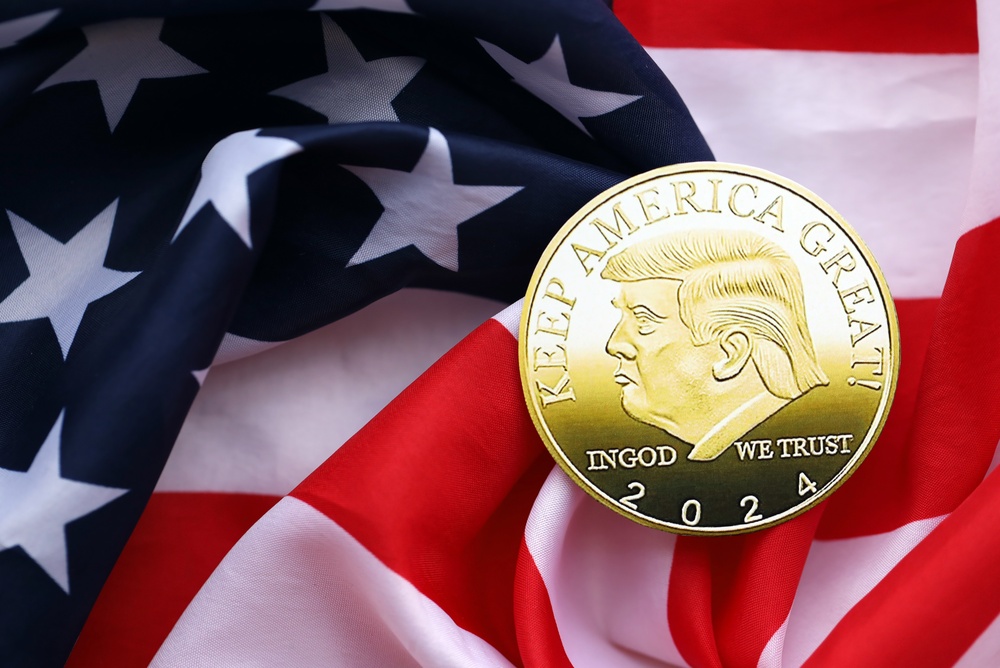
A new commemorative $1 coin celebrating America’s 250th anniversary has sparked one of the most unusual legal and political debates of Donald Trump’s second presidency. While the Treasury Department says the coin is a fitting tribute to the nation’s semiquincentennial, legal scholars and ethics experts argue that placing a sitting president’s portrait on official U.S. currency could conflict with long-standing federal law and centuries of American tradition.
Contents
show
The dispute has quickly grown beyond the design of a collectible coin. It now touches on questions about executive authority, historical precedent, and whether America’s currency should remain free from contemporary political symbolism.
A New Coin Places Trump at the Center of America’s 250th Celebration
Treasury Secretary Scott Bessent officially unveiled the commemorative coin earlier this week, announcing that the U.S. Mint will begin producing it as part of the country’s 250th birthday celebrations. The special-edition $1 coin features President Donald Trump on one side, while the reverse displays the bald eagle from the Great Seal of the United States.
The front of the coin presents Trump wearing a suit and tie with a serious expression. The word “LIBERTY” appears across the top, while the dates “1776-2026” are inscribed beneath the portrait. The familiar national motto, “IN GOD WE TRUST,” is positioned to the side.
According to the Treasury Department, the coin will receive a gold-like finish, although it is not made of solid gold. It is expected to become available for purchase later this year before entering circulation during the nation’s semiquincentennial celebrations in 2026.
Bessent promoted the design as a symbol of the country’s milestone anniversary, describing it as a celebration of American values and national freedom. The administration has framed the coin as an appropriate tribute to both the nation’s history and its current leadership during a landmark anniversary.
President Trump appeared pleased with the announcement.
“It’s very cute, they gave me a coin,” Trump said during an interview with Fox News. “That’s very unusual, from what I understand.”
His response reflected what many observers immediately noted: it is highly uncommon for a sitting American president to appear on official U.S. currency.
Why the Coin Immediately Sparked Legal Questions
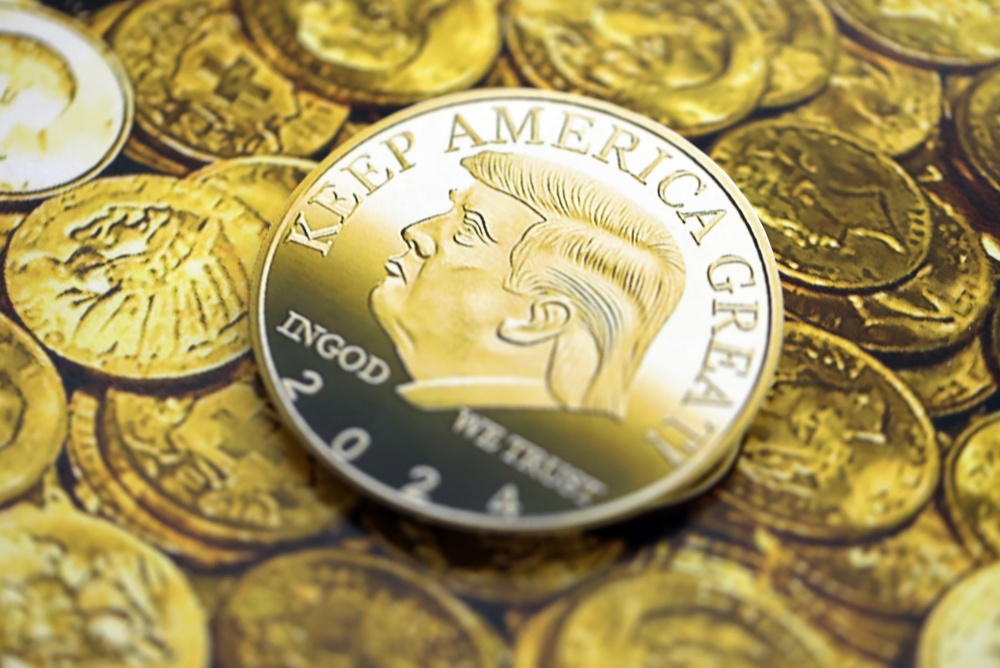
Within hours of the coin’s unveiling, legal experts began questioning whether the design complies with federal law.
The debate centers on several statutes governing who may appear on American currency.
One of the oldest dates back to 1866, when Congress responded to public outrage after a Treasury official arranged for his own portrait to appear on paper money. The resulting legislation established that only deceased individuals could appear on United States currency and securities.
For generations, that principle has become a defining feature of American money. Presidents have traditionally appeared on coins and bills only after their deaths, reinforcing the idea that currency should remain separate from contemporary politics.
Jeremy Paul, a constitutional law professor and former dean of Northeastern University School of Law, believes the new commemorative coin raises significant legal concerns.
“The law prohibits, currently, on currency, the likeness of any person, not just the president, who is alive,” Paul said.
According to Paul, the issue extends beyond technical statutory language.
“Regardless of careful parsing of the language of these individual statutes, this plan the president and Secretary Bessent have cooked up is inconsistent with the principles of our country, and it politicizes something that’s not supposed to be political,” he said.
Other legal experts have reached similar conclusions, arguing that the longstanding prohibition reflects an important constitutional principle rather than simply a design preference.
Richard Painter, who served as chief White House ethics lawyer under President George W. Bush, argued that placing living presidents on money has historically been associated with political systems the United States intentionally rejected.
“One of the reasons for Congress wanting to prohibit this is that we don’t want presidents acting like kings,” Painter said. “And this is not the only way in which Donald Trump has acted like a king.”
Supporters of the administration, however, maintain that the coin falls within a specific legal exception created by Congress.
The Administration Says Congress Already Authorized the Coin

Treasury officials argue that critics are overlooking legislation passed during Trump’s first administration.
In 2020, Congress approved the Circulating Collectible Coin Redesign Act, authorizing the Treasury Secretary to issue special $1 coins featuring designs “emblematic of the United States semiquincentennial” during 2026.
The administration says this law provides clear authority for the commemorative coin.
During an appearance on Fox News, Bessent defended the decision by pointing to an earlier historical example.
“As Treasury secretary, I only have two mandates: the currency has to say ‘In God We Trust’ somewhere on it and there cannot be an image of a living person,” he said.
He then referenced an exception from nearly a century ago.
“During the 150th there was a Calvin Coolidge coin, so we can put living people’s images on a coin.”
Treasury officials have consistently maintained that the 2020 legislation gives them sufficient authority to proceed with the design despite broader restrictions that normally govern U.S. currency.
The U.S. Commission of Fine Arts also reviewed several proposed versions of the commemorative coin before approving a final design earlier this year. Although the Treasury ultimately selected a different portrait than the commission originally recommended, officials stated that legal reviews conducted by both the Mint and the Treasury Department concluded that the commemorative coin complies with the governing statute.
That interpretation, however, has not settled the matter.
The Calvin Coolidge Comparison Isn’t Universally Accepted
The administration’s strongest historical argument rests on a single example from 1926.
That year, President Calvin Coolidge appeared alongside George Washington on a commemorative half-dollar celebrating America’s 150th anniversary. It remains the only time a sitting president has appeared on an official U.S. coin during his lifetime.
Treasury officials argue that this establishes a historical precedent supporting Trump’s commemorative coin.
Critics disagree.
Paul argues that even if the Coolidge coin established an exception nearly a century ago, Congress has since enacted additional laws designed to move American currency further away from honoring living political figures.
One important example is the Presidential $1 Coin Act of 2005.
That legislation created a long-running series honoring former presidents but required each president to have been deceased for at least two years before becoming eligible for inclusion.
The final coin in that series honored George H. W. Bush in 2020, two years after his death.
To critics, the requirement reinforced Congress’s continuing preference for commemorating presidents only after their time in office has fully entered history.
They argue that the semiquincentennial legislation should not automatically override those broader principles unless Congress explicitly intended to create such an exception.
The disagreement ultimately comes down to competing interpretations of multiple federal statutes rather than a single, straightforward legal prohibition.
That complexity may explain why legal scholars continue to disagree over whether the commemorative coin would survive judicial review if challenged.
A Court Fight May Be Difficult to Bring

Even if critics believe the coin violates federal law, bringing the issue before a judge presents another obstacle.
Under American law, plaintiffs generally must demonstrate that they have suffered a concrete injury before a court will consider the merits of their claim.
Paul says identifying such an injured party may prove difficult.
“In order to take your case to court, you have to prove that you were injured,” he explained. “And the question is, who’s injured by the fact that the president is violating this law?”
One early attempt has already failed.
Earlier this year, retired Oregon attorney James Rickher filed a lawsuit seeking to block the commemorative coin before production began. Rickher argued that the proposal would harm him as a coin collector.
A federal judge rejected the request, concluding that Rickher had not demonstrated sufficient legal standing to pursue the case. Importantly, the court did not decide whether the coin itself complies with federal law.
That means the underlying legal question remains unresolved.
Some legal observers believe a future dispute could emerge after the coins enter circulation if a business, collector, or consumer challenges their legal status. Others believe the issue may never receive a definitive court ruling if no plaintiff can establish the necessary standing to sue.
For now, the administration continues moving forward with production while legal experts remain sharply divided over whether the commemorative coin represents a lawful exception or an unprecedented break from long-standing American practice.
Political Critics Say the Coin Is Part of a Larger Pattern

The debate surrounding the commemorative coin has expanded well beyond questions about statutory language. Critics argue the design reflects a broader effort by the Trump administration to place the president at the center of America’s 250th anniversary celebrations.
Over the past several months, the administration has announced several initiatives that prominently feature Trump’s name or image. Among them are plans for new passports carrying Trump’s likeness, updated national park passes, banners displayed across government buildings, and changes affecting U.S. currency.
Another move that drew attention came in March, when the Treasury Department announced that newly printed paper currency would include Trump’s signature. Traditionally, American banknotes carry the signatures of the Treasury secretary and the Treasurer of the United States rather than the president. Treasury officials described the addition as an appropriate acknowledgment of the sitting president during the semiquincentennial period.
At the same time, the administration confirmed it was no longer pursuing earlier plans to place abolitionist Harriet Tubman on the $20 bill, a proposal that had been under discussion for years.
That contrast quickly became a political flashpoint.
Representative Joyce Beatty of Ohio criticized the decision in a social media post, writing, “They can put Trump on a $1 coin, but can’t keep a decades-old promise to put Harriet Tubman on the $20 bill??? This Treasury is funding presidential vanity projects.”
Supporters of the administration view the commemorative coin differently. They argue that America’s 250th anniversary naturally coincides with Trump’s presidency and that commemorating the nation’s current leader during such a milestone is appropriate. Treasury officials have repeatedly described the coin as honoring American liberty rather than promoting a political campaign.
Still, critics contend the cumulative effect of these projects has intensified concerns about whether national symbols are becoming increasingly personalized.
History Shows America Has Long Avoided Honoring Living Leaders on Money
The controversy has also revived a long-standing tradition that dates back to the country’s founding.
Unlike many monarchies, the United States deliberately avoided placing living rulers on its money. Early American leaders believed currency should represent the nation rather than any individual who happened to hold office.
George Washington reportedly rejected suggestions that his own image appear on American coins during his presidency, believing such practices resembled European monarchies that the young republic sought to distinguish itself from.
Congress later reinforced that philosophy through legislation restricting portraits of living individuals on currency.
The only widely recognized exception came in 1926, when President Calvin Coolidge appeared on a commemorative half-dollar celebrating the nation’s 150th anniversary. Even that coin generated criticism at the time.
Its commercial performance was also disappointing.
Nearly one million coins were produced, but demand fell far below expectations. More than 859,000 unsold coins were eventually returned to the Mint and melted down, making the issue more of a historical curiosity than a circulating success.
Legal scholars who oppose the new Trump coin argue that the Coolidge example should remain an exception rather than a precedent.
They also note that Congress enacted additional restrictions after 1926, including the Presidential $1 Coin Act, which explicitly limited presidential commemorative coins to leaders who had been deceased for at least two years.
Supporters of the administration counter that the semiquincentennial legislation enacted in 2020 created a separate legal framework specifically intended for America’s 250th anniversary.
Whether Congress intended that authority to override earlier restrictions remains one of the central questions in the ongoing debate.

Will Americans Actually Spend the Coin?
Beyond the legal arguments lies another question: what happens after the coin reaches the public?
Although the commemorative $1 piece will be legal tender, its practical use may differ from that of ordinary circulating coins.
Collectors are expected to purchase many examples simply because they commemorate the nation’s 250th anniversary. Political supporters may also keep them as souvenirs rather than spend them.
Some analysts have suggested that opponents of the president could react in the opposite way, choosing to spend the coins as quickly as possible rather than keep them.
That combination could create an unusual situation in which large numbers of coins leave regular circulation almost immediately, either because they become collectibles or because people deliberately avoid holding onto them.
There is historical support for that possibility.
The 1926 Calvin Coolidge commemorative coin never achieved widespread circulation. Instead, many examples were preserved by collectors, while unsold inventory eventually returned to the Mint.
Modern commemorative coins often follow a similar pattern. Although they remain legal tender, their collector value usually exceeds their face value, giving owners little incentive to use them in everyday transactions.
The Treasury has not announced the retail price of the new coin or explained how proceeds from sales will be allocated. Traditionally, commemorative coins include surcharges that support museums, historical preservation projects, Olympic programs, and other congressionally authorized initiatives.
The Legal Debate May Continue Long After the Coin Is Released
For now, production of the commemorative coin is moving forward despite the controversy.
The Treasury Department continues to insist that the design complies with the authority granted under the Circulating Collectible Coin Redesign Act of 2020. Legal scholars challenging the decision argue that other federal statutes and long-standing constitutional traditions point in the opposite direction.
Both sides acknowledge that obtaining a definitive answer may prove difficult.
Without a plaintiff who can demonstrate a direct legal injury, federal courts may never rule on whether the commemorative coin violates existing law. The unsuccessful lawsuit brought by retired attorney James Rickher illustrates the procedural hurdles that challengers could face before a judge even considers the underlying legal questions.
That leaves the issue in an unusual position. The coin could enter circulation while the debate over its legality remains unresolved.
Meanwhile, it has already become one of the most talked-about symbols connected to America’s upcoming 250th anniversary.
For supporters, the coin represents a celebration of the country’s current leadership during a historic milestone. For critics, it raises broader questions about presidential power, historical precedent, and the role that national symbols should play in American public life.
Whether the commemorative coin ultimately becomes a prized collector’s item, a frequently used dollar, or the subject of future litigation, its release has already ensured a place in the larger conversation surrounding the nation’s semiquincentennial and the evolving relationship between politics and America’s most familiar public institutions.