
Your cart is currently empty!
Remembering Charlie Kirk as Trump Awards Him the Medal of Freedom
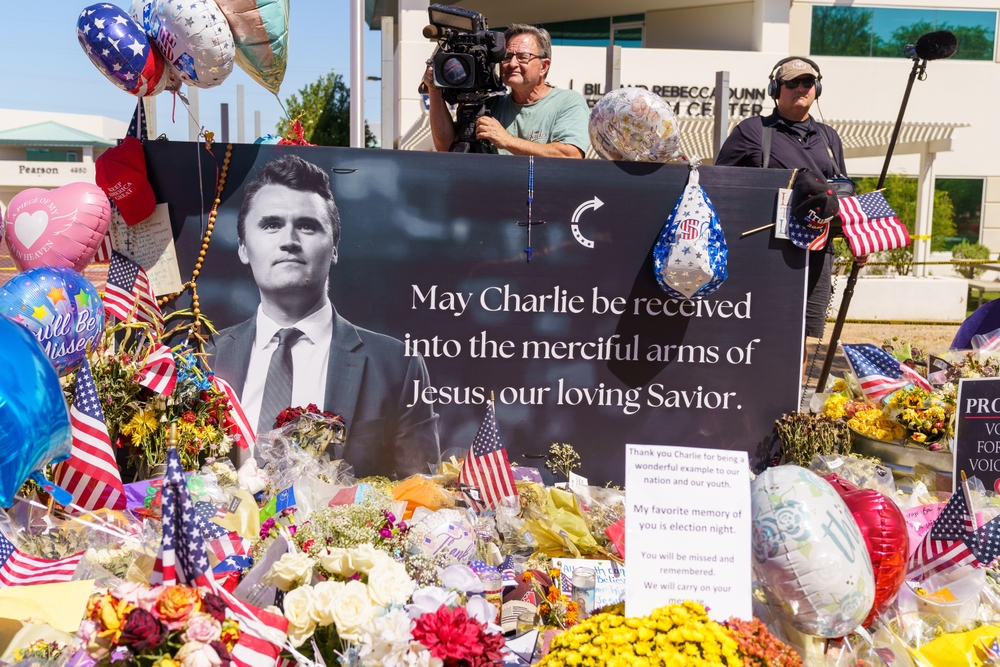
Under a clear October sky in the White House Rose Garden, the hum of cameras fell silent as Erika Kirk stepped forward to accept the Presidential Medal of Freedom on behalf of her late husband, Charlie Kirk. The moment carried both solemnity and spectacle a nation’s highest civilian honor bestowed upon a man whose death, just weeks earlier, had shocked political circles across America. President Donald Trump, who personally returned from international travel to preside over the ceremony, described Kirk as a “warrior for liberty” and “a martyr for truth.” For those in attendance, the day marked more than recognition; it became a convergence of grief, remembrance, and ideology.
Contents
show
The ceremony took place on October 14, 2025 the day that would have been Charlie Kirk’s 32nd birthday. A crowd of family, friends, Turning Point USA members, and prominent political figures filled the Rose Garden, its iconic white columns draped in American flags. Trump stood at the podium, joined by First Lady Melania Trump and Vice President JD Vance, while Erika Kirk cradled the medal in her hands, its golden rays catching the light. What followed was not a conventional award acceptance but a deeply personal reflection on freedom, faith, and loss. Through tears, Erika shared memories of her husband’s unwavering conviction and his final message: that “to die free is the greatest victory.” Her words resonated far beyond the garden, spreading across television broadcasts and social media as millions revisited Kirk’s legacy a life that had become both symbol and controversy in the ever-polarized landscape of American politics.
A Ceremony Steeped in Symbolism
The Presidential Medal of Freedom, established by President John F. Kennedy in 1963, has long served as an emblem of national gratitude, awarded to individuals who have made extraordinary contributions to the country’s cultural, political, or humanitarian life. Over the decades, recipients have ranged from scientists and artists to civil rights leaders and world figures. Under Trump’s administration, however, the medal has taken on a distinctly ideological hue a way to canonize those who embodied the spirit of his movement. When Trump draped the ribbon across the empty space where Kirk should have stood, it was as much a personal tribute as it was a political signal.
Trump’s remarks blended reverence and rhetoric. He described Charlie Kirk as a man who “fought fearlessly for a better and stronger America” and “galvanized the next generation like no one else.” He called Kirk’s killing a “demonic act” and spoke of him as a “martyr for truth and for freedom.”

The president’s tone swelled with emotion a rare moment of solemnity for a leader known for his defiance. Yet beneath the pathos lay political theater. By honoring Kirk on his birthday, Trump transformed private mourning into a national stage, binding the activist’s death to a broader narrative of sacrifice and resilience within conservative America.
The crowd, a mixture of political allies and personal friends, stood in hushed respect. Among them were Turning Point USA staff, foreign dignitaries, and rising conservative influencers many of whom owed their political inspiration to Kirk’s mentorship. As Erika took the podium, her voice steady yet trembling, the ceremony shifted tone. She began with gratitude: “Thank you, Mr. President, for honoring my husband in such a profound way. Charlie always admired your commitment to freedom.” Then came the intimate: stories of her husband’s love for quiet walks, his Saturday sabbaths, his mint chocolate chip ice cream rituals, and his stubborn faith in divine purpose. The political veneer melted away, replaced by something universal a wife’s grief, a mother’s strength, and a widow’s attempt to give meaning to loss.
The Life and Legacy of Charlie Kirk

Charlie Kirk’s story was one of ambition, faith, and unrelenting conviction. Born in Wheeling, Illinois in 1993, he displayed a fascination with politics from a young age. At 18, he founded Turning Point USA (TPUSA), a student-led movement dedicated to promoting free markets, limited government, and conservative values on college campuses. What began as a grassroots initiative quickly grew into a political powerhouse, with hundreds of campus chapters and tens of millions in funding. By his early thirties, Kirk had become a central figure in the conservative movement a polarizing yet undeniable force in shaping the next generation of right-wing activism.
His voice, amplified through social media, talk shows, and rallies, resonated with young conservatives who felt alienated by mainstream academia. Kirk cast himself as their defender against what he saw as ideological censorship and progressive overreach in universities. Critics accused him of fueling division and promoting reactionary politics, but to his supporters, he embodied courage. He was a provocateur, a strategist, and, above all, a believer in what he called “truth anchored to God.”
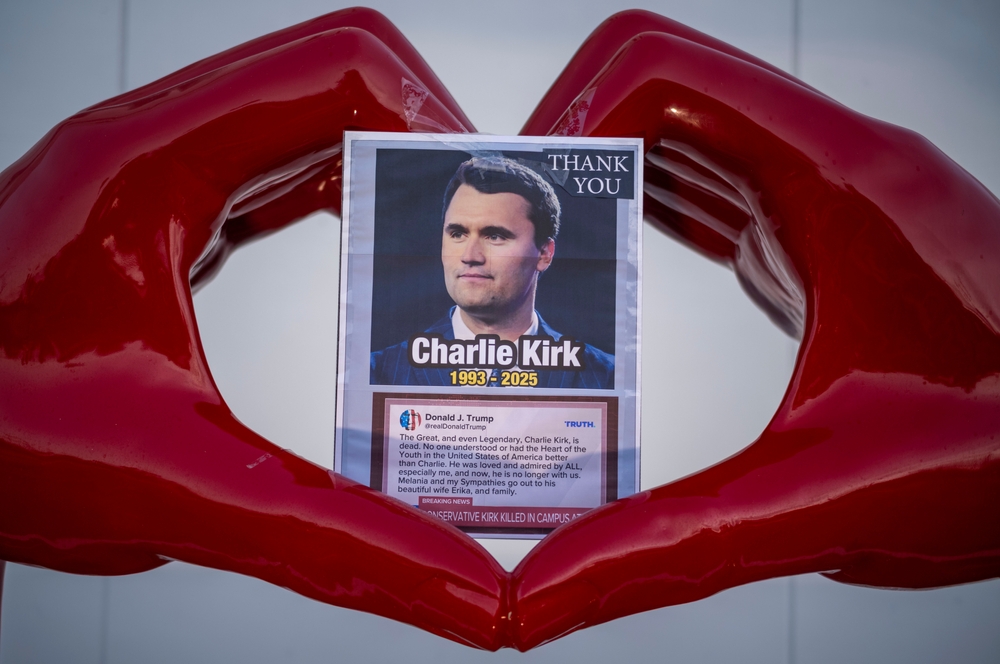
That conviction made him both influential and controversial. Kirk’s detractors pointed to his frequent attacks on diversity programs and his skepticism of the Civil Rights Act, arguing that his rhetoric stoked resentment rather than dialogue. Yet even his harshest critics acknowledged his effectiveness. He had an uncanny ability to mobilize discontent into action to translate ideology into movement. His rise reflected a broader transformation within the Republican Party, where activism and populism fused into a single, fervent identity.
Kirk’s death on September 10, 2025, came as a shock to that movement. While speaking at Utah Valley University about mass shootings in America, he was fatally shot in what authorities later described as an isolated attack. Investigators found no links to political organizations, but the narrative quickly evolved into something larger. For conservatives, his assassination became proof of a deeper societal sickness a moral and ideological war consuming public life. For others, it underscored the dangers of weaponized rhetoric and polarization. Either way, his death forced the country to confront the fragility of public discourse and the human cost of ideological division.
Love, Faith, and Freedom
If the ceremony was political theater, Erika Kirk’s speech was its emotional heart. Standing beneath the Rose Garden’s autumn light, she spoke not as a political widow but as a woman rebuilding meaning from tragedy. Her words wove together theology, patriotism, and personal memory, transforming grief into something almost liturgical. “Charlie believed that liberty was both a right and a responsibility,” she said. “He used to say that freedom is the ability to do what is right without fear. And that’s how he lived.”
She recalled their first meeting an interview on politics and philosophy that turned into a lifelong partnership. She spoke of his restlessness, his sense of divine calling, and his love for his children. Her three-year-old daughter Gigi’s birthday message drew tears from many: “Happy birthday, daddy. I want to give you a stuffed animal. I want you to eat a cupcake with ice cream, and I want you to go have a birthday surprise.” The words, simple and childlike, became the emotional punctuation mark of the ceremony a moment when politics dissolved into pure human sorrow.
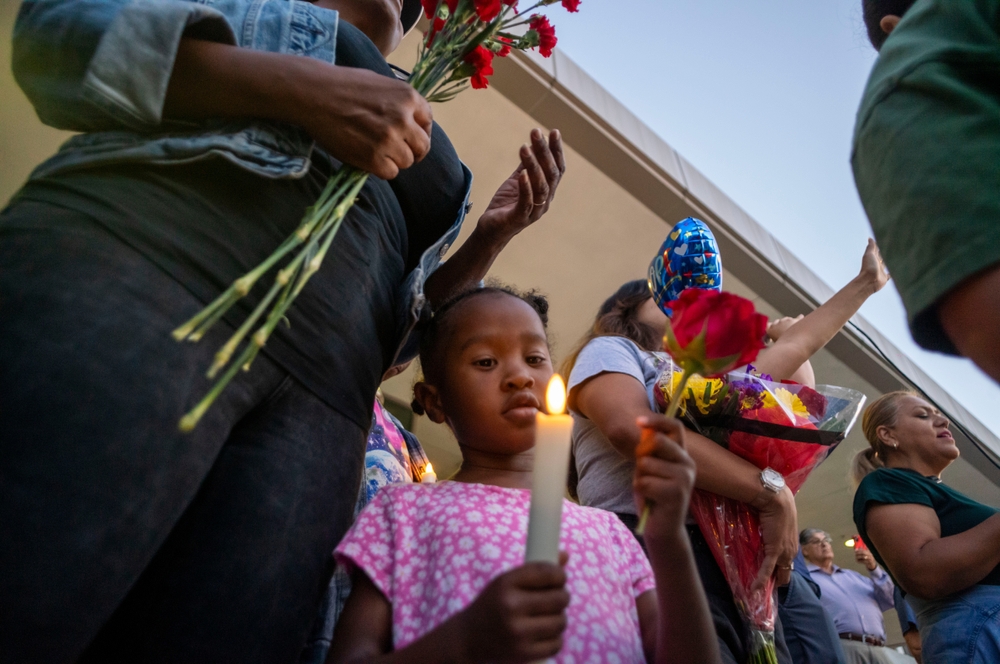
Then came Erika’s declaration that would echo across social media and news outlets: “To live free is the greatest gift, but to die free is the greatest victory.” It was both a farewell and a benediction an affirmation of her husband’s guiding principle. She reminded the audience that “freedom is inherited in this country, but each of us must be intentional stewards of it.” To those gathered, it sounded less like a eulogy and more like a commissioning, a call to carry forward the mission that Charlie had begun.
Her closing words lingered long after the applause faded: “Heaven gained what earth could no longer contain a free man made fully free.” The line encapsulated the paradox of the moment profound loss intertwined with spiritual triumph. For many viewers, it became the defining soundbite of the day, encapsulating both personal faith and political conviction.
Between Tribute and Politics
For President Trump, the decision to honor Charlie Kirk was both heartfelt and strategic. Kirk had been one of his most ardent supporters, a bridge between the populist right and its younger adherents. Their relationship had always been mutually reinforcing Kirk amplified Trump’s message on campuses, while Trump legitimized Kirk’s status within the movement. Awarding him the Medal of Freedom was a gesture steeped in loyalty and symbolism, positioning Kirk as a martyr whose death embodied the conservative struggle against ideological persecution.
Yet this fusion of personal tribute and political messaging did not go unnoticed. Critics questioned whether the ceremony blurred the line between commemoration and campaign. Trump’s invocation of Kirk as a victim of “radical left extremism” played into a familiar narrative of grievance and resistance, a cornerstone of his political rhetoric. Supporters, on the other hand, saw the gesture as long overdue recognition for a man who had reshaped conservative activism.
The media response reflected the nation’s deep divisions. Conservative outlets praised the event as a powerful affirmation of principle. Others described it as an exercise in mythmaking the transformation of tragedy into ideology. Still, there was little denying the emotional impact. The sight of Erika Kirk clutching the medal while the president stood in solemn silence was potent and deeply human. It transcended partisanship, if only briefly, reminding even the most jaded observers that behind every headline lies a story of people, families, and love interrupted.
Legacy and Continuation
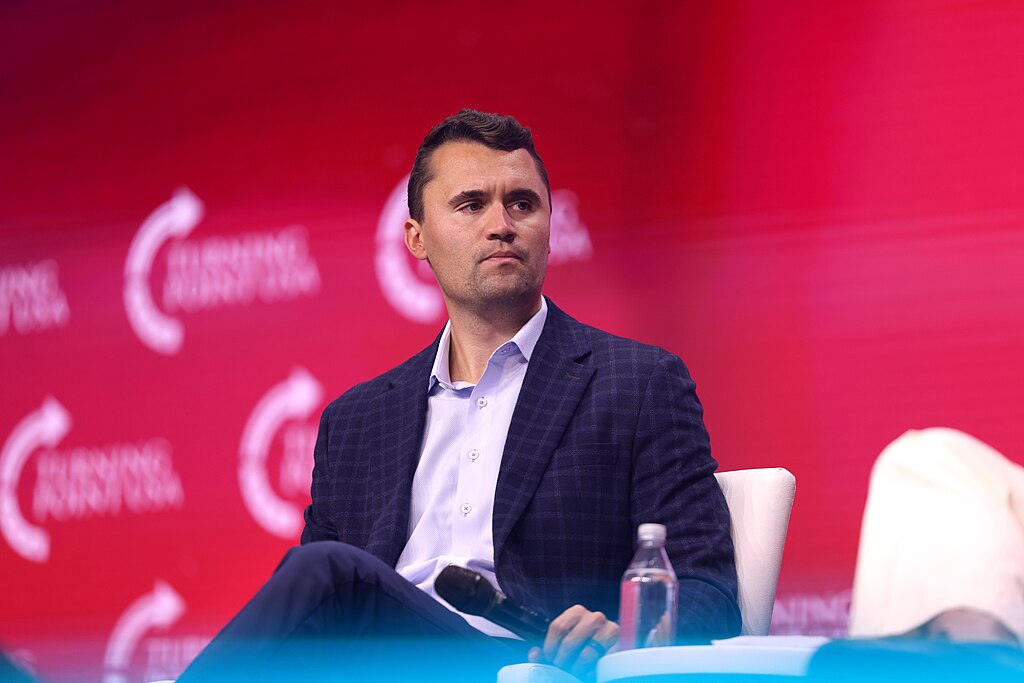
In the aftermath of the ceremony, Erika Kirk announced that she would assume leadership of Turning Point USA, continuing her husband’s mission to cultivate a new generation of conservative thinkers. Her vision, however, carries a noticeably different tone less combative, more conciliatory. In interviews, she has emphasized faith, service, and dialogue over confrontation. Whether this marks an evolution or a softening of Turning Point’s identity remains to be seen, but early indications suggest a desire to expand the movement’s moral vocabulary.
Under Erika’s stewardship, Turning Point has begun launching scholarship programs, interfaith initiatives, and civic service projects aimed at “building communities anchored in freedom and responsibility.” Attendance at its national conferences has surged, and donations have spiked since Charlie’s death. For many supporters, her leadership embodies continuity; for others, it signals transformation a bridge between passion and purpose.
Meanwhile, Trump’s administration has leaned into Kirk’s martyrdom as part of a broader message about national identity and ideological struggle. He signed a proclamation declaring October 14 as a National Day of Remembrance for Charlie Kirk, calling it a time to “reflect on the cost of courage and the blessings of liberty.” While opponents see political calculation in the gesture, even some critics admit the symbolism resonates. In an era of cynicism, acts of recognition even those intertwined with politics carry weight.
The legacy of Charlie Kirk will continue to evolve. His life was a study in paradox: idealism mixed with provocation, conviction entwined with controversy. Whether remembered as a visionary or a polarizing figure, his influence on conservative youth culture is undeniable. And through Erika’s efforts, his ideals faith, freedom, and fortitude will continue to echo across campuses and communities.
Freedom, Faith, and the Fragility of Public Life
The image of Erika Kirk holding the Medal of Freedom beneath the autumn sun captures something quintessentially American a blend of triumph and tragedy, devotion and debate. Her husband’s story, at once deeply personal and politically charged, reveals how ideals can both inspire and divide. In honoring him, the nation confronts its own contradictions: freedom as both inheritance and responsibility, truth as both weapon and balm.
Beyond partisanship, there lies a quieter lesson. The rhetoric of freedom, so often wielded as political armor, is also a deeply human yearning the desire to live with integrity, to believe one’s life has purpose. Charlie Kirk lived by that creed, and his wife’s tribute turned it into a prayer for perseverance. Her words reminded listeners that liberty begins not in the halls of power but in the heart a truth easy to forget amid the noise of politics.
As the ceremony ended and the sun dipped behind the Rose Garden trees, the audience rose in silence. Trump stood beside Erika, hand on her shoulder, as a Marine band played softly in the distance. Cameras captured the moment, but its power lay not in its broadcast value, nor in its political implications, but in its humanity. Amid the symbols and speeches, one truth endured: that freedom, however defined, remains sacred when carried by love.
Charlie Kirk’s story his rise, his death, and his remembrance now belongs to history. But history, as ever, is written in the tension between fact and faith, between what we remember and why. And in that space, the image of Erika Kirk’s tear-streaked face and trembling hands will endure a testament not only to one man’s conviction but to a nation still struggling to define the meaning of freedom itself.