
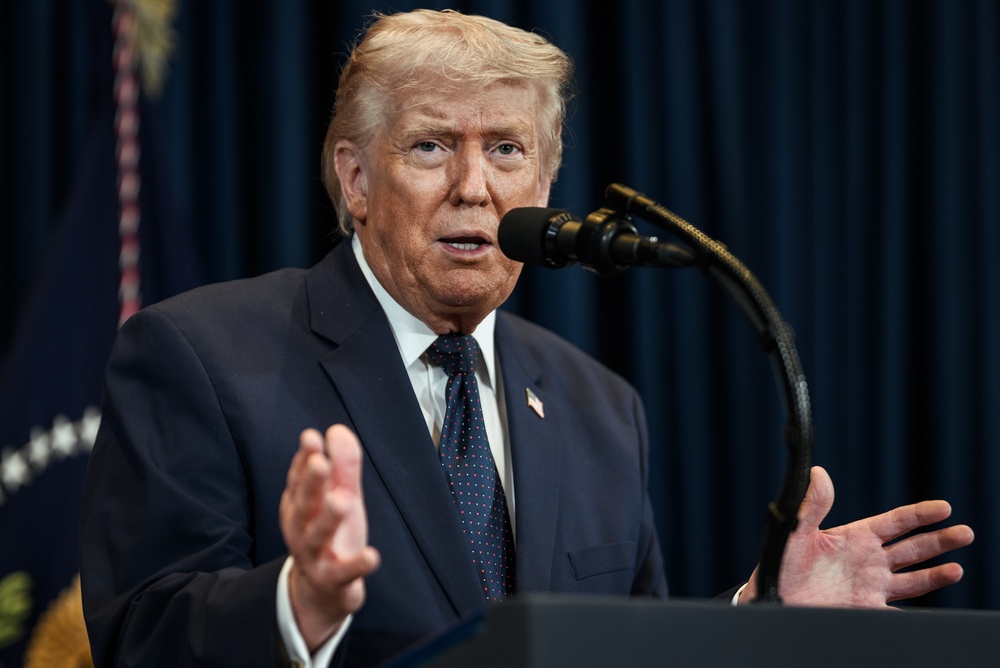
President Donald Trump has launched a fresh attack on CBS’s 60 Minutes after the program examined how six American soldiers were killed in an Iranian drone strike in Kuwait. The president accused the program of presenting an incomplete account of the Iran war, arguing that its investigation overlooked the scale of US military success against incoming Iranian weapons.
The dispute has opened another confrontation between Trump and the network, with the president questioning the program’s new leadership and its handling of the conflict. However, the investigation has also raised serious questions about whether American troops received adequate protection before the deadly attack. With a surviving Army officer now filing a whistleblower complaint to Congress, the controversy is becoming increasingly difficult to separate from the wider scrutiny of the administration’s handling of the war.
Trump Calls Out 60 Minutes Over Its Iran War Investigation
Trump criticized 60 Minutes on Monday, November 16, following a report presented by correspondent Norah O’Donnell. The investigation examined the March 1 Iranian drone attack on an American Army command post at Port Shuaiba in Kuwait, where six US soldiers were killed. The president took particular issue with what he considered an inaccurate presentation of American defensive capabilities during the conflict.
“The new people running 60 Minutes are even worse than their predecessors. A recent study on an attack in the early stages of Iran was not correctly stated,” Trump wrote in a Truth Social post. His criticism was directed at the program’s current leadership and its coverage of the military campaign.
The president argued that the investigation concentrated on vulnerabilities within American military installations while giving insufficient attention to the number of Iranian weapons intercepted by US forces. He maintained that the defensive performance of American troops deserved greater recognition, particularly given the number of drones and missiles launched during the conflict.
The investigation, meanwhile, examined the circumstances surrounding the deaths of the six soldiers and allegations that military leaders failed to address warnings about the facility’s vulnerability. Those competing accounts have placed the program’s reporting under renewed scrutiny, with the debate extending beyond television journalism into questions about military preparedness and accountability.
Trump Uses Drone And Missile Figures To Defend US Forces
The president backed his criticism with figures describing Iran’s attacks since Operation Epic Fury began on February 28, 2026. Trump claimed that Iran had launched between 8,000 and 9,000 one-way attack drones, arguing that only two had penetrated American defenses and resulted in US fatalities. He identified the attacks in Kuwait and Saudi Arabia as the two incidents.
Trump also cited approximately 2,000 Iranian ballistic missile launches, claiming that only one had penetrated defenses and caused American fatalities in Jordan. He used those figures to challenge the impression that American military installations had been broadly vulnerable throughout the campaign.
“Translation: 99.99% of Iranian missiles and drones have been shot down or, in any event, not caused U.S. deaths. CENTCOM defensive measures have been historically effective. No one in the World has the ability to do so well. All of this being left out of the 60 Minutes ‘report,’” Trump wrote.
His argument combines weapons intercepted with attacks that did not produce American deaths. Those measurements are different, and the figures in his post have not been independently established by the information provided in the investigation. The distinction is central to understanding the disagreement: the president is emphasizing overall defensive performance, while the program is examining a specific deadly breach and the circumstances that preceded it.

Six American Soldiers Were Killed In The Kuwait Attack
The March 1 attack on Port Shuaiba became the central subject of the investigation because it resulted in six American military deaths during the opening days of the war. An Iranian drone struck an Army command post at the Kuwaiti installation, killing six service members and leaving survivors to deal with the aftermath.
The investigation included accounts from soldiers who had been stationed at the facility, along with footage and photographs documenting the damage. It also examined the wider impact of Iranian attacks on American military and diplomatic locations across the Middle East. The reporting identified at least 31 affected sites across eight countries, with hundreds of buildings and structures damaged.
The human cost of the conflict has also grown considerably since the initial attack. The investigation cited 23 American service members killed and more than 800 wounded during the war. Those figures formed part of the broader examination of how American personnel were protected while military operations continued across the region.
The Kuwait incident has become particularly significant because surviving personnel have questioned whether the installation was adequately prepared for the threat. Their accounts raise questions about intelligence warnings, defensive equipment, and medical resources available before the drone struck. These concerns have now reached Congress through a formal whistleblower complaint.
Army Major Alleges Military Leaders Ignored Earlier Warnings
Army Maj. Stephen Ramsbottom, who survived the attack, filed a whistleblower complaint with the House and Senate Armed Services Committees. He alleged that senior military officials ignored warnings about the vulnerability of Port Shuaiba and failed to prepare adequately for Iranian drone attacks. His complaint also questioned the defensive arrangements and emergency medical resources available at the installation.
Ramsbottom described the incident as a failure involving multiple levels of military leadership. “I feel this is a tactical failure by the Army, our leadership, and myself, all the way down to my level,” he said during his interview. He also acknowledged his own responsibility while questioning the decisions made before the attack.
“We just did not plan this well, and this needs to be a lesson that we learn,” Ramsbottom added. His comments reflected the concerns raised in his complaint, which calls for an examination of the military’s preparation for the Iranian threat.
The allegations include several specific concerns about the conditions at Port Shuaiba:
- Intelligence warnings: Ramsbottom alleged that soldiers had seen intelligence identifying the installation as a potential Iranian target before the conflict began.
- Counter-drone protection: Personnel reportedly requested additional equipment during the week before the attack.
- Medical facilities: The complaint claimed the installation had no physician and no fixed aid station.
- Emergency transportation: According to the complaint, only one ambulance was available at the site.
- Military preparedness: Ramsbottom questioned whether senior officials had adequately assessed the threat facing personnel stationed there.
These claims remain allegations contained in a whistleblower complaint. The Pentagon has not publicly confirmed them, and the specific decisions surrounding the installation require further examination.
Soldiers Say Promised Counter-Drone Equipment Never Arrived
One particularly concerning allegation involves a counter-drone system that personnel reportedly expected to receive before the attack. Ramsbottom said soldiers had requested additional protection as tensions increased, and a senior command representative indicated that efforts would be made to send the equipment.
During his interview, O’Donnell asked whether the system had eventually arrived at Port Shuaiba. Ramsbottom answered, “No, it never arrived at Shuaiba. And we don’t know if it was ever even ordered to or requested.”
The allegation raises questions about how equipment requests were handled before the conflict escalated. It also creates a specific issue for investigators to examine: whether the requested defensive system was formally approved, ordered, or delayed before the attack.
Pentagon Previously Maintained That Troops Were Protected
The allegations have drawn attention to earlier statements from Defense Secretary Pete Hegseth, who defended the protective arrangements at the installation following the attack. Speaking at a press conference in March, Hegseth acknowledged that an Iranian weapon had penetrated the defenses but maintained that the command center had been fortified.
“Every once in a while you might have one, unfortunately, we call it a squirter that makes its way through,” Hegseth said. He was describing a weapon that manages to penetrate defensive measures despite efforts to intercept incoming attacks.
“And in that particular case it happened to hit a tactical operations center that was fortified. But these are powerful weapons,” he added. His comments reflected the administration’s position that the military had taken precautions against Iranian attacks, even though one weapon had caused devastating casualties.
Pentagon spokesman Sean Parnell also defended the precautions in a March statement responding to questions about the facility. “Every possible measure has been taken to safeguard our troops, at every level,” Parnell wrote.
However, the whistleblower complaint raises specific questions that those earlier statements do not resolve. Investigators will need to establish what protective measures were actually available, which warnings reached military leadership, and whether equipment requests were handled appropriately. The allegations have not yet been established as official findings.
Congressional Pressure Builds Over The Kuwait Strike
The whistleblower complaint has also attracted attention from lawmakers examining the administration’s handling of the Iran war. Sen. Richard Blumenthal, a Connecticut Democrat and ranking member of the Senate Permanent Subcommittee on Investigations, requested further information from the Defense Department after reviewing the allegations.
In a letter dated November 15, Blumenthal called on Hegseth to provide a classified briefing and supply force protection assessments relating to Port Shuaiba. The request places the military’s preparations for the attack under additional congressional scrutiny.
“The families of the six fallen servicemembers, the wounded survivors, and the American people deserve transparency and accountability,” Blumenthal wrote. His demand reflects growing pressure to establish what happened before the drone reached the installation and whether military decisions contributed to the deaths.
Democrats have also indicated that they intend to investigate the administration’s handling of the war after taking control of both chambers of Congress in January 2027. Such investigations could examine military planning, intelligence assessments, and the resources made available to American personnel stationed across the region.
The Pentagon declined to comment on Ramsbottom’s allegations, including whether adequate force protection had been provided at Port Shuaiba. Without a detailed public response, several questions surrounding the installation remain unresolved.
The CBS Report Raises Questions Beyond Trump’s Criticism
The disagreement between Trump and 60 Minutes has placed two different aspects of the conflict in the spotlight. The president is emphasizing the overall number of Iranian drones and missiles that American forces reportedly intercepted or prevented from causing fatalities. The investigation is examining whether a particular American installation was adequately protected before six soldiers were killed.
Those issues require separate examination. Even a highly effective defensive campaign across the region would not automatically establish that every military installation received sufficient protection. Equally, allegations of failures at Port Shuaiba do not demonstrate that American defensive operations were ineffective everywhere else.
The investigation’s findings about damage to American facilities across eight countries also provide a wider picture of the challenges faced by US forces during the conflict. The figures cited in the program indicate that Iranian attacks reached multiple locations despite American interception efforts. Understanding the full extent of those attacks requires looking beyond the number of weapons that caused fatalities.
For now, the central questions concern the intelligence available before March 1, the equipment requested by soldiers, and the decisions made by military leadership. Trump’s criticism has brought renewed attention to the television report, but the whistleblower complaint has created a separate matter that congressional investigators will have to address.
The six soldiers killed at Port Shuaiba remain at the center of the dispute. Their deaths have left military leaders facing questions that cannot be settled by competing claims about interception percentages. The records surrounding the attack and the testimony of those who survived will determine how much accountability follows.