
Your cart is currently empty!
Trump’s $2,000 Dividend Check to You for Tariffs: How It Would Work

President Donald Trump promised Americans something they love hearing about: free money. Over the weekend, he posted on Truth Social that every low and middle-income citizen would receive a check for at least $2,000, funded by what he describes as massive tariff revenue flooding into federal coffers. Sounds simple enough. A dividend from import taxes, delivered straight to your mailbox or bank account.
Contents
show
But between a presidential social media post and actual cash in hand sits a complicated maze of congressional approval, disputed math, contradictory messaging from his own administration, and a Supreme Court case that could undermine the entire premise. Add in a Treasury Secretary who says he never discussed the idea with Trump, and you have a proposal that raises more questions than it answers.
So what exactly did Trump promise? Where would the money come from? And should Americans start planning how to spend their $2,000 windfall?
Trump Promises Americans $2,000 from Tariff Revenue
Trump characteristically made his announcement on Sunday, attacking critics before unveiling his plan. “People that are against Tariffs are FOOLS!” he wrote, claiming the country now stands as the richest and most respected in the world with almost no inflation and record stock market prices.
Then came the money shot. “A dividend of at least $2000 a person (not including high income people!) will be paid to everyone,” Trump declared. He doubled down Monday, adding that any leftover tariff revenue after the payments would go toward reducing the $38.12 trillion national debt.
Trump frames the payment as a corporate dividend, a distribution of profits to stakeholders. Americans paid tariffs through higher prices on imported goods, his logic goes, so now they deserve a share of the revenue those tariffs generated. Since February, when Trump returned to office and ramped up his tariff program, the Treasury Department collected approximately $176 billion in customs duties through September.
But calling it a dividend raises an interesting question. Dividends come from profits, not revenue. And profits require subtracting costs from income, an accounting exercise the administration seems eager to skip.
Revenue Falls Short of Payment Costs

Erica York, vice president of tax policy at the Tax Foundation, ran the numbers. If Trump sends $2,000 checks to every adult making under $100,000 annually, the total cost hits roughly $300 billion. Tariffs brought in about $120 billion in new revenue, leaving a gap of $180 billion before you even consider other effects.
Tariffs don’t exist in a vacuum. When companies pay import taxes, they often reduce spending elsewhere, cutting payroll, delaying investments, or lowering other taxable activities. York’s analysis found that each dollar collected in tariffs reduces payroll and income tax revenue by 24%. After accounting for this offset, federal revenue only increased by $90 billion, less than one-third of what the rebate checks would cost.
Even targeting the payments more narrowly doesn’t solve the problem. York calculated that limiting checks to Americans making $75,000 or less would still exceed available tariff revenue. Rather than paying down debt as Trump suggests, the dividend proposal would add to it.
“So you’ll see at least a $100 billion gap there between what we can expect the tariffs to generate for the U.S. government versus what the president is promising to spend on tariff rebates for American citizens,” York told NPR.
Treasury Secretary Offers Different Story
When ABC News asked Treasury Secretary Scott Bessent about the dividend proposal on Sunday, his response should have set off alarm bells. Bessent admitted he had not spoken with Trump about any checks. Instead, he reframed the entire concept.
“The $2,000 dividend could come in lots of forms, in lots of ways, George,” Bessent told anchor George Stephanopoulos. “You know, it could be just the tax decreases that we are seeing on the president’s agenda. You know, no tax on tips, no tax on overtime, no tax on Social Security, deductibility of auto loans.”
Wait. So the dividend might not be a check at all, but rather tax cuts Congress already passed in July? Cuts that take effect next year and have nothing to do with tariff revenue?
Bessent later added that the real goal of tariffs centers on rebalancing trade and making it more fair, a statement that contradicts the entire premise of returning tariff revenue to taxpayers. Either tariffs exist to raise money for dividend checks, or they exist to reshape trade policy. Both purposes can’t drive the same policy without creating logical whiplash.
A White House official, speaking without authorization to go on record, offered only vague reassurance. “The Administration is committed to putting this money to good use for the American people.” No details. No timeline. No specifics about who qualifies or how payments would work.
Congress Must Approve Any Payments
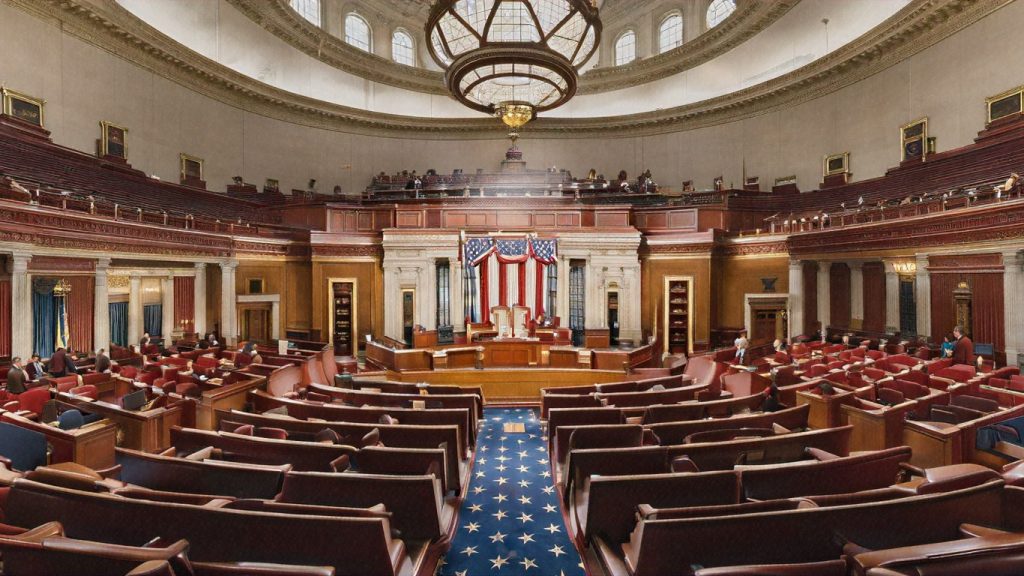
Here’s where civics class matters. Presidents cannot unilaterally spend federal money, no matter how many social media posts they write. Only Congress holds the constitutional power to appropriate funds and authorize spending. Every previous round of stimulus or rebate checks, from George W. Bush’s 2008 rebates to the three rounds of COVID payments, required and received congressional approval first.
Trump would need legislation authorizing the Treasury to cut checks. So far, the appetite for such a bill appears limited. Senator Josh Hawley introduced legislation in July proposing $600 tariff rebate checks per adult, but the bill never made it out of committee. Hawley’s more modest proposal couldn’t gain traction. Trump’s $2,000 version faces even steeper odds.
Congress just passed a massive tax cut package that slashed revenue. Lawmakers who spent months negotiating that deal seem unlikely to immediately turn around and approve $300 billion in new spending that would balloon the deficit further. Republicans control both chambers, but even within Trump’s own party, fiscal hawks remain wary of unfunded expenditures.
Income Thresholds Remain Unclear
View this post on Instagram
Trump excluded “high-income people” from his proposed payments but never defined the term. Federal tax policy offers multiple possible definitions, each creating different eligibility pools.
Does high income mean the top tax bracket of 37%, which applies to single filers making $626,351 or more? Or does it mean the Additional Medicare Tax threshold of $200,000 for singles and $250,000 for married couples? Perhaps Trump means the top 5% of earners, who make about $336,000 according to Census data. Or maybe he’s thinking of the median household income of $83,730 as a dividing line.
Without specifics, Americans have no way to know whether they would qualify. Someone making $150,000 could reasonably argue they’re middle class in San Francisco or New York City. That same income puts them well into the top 10% nationally. Geography, family size, and cost of living complicate any simple income cutoff.
Supreme Court Case Creates Legal Problem
Trump faces a more fundamental obstacle that could invalidate much of his tariff program. Small businesses and states sued, arguing the president exceeded his authority when he imposed roughly $100 billion in tariffs under the International Emergency Economic Powers Act. About half of all tariff revenue comes from duties imposed under IEEPA.
During oral arguments last week, Solicitor General John Sauer tried to downplay the revenue aspect. These are regulatory tariffs, Sauer told the justices. They are not revenue-raising tariffs. The fact that they raise revenue is only incidental.
Read that again. Trump’s own lawyer argued before the Supreme Court that tariffs don’t exist to raise money, the same week Trump promised to distribute tariff revenue to every American. If tariffs are regulatory tools rather than revenue measures, as the administration claims in court, then there’s no logical basis for a tariff dividend.
Justices appeared skeptical of the administration’s position during arguments. If the Court rules against Trump, it could wipe out half the tariff revenue he’s counting on for his dividend plan. Even if the Court upholds presidential tariff authority in some form, the administration’s contradictory messaging undermines its own policy coherence.
Previous Payment Promises Never Delivered
Trump announced another ambitious payment plan in February. Speaking to a Florida audience, he suggested returning 20% of savings from the Department of Government Efficiency cost-cutting task force to citizens, with checks potentially reaching $5,000. Momentum built. Headlines circulated. Americans imagined how they’d spend the money.
Those checks never came. DOGE found only a fraction of the savings it promised, and the payment plan quietly disappeared from public discussion. Now, Trump returns with a similar promise, a different funding source, same lack of detail.
Pattern recognition matters in politics. When someone promises easy money twice and delivers zero times, skepticism becomes rational.
Checks Would Take Months Even if Approved
Assume Congress approves the dividend tomorrow. Assume the Supreme Court upholds tariff authority. Assume revenue projections somehow work out. Even under the best circumstances, Americans would wait months for payments.
The IRS would need to determine eligibility for roughly 163 million individual tax return filers. Systems would need programming to calculate payments based on income thresholds that don’t exist yet. Direct deposit information would need verification. Paper checks would need printing and mailing, except that the federal government recently ordered agencies to stop sending paper checks, creating another logistical hurdle.
Previous stimulus rounds took weeks to begin and months to complete, even with detailed legislation and clear parameters. Trump’s proposal has neither.
What Comes Next for Taxpayers
Mathematical reality crashes against political promise in Trump’s tariff dividend plan. Revenue falls billions short of costs. His Treasury Secretary suggests the money will come from tax cuts rather than actual checks. Congress shows little interest in authorizing new spending. And the Supreme Court might invalidate the legal foundation supporting half the tariff revenue.
Yet Trump continues pushing the idea in social media posts, framing it as proof of tariff policy success. Either he believes the numbers will somehow work out, or he’s more interested in the political messaging than the policy mechanics.
For Americans wondering whether to expect $2,000 in their bank accounts, the answer remains unclear at best and unlikely at worst. Between announcement and implementation stretches a vast gulf filled with legislative battles, legal challenges, and economic arithmetic that refuses to cooperate.
Smart money says don’t spend the dividend until the check clears if it ever arrives at all.