
Your cart is currently empty!
Trump’s ‘Magic Paint’ Plan for a 138-Year-Old White House Office Building Draws Expert Backlash
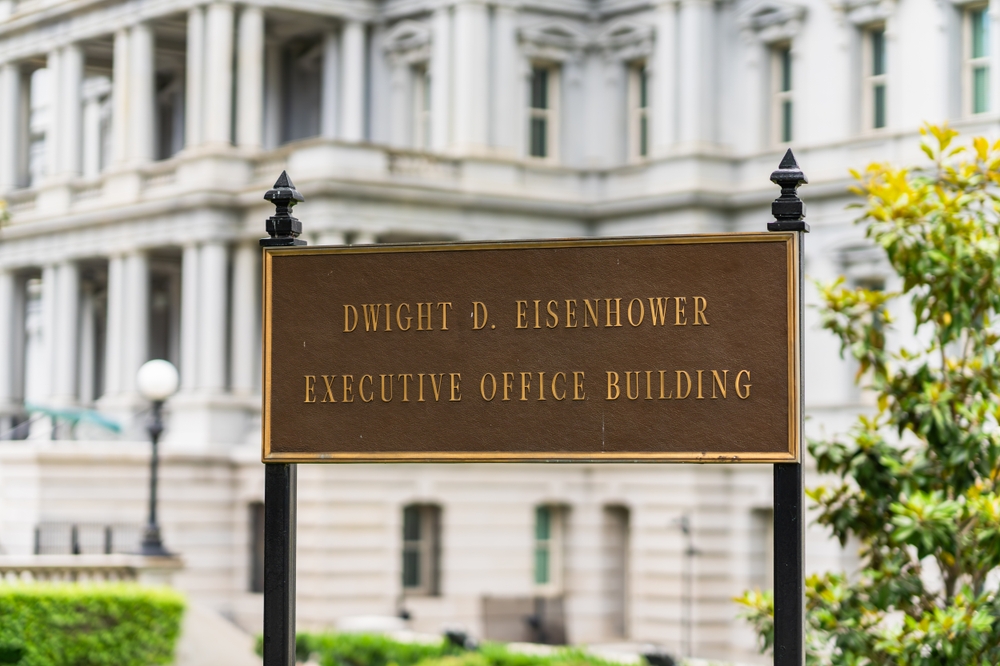
Few buildings in Washington, D.C., carry as much institutional weight as the Eisenhower Executive Office Building. Sitting just steps from the West Wing, its granite facade has weathered more than a century of political change, housing everyone from 19th-century war secretaries to modern vice presidents. Now, a plan from President Donald Trump to radically alter that facade has set off a collision between presidential ambition and architectural preservation, with experts warning that the proposed makeover could leave scars on the structure that no amount of paint can fix. At the center of the dispute is a substance Trump has called “magic paint.”
Contents
show
A President’s Vision in Bright White
Trump first floated the idea during a Fox News interview with Laura Ingraham in November 2025, showing a rendered mockup of the building covered entirely in white. He expressed admiration for the ornate 19th-century structure while making his case for a dramatic change.
“You know it was always considered an ugly building, and it’s actually one of the most beautiful buildings ever built,” Trump told Ingraham, before arguing that a fresh coat of paint would enhance the building’s elaborate stonework and bring out its finer details.
Ingraham appeared less convinced. She told the president she liked its current appearance and asked whether the all-white rendering looked “like a big white blob.” Trump pushed back, insisting that a white exterior would draw attention to the building’s ornamental carvings rather than obscure them.
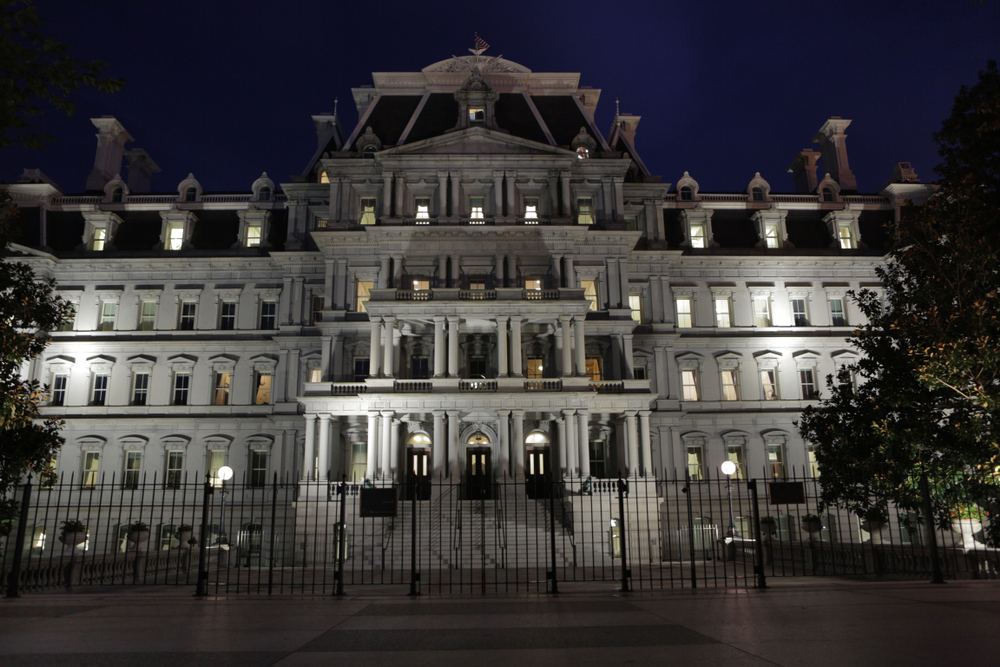
Since that interview, the administration has moved beyond talk. Renderings submitted to the Commission of Fine Arts present two options for the renovation. One would cover the entire structure in white mineral silicate paint. A second would paint most of the building white but leave the exposed basement and sub-basement levels in their original granite. Both options represent a stark departure from the muted grey stone that has defined the building for nearly 140 years.
In private, Trump has gone even further in his praise for the paint, claiming it would strengthen the stone, keep water out, prevent staining, and require little maintenance over time. He has also made no secret of his distaste for the building’s current color palette. “Gray is for funerals,” he said, making clear that aesthetics sit at the heart of his motivation.
A Building Born in Controversy
Ironically, the EEOB has faced questions about its appearance since the day it opened. President Ulysses S. Grant commissioned the building, and architect Alfred B. Mullett, then serving as the supervising architect of the Treasury Department, designed it in the French Second Empire style with chief designer Richard Von Ezdorf. Construction began in 1871, and the project stretched across roughly 17 years before the building opened its doors in 1888.
By then, the architectural winds had shifted. French Second Empire design had fallen out of popular favor, and Mullett’s creation was seen by many Victorians as an awkward relic of a passing trend rather than a statement of grandeur. Mark Twain reportedly called it “the ugliest building in America,” a quip that tour guides around the White House complex still repeat to visitors today.
Originally called the State, War, and Navy Building, the structure housed three of the most powerful departments in the federal government during its early decades. Its interior reflected the ambition of its era, with 553 ornate gilded rooms, bronze stair balusters, hand-painted tiles, carved wooden fixtures, stained glass rotundas, and cast iron detailing that spoke to the craftsmanship of the Gilded Age.
Over the 20th century, the building’s tenants changed. As the State, War, and Navy departments outgrew the space and relocated, the Bureau of the Budget and White House staff moved in. Beginning with Lyndon B. Johnson in 1961, the building also became home to the vice president and his staff. Richard Nixon famously kept a working office there while treating the Oval Office as more of a ceremonial space. In 1999, the building received its current name in honor of President Dwight D. Eisenhower.
Perhaps most telling of the building’s complicated reputation is the fact that a formal recommendation to demolish it came in 1957. Instead of a wrecking ball, however, the EEOB received National Historic Landmark designation in 1969, a recognition that cemented its place in the nation’s architectural heritage and imposed legal obligations around its preservation.
What 25 Experts Found About the ‘Magic Paint’
Whatever Trump’s aesthetic preferences, the science behind his proposal has drawn sharp criticism. Two preservation organizations, the DC Preservation League and Cultural Heritage Partners, assembled a panel of 25 experts to analyze the feasibility of painting the EEOB’s granite exterior with mineral silicate paint. According to a document obtained by CNN detailing the panel’s findings, these professionals had overseen major restoration projects on some of the country’s most prominent stone buildings, including the White House and the U.S. Capitol. Some had even traveled to overseas manufacturing facilities of mineral silicate paint producers to receive hands-on training.
Their conclusions were unambiguous. “Mineral silicate paints are not suited for use on granite,” the panel determined, explaining that granite does not chemically bond with mineral silicate paint in the way that other stone surfaces might. For the paint to adhere, the granite would need to be primed first, a step the experts said would cause permanent damage to the stone.
Beyond adhesion, the experts took issue with several of Trump’s private claims about the paint’s supposed benefits. Contrary to the president’s assertion that it would strengthen the building, the panel found the paint would not improve the stone’s structural durability. And rather than preventing stains, painted surfaces would actually make staining more visible than it is on the raw granite exterior, effectively worsening one of the problems the administration cited as a reason for the renovation.
Materials submitted to the Commission of Fine Arts by the White House argued that the building “has been largely neglected since its construction in the late 1800s,” pointing to surface staining, abrasions, and cracks that accumulated through decades of poor or nonexistent exterior maintenance. Yet the experts’ findings suggest that the proposed remedy could create new problems far more difficult to reverse than the ones it aims to solve.
A Legal Battle Over Preservation
Preservation groups have not limited their opposition to expert testimony. After Trump floated the painting idea on Fox News last November, the DC Preservation League and Cultural Heritage Partners filed a lawsuit in the U.S. District Court for the District of Columbia seeking to block the administration from making any exterior changes to the building until it completes standard environmental and historic preservation reviews.
At the heart of their legal argument is the claim that the administration cannot bypass the review processes required for alterations to a National Historic Landmark. Going around those procedures, the groups argue, could result in irreversible damage to a building that has served the federal government for well over a century. Because the EEOB received its landmark designation in 1969, any proposed changes to its exterior carry a layer of legal obligation that extends beyond ordinary federal building maintenance.
Rather than simply opposing the renovation, the preservation groups have also offered alternatives. A slide deck prepared by Cultural Heritage Partners and shared with the administration proposes a conservation-grade cleaning program to address the staining and grime that have accumulated on the granite. Other suggestions include refinishing the building’s ironwork, installing new lighting, applying window film to brighten the facade without altering the stone, and improving the surrounding landscaping. Taken together, these recommendations aim to revitalize the building’s appearance without touching its protected granite surface.
A Commission Vote Looms
All eyes now turn to Thursday, April 16, when the Commission of Fine Arts will review the proposed renovation plans for the first time. Established to advise on the design of federal buildings and public spaces in Washington, the commission will weigh in on both rendering options submitted by the White House.
How the commission rules remains an open question. Trump has filled the panel with loyalists during his second term, a fact that preservationists view with concern. Even so, the expert findings and the pending lawsuit add layers of complication to what might otherwise be a routine design review.
CNN has reported that the White House has not yet responded to the preservation groups’ expert analysis. Whether the administration adjusts its approach in light of those findings or pushes forward with the original plan will likely become clear in the days following the commission’s meeting.
Bigger Questions About Presidential Taste and Public Trust
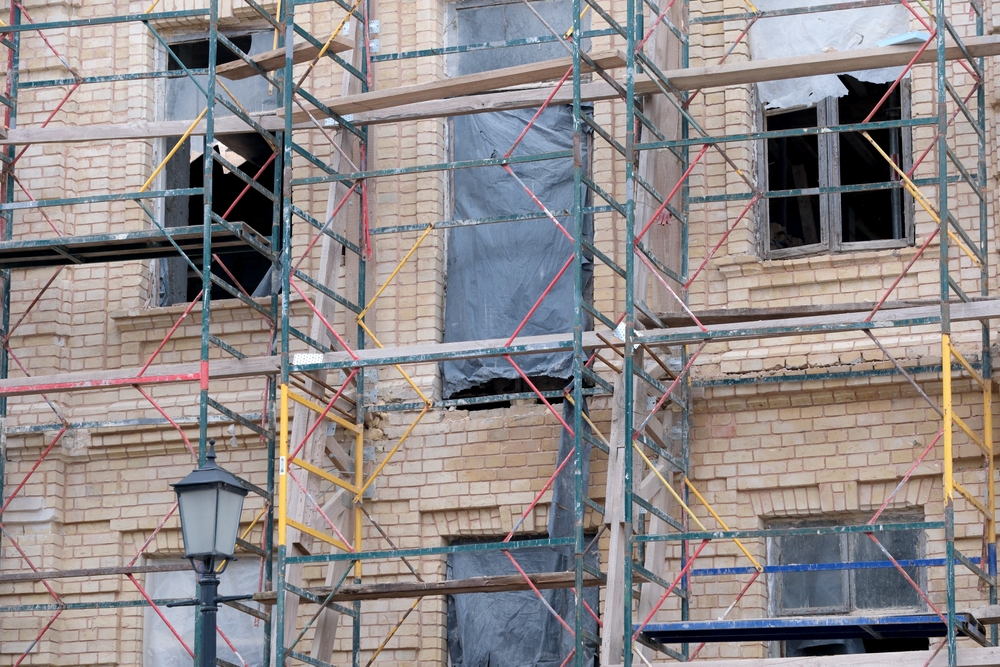
Trump’s second term has seen an unprecedented wave of physical changes to the White House grounds and surrounding properties. Plans for a $400 million ballroom, reports of imported Luxembourg steel for construction projects, and a stated desire to remodel the Lincoln Memorial Reflecting Pool have all drawn public attention. Against that backdrop, the EEOB painting proposal reads as one chapter in a larger story about how far a sitting president can go in reshaping the physical identity of the nation’s most symbolic buildings.
For a structure that has survived calls for demolition, shifts in architectural fashion, and more than a dozen presidential administrations, the question is whether it can also survive a coat of magic paint, or whether that paint would leave marks that outlast the presidency that ordered it.