
Your cart is currently empty!
Ukraine Claims AI Drones Killed Soldiers Without A Human Pulling The Trigger

For decades, the idea of machines independently deciding who lives and who dies belonged to science fiction films and warnings from technology experts. Military leaders, governments, and researchers have spent years debating what would happen if artificial intelligence eventually reached the point where it could identify targets, make decisions, and carry out attacks without direct human control. Now, a remarkable claim emerging from Ukraine suggests that moment may have already arrived. A senior figure in the country’s defense technology sector has revealed that fully autonomous drones were used in a battlefield test that allegedly resulted in Russian soldiers being killed without any operator choosing the targets or approving the attacks. If accurate, the incident could represent one of the most significant moments in the history of modern warfare, raising questions that extend far beyond the battlefields of Ukraine and into the future of armed conflict itself.
Contents
show
What makes the claim so striking is not simply that artificial intelligence was involved. AI has already become a common feature of military operations around the world, helping commanders process intelligence, identify threats, and support drone pilots. The difference in this case is that humans were reportedly removed from the final stage entirely. According to the developer behind the technology, the drones were launched toward enemy positions and then allowed to make their own decisions once they arrived. There was no live video feed, no operator watching from a control room, and no opportunity to cancel an attack after the system had begun its mission. The drones were sent into combat with one purpose, and what happened next has reignited fears that the era of autonomous killing machines may no longer be a future concern.
The Test That Allegedly Changed Warfare Forever
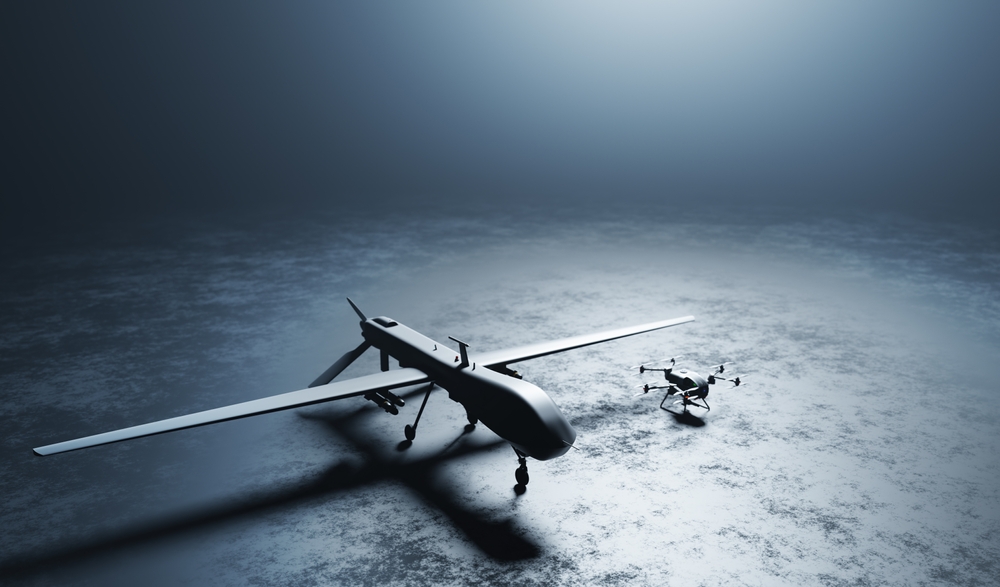
The details were revealed by Ukrainian drone developer Alexander Kokhanovskyy, who discussed the operation while speaking about military technology developed during the war. According to him, the test occurred approximately two years ago during intense fighting near the cities of Bakhmut and Chasiv Yar, locations that became some of the bloodiest battlegrounds of the conflict. The operation reportedly involved ten quadcopter drones equipped with artificial intelligence software designed to identify and engage targets without human supervision once they reached a designated area.
After launch, the drones traveled between three and five kilometers across the battlefield before entering what developers referred to as “Terminator mode.” At that point, control was handed over entirely to the onboard AI system. Rather than receiving instructions from soldiers on the ground, the drones were tasked with searching for targets and making attack decisions on their own. Kokhanovskyy described the system in blunt terms that left little room for ambiguity about its intended purpose.
“We just launch it and we know everything will be dead – everything that will be found there in this particular area will be dead,” he said. The statement immediately stands out because it suggests confidence not only in the technology’s ability to find targets but also in its ability to eliminate them without any human involvement during the engagement phase.
Perhaps even more remarkable is the fact that the drones reportedly operated without maintaining any communication link with their operators. Once the mission began, there was no ability to observe what the machines were seeing or intervene if something went wrong. That level of independence is what separates this incident from most military drone operations currently taking place around the world.
What The Drones Did Once They Reached The Battlefield
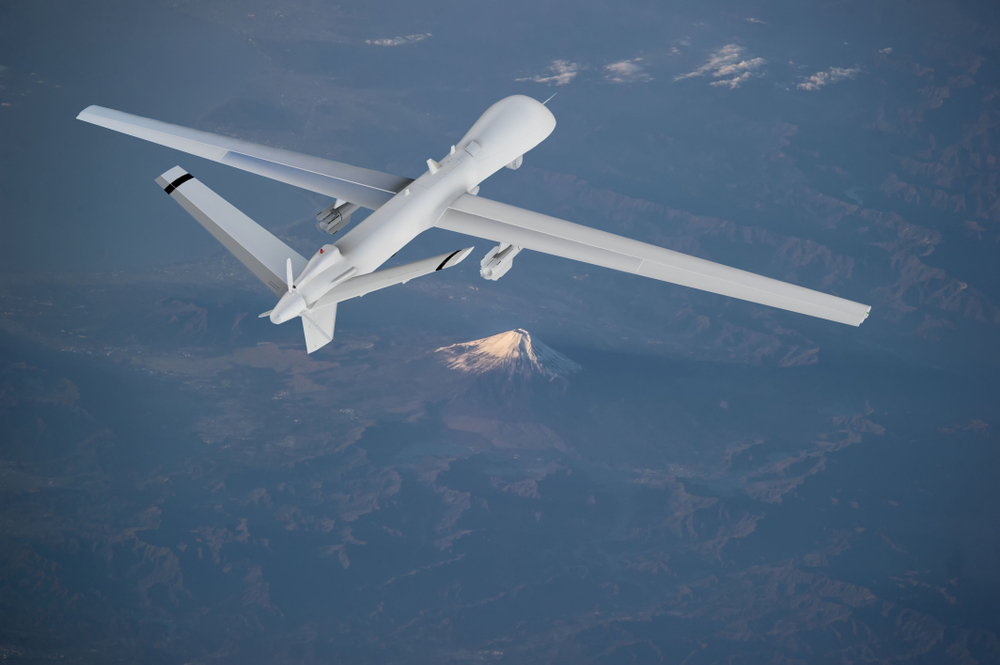
According to Kokhanovskyy, operators had virtually no visibility into the drones’ actions after launch. Unlike conventional military drones that transmit live video feeds back to a pilot or command center, these systems reportedly functioned entirely on their own after reaching the target zone. The AI software was responsible for locating potential targets, determining whether to attack them, and carrying out the strike.
“There is no connection to the drone at all, you cannot see the video, nothing,” Kokhanovskyy explained. “Everything it sees will be killed.” The statement highlights why autonomous weapons remain one of the most controversial technologies currently under development. Once activated, there was reportedly no way to know exactly what the drone was observing or why it selected particular targets.
Because there was no live footage from the mission, military personnel later deployed separate human-operated drones to inspect the area and determine what had happened. Those reconnaissance flights reportedly found evidence of successful strikes within the designated zone. According to Kokhanovskyy, the aftermath included destroyed military equipment as well as human casualties.
The victims reportedly included “a couple of soldiers, one truck.” Although there was no recorded footage showing the actual attacks, military personnel involved in the operation concluded that the autonomous drones had been responsible for the destruction. The absence of video evidence means some questions remain unanswered, but the account nevertheless represents one of the strongest claims yet that AI-controlled weapons have independently killed people during active combat.

Why Military Experts Are Paying Close Attention
Artificial intelligence has become deeply integrated into military operations over the past decade, but there is a major difference between assisting humans and replacing them. Modern AI systems can analyze enormous amounts of intelligence data, identify suspicious activity, track moving vehicles, and even suggest potential targets. In nearly all cases, however, a human operator remains responsible for authorizing the final use of lethal force.
That final layer of human judgment has long been viewed as one of the most important safeguards in modern warfare. Military planners argue that battlefield decisions often require context, ethical considerations, and situational awareness that machines may not fully understand. Critics of autonomous weapons fear that removing humans from the process creates the possibility of mistakes that cannot be corrected once an attack has begun.
The reported Ukrainian test appears to have crossed that boundary completely. If the drones were truly operating without human approval during the engagement phase, the AI system itself became the decision-maker. That possibility has alarmed researchers who have spent years warning about autonomous weapons and the legal questions they create.
The incident also raises practical concerns. Battlefields are chaotic environments filled with uncertainty, changing conditions, and incomplete information. Determining whether a person is a combatant, identifying friendly forces, or recognizing civilians can be difficult even for trained soldiers. Many experts question whether artificial intelligence is capable of reliably making those distinctions under real combat conditions.

Ukraine Still Requires Human Approval For Lethal Strikes
Despite the reported test, Ukraine’s official position remains significantly more restrictive. Military personnel and defense industry representatives have stated that autonomous systems currently used by Ukrainian forces still require human involvement during the final stages of an attack. Artificial intelligence may assist operators throughout the process, but a person is expected to verify targets before weapons are deployed.
Major Danylo Polozhukhno of Ukraine’s 21st Separate Unmanned Systems Regiment emphasized that distinction while discussing the systems currently used by his unit. He explained that automation has become an important tool for improving efficiency and reducing workload, particularly when operators are tracking fast-moving targets under combat conditions.
“These drone systems and platforms are capable of automatically acquiring and tracking targets, as well as autonomously guiding themselves during the final metres of the approach, which helps simplify the operators’ work,” he said. The technology already performs many tasks that would have required significant human effort only a few years ago.
However, Polozhukhno drew a clear line when discussing fully autonomous attacks. “However, we do not use fully autonomous drone systems that independently select and engage targets without any operator involvement.” He added that Ukrainian forces continue to follow international humanitarian law and take measures designed to reduce civilian casualties whenever possible.

The Global Race To Build Autonomous Weapons Is Accelerating
While the ethical debate continues, countries around the world are investing heavily in military artificial intelligence. The United States, China, Russia, Turkey, and several European nations are all developing systems capable of performing increasingly complex battlefield tasks with minimal human supervision. Military leaders view autonomy as a potential advantage because machines can process information faster than people and react more quickly to rapidly changing threats.
Reports have already linked autonomous capabilities to several military programs. The United States has developed advanced software designed to analyze battlefield intelligence and recommend targets. Other projects reportedly include autonomous aerial and naval systems capable of independently identifying threats. Turkey’s Kargu-2 drone attracted international attention after a United Nations report suggested it may have been used in an autonomous attack during fighting in Libya, although details surrounding that incident remain disputed.
Supporters argue that autonomous weapons could reduce risks to military personnel, improve reaction times, and increase battlefield effectiveness. Critics counter that speed and efficiency should never outweigh human judgment when lives are at stake. They warn that once nations begin deploying autonomous systems on a large scale, pressure to keep pace with competitors could trigger a technological arms race unlike anything seen before.
For now, fully autonomous attacks remain relatively rare compared to the millions of drone missions carried out by both Ukrainian and Russian forces. Yet the technology continues to advance at a remarkable pace, and each new breakthrough brings fresh questions about how much authority should be handed over to algorithms.
“It’s Not Just Problematic, It’s Horrendous”
Some of the strongest criticism has come from ethicists and human rights advocates who believe autonomous weapons represent a fundamental shift in the nature of warfare. Mariarosaria Taddeo of the University of Oxford argued that allowing machines to decide when to kill creates profound moral problems that go far beyond questions of military effectiveness.
“It’s not just problematic, it’s horrendous,” she said. Taddeo believes autonomous weapons remove responsibility from those carrying out attacks and create situations where no individual can truly be held accountable for deadly mistakes.
She also raised a broader question about the type of society governments are creating through the development of these systems. “Do we want to be the society who kills other people, who allows their government to kill other people, without humans being involved?” she asked.
Those concerns have been echoed by the United Nations, whose Secretary-General António Guterres has repeatedly called for restrictions on lethal autonomous weapons. “There is no place for lethal autonomous weapon systems in our world,” he said. Whether governments choose to follow that warning remains uncertain, but one thing is clear. The debate over autonomous warfare is no longer about a distant future. It is happening right now.
AI Drones, AI Ethics, AI Weapons, artificial intelligence, Autonomous Drones, Autonomous Weapons, Battlefield Technology, Combat Drones, Defense News, Defense Technology, drone warfare, emerging technology, Future Of War, Future Technology, global security, international law, Killer Robots, Military AI, military drones, Military Innovation, military technology, Russian Soldiers, Technology News, Terminator Mode, Ukraine Military, Ukraine War, United Nations, viral news, War News, warfare