
Your cart is currently empty!
UN Report Puts 70% Odds on Earth Crossing the 1.5°C Climate Threshold by 2029, and Scientists Say the Probability Is Still Rising

For years, 1.5 degrees Celsius functioned as something between a scientific target and a moral line. World leaders agreed to it in Paris in 2015. Climate researchers cited it in warnings. Activists carried it on signs. It was the number that separated manageable disruption from something harder to contain, and for a decade, the scientific community worked under the assumption that staying below it was still, technically, possible.
Contents
show
A new report from the UNEP suggests that the window is closing faster than previously projected, and the scientists who built the forecast are not hedging their language.
What the WMO Report Actually Found
On Wednesday, the World Meteorological Organization released its annual decadal climate report, compiled by Britain’s Met Office from data gathered across multiple global forecasting centers. Its central finding is direct: there is a 70% chance that average global warming across the five years from 2025 to 2029 will exceed 1.5°C above pre-industrial levels.
Alongside that figure, the report places an 80% probability on at least one individual year within that window being warmer than 2024, currently the warmest year in 175 years of recorded temperature history. An 86% chance exists that at least one of those years will individually cross the 1.5°C mark.
“We have just experienced the 10 warmest years on record. Unfortunately, this WMO report provides no sign of respite over the coming years, and this means that there will be a growing negative impact on our economies, our daily lives, our ecosystems and our planet,” said WMO Deputy Secretary-General Ko Barrett.
What makes that 70% figure particularly striking is how quickly it has risen. Just two years ago, in the 2023 report covering the 2023 to 2027 window, the equivalent probability stood at 32%. Last year’s report raised it to 47% for the 2024 to 2028 period. Now it sits at 70%, and climate scientists say the direction of travel is not ambiguous.
What 1.5°C Means and Where the Number Came From
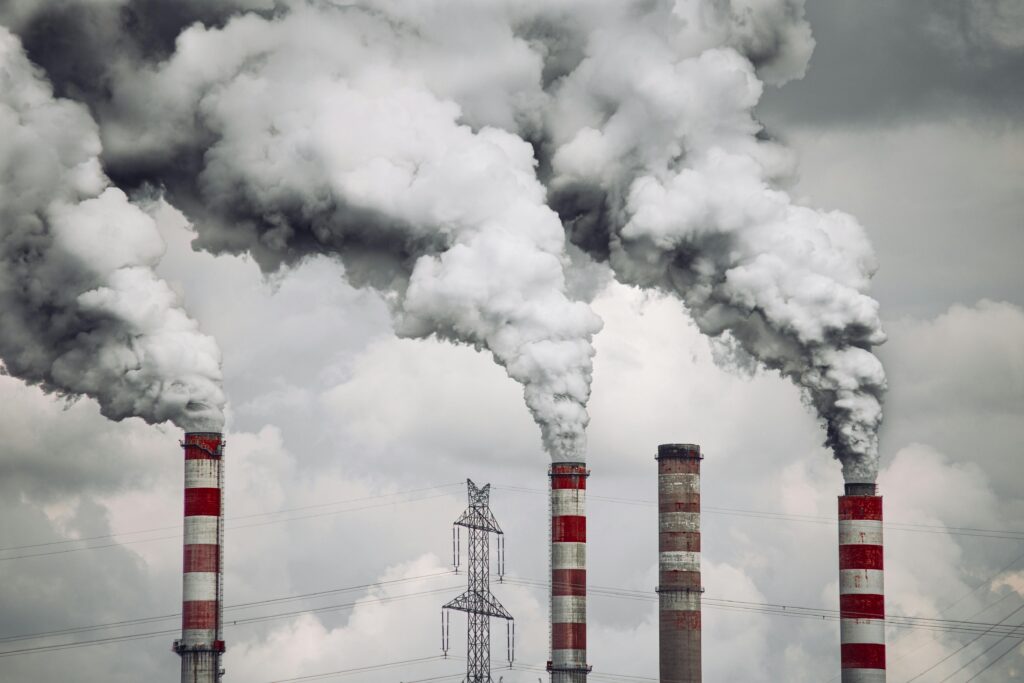
Reaching 1.5°C of warming is not a random threshold. It was written into the 2015 Paris Agreement as the more ambitious of two targets, with world leaders agreeing to hold long-term warming well below 2°C above pre-industrial levels while pursuing efforts to limit it to 1.5°C. Both figures are measured against the 1850 to 1900 average, a period before large-scale industrial burning of coal, oil, and gas began pumping carbon dioxide into the atmosphere at a rate the planet had no natural mechanism to absorb.
An important distinction separates a single calendar year crossing 1.5°C from the long-term average doing so. Under the Paris Agreement framework, the 1.5°C target refers to warming measured across roughly 20 years, not a one-off spike. By most estimates, 2024 was likely the first calendar year to individually exceed that mark, recording a global mean near-surface temperature of approximately 1.55°C above the pre-industrial baseline. But the long-term 20-year average has not yet crossed 1.5°C. What the WMO report is now projecting is that it will, and within a timeline measured in years rather than decades.
Methods for calculating exactly where long-term warming stands vary. One approach combining the past decade of observations with projections to 2034 places the 20-year average at 1.44°C. Copernicus, the EU’s climate monitoring service, puts current warming at 1.39°C and projects that 1.5°C could arrive by mid-2029 or earlier. No single method has yet won universal consensus among climate scientists, but across all of them, the trajectory points in the same direction.
Scientists Say 100% Probability Is Only Years Away
Peter Thorne, director of the Irish Climate Analysis and Research Units group at the University of Maynooth, reviewed the WMO findings and offered a frank assessment of what comes next. He described the current projections as entirely consistent with passing 1.5°C on a long-term basis in the late 2020s or early 2030s, and added that “I would expect in two to three years this probability to be 100 percent” in the five-year outlook.
Put plainly: the question is no longer whether average warming will cross the 1.5°C threshold. Among many climate scientists, it has become a question of exactly when.
CO2 emissions continue to increase globally, a fact that growing numbers of researchers cite when explaining why they now consider the more optimistic Paris target functionally out of reach. Every year that fossil fuel combustion continues at or near current rates narrows the remaining gap between where temperatures are and where the international community agreed they should stay.
A Figure That Was Once Unthinkable Is Now in the Models
Beyond 1.5°C, the WMO report contains a finding that caught several scientists off guard. For the first time in recorded climate modeling history, at least one year in the next five carries a non-zero probability of exceeding 2°C of warming. That probability currently sits at 1%, a figure the report itself describes as exceptionally unlikely. But the fact that it has appeared at all carries weight.
Adam Scaife of the Met Office, one of the researchers whose team produced the projections, addressed the finding directly. “It’s the first time we’ve ever seen such an event in our computer predictions,” he said, describing the result as shocking and warning that the probability will rise over time.
Scaife drew a comparison that requires no statistical background to understand. A decade ago, climate models first began showing a very small but non-zero probability of a single calendar year crossing 1.5°C. That figure seemed remote at the time. In 2024, it happened. History suggests that treating low-probability climate milestones as permanent anomalies is not a reliable approach.
What the Planet Is Already Experiencing
While researchers debate the precise timeline of threshold crossings, the physical world is not waiting for consensus. In recent weeks alone, parts of China have recorded temperatures above 40°C. Pakistan suffered deadly winds in the wake of an intense heatwave. Temperatures in the United Arab Emirates reached nearly 52°C, just below a new May record.
Climatologist Friederike Otto of Imperial College London catalogued the broader pattern in stark terms, pointing to deadly floods in Australia, France, Algeria, India, China, and Ghana, and to wildfires burning across Canada. Her conclusion about what the data means for energy policy was unambiguous.
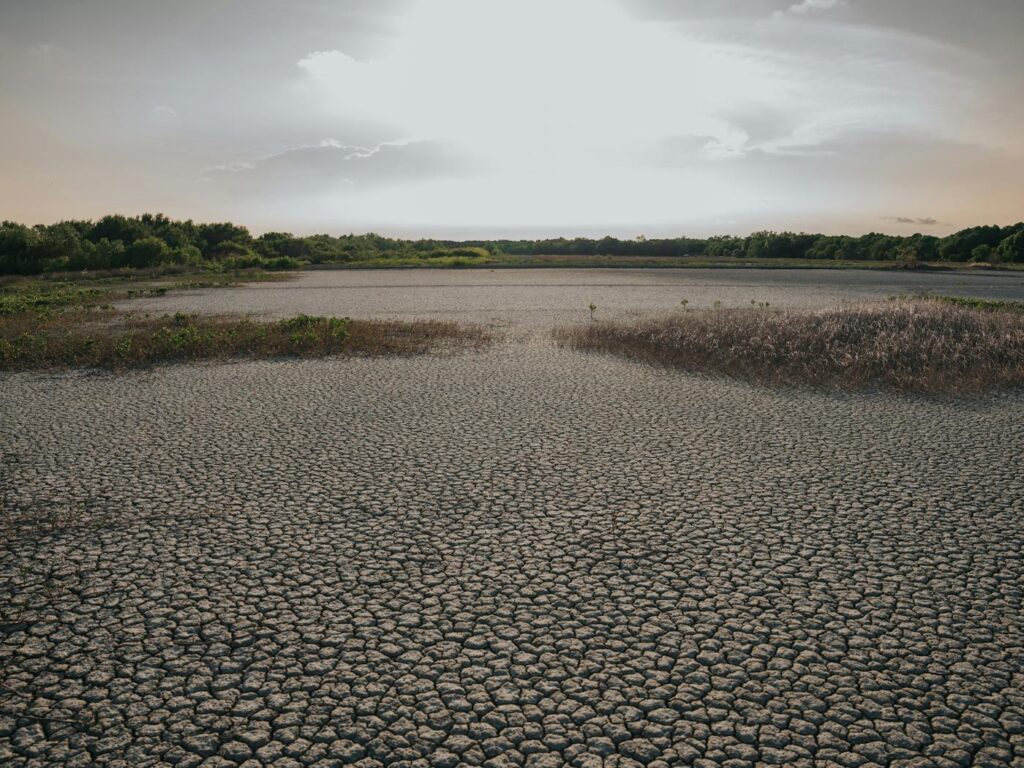
Every additional fraction of a degree of warming compounds these events. Heatwaves grow longer and more intense. Rainfall events deliver more water in shorter periods, overwhelming drainage and causing floods. Droughts deepen. Glaciers and ice sheets lose mass faster, adding to sea level rise. Marine heatwaves heat the ocean and bleach coral systems. None of these is a projection about a future that may arrive. Many are already measurable in current data.
The Arctic Is Warming at a Pace All Its Own

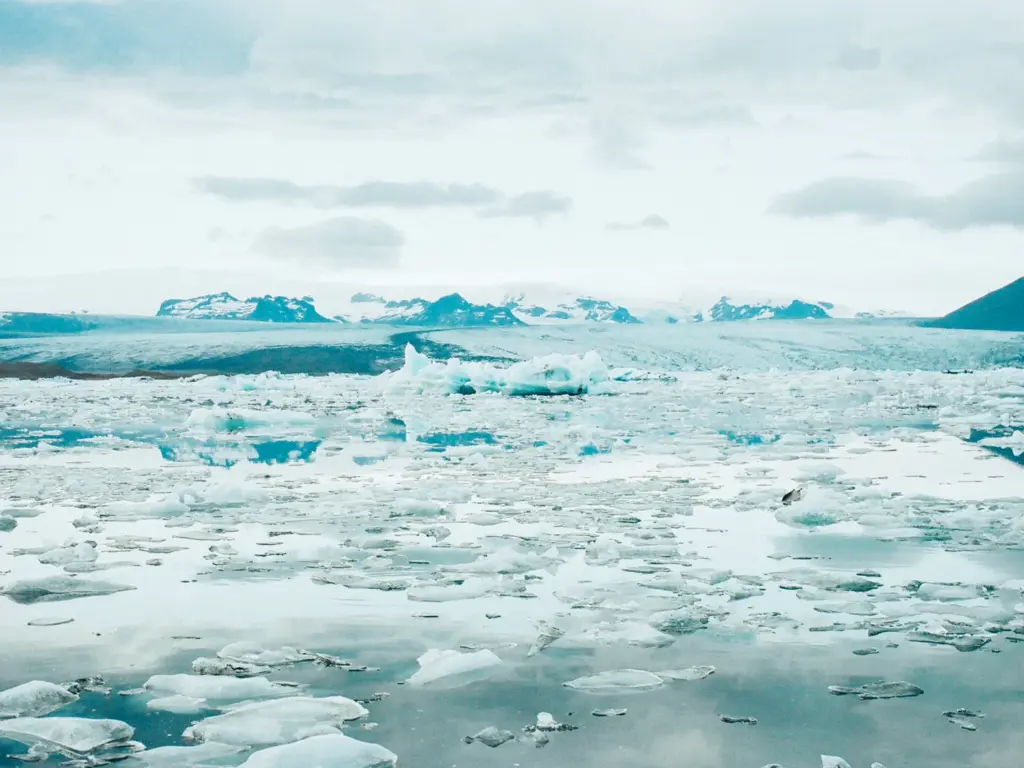
Globally averaged figures mask significant regional variation, and nowhere is that variation more pronounced than in the Arctic. Over the next five extended winters from November through March, Arctic warming is projected to reach 2.4°C above the 1991 to 2020 baseline, a rate more than three and a half times the global average.
Sea ice reductions are forecast across the Barents Sea, the Bering Sea, and the Sea of Okhotsk. When Arctic sea ice diminishes, it reduces the reflective surface that bounces solar radiation back into space, creating a feedback loop where less ice leads to more warming, which leads to less ice. At the same time, melting land ice in Greenland and across Arctic regions contributes directly to rising sea levels that affect coastlines far removed from the poles.
Rainfall Patterns Are Shifting Across Multiple Continents
Precipitation forecasts in the WMO report show pronounced regional differences across the 2025 to 2029 period. Wetter-than-average conditions are projected for the Sahel region of northern Africa, for northern Europe, Alaska, and northern Siberia. South Asia, which has experienced above-average rainfall in recent years, is expected to continue on a similar trend.
By contrast, the Amazon faces drier-than-average conditions, a forecast that raises concerns for one of the world’s largest carbon-storing ecosystems. A drier Amazon is more vulnerable to fire, and fire releases stored carbon, adding further to the atmospheric load that is driving warming in the first place.
What Comes Next and What Is Now at Risk
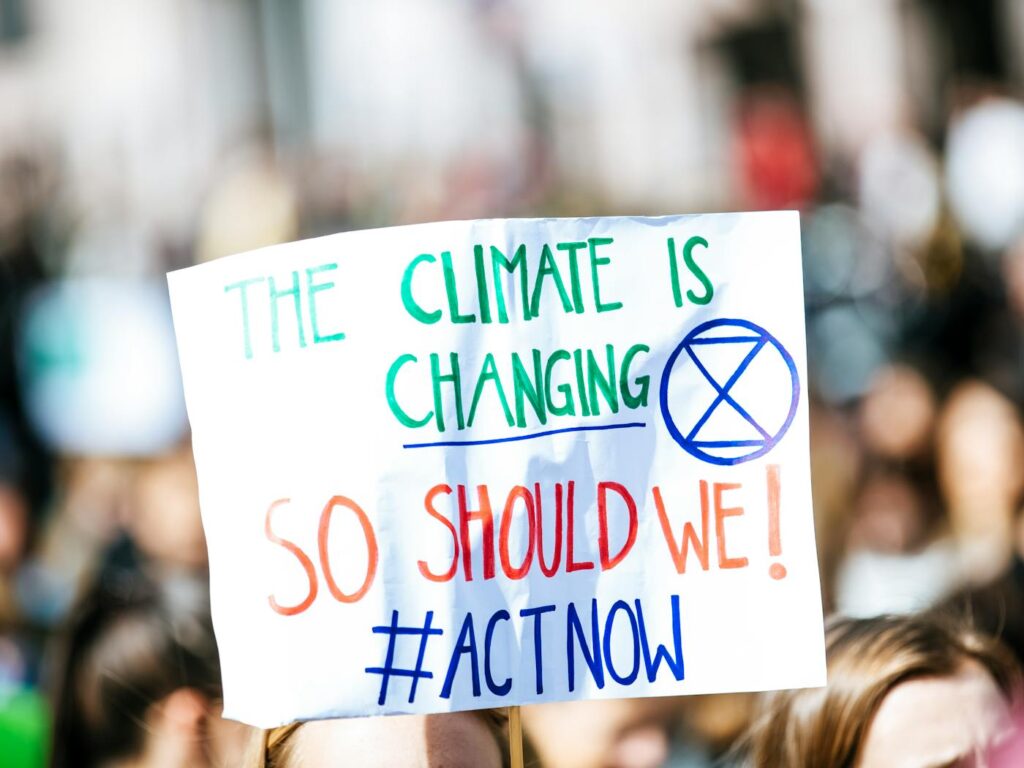
Later in 2026, world leaders will gather for COP30, the annual UN climate conference, where countries are expected to submit updated Nationally Determined Contributions. These pledges represent each nation’s stated commitment to cutting carbon emissions and form the practical machinery through which the Paris Agreement’s targets are meant to be pursued. Arriving at that conference with a WMO report projecting a 70% chance of crossing the 1.5°C average adds pressure to what those pledges contain.
At the same time, recent funding cuts to NOAA, the U.S. federal agency responsible for a significant share of global weather and climate observations, have begun reducing the data available to forecasters who produce reports like this one. WMO projections draw on multiple contributing centers around the world, but the loss of NOAA data inputs has already affected recent reporting cycles, raising questions about the completeness of future forecasts at a moment when precision matters most.
Davide Faranda of France’s CNRS National Centre for Scientific Research put the scientific community’s position directly: the path forward requires cutting fossil fuel emissions and accelerating the transition to clean energy, and the urgency of that transition is no longer a matter of debate among researchers.
Barrett’s closing message from the WMO was less about alarm and more about what monitoring exists to do: give decision-makers reliable, science-based tools so that responses can be proportionate to what the data actually shows. What the data shows, in this report, is a probability that keeps climbing, a threshold that keeps approaching, and a window that will not stay open indefinitely.
Source: Programme, U. N. E. (2025). Emissions Gap Report 2025: Off Target – Continued Collective inaction puts Global Temperature Goal at Risk. In United Nations Environment Programme eBooks. https://doi.org/10.59117/20.500.11822/48854
1.5°C threshold, Arctic warming, carbon emissions, climate change, Climate Crisis, climate forecast, Climate Science, climate tipping point, CO2 emissions, COP30, Copernicus climate monitor, decadal climate prediction, extreme weather, Fossil Fuels, Global Warming, greenhouse gas, heatwave, Met Office, NOAA, Paris Agreement, pre-industrial levels, sea ice, WMO report, World Meteorological Organization