
Your cart is currently empty!
Scientists Find Six US Bat Species Glow Green Under UV Light
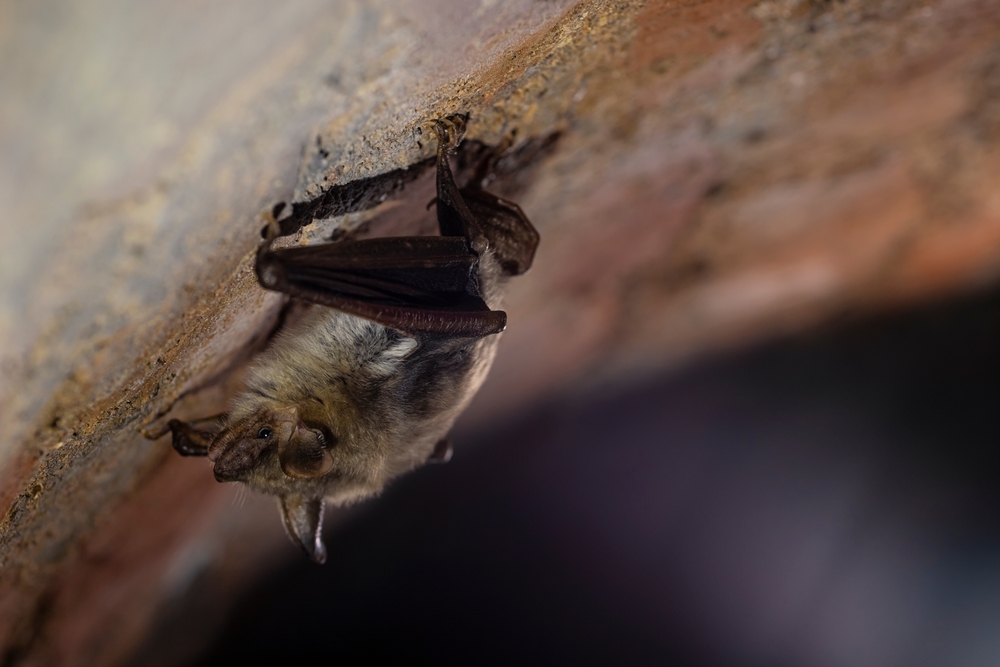
For decades, preserved bats sat quietly in a museum collection in Georgia. Then researchers switched on ultraviolet light, and the specimens revealed something nobody expected to see: a bright green glow that appeared across every bat they examined.
Contents
show
The discovery involved 60 bats representing six species, with specimens collected over a span of more than 100 years. Researchers now suspect the fluorescence could be an inherited trait from a common ancestor, although they still cannot explain exactly why the bats produce it.
A Museum Collection Revealed A Hidden Glow
The discovery began inside the Georgia Museum of Natural History in Athens, Georgia, where Briana Roberson examined preserved specimens from the mammal collection. Roberson, a University of Georgia alumna and lead author of the resulting study, placed the bats in a dark setup and illuminated them with ultraviolet light at 410 nanometers.
A yellow filter was placed over the camera lens to remove blue haze and make the fluorescence easier to see. What appeared on the specimens was a distinct green glow that could not be seen under ordinary lighting.
The researchers examined 60 specimens representing six species. Most came from Georgia, while others originated from South Carolina, Tennessee, Illinois and California, with collection dates ranging from 22 to 103 years earlier.
Previous research had documented fluorescence in individual bats, including an eastern tube-nosed fruit bat from Australia and Mexican free-tailed bats. This study went further by measuring fluorescence across several species and comparing the results.
The Glow Appeared On Their Wings And Legs
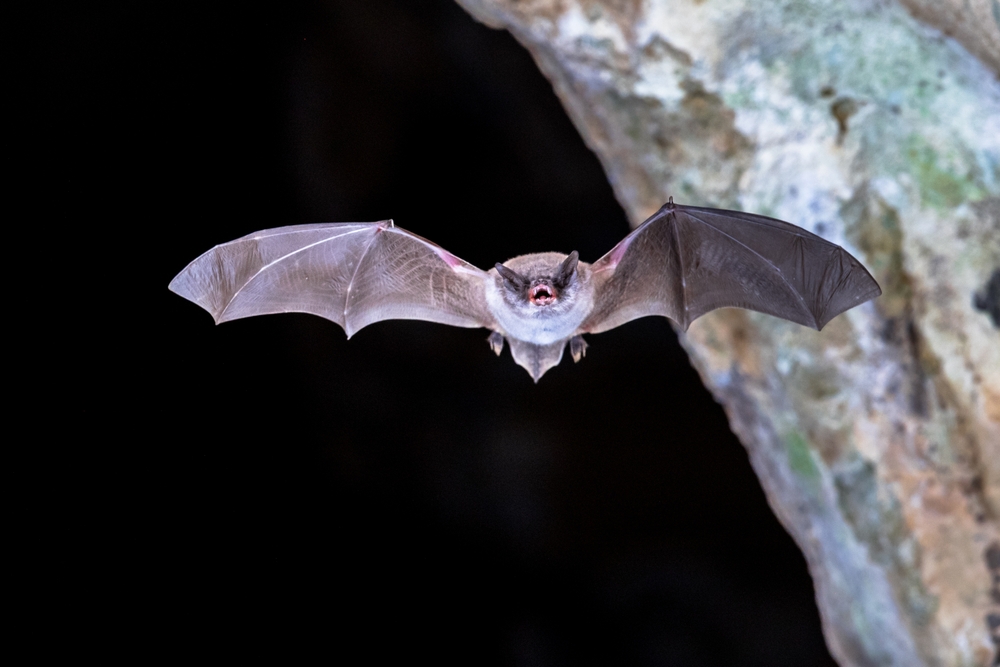
The fluorescence was concentrated on parts of the bats’ bodies associated with flight. Researchers observed it on the wings, hind limbs and uropatagium, which is the membrane of skin stretching between a bat’s hind legs.
That placement adds another layer to the mystery because these surfaces are exposed during flight but can be folded away while bats are resting. Several of the species studied also spend much of their lives in crowded social roosts.
Roberson said the finding was particularly interesting because bats have distinctive sensory systems and social behavior. “Bats have very unique social ecology and sensory systems,” she said, noting that the characteristics observed in these species differ from many other observations in nocturnal mammals.
Every Species Produced The Same Green Shade
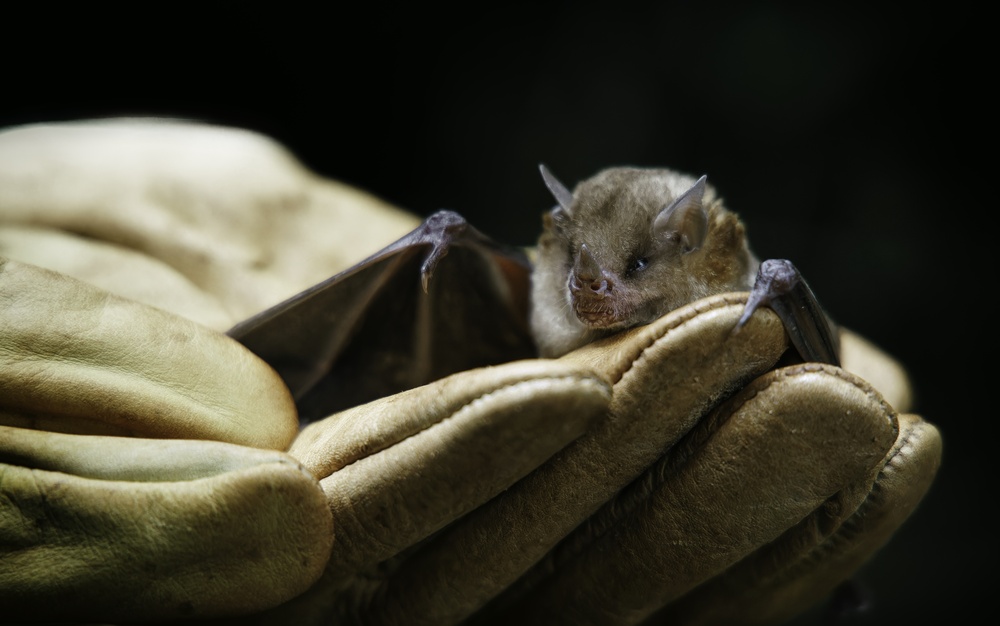
The researchers used a spectroradiometer to measure the fluorescence rather than relying only on photographs. The instrument was positioned 10 millimeters above each specimen and recorded the wavelengths of light coming back from the bats.
Every scan peaked between 520 and 552 nanometers, a range corresponding to green light. The consistency appeared across all six species, despite their differences in habitat and behavior.
The study examined the following bats:
- Big brown bats: One of the six species represented in the museum collection.
- Eastern red bats: A species that commonly roosts among foliage.
- Seminole bats: Another foliage-roosting species included in the study.
- Southeastern myotis: A smaller bat species represented in the collection.
- Gray bats: A species associated with cave habitats.
- Brazilian free-tailed bats: A highly aerial species included in the comparison.
Steven Castleberry, a Warnell School professor who supervised the research, acknowledged that the result raises a bigger question than it answers. “It’s cool, but we don’t know why it happens,” Castleberry said. “What is the evolutionary or adaptive function?”
Researchers Ruled Out Several Simple Explanations

The researchers looked at whether the fluorescence differed between male and female bats. They found no meaningful difference, providing no evidence that the color is associated with sexual selection.
That result does not establish that the fluorescence has nothing to do with reproduction. It simply means the researchers did not find sex-based differences that would support that explanation, while fluorescence intensity did vary between individual specimens.
Camouflage also presented a problem.
Two of the species, the eastern red bat and Seminole bat, commonly roost in leaves. If their fluorescence helped them blend into foliage, researchers would expect the emitted wavelengths to be closer to chlorophyll fluorescence, which peaks around 680 nanometers.
Instead, the bats consistently produced green fluorescence between 520 and 552 nanometers. The species that roost in caves and crevices produced the same basic color as those found among trees, making it unlikely that the glow is specifically adapted to their sleeping environments.
One Ancient Ancestor Could Explain The Similarity

The remarkable consistency across six different species led the researchers toward an evolutionary explanation. Rather than developing the same fluorescent trait independently, the bats may have inherited it from a shared ancestor far back in their evolutionary history.
“The data suggests that all these species of bats got it from a common ancestor,” Castleberry said. “They didn’t come about this independently.”
The idea also fits with findings from a 2023 survey of museum specimens in Australia. That research documented fluorescence in 125 mammal species spanning all 27 living mammalian orders examined, suggesting that fluorescence may be widespread among mammals.
If fluorescence is common across mammals, the surprising part may be how rarely anyone notices it. The effect generally requires the right ultraviolet light and equipment to become visible.
There Is A Major Catch With The Evidence
The bats in this study were preserved museum specimens, which creates an obvious question about whether preservation influenced the glow. Linda Reinhold, a zoologist at James Cook University whose work examines fluorescence, told Smithsonian magazine that the uniform green appearance “is due to preservation.”
Preservation methods have previously been shown to affect fluorescence intensity in museum specimens. That means scientists need to establish whether living bats display the same optical characteristics before assigning any biological function to the phenomenon.
The researchers addressed some of those concerns by examining specimens ranging from 22 to 103 years old. They found no relationship between specimen age and peak wavelength, while also noting that dry study skins reduce the influence of fluorescent skin bacteria that could complicate measurements.
Several questions remain unanswered, however. The researchers have not compared these results with living bats, conducted behavioral experiments or established whether bats encounter enough ultraviolet light in their natural environments to trigger visible fluorescence.
The study also examined adults only, leaving open the question of whether juvenile bats show the same pattern. The authors therefore stopped short of claiming a behavioral purpose, writing that their results suggest a shared physiological origin but cannot confirm a shared behavioral function.
Their Eyes May Be Able To Detect The Same Light
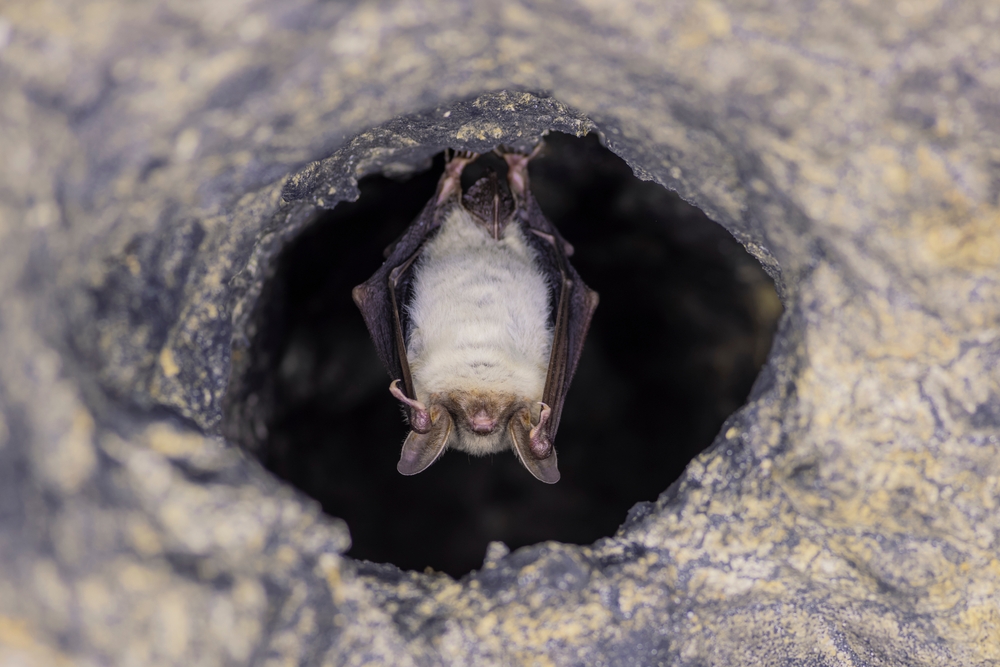
One detail from previous bat research makes the discovery even more intriguing. Although bats are famous for echolocation, they also have eyes, and earlier research indicates that the opsin responsible for detecting greenish light in bats is most sensitive between 536 and 560 nanometers.
The fluorescence measured in the six species peaked between 520 and 552 nanometers. Those ranges overlap substantially, meaning the bats appear to possess visual sensitivity within much of the same part of the spectrum their bodies produce under ultraviolet illumination.
Roberson noted that this wavelength sensitivity is highly conserved among bats. “Based on previous research, that kind of range of wavelengths is highly conserved in bats,” she said.
That overlap does not prove bats use the fluorescence to communicate. The researchers did not test whether one bat can see another’s fluorescent wings, whether bats respond to the glow or whether the phenomenon has any role in social behavior.
The Next Step Is Testing Living Bats
The museum specimens have answered one question surprisingly clearly: six species of American bats can produce remarkably consistent green fluorescence under ultraviolet light. They have not yet answered the much more interesting question of what that fluorescence means.
Researchers now need to determine whether living bats display the same pattern under natural conditions. Behavioral experiments could also reveal whether the animals detect or respond to the wavelengths, while studies of younger bats could show when the trait first appears.
For now, the green glow remains a biological mystery hiding in plain sight. The bats were sitting in a museum collection for decades, but it took ultraviolet light to reveal a feature that may have been part of their biology for millions of years.