
Your cart is currently empty!
Vatican Warns Environmental Harm Can Become A Sin Against Creation
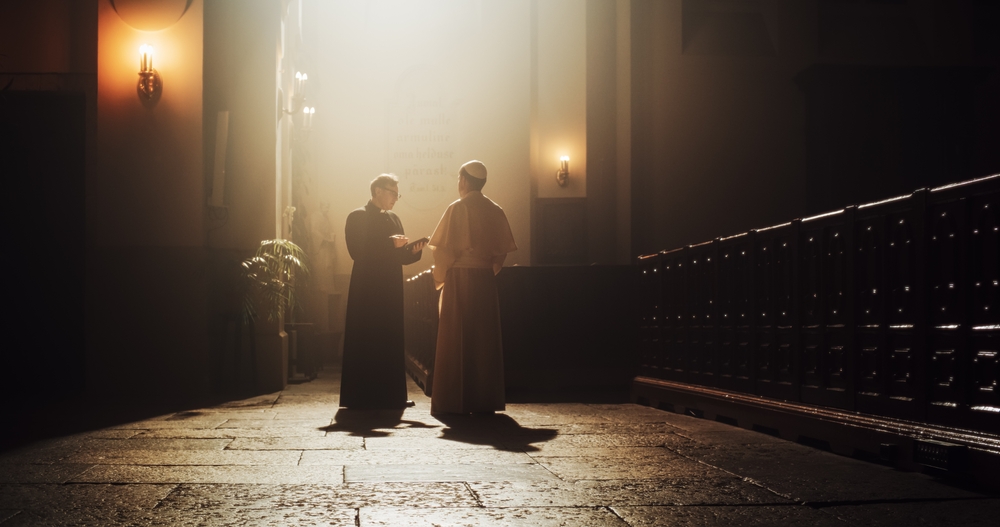
The Vatican has given environmental damage a distinctly religious dimension, arguing that harming nature can amount to a “sin against creation and against the Creator.” The wording appears in a new 29,000-word document from the International Theological Commission, released in Italian on September 2.
Contents
show
The document does not create a new binding rule for Catholics, but it does propose a significant shift in how environmental harm could be understood within Catholic theology. The timing is also notable, arriving just one day after Pope Leo XIV celebrated a Mass dedicated to the Care of Creation.
Pope Leo XIV Has Made Creation Care A Major Theme
On September 1, Pope Leo XIV celebrated the Mass for the Care of Creation in the Madonnina Garden of the Borgo Laudato Si’ at Castel Gandolfo. During the ceremony, he said, “It is not yet too late,” while calling the Season of Creation an opportunity for “a profound conversion.”
That language reflects the direction of the new Vatican document. Environmental responsibility is being discussed not only as a matter of public policy, but also as a question of personal moral responsibility within Catholic life.
The Document Arrived During The Season Of Creation
The International Theological Commission published “Caring for Our Common Home: A Responsible and Fraternal Response to the Triune God” on September 2. A subcommission worked on the document between 2022 and 2025, and a majority of the commission approved it in July 2026.
Cardinal Víctor Manuel Fernández authorised its release after it was presented to Leo XIV. The document appeared on the second day of the Season of Creation, which runs from September 1 through October 4, giving the release a particularly fitting backdrop.
The Vatican Wants To Go Beyond “Ecological Sin”
Pope Francis had already pushed the idea of ecological sin into Catholic discussion. In 2019, he said the Church should consider adding “the sin against ecology, ecological sin against the common home” to the Catechism.
The new document argues that the terminology can be made more precise. Instead of simply describing environmental destruction as “ecological sin,” the commission proposes the phrase “sin against creation and against the Creator.”
That distinction changes the theological focus. Environmental destruction becomes more than physical damage to forests, oceans, air, or other parts of nature. According to the document, it can involve violating the meaning of creation as intended by God.
The commission says this applies when human actions violate “the meaning of creation intended by God the Creator.” The wording places environmental responsibility within a much older Catholic framework involving God, humanity, and creation.
Three Relationships Can Be Damaged At Once
The document argues that environmental harm can affect several relationships simultaneously. By failing to care for the common home with wisdom and long-term vision, people “not only fail to respect God’s plan and mistreat creation, but we also harm our neighbors, especially the poorest and future generations.”
The commission therefore identifies three relationships that can become distorted:
- God: Environmental destruction can involve a failure to recognise or accept the Creator’s plan.
- Other people: Pollution and resource exploitation can impose serious costs on communities, particularly vulnerable populations.
- Creation: The natural world can be treated without the wisdom and long-term care the document says are required.
Msgr. Piero Coda singled out another part of the proposal, describing the idea of understanding environmental wrongdoing in a way similar to the Church’s concepts of “social sin” and “structures of sin.”
That distinction matters because some environmental damage cannot easily be traced to one person’s individual decision. It can emerge from systems involving production, consumption, resource extraction, economic incentives, and social structures.
The Document Says Everything Is Connected
The first chapter takes a theological route into the environmental question. It draws on thinkers including Augustine, Bonaventure, and Aquinas while presenting creation as something that reflects its divine source.
The document also engages with modern science, including the Big Bang and quantum physics. Its central argument is that creation should not be understood as a collection of isolated objects existing independently of one another.
“Nothing and no one is a monad,” the text says. “Everything is interrelated,” forming “a single community of life.” The statement connects the document’s theological argument with its criticism of treating nature primarily as something available for exploitation.
The commission describes a historical transformation beginning around the sixteenth century, linking changing views of nature with increasingly predatory attitudes toward the natural world. It then connects those developments with the ecological crisis unfolding on a planetary scale.
The Poorest And Future Generations Face The Cost
The second chapter turns toward the consequences of environmental damage. The commission points to “extremely serious” effects on poor communities, including situations where natural resources are exploited and people are forced to migrate.
The document’s argument is that environmental harm does not fall evenly across society. People with fewer resources can have less ability to protect themselves from pollution, resource depletion, environmental disruption, or displacement.
The commission also extends that responsibility beyond people who are alive today. “The Common Home must also be cared for on behalf of future generations,” the document states.
That gives the argument a second time dimension. Human decisions can affect people who have not yet been born and who have no opportunity to participate in decisions made today.
This Is Guidance, Not A New Church Doctrine
There is an important qualification behind the headlines. The International Theological Commission does not exercise the same authority as the Church’s ordinary teaching office.
The Vatican’s own description of the commission says it has “only a consultative and not a deliberative voice” in the functioning of the ordinary magisterium. In practical terms, the September 2 document is a theological proposal rather than a new binding rule for Catholics.
The text was approved by a majority of the commission rather than unanimously, and it does not establish a precise boundary for when environmental harm constitutes grave sin. That distinction is important when interpreting the significance of the announcement.
The Vatican has published a substantial theological argument about environmental responsibility, but the document does not declare that every environmentally harmful action automatically constitutes grave sin.
The Final Chapter Turns Theology Into Everyday Conduct
The third chapter focuses on what the commission calls “ecological conversion.” The document organises that conversion around five relationships involving God, oneself, creation, other people, and other religions.
The practical emphasis is largely about restraint and responsibility rather than dramatic new rules. The chapter also draws on Pope Francis’s expression “situated anthropocentrism,” which Leo XIV has continued to use.
Human beings remain central to the moral discussion, but the document describes them as “stewards and servants of Creation.” That language rejects the idea that humanity has unlimited freedom to exploit the natural world while still giving people responsibility for what happens to it.
The chapter also calls for interreligious cooperation in caring for creation and connects respect for human life with opposition to war.
Why The Wording Could Matter Inside The Church
The most consequential part of the document may be its attempt to put environmental responsibility into familiar Catholic moral categories. If ecological wrongdoing is understood as involving relationships with God, other people, and creation, environmental behaviour becomes something that can potentially be examined alongside other areas of moral life.
The document nevertheless leaves an important question unresolved because it does not establish a detailed boundary between environmental damage that constitutes serious moral wrongdoing and harm that does not. That leaves room for further theological discussion.
It is also unclear whether the proposed language will eventually influence the Catechism or other formal Catholic teaching. The commission has put forward a framework, but its publication does not settle what future Church teaching might look like.
Eight Centuries After Francis Of Assisi
The timing carries another layer of significance because the Season of Creation ends on October 4, the feast of Francis of Assisi. In 2026, that date falls 800 years after Francis’s death.
Leo XIV used that setting to deliver a message about redirecting human activity toward protecting life. “What has been used for destruction can be redirected toward life,” the pope said, “toward the care of the poor, the nourishment of the hungry, and the safeguarding of creation.”
The new Vatican document takes that idea further into theology. Its proposal places environmental responsibility within the relationships people have with God, other people, and the world around them.
For now, the Vatican has drawn a clear theological connection between environmental harm and the language of sin. The question ahead is how the Church decides where that proposed line should actually fall.