
Your cart is currently empty!
Scientists Reveal How Your Walking Speed Could Predict Your Risk Of Dying

Something as ordinary as walking to the grocery store could reveal important information about your health. Researchers have discovered a connection between walking speed and the risk of dying, suggesting that the way people move could offer clues about their overall physical condition.
Contents
show
The findings have caught attention because walking is something most people do every day. A change in pace could potentially reveal health problems before other obvious warning signs appear.
Researchers Discovered A Connection Between Walking Speed And Longevity
A study published in JAMA Network Open examined 4,067 older adults in the United Kingdom to investigate whether walking speed could help predict their risk of death. The participants had an average age of approximately 69 years, and researchers monitored their health outcomes for nearly 12 years.
The research team assessed walking speed using two different approaches. Participants completed a short walking test at their usual pace, while wrist-worn activity trackers recorded their movements during everyday life.
For the clinical assessment, participants walked along a marked 2.44-meter course at their normal speed. They completed the test three times, allowing researchers to calculate an average walking speed from the results.
The participants also wore GENEActiv wrist accelerometers for nine consecutive days. These devices recorded their movements and helped researchers identify walking episodes, step counts, and different measures of walking cadence.
During the follow-up period, 739 participants died. Researchers compared their walking measurements with mortality records while accounting for factors such as age, sex, smoking, alcohol consumption, body mass index, existing illnesses, and other lifestyle characteristics.
The findings revealed that people who walked faster generally had a lower risk of death. This association remained even after researchers adjusted their calculations for several important health and lifestyle factors.
Why Walking Speed Has Become Known As The Sixth Vital Sign

Walking might appear to be one of the simplest things the human body does, but maintaining a steady pace requires several systems to function together. Your muscles, heart, lungs, brain, and nervous system all contribute to the process.
Beth Templin, a board-certified geriatric clinical specialist and CEO of HouseFit Physical Therapy & Fitness in St. Louis, explained why physical therapists pay attention to walking speed. She was not involved in the research but offered her professional perspective to Fox News Digital.
“In physical therapy, we call walking speed the ‘sixth vital sign’ because it’s a snapshot of how well many body systems are working together,” Templin said. Her explanation reflects how walking performance can provide information about several aspects of physical health.
Walking requires your leg muscles to generate enough force to move your body forward. Your cardiovascular and respiratory systems must also deliver oxygen, while your brain coordinates movement and helps maintain balance.
Templin explained that walking briskly requires strong legs, a healthy heart and lungs, good balance, and effective coordination. Problems affecting any of these systems could eventually influence how quickly someone moves.
“When walking speed starts to slip, it’s often an early warning sign that one of those systems is declining, sometimes before anything shows up on a lab test,” Templin added. This makes changes in walking speed particularly interesting when assessing older adults.
The Research Revealed Three Important Mortality Findings

The researchers examined several walking measurements to determine how strongly they were associated with mortality risk. Their analysis considered both walking speed measured during the clinical test and cadence recorded during everyday activities.
After adjusting for age, lifestyle, and health-related factors, the researchers identified three notable associations.
- Clinical walking speed: Each standard increase in measured walking speed was associated with a 23% lower risk of death. This measurement came from the short walking test completed by participants.
- Median everyday walking cadence: Higher median walking cadence was associated with a 17% lower risk of death. This measurement represented the middle value of participants’ steps per minute during everyday walking periods.
- Brisk everyday walking cadence: Higher walking cadence at the 95th percentile was associated with an 18% lower risk of death. This measurement captured participants’ faster walking periods.
The researchers also examined how well these measurements predicted mortality when added to models containing other established risk factors. Both clinical walking speed and everyday walking cadence provided modest improvements in prediction.
Interestingly, the two measurement methods showed only a weak correlation with each other. This suggests that a short clinical walking test and everyday walking habits capture somewhat different aspects of physical movement.
Combining the measurements offered a small additional improvement in predictive ability. However, that improvement was not statistically significant after detailed health factors were considered.
Another Study Found That Walking More Or Faster Could Help

A separate investigation involving 64,743 adults in the United Kingdom examined the relationship between daily step counts, walking pace, and mortality. Participants had an average age of 62 and wore wrist activity trackers for approximately one week.
Researchers monitored their daily steps and calculated walking cadence using the 30 highest-activity minutes of each participant’s day. Those minutes did not necessarily need to occur consecutively.
The researchers divided daily step counts into four categories: fewer than 5,000 steps, 5,000 to 7,500 steps, 7,500 to 10,000 steps, and more than 10,000 steps. They then compared mortality outcomes among people with different combinations of walking volume and speed.
During approximately eight years of follow-up, 1,697 participants died. Of those deaths, 502 were attributed to cardiovascular disease.
One particularly interesting finding involved people who took fewer than 5,000 steps daily. Participants in this group who walked at a faster pace had a substantially lower risk of dying from cardiovascular disease or other causes than those walking more slowly.
Their risk was similar to that of people taking between 5,000 and 7,500 steps daily at a slower pace. The researchers also found that participants taking between 7,500 and 10,000 daily steps had the lowest death rates among the step-count groups.
The authors identified maintaining a brisk walking cadence of approximately 90 to 100 steps per minute for 30 minutes daily as a potentially useful target. They also acknowledged that people facing limitations involving time or physical ability could benefit from different combinations of walking speed and step counts.
A Slower Walking Pace Could Reveal Underlying Health Problems

One of the most interesting aspects of the research concerns what happens when someone’s usual walking speed begins to decline. People often associate slower movement with getting older, but several underlying factors could contribute to the change.
Neha Sabharwal, a physical therapist specializing in geriatric mobility and functional decline at Vintage Faire Nursing and Rehabilitation Center in Modesto, California, discussed this issue with Healthline. She explained that walking depends on several body systems working together.
“It is easy to dismiss that change as part of getting older, but there may be something else going on,” Sabharwal said. She identified several possible reasons behind changes in walking performance.
These include muscle weakness, pain, reduced endurance, balance difficulties, and underlying medical conditions. Each can affect how comfortably someone moves through everyday activities.
Some possible warning signs include:
- Increasing difficulty climbing stairs: Activities that once felt manageable may begin requiring more effort. This could indicate changes in muscle strength or endurance.
- Frequent breaks during ordinary walks: Someone who previously walked continuously might begin stopping more often. Reduced stamina or discomfort could contribute to this change.
- New balance difficulties: Feeling unstable while walking can affect confidence and movement. Balance problems may also increase the risk of falls.
- Unexplained changes in walking pace: A noticeable reduction in speed could reflect pain, weakness, or another health concern. Monitoring changes over time can help identify when something deserves attention.
Sabharwal explained that she pays attention to changes in how quickly patients walk. She also suggested that monitoring an individual’s progress over time can be more informative than comparing their walking speed with another person’s.
Experts Recommend Building Strength To Improve Walking Ability
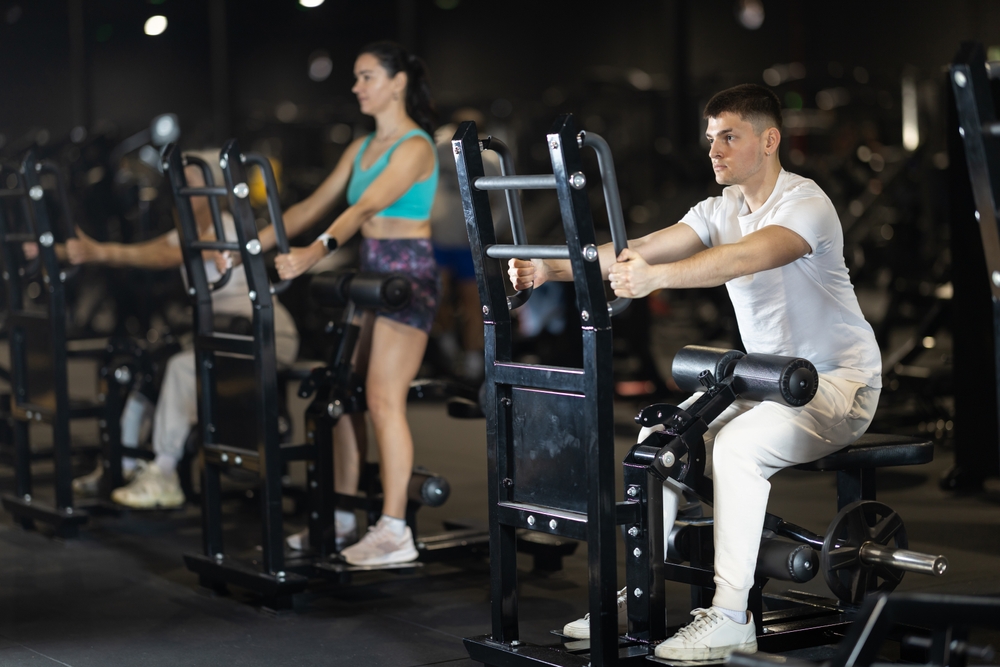
For older adults hoping to improve their walking performance, simply increasing daily step counts may not address every factor involved. Physical strength and balance also play important roles in maintaining comfortable movement.
Templin recommends focusing on the physical abilities that support faster walking. She explained that building strength can help people improve the physical capacity needed for everyday movement.
“Build the engine, not just the habit,” Templin advised. Her recommendation focuses on strengthening the muscles involved in walking rather than concentrating exclusively on accumulating steps.
She suggested several simple exercises that can be incorporated into an appropriate fitness routine. These movements can help develop strength in the lower body while supporting everyday mobility.
Chair stands: Sit in a sturdy chair and practice standing up without using your hands, provided you can do so safely. This movement works muscles that help you stand, walk, and perform everyday activities.
Heel raises: Stand behind a sturdy counter and slowly lift your heels off the floor. Hold the position briefly before lowering them, using the counter for support.
Short bursts of faster walking: After warming up, walk briskly for one minute before returning to a comfortable pace for two minutes. Repeat the pattern and gradually increase the faster intervals as your fitness improves.
Balance exercises: Include suitable movements that help develop stability and coordination. People who feel unsteady should use appropriate support and seek guidance before attempting challenging exercises.
The intensity of these activities should match an individual’s current physical ability. People experiencing mobility limitations, persistent pain, or balance difficulties may benefit from exercises adapted by a physical therapist.
What The Experts Say About Monitoring Your Walking Speed
The researchers found that both clinical walking tests and everyday walking measurements could provide useful information about mortality risk. This raises the possibility that wearable devices could help researchers and healthcare professionals monitor movement outside traditional clinical settings.
However, experts caution against treating walking speed as a standalone prediction of someone’s lifespan. People who naturally walk faster may already have better underlying health, which could help explain the association.
Sabharwal emphasized that the findings should not be interpreted as proof that deliberately increasing walking speed will automatically make someone live longer. She suggested paying attention to personal changes rather than trying to outperform other people.
Theodore Strange, chairman of medicine at Northwell Staten Island University Hospital, also discussed changes in walking ability with Healthline. He emphasized that new symptoms accompanying reduced mobility deserve attention.
“I mean, if it’s slowing down because a week or two ago, you were walking up a flight of steps with no problem, and now, you’re having some shortness of breath, I think it should be evaluated,” Strange said.
He also noted that new aches or pains could make exercise more difficult. People experiencing these changes should consider getting them assessed rather than simply pushing themselves to walk faster.
Strange suggested gradually increasing daily steps and managing existing chronic conditions so people can remain physically active within their individual limitations. He also mentioned that physical therapy can help people experiencing problems with gait mechanics, strength, or balance.
The Findings Have Important Limitations
Although the research identified a consistent relationship between walking speed and mortality, several limitations deserve attention. The findings do not establish that walking faster directly prevents death or adds a specific number of years to someone’s life.
The main study included participants who were generally healthier than the wider population. This could limit how confidently the findings apply to older adults with significant health conditions or mobility difficulties.
The researchers also acknowledged that wrist-worn activity trackers do not provide a universally standardized way to measure everyday walking cadence. Different measurement approaches could produce different results in other populations.
Furthermore, the study examined a particular group of older adults in the United Kingdom. More research is needed to determine whether the findings apply equally to younger populations and people with different health backgrounds.
The researchers also found that walking speed provided only modest improvements in mortality prediction when added to existing health information. This means walking measurements are best understood alongside other factors rather than as an isolated indicator.
The separate study involving 64,743 adults offers additional evidence linking walking habits with mortality. However, it also demonstrates an association rather than proving that a faster walking pace directly causes people to live longer.
Your Everyday Walking Habits Deserve More Attention
Walking is an activity that many people perform automatically, yet changes in walking ability can reveal useful information about physical health. The research suggests that both the speed and amount of walking deserve attention, particularly as people grow older.
For anyone hoping to maintain mobility, gradually building strength and improving balance can support everyday movement. Regular walking can also help people remain active, provided the pace and intensity are appropriate for their abilities.
If your usual walking speed has noticeably declined, especially alongside new breathlessness, pain, or balance problems, it is worth discussing those changes with a healthcare professional. A simple change in how you walk could be a clue that deserves investigation.