
Your cart is currently empty!
Warren Buffett Just Made a Record Breaking $6 Billion Donation, Urges Welathy to End World Hunger Now
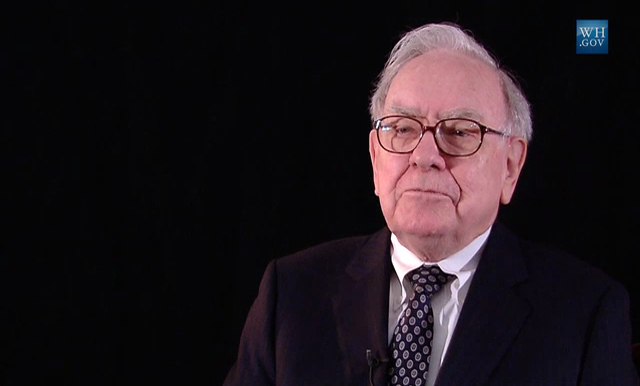
We spend our days gripping tighter. To titles. To possessions. To the idea that more is the measure of a life well lived. But sometimes, someone shows us that true freedom is not in the grasp, but in the release.
Contents
show

At ninety-four, Warren Buffett has nothing left to prove. Yet instead of stacking higher, he’s been dismantling brick by brick. In 2025, he released another $6 billion into the world, raising his lifetime giving to more than $60 billion, which already exceeded the value of his entire fortune twenty years ago.
This isn’t about dollars. It’s about a decision. While most of us are taught to measure life by accumulation, Buffett chose the opposite. He chose to empty his hands. Not to be praised, not to erase guilt, but because perhaps he discovered what so many forget: wealth multiplies when it moves, not when it sits still.
The question left for us is not how much one man gave. It’s what each of us is still gripping that keeps us from being free.
The Billionaire Who Gave Without Letting Go
In June 2025, while the internet was busy chasing headlines, Warren Buffett quietly shifted the ground beneath philanthropy. More than 12.3 million shares of Berkshire Hathaway stock, valued at $6 billion, left his hands and landed in the service of others. There were no stage lights or ceremony, only intention.
Roughly $4.6 billion flowed to the Bill & Melinda Gates Foundation Trust, a continuation of years spent working side by side on global health and education. The rest was divided among four foundations led by his family, each addressing deeply human struggles: reproductive health, poverty, food insecurity, community healing. These weren’t casual gestures. They were acts of precision, with generosity aimed like a compass toward places where people are hurting most.
And still, even after giving away more than most could dream of owning, Buffett remained Berkshire Hathaway’s largest individual shareholder. He held over 198,000 Class A shares and more than 1,100 Class B shares. His net worth slipped from $152 billion to slightly less, moving him from fifth richest to sixth. But as anyone who has lived long enough to measure legacy knows, the ladder of Forbes rankings isn’t the one that matters.
What mattered was his response to speculation that he might be preparing for an exit. He wrote, “During the following 19 years, I have neither bought nor sold any A or B shares nor do I intend to do so.”
That single line speaks louder than the billions. He isn’t giving because of fear. He isn’t retreating from the game. He’s giving while fully awake, still standing on the field. And in his usual clarity, Buffett drew another boundary: once he’s gone, the Gates Foundation will no longer receive his support.
He’s not writing himself into eternity with donations. He’s setting limits, choosing to give while he still has something rarer than wealth, his attention. Because giving isn’t about performance. It’s about presence.
The Discipline of Letting Go
The world celebrates fireworks. The viral clip. The oversized check. But Warren Buffett reminds us that true generosity doesn’t need a spotlight. Sometimes, it’s not one grand gesture but the steady beat of a life lived in rhythm with its values.
Since 2006, Buffett has kept to a pattern. Each year, he transforms a portion of his Berkshire Hathaway Class A shares into Class B and then releases them. No skipped years. No last-minute dramatics. Just quiet consistency. Not fueled by guilt, not by applause, but by a conviction: wealth fulfills its purpose only when it moves.
By 2025, that rhythm had carried him to an almost unthinkable milestone: more than $60 billion given away. As he put it, those shares were worth “about 60 billion dollars, substantially more than my entire net worth in 2006.” He gave away more than he once even had. That is not an accident. That is a philosophy.
This path began not with a viral announcement, but with a letter. In 2006, Buffett wrote to Bill and Melinda Gates and laid out a formula for recurring gifts. Discipline, not impulse. In 2024 alone, he sent out $5.3 billion in June and another $1.14 billion in November, barely a ripple in the news cycle, but a tidal shift for those touched by it.
And he didn’t keep the vision to himself. In 2010, he co-founded The Giving Pledge, urging fellow billionaires to commit half their fortunes to humanity’s needs. Yet while others were signing pledges, Buffett was already living his own: to give away more than 99 percent of his wealth.
Not because the world demanded it. But because he understood that money’s greatest power comes when it is no longer orbiting the one who earned it. Legacy is not a single decision. It’s repetition. A drumbeat of purpose, echoing across decades.
And in that rhythm, Warren Buffett found a different kind of wealth: not what he kept, but what he chose, over and over, to let go.
Legacy Measured in Trust, Not Towers
We often think legacy is about size, measured by how much we leave behind and how many decades our name endures. But Warren Buffett has shown us a different truth: legacy is not the monument, it’s the method. Not how much you give, but how you give it, and who you trust to carry it forward.
In late 2024, Buffett rewrote one of the most important chapters of his life. Not in the markets, but in his estate plan. With remarkable clarity, he directed 99.5 percent of his remaining wealth into a charitable trust. The genius lay not in the figure but in the structure.
He placed the trust in the hands of his three children, bound not by majority rule, but by unity. Every decision must be unanimous. No tie-breakers. No shortcuts. As he wrote, “They express particular surprise at my requirement that all foundation actions will require a unanimous vote.” It is a design not of control, but of deep respect. A belief that real impact emerges from shared values, not forced outcomes. And if his children cannot serve, he has already named successors who were chosen and trusted together.
There is a timer on this gift. Ten years. That’s all. Ten years to distribute the fortune before the trust dissolves. There was no empire or dynasty, only a finite window of purpose. In that limit lies something rare: accountability. He refuses to let his wealth drift into eternity, detached from his vision.
His reasoning is as direct as it is profound: “I’ve never wished to create a dynasty or pursue any plan that extended beyond the children.” With that line, he dismantles one of the deepest illusions of wealth, that it must last forever.
Buffett never saw money as a crown to be inherited. He saw it as a responsibility to be carried carefully, intentionally, and only for as long as the carriers remain true.
And in making that choice, he leaves us with a lesson sharper than any balance sheet: the real measure of life is not how tightly we hold, but how clearly we release.
Giving With Direction, Not Display
When Warren Buffett gives away billions, he transfers not only money but also trust. His $6 billion donation in 2025 was not scattered across faceless programs or locked away in endowments with no pulse. It was placed, intentionally, into five foundations that carry pieces of his heart. Their power doesn’t come from the size of their grants but from their focus. Each is committed to deep work over decades, not shallow charity in headlines.
The Susan Thompson Buffett Foundation, named for his late wife, has long championed reproductive health and educational access, areas often underfunded and politically charged. It directs resources toward clinics, research, and scholarships, working quietly but effectively. Its impact is measured not in noise, but in lives changed at the roots.
Closer to home, the Sherwood Foundation reflects the vision of Buffett’s daughter Susie. Grounded in Nebraska, it invests in local schools, early childhood programs, and nonprofit capacity. It doesn’t chase trends. It builds systems that last, woven into the same community where Buffett’s own story began.
The Howard G. Buffett Foundation, guided by his eldest son, widens the lens to over 40 countries. Its focus reaches some of the hardest problems humanity faces, such as food insecurity, land degradation, human trafficking, and recovery in post-conflict zones. These are not issues solved in a news cycle. They demand patience, partnerships, and the courage to work far from the spotlight.
And then there is NoVo, co-chaired by Buffett’s youngest son Peter and his wife Jennifer. Their mission leans into transformative justice, amplifying the voices of women, girls, indigenous groups, and marginalized communities. NoVo does not dictate but listens, supports, and strengthens what already exists on the ground.
These foundations are not about top-down power. They are about inside-out change. Buffett chose to spread his legacy not through ego, but through people he trusts, family and visionaries alike, who know the terrain they’re walking.
This is not generosity for image. It is generosity with direction. In an era where giving often doubles as branding, Buffett’s choice offers something rare: the reminder that wealth has its highest meaning when it is placed in hands that build, not broadcast.
The Wealth of Letting Go
Warren Buffett’s story is not just about billions. It is about a man who, at ninety-four, chose rhythm over spectacle, clarity over control, and generosity over accumulation. He reminds us that wealth goes beyond numbers, acting as a force that can either tighten bonds or create freedom for others. But here’s the truth: you don’t need billions to practice what Buffett teaches. The real question isn’t “How much can I give?” It’s “What am I willing to release?” Because freedom begins not in what we gain, but in what we let go.
Giving while you’re here matters, because even the smallest act of generosity can spark ripple effects now, not someday. When you choose to focus on depth rather than display, you realize that consistent support, whether for a cause, a person, or a community, often creates more impact than one-time applause. Like Buffett’s estate plan, boundaries matter too; giving with intention ensures your efforts don’t lose power or drift away from your values. And perhaps the greatest lesson is to trust people, not just systems. Real change is rooted in relationships, in shared values, and in the courage to let others lead.

Wealth, in the end, isn’t just about money. It is also your time, your attention, your wisdom, your creativity. Share those as freely as dollars, and you’ll discover what Buffett did: that legacy isn’t measured by how much you hold, but by how clearly you let go and how fully you give what you can.
Featured Image from USA White House, Public domain, via Wikimedia Commons