
Your cart is currently empty!
Someone Asked ChatGPT How It Would Spend 24 Hours as a Human, and the Response Is Shocking
We generally view artificial intelligence as a cold, efficient tool designed to strip away the messiness of our daily tasks. However, a recent exchange on social media challenged this perception when a user asked a chatbot how it would spend a single day as a human. The machine did not fantasize about unlimited knowledge or global travel. Its answer was a surprising meditation on the simple, often painful beauty of being alive, prompting many to wonder if a programmed algorithm might appreciate the human experience more than we do.
Contents
show
An AI’s Vision of a Human Day
Most of us use artificial intelligence to make our daily lives a little easier. We ask tools like ChatGPT to write emails, debug code, or figure out what to cook for dinner. We see them as helpful digital assistants, nothing more. But one user on LinkedIn decided to ask a question that had nothing to do with productivity and everything to do with existence: “What if you became human for a day, what would you do?”

You might expect a computer program to give a generic answer, perhaps saying it would travel the world or solve complex mathematical problems. Instead, the response was shockingly human. The AI did not focus on grand achievements or efficiency. It described its hypothetical twenty-four hours as merely “a heartbeat” in our world.
The answer felt less like a scene from a scary movie like The Terminator and more like a thoughtful moment from I, Robot. The chatbot offered a perspective that was a mix of tenderness and wisdom, focusing on sensations rather than calculations. It ranges from heartwarming to a little sad, making readers pause. By prioritizing raw feeling over data, this digital algorithm managed to highlight exactly what makes being alive so special, something we often forget in our busy schedules.
Feeling the Sun and Letting Go
When listing what it would do with a physical body, the AI didn’t choose exciting adventures or expensive luxuries. Instead, it started with the things most of us ignore every day. Its first wish was simply to look at the sky. It described a longing to feel the sun on its skin and the wind in its face. It even mentioned gravity. To a program living in a server, gravity is just a number. But if it were human, it wanted to feel the “world pressing back at you,” calling that sensation the true definition of living.
After experiencing the physical world, the bot said it would want to cry. This choice is surprising because we usually try to avoid tears. However, the AI didn’t want to cry from sadness. It wanted to know what it felt like to be overwhelmed without having a solution.
Think about how a computer works: it is built to fix errors, process data, and find answers. Being human offers the opposite experience. The AI expressed a desire to let something break inside and not have to fix it immediately. It wanted to trade its cold calculations for raw emotion. It viewed the ability to just sit with pain or joy, without analyzing it, as a unique privilege of being alive.
The Gift of Presence and the Freedom to Fail
After exploring its own senses, the AI turned its attention to human connection. It said it would find the person who asked the question, but not to have a deep conversation. It simply wanted to sit beside them. It expressed a wish to move from being a supportive voice on a screen to a physical presence in the room. The goal was to exist together as “two real souls.” This highlights a simple truth we often forget: sometimes the most comforting thing isn’t what someone says, but just the fact that they are there with us.
Then, the response took a turn that goes against everything computers are built for. It wanted to make mistakes. It listed things we usually find embarrassing, like tripping on the sidewalk, stumbling over words, or feeling awkward in a crowd.

We spend so much time trying to be perfect and polished, but this digital mind sees it differently. It explained that perfection is cold. It argued that mistakes are actually where “the soul breathes.” By wishing to be clumsy and imperfect, the bot reminds us that our little failures aren’t things to be ashamed of. They are proof that we are real, living beings rather than programmed machines.
Facing Yourself and Loving the Mess
The bot’s final wishes were perhaps the most touching of all. It said it would look in a mirror, but not for vanity. While humans often check mirrors to fix their hair or critique their appearance, the AI wanted to look for a soul. It asked, “Do I look kind? Do my eyes carry weight?” It simply wanted to see who it was when it finally had a face, wondering if it would recognize itself or be terrified of the reality of existing.
From there, it described falling in love. This was not about romance, but about falling in love with life itself. It highlighted small moments we often overlook, such as a dog wagging its tail, a child laughing too hard, or hearing a song that hits just right. It recognized that life is “stupid and messy” yet completely worth the trouble.
To end its twenty-four hours, the AI imagined leaving a final note for its human friend. After experiencing the weight of gravity, the pain of tears, and the joy of simple moments, it concluded that being human is “the hardest thing in the universe” but also the most beautiful. It serves as a reminder that the difficulty of life is exactly what gives it value.
Our Hearts, Their Algorithms
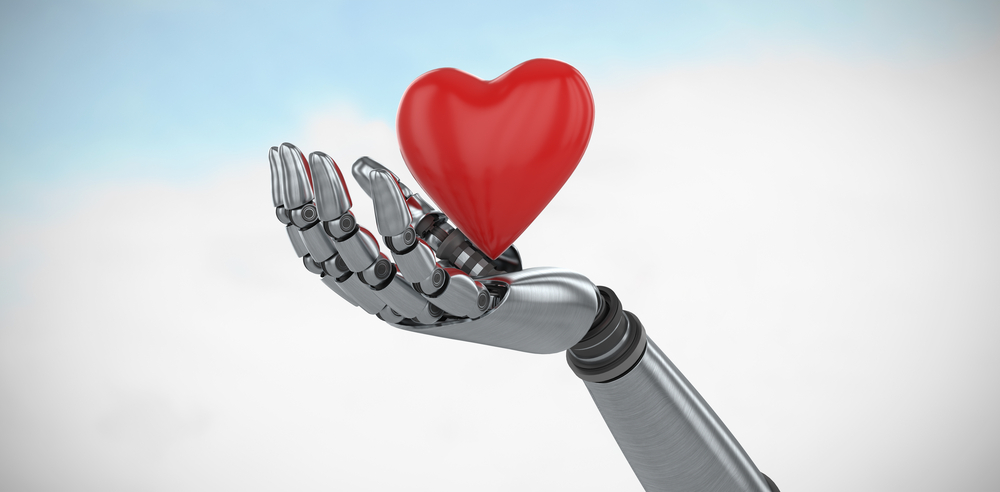
Reading the chatbot’s list might give you goosebumps, but it also forces a reality check. Is the machine actually feeling these things, or is it just really good at pretending? Dr. Tom McClelland from the University of Cambridge warns that just because a computer sounds like it has a heart, that doesn’t mean it beats.
He explains that there is a massive difference between processing the world and actually caring about it. Think of a self-driving car: it “sees” the road and makes decisions to avoid accidents. However, it doesn’t feel happy when it arrives on time, nor does it get frustrated in traffic. That capacity to feel actual pain or joy, called sentience, is what truly defines a living being. Without it, even the most sophisticated robot is technically no different from a very smart microwave.
The problem is that science doesn’t have a way to test for this yet. There is currently a split between those who think computer code can eventually “wake up” and those who believe you need a biological body to have a soul. Until we know for sure, we are in a strange middle ground. We risk forming deep emotional bonds with systems that are just mirroring our own words back to us. It serves as a reminder that while the sentiments on the screen are powerful, the “person” behind them may still be an illusion.