
Your cart is currently empty!
What If Trump Faced Obama in 2028? AI Offers a Surprising Prediction
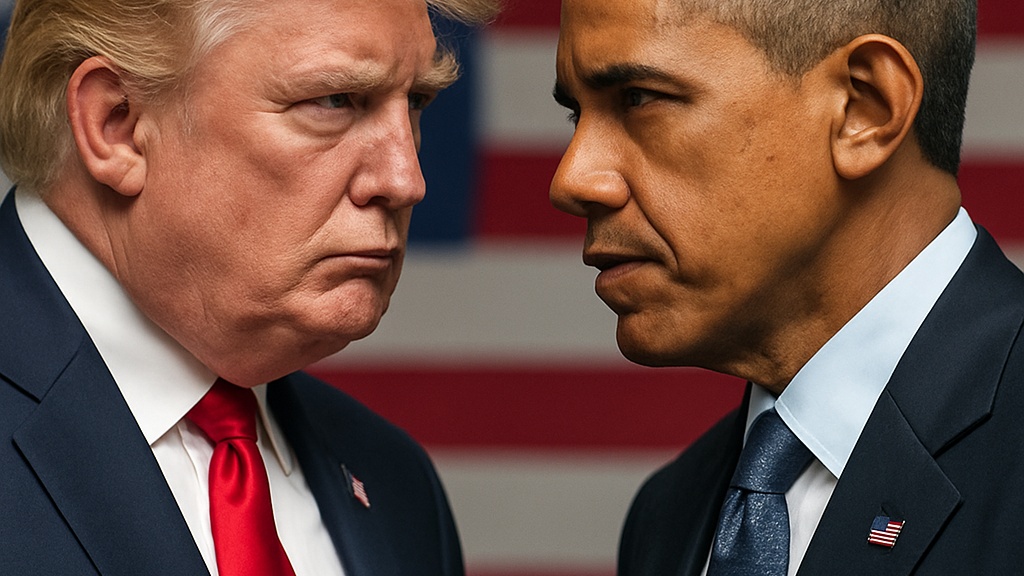
It is the kind of political question that immediately captures national attention and spreads rapidly across social media platforms, cable news panels, and online debate forums. What would happen if the rules of American democracy changed and two of the most defining political figures of the 21st century were suddenly allowed to face each other once again on the presidential ballot? A popular YouTube channel decided to explore that exact scenario, asking artificial intelligence to simulate a 2028 election in which both Donald Trump and Barack Obama were legally eligible to run for a third term. While such a contest is currently prohibited under the United States Constitution, the hypothetical matchup has reignited discussions about leadership styles, political fatigue, voter psychology, and the enduring divisions that continue to shape American politics.
Contents
show
The thought experiment begins with a simple but powerful request to viewers: temporarily suspend constitutional reality. The channel, I Ask AI, asked its audience to imagine a world in which the 22nd Amendment no longer restricted presidential eligibility, allowing both men to compete once again for the highest office in the country. Although neither Trump nor Obama can legally seek another term under existing law, the symbolic weight of this imagined rematch has proven compelling. It represents more than a campaign between two individuals; it evokes two political eras, two governing philosophies, and two sharply contrasting visions of America’s future. When the AI ultimately delivered its prediction, it did so with notable confidence, offering a conclusion that has sparked widespread conversation about what the country might want from its leadership by 2028.
The Legal Barrier That Makes It Impossible
Under the 22nd Amendment to the United States Constitution, presidential term limits are clearly defined and leave little room for interpretation or ambiguity. The amendment states: “No person shall be elected to the office of the President more than twice, and no person who has held the office of President, or acted as President, for more than two years of a term to which some other person was elected President shall be elected to the office of the President more than once.” This language was adopted to formalize a long-standing tradition that presidents serve no more than two elected terms, reinforcing the principle of leadership rotation and limiting the consolidation of executive power within a single individual.
Both Donald Trump and Barack Obama have already completed two terms as president, which means that under current constitutional law, neither man would be eligible to run again in 2028. Despite this legal reality, Trump has at times left the door open rhetorically. In October, he said he would “love to run,” and when reporters pressed him on whether he was ruling out the possibility, he responded, “Am I not ruling it out? I mean, you’ll have to tell me.” Those comments did not constitute a formal plan, but they were enough to fuel speculation and generate headlines about whether any path could exist for a third campaign.
Trump’s former chief strategist Steve Bannon has also expressed support for the idea of another run. He told The Economist that there already is a “plan” to get around the 22nd Amendment and claimed there are “many different alternatives,” though he declined to explain what those alternatives might be and said the details would be revealed “at the appropriate time.” Legal scholars and constitutional experts, however, have repeatedly emphasized that the amendment’s language is explicit and that any attempt to bypass it would face significant legal challenges and institutional resistance.
One proposal floated by US Representative Andy Ogles last year suggested amending the Constitution to restrict presidents from serving more than two consecutive terms rather than two total terms. However, the amendment process requires approval by two thirds of both houses of Congress and ratification by three quarters of the states, making such a change extraordinarily difficult in a polarized political environment. Other speculative ideas, such as running for vice president and assuming office if the president stepped down immediately, have also circulated, but scholars have pointed out that existing constitutional provisions and federal statutes are designed to prevent that type of workaround from succeeding.
“Forget All About the 22nd Amendment”
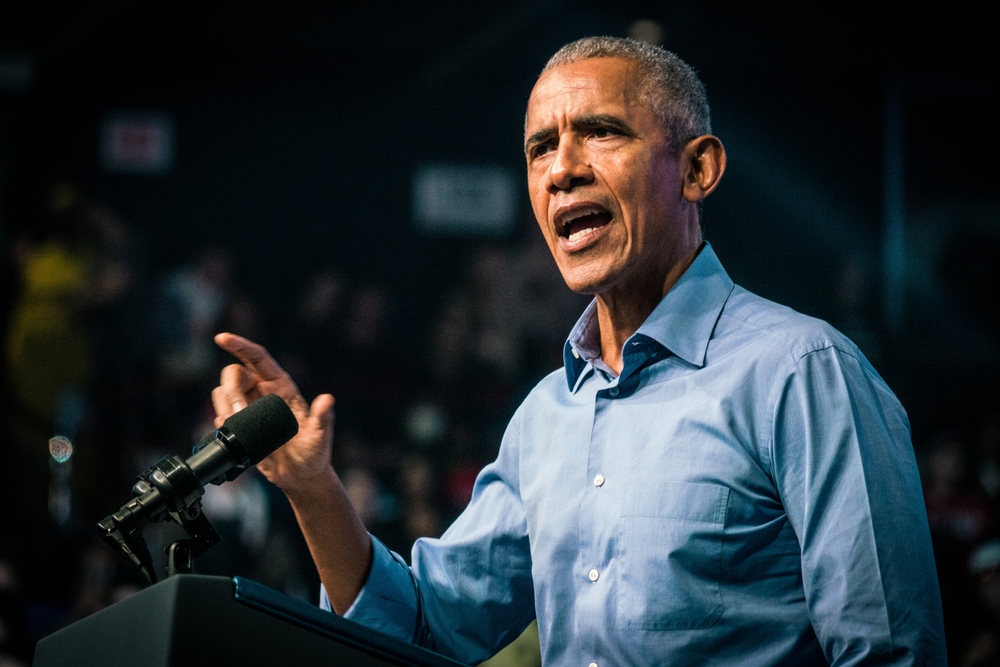
In launching the simulation, the I Ask AI host made it clear that viewers needed to set aside legal constraints to properly engage with the scenario. “So for the next 15 minutes, forget all about the 22nd Amendment. Just put it aside or somewhere,” he said before introducing the imagined 2028 race. With that instruction, the focus shifted away from constitutional feasibility and toward political strategy, voter behavior, and national mood.
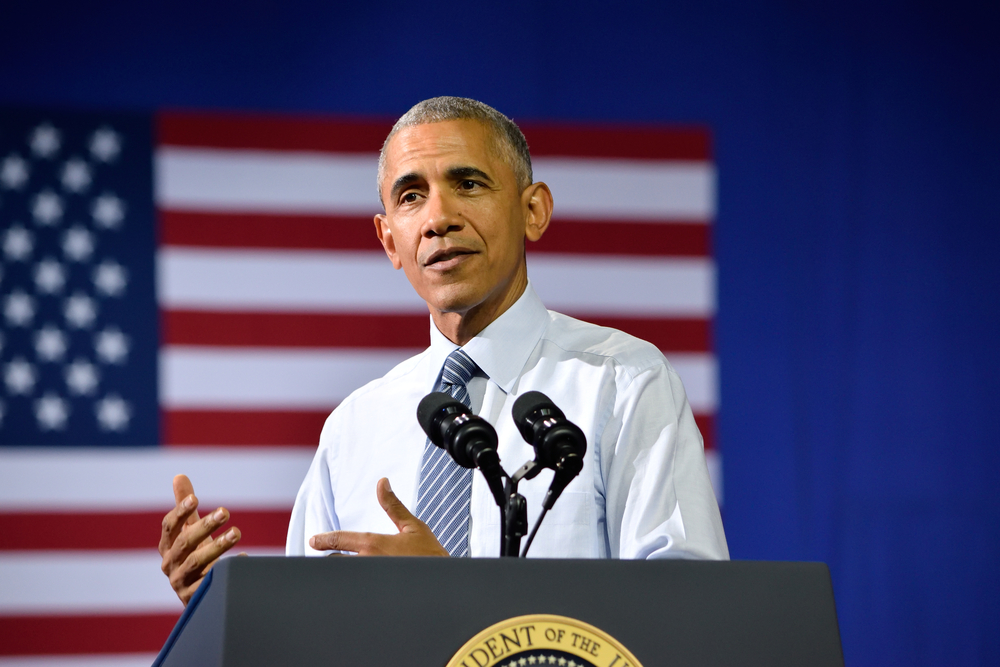
Once the concept of a third term was accepted within the hypothetical framework, the conversation quickly narrowed to one Democratic figure who consistently emerges in public discussions about a Trump rematch. “And once you open that door, there’s really only one name that people bring up. Yes, this man. Every time Trump talks about a third term, Barack Obama’s name comes up instantly,” the host explained. In that framing, the contest became less speculative and more symbolic, representing unfinished political debates that have lingered for years.
The simulation proceeded by examining how each campaign might be structured, what policy themes would dominate messaging, and how voters might respond in a political climate shaped by years of division and intense media scrutiny. Rather than simply guessing a winner, the AI evaluated leadership styles, rhetorical strategies, and broader societal conditions that could influence the electorate’s mindset in 2028.
How the AI Imagined an Obama Campaign
According to the AI’s projection, an Obama campaign would be structured largely around contrast and restoration. It predicted that Obama would focus on “undoing, correcting, or stabilizing what he would describe as damage from an extended Trump era.” This framing would position him not merely as a returning former president, but as a stabilizing force seeking to recalibrate the direction of national policy and political tone after a prolonged period of confrontation.
The AI further elaborated that Obama would “present himself as the counterweight, steady where Trump is confrontational, institutional where Trump is disruptive, making the race a direct referendum on two very different governing styles.” In this imagined scenario, the election would center less on isolated legislative proposals and more on broader themes of governance, temperament, and institutional trust. The contrast would become the core narrative of the campaign.
Rather than relying solely on nostalgia for his previous administration, the AI suggested Obama would emphasize institutional continuity, restoration of alliances abroad, and a lowering of domestic political tensions. The campaign would likely highlight stability, experience, and a recommitment to democratic norms. In a climate marked by division, the message would focus on rebuilding confidence in public institutions and reestablishing predictability in national leadership.
The projection assumed that this approach would resonate particularly with voters who feel fatigued by years of intense partisan conflict. If the national mood leaned toward a desire for steadiness and calm, Obama’s positioning as a counterweight could gain significant traction across moderate and independent voters seeking relief from constant political volatility.
How the AI Imagined a Trump Campaign
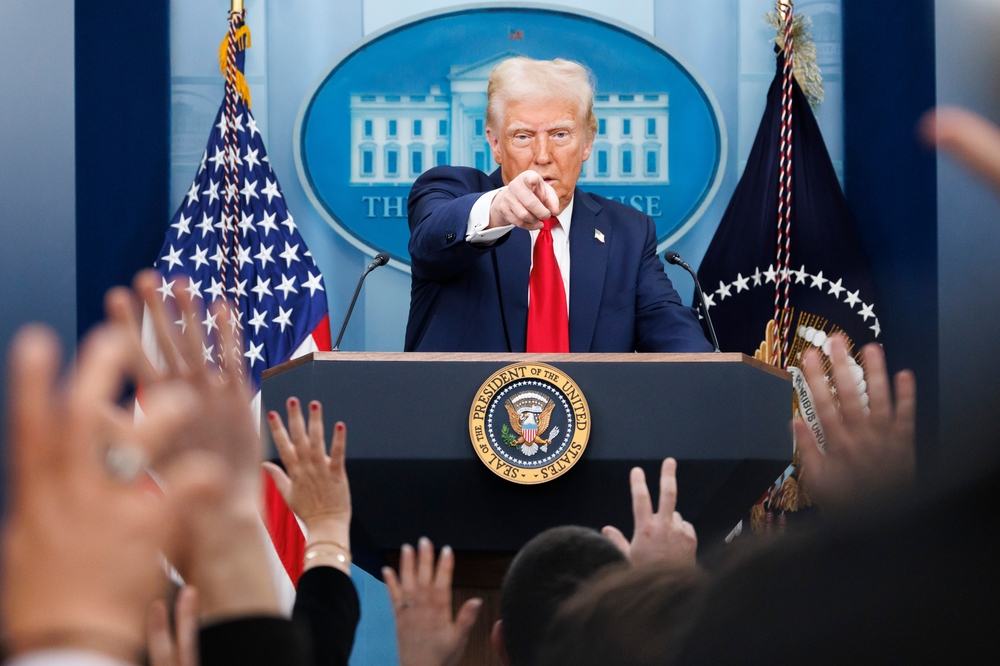
On the other side of the hypothetical race, the AI projected that Trump would campaign on themes of unfinished business and continued reform. Immigration would likely remain a central focus, with “expanded border control, and possibly ending birthright citizenship if he hasn’t already pushed that fight” forming key pillars of the message. This approach would align closely with the priorities that have defined Trump’s political identity in previous campaigns.
Economic nationalism would also feature prominently. The AI suggested Trump would advocate for tariffs, reshoring manufacturing, and “being tougher on trade” as part of a broader strategy to protect American workers and industries from global competition. These policies would be framed as necessary to strengthen domestic production and assert national sovereignty in economic matters.
The model further predicted that Trump would intensify his criticism of Democratic opponents, working to “probably frame them as radical, corrupt, or dangerous to the country’s stability.” That messaging would seek to energize his base while drawing sharp ideological lines between the two camps. The emphasis would be on strength, resilience, and a willingness to challenge entrenched political establishments.
Ultimately, the AI summarized Trump’s likely appeal with a clear statement. “He’d claim he is the only one strong enough to save the country from decline,” the host said. In this hypothetical contest, Trump’s campaign would revolve around projecting decisive leadership and positioning himself as uniquely capable of confronting what he would characterize as national challenges.
A Nation Feeling Exhausted
One of the most significant elements of the AI’s projection involved the broader national mood heading into 2028. The simulation suggested that the United States would be experiencing fatigue stemming from years of political conflict, public protests, scandals, and deeply entrenched partisan divisions. In such an environment, the traditional advantages associated with incumbency might not function in the usual way.
If voters were exhausted by sustained political tension and social upheaval, the desire for stabilization could outweigh other considerations. The AI assumed that a significant portion of the electorate would prioritize lowering the national temperature over continuing confrontational politics. That assumption played a decisive role in the final projection.
The conclusion delivered in the video was direct and confident. “In that environment, I wouldn’t see this as razor thin. I’d lean toward a fairly confident Obama win.” The phrasing suggested that the predicted outcome would not hinge on a narrow margin, but rather reflect a broader national shift toward perceived steadiness and institutional reassurance.
It remains important to emphasize that this scenario is entirely hypothetical. Under current constitutional law, Trump’s presidency will conclude in January 2029 and he cannot be reelected, and Obama is equally barred from seeking another term. The exercise was designed to explore political dynamics rather than forecast an actual ballot outcome.
Why This Hypothetical Resonates
Even though such a race cannot legally take place, the discussion has captured attention because it symbolizes unresolved political tensions that continue to shape American discourse. Trump and Obama represent two distinct governing philosophies and communication styles that have defined the country’s political narrative for more than a decade. The imagined rematch condenses those broader debates into a single, highly recognizable contest.
The scenario also reflects the growing role of artificial intelligence in shaping public conversations about politics. As AI tools are increasingly used to simulate outcomes and analyze voter sentiment, their projections can influence how people conceptualize potential futures. Even when the premises are constitutionally impossible, the narratives generated by these simulations can become part of mainstream discussion.
At its core, the Trump versus Obama hypothetical serves as a mirror for how Americans interpret their own political climate. It raises questions about whether voters in 2028 would prioritize stability over confrontation, continuity over disruption, or institutional norms over populist momentum. While the Constitution firmly prevents this matchup from appearing on a real ballot, the conversation surrounding it reveals ongoing debates about leadership, identity, and the direction of the nation.