
Your cart is currently empty!
What Is the Tiny Hole in Nail Clippers Actually For? Millions Had No Idea
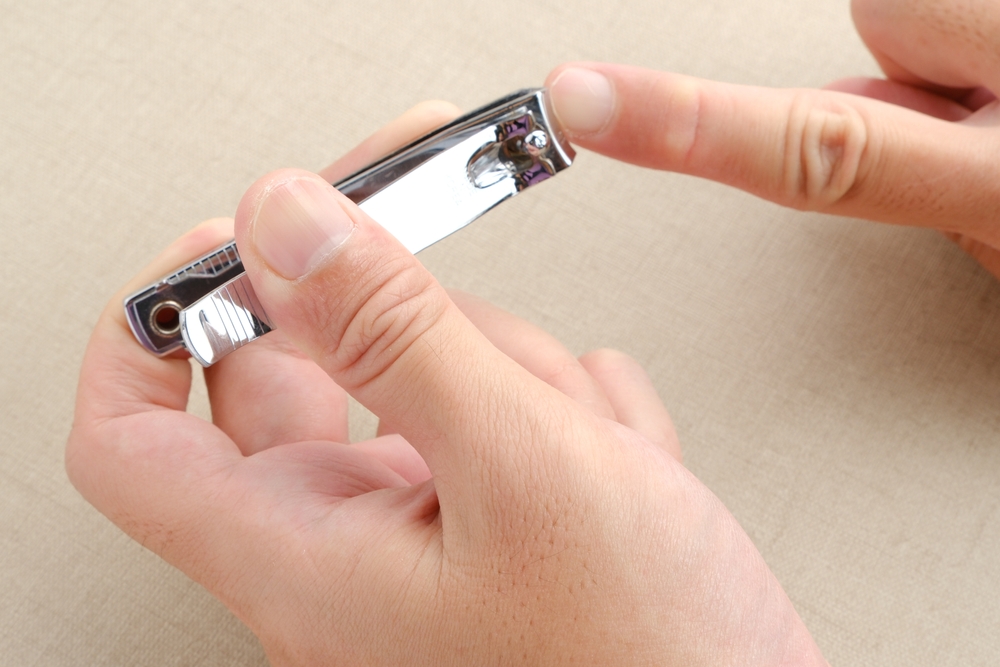
Almost every household has at least one pair of nail clippers tucked inside a bathroom drawer or medicine cabinet. People reach for them without a second thought, press down on the lever, and carry on with their day. Yet a small, deliberate design detail on these common grooming tools has escaped the attention of millions for well over a century.
Contents
show
A tiny hole, punched near the base of nearly every nail clipper ever manufactured, sits in plain sight. It has been there since the late 1800s. Most people have never once stopped to wonder what purpose it serves. But a recent social media moment has prompted thousands to examine their clippers a little more closely, and what they found left many of them stunned.
A Facebook Post That Started It All
It all began, as many internet discoveries do, with a candid confession. A Facebook user posted about a conversation with his mother-in-law that left him red-faced and questioning whether he was alone in his ignorance.
“My mother-in-law couldn’t stop laughing when she realized I had no idea what the tiny hole in a nail clipper is for. Now I wonder… am I the only one who never knew?” he wrote.
He was far from alone. As the post gained traction, hundreds of comments poured in from people who were just as clueless. Guesses ranged from the practical to the absurd. One commenter joked that the hole must be for storing toenail clippings. Another suggested it might be a place to keep dental floss. Few, if any, landed on the correct answer. What became clear was that an object people had been using their entire lives still carried a small mystery, one that the internet was determined to solve.
So What Is It Actually For?
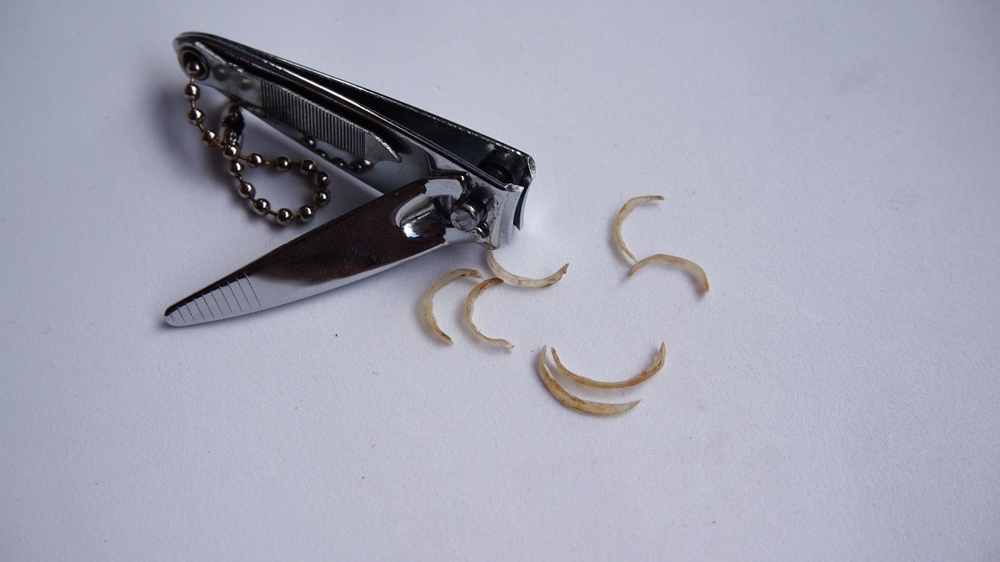
After all that speculation, the answer turned out to be far simpler than anyone expected. Every standard nail clipper has a small hole near its base for one practical reason. It allows the clipper to be attached to a keychain, a ring, a string, or a hook. By threading a small chain or cord through the hole, users can fasten their clippers to a toiletry kit, travel pouch, or set of keys.
For anyone who has ever lost a pair of clippers in the depths of a suitcase or watched them vanish into a cluttered bathroom drawer, the logic behind the feature is hard to argue with. Nail clippers are small, easy to misplace, and rarely where you left them. Some models even ship with tiny beaded chains already attached, ready for use straight out of the packaging.
Once the answer circulated online, commenters reacted with a mix of disbelief and amusement. One wrote, “I’ll never look at my nail clippers the same way.” Another declared it was time to attach them to his keys right away. For a feature that has existed for well over a hundred years, its purpose had remained a well-kept, if entirely unintentional, secret.
From Knives to Lever-Style Clippers
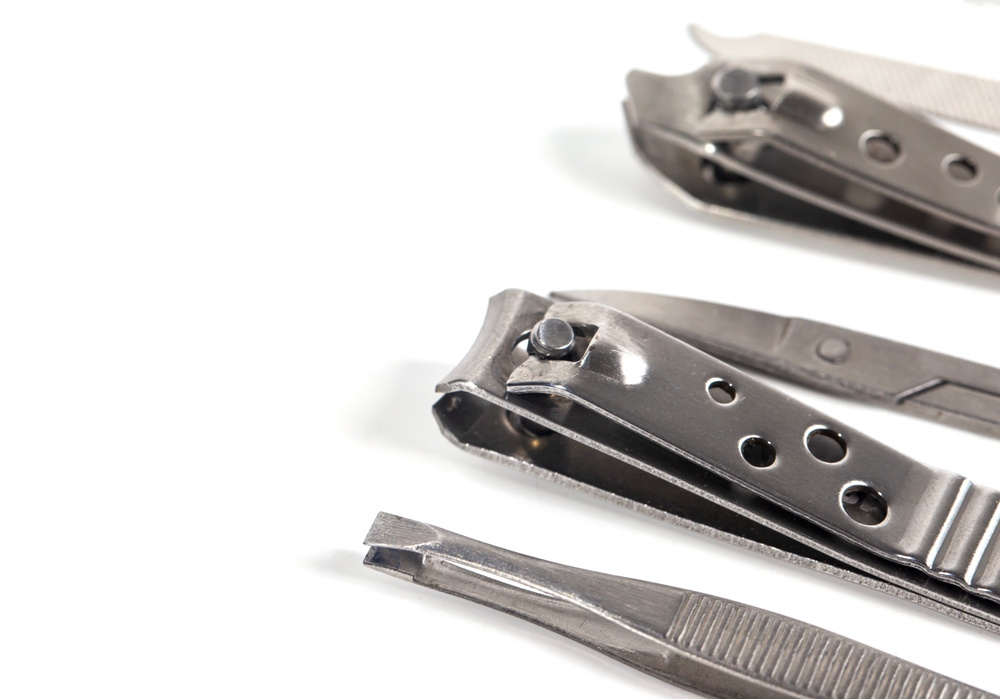
Nail clippers, in their modern form, trace back to 1875 when Valentine Fogerty patented the first lever-style model in the United States. Before Fogerty’s invention, grooming options were far more rudimentary. People relied on small knives, scissors, or even their teeth to manage nail growth. Imagine peeling an apple with a paring knife and applying that same technique to your fingernails. Precision was not exactly a given, and the risk of injury made the process far less casual than it is today.
By 1881, two inventors named Eugene Heim and Celestin Matz refined the clamp-based design that most people recognize in the present day. It was during this period that the small hole became a standard part of the clipper’s construction. What was once a niche grooming instrument became a household staple, and that tiny hole traveled with it into bathrooms across the globe. For more than 140 years, it sat there, noticed by almost no one, doing nothing but waiting for a keychain that would never come.
Why Nail Care Matters More Than You Think
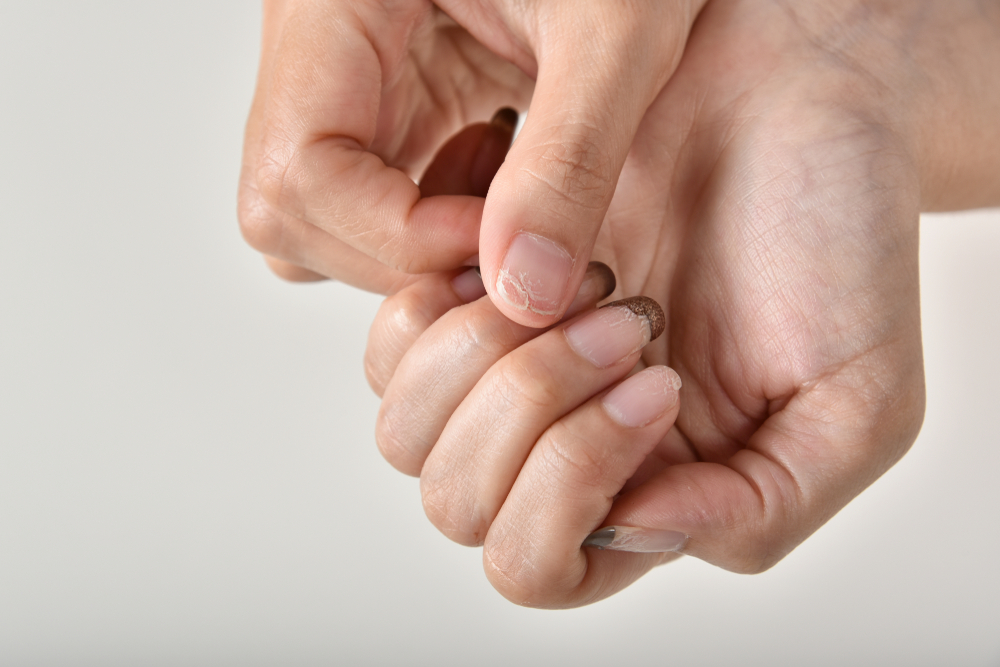
Beyond design trivia, nail care carries real health implications that deserve attention. Jeffrey Kaplan, a biology professor at American University, spoke to USA Today in 2022 about the risks associated with long fingernails. According to Kaplan, “The longer the nail, the more surface area there is for microorganisms to adhere.”
Research conducted on what lives beneath fingernails has produced unsettling findings. Scientists have identified 32 distinct bacterial species and 28 different fungi lurking under the nail bed. Whether nails are natural or artificial makes little difference, as both types create environments where microorganisms thrive and resist removal through regular handwashing or scrubbing.
Kaplan also noted that these bacteria can transfer into a person’s system through everyday habits like nail-biting, nose-picking, and finger-sucking. Once inside the body, these microorganisms can cause infections. For those who prefer to keep their nails long, dedicated and careful cleaning becomes an essential part of maintaining good hygiene. Clipping nails short may be the simplest defense, but it is far from the only option.
Long Nails, Clean Hands? A Nail Tech Weighs In
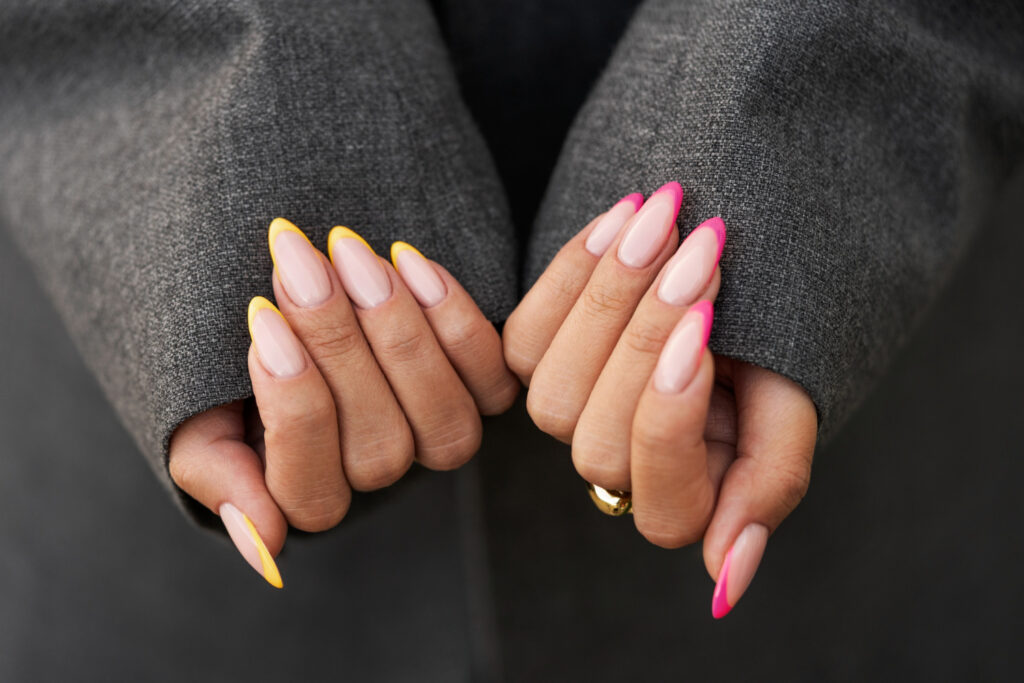
Health warnings, however, don’t tell the full story. Kayla Newman, a nail technician based in North Carolina, offered a different take on the long-nails debate. In her years of working with clients, she has never encountered a case of poor nail hygiene among those who invest in professional manicures.
Newman pointed out that people who commit to longer nails tend to know how to manage and clean them properly. Her reasoning was direct and hard to dismiss. “If you’re spending upwards of $60 to get your nails done and you don’t keep them clean, that doesn’t make sense,” she said.
Her argument cuts to a simple truth about human behavior. People who spend money on something tend to take care of it. A $60 manicure motivates better maintenance than any public health warning ever could. While medical professionals raise valid concerns about bacteria and fungi, the lived experience of nail technicians suggests that long nails and good hygiene are not mutually exclusive. Personal responsibility, combined with regular upkeep, makes all the difference. Both sides of the debate have merit, and the reality for most people falls somewhere in between.
Other Everyday Design Features You Probably Missed
Nail clippers are hardly the only household item hiding a feature in plain sight that most people fail to notice. Kitchen scissors, for example, recently had their own viral moment on Reddit when a user posted a photo and asked about the metal notch built into the handles.
Within minutes, hundreds of responses flooded in. Many users explained that those notches, often found on what are properly called kitchen shears, serve a variety of purposes. Cracking nuts, popping open bottle caps, and removing bones from meat all ranked among the most common uses. One commenter said he had always assumed they were just nutcrackers. Others described using them to open stubborn jar lids by squeezing the notch around the cap for extra grip. A professional chef chimed in to explain that the notch was designed for gripping bones in cuts of meat, a technique that requires placing the bone between the metal teeth, twisting, and pulling.
People have also reported using these scissor notches for less conventional tasks. De-stemming herbs, cracking lobster shells, slicing the tops off boiled eggs, and cutting foil all made the list. Much like the nail clipper hole, these scissor features have been present in kitchens for years, going unrecognized by the very people who use them on a daily basis.
A World of Small Surprises
Everyday objects carry more thought and intention in their design than most people ever realize. A hole in a nail clipper, a notch in a pair of scissors, or any number of small features built into common tools all have specific purposes that their creators considered with care. What makes these viral moments so engaging is not the answer itself, but the collective realization that millions of people shared the same blind spot for decades.
Sometimes the most interesting discoveries are not found in far-off places or research laboratories. Sometimes they are sitting in your bathroom drawer, waiting for someone to finally ask the right question.