
Your cart is currently empty!
Where Did the Snow Go? The Winter Olympics Are Running Out of Places to Call Home
Jessie Diggins knows pain. As an Olympic cross-country skier, she has built a career around pushing her body past its limits, finding comfort in the suffering her sport demands. But something else keeps her up at night, something no amount of endurance training can fix. Her sport is disappearing beneath her feet, and she can do nothing to stop it.
Contents
show
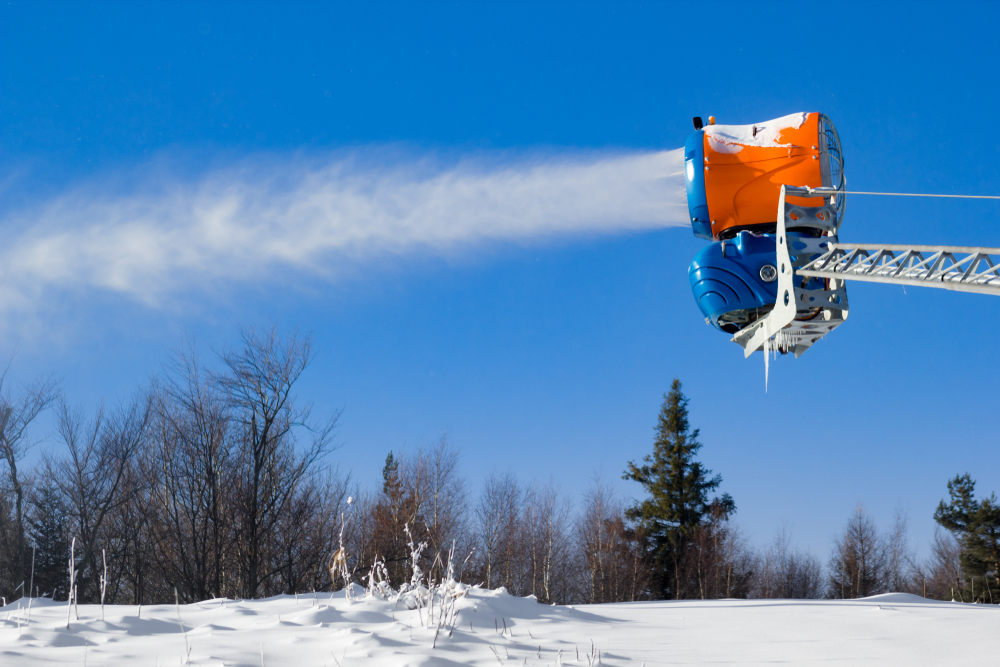
When Milan Cortina’s Winter Games open on February 6, Diggins will compete in her final Olympics across venues scattered throughout northern Italy’s alpine region. Snowmaking machines have been running for weeks, churning out nearly 2.4 million cubic meters of artificial snow, an effort requiring roughly 250 million gallons of water. Picture nearly 380 Olympic-sized swimming pools drained dry just to coat the slopes in white. Beijing’s 2022 Games ran an eerily similar playbook, relying almost entirely on manufactured snow and consuming 49 million gallons of water in the process. Italy, a country that has already watched 265 ski resorts close because of rising temperatures, now faces its own reckoning with a warming world.
Yet the real story stretches far beyond one host nation. Behind the spectacle of gold medals and national anthems, a quieter crisis is building, one that could redraw the map of winter sport within a single generation.
Cortina Then and Now
Cortina d’Ampezzo first welcomed the Winter Games in 1956. Skaters glided across natural, uncovered ice at Lake Misurina that year, a scene impossible to imagine today. In the seven decades since, February temperatures in the alpine town have climbed 6.4°F (3.6°C). During the decade after those 1956 Games, Cortina’s average February temperature sat at a frigid 19.3°F. Fast-forward to 2016 through 2025, and that figure has crept up to 27.1°F, hovering dangerously close to the point where snow turns to slush. February snow depth in Cortina has also dropped by roughly six inches between 1971 and 2019.
Milan, where indoor ice events like figure skating and hockey will take place, has warmed 5.8°F (3.2°C) over the same window. And Cortina and Milan are hardly outliers. Every city that has hosted the Winter Olympics since 1950 has gotten warmer, by an average of 4.8°F (2.7°C), according to Climate Central. Historical records paint a striking arc. Average maximum daily temperatures at host cities during the Games hovered around 0.4°C from the 1920s through the 1950s. By the twenty-first century, that number had jumped to 6.3°C.
Warmer air does not just mean less snow. At the 2014 Sochi Games in Russia, elevated temperatures were partly blamed for alarming crash and injury rates. Daniel Scott, a professor of geography and environmental management at the University of Waterloo, described the conditions bluntly. “It was like skiing in a slushy,” he said. “People weren’t hitting jumps at the speeds they anticipated. They weren’t getting to landing areas properly.”
Fewer Freezing Days, Greater Danger
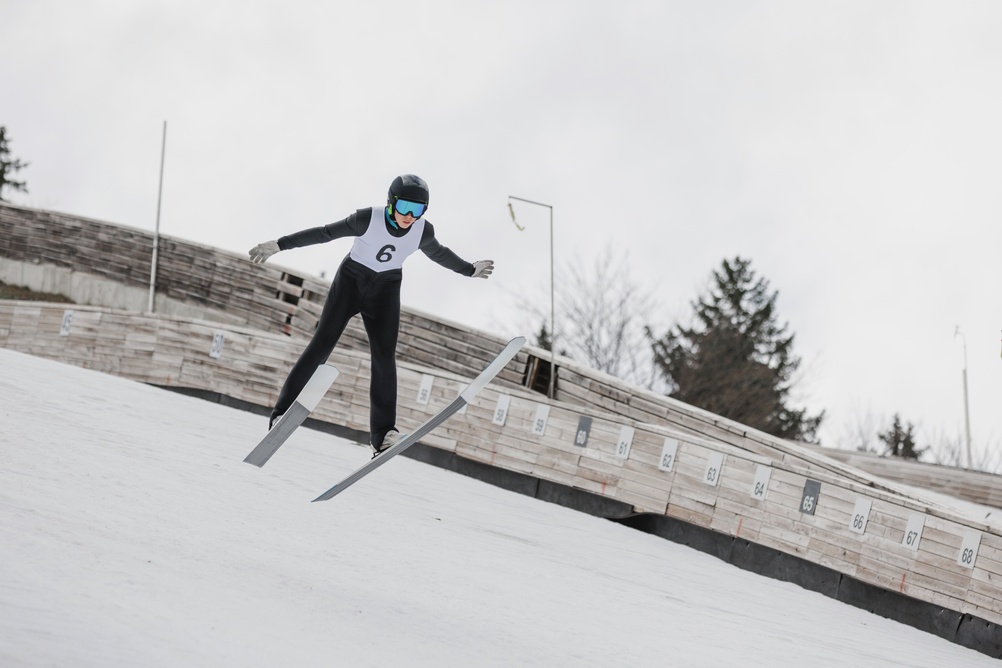
Numbers on a thermometer translate into real consequences on the mountain. Cortina now logs 41 fewer freezing days each year than it did in the mid-1950s, a 19% decline from 214 to 173. Without overnight freezes, snow and ice surfaces cannot harden, leaving them soft and unpredictable. Athletes who race later in the start order face progressively worse conditions, raising serious questions about fairness. Rain, wet snow, and thin coverage become the norm rather than the exception.
Professional athletes have taken notice. A 2022 survey found that 94% of elite winter athletes and coaches worried about how a warming climate would affect their sport’s future. More than 420 athletes have signed an open letter demanding that governing bodies develop credible climate strategies. For competitors whose careers depend on reliable snow, anxiety about conditions has become as routine as pre-race warm-ups.
A Shrinking Map
Perhaps the most sobering evidence comes from a 2024 study that evaluated 93 past and potential host locations for the Winter Olympics and Paralympics. Under present conditions, 87 of those 93 sites (94%) rate as climate-reliable for February competitions. But that number is on a steep downward slide.
If nations follow through on current climate pledges (a mid-range emissions scenario scientists consider most probable), only 52 of those 93 locations will remain reliable by the 2050s. By the 2080s, the count falls to 46. Under a high-emissions path, a majority of sites become unsuitable. Researchers identified just four locations worldwide that could likely host natural snow alone by mid-century. Niseko in Japan, Terskol in Russia, Val d’Isère and Courchevel in France would stand as the last natural strongholds. Recognizing the threat, the International Olympic Committee postponed its 2030 host-city decision in 2022 to better evaluate climate resilience among bidding cities.
Paralympics on Even Thinner Ice
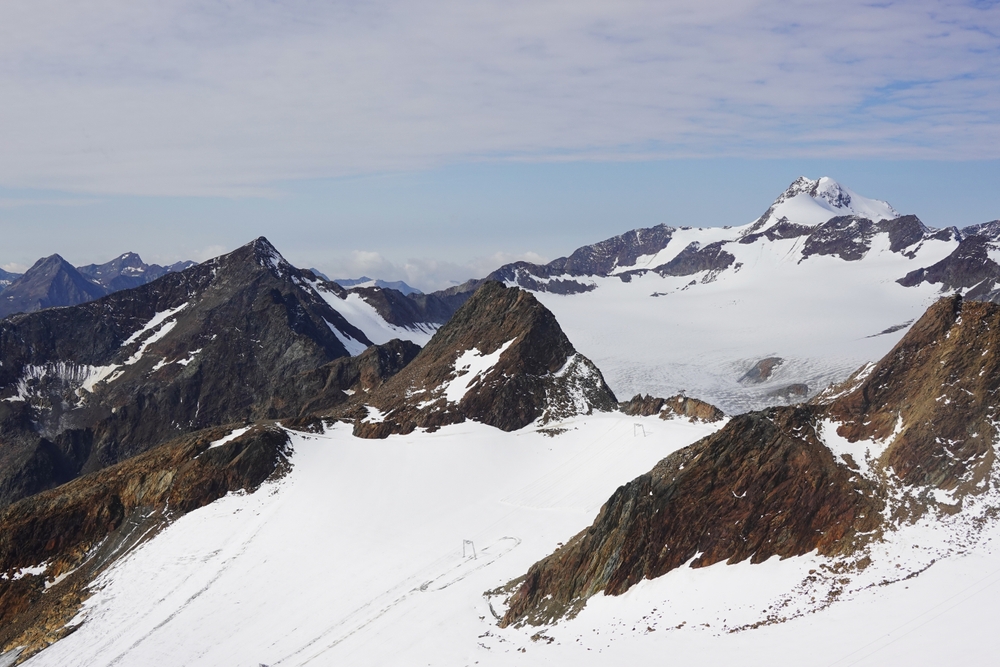
If February competitions face growing risk, March events are in outright peril. Paralympic Winter Games have been held roughly one month after the Olympics since 1992, placing them squarely in a warming window. Over the past 50 years, March temperatures in Cortina and Milan have risen 4.6°F and 3.9°F, respectively.
Even under current conditions, only 49 of 93 potential host sites (53%) qualify as climate-reliable for March competitions. By mid-century, under mid-range emissions, that drops to just 22. Under high emissions in the 2080s, a staggering collapse leaves only four viable locations on the planet. Scientists project that Northern Hemisphere winters, which averaged 76 days in the 1950s, could shrink to 53 days by mid-century and potentially just 27 days by 2100 if emissions remain unchecked. Each lost day pushes March events closer to the spring thaw and further from competitive viability.
When Snow Loss Accelerates
What makes the crisis particularly treacherous is how suddenly conditions can deteriorate. A 2024 Nature study revealed that the relationship between warming and snow decline is not a straight line. Snowpack can appear stable for years until average winter temperatures cross a threshold of minus-8°C (17°F). Beyond that point, even modest warming triggers rapid snow loss, a phenomenon researchers describe as a “snow-loss cliff.”
Western U.S. snowpack between 1982 and 2016 lost 41% of its mass across an area the size of South Carolina. Salt Lake City, chosen to host the 2034 Winter Games, recorded a mere 0.1 inches of snow in January 2026, more than 30 inches below its average. Numbers like these have prompted blunt assessments from local leaders who know the terrain. Rocky Anderson, former mayor of Salt Lake City, has stated, “I don’t think we’re going to see a Winter Olympic Games in Utah in 2034.”
Manufactured Snow and Its Limits
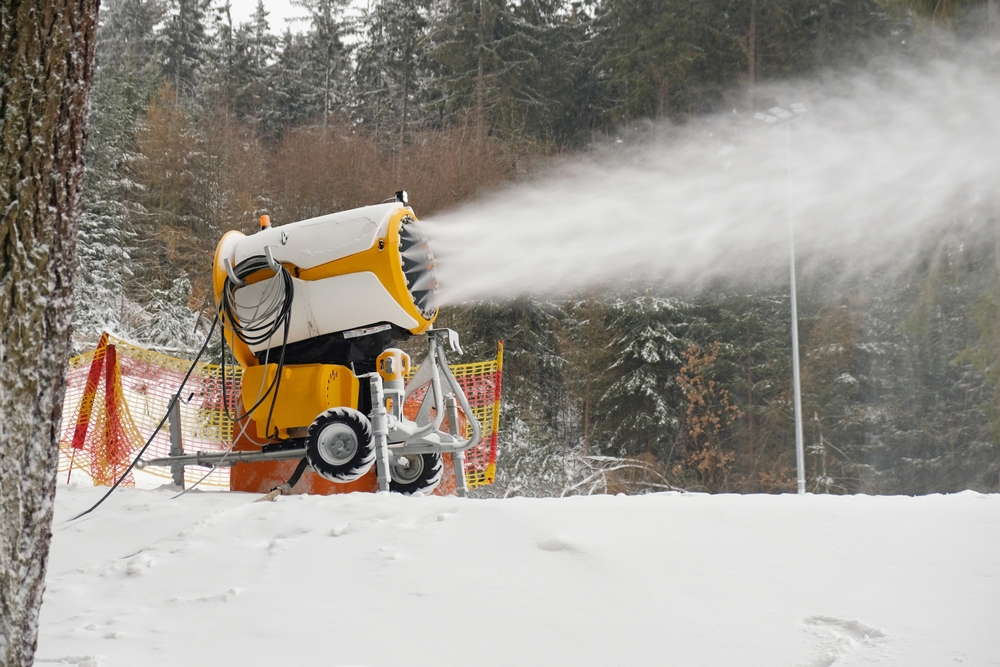
Where nature falls short, technology steps in, but only so far. Snowmaking machines need wet-bulb temperatures of 27°F or lower and relatively dry air, both conditions that warming makes harder to guarantee. At some resorts, snowmaking accounts for 67% of total energy consumption. Covering a single acre with one foot of snow requires about 200,000 gallons of water, and costs at individual resorts run between $500,000 and $3.5 million per year.
History offers cautionary tales. Pre-made snow for the 2010 Vancouver Games melted during a record warm January, forcing organizers to haul replacements by truck and helicopter. At Milan Cortina, December 2025 temperatures ran so warm that venues could only produce snow after dark. And manufactured snow itself presents problems for athletes, as its slicker, icier texture raises injury risk compared to natural powder.
Critics question whether snowmaking simply masks a deeper contradiction. Carmen de Jong, a hydrology professor at the University of Strasbourg, has challenged the logic of forcing winter competitions into increasingly hostile climates. Others counter that abandoning snowmaking would mean abandoning snow sports altogether.
An Economic Chill Spreads
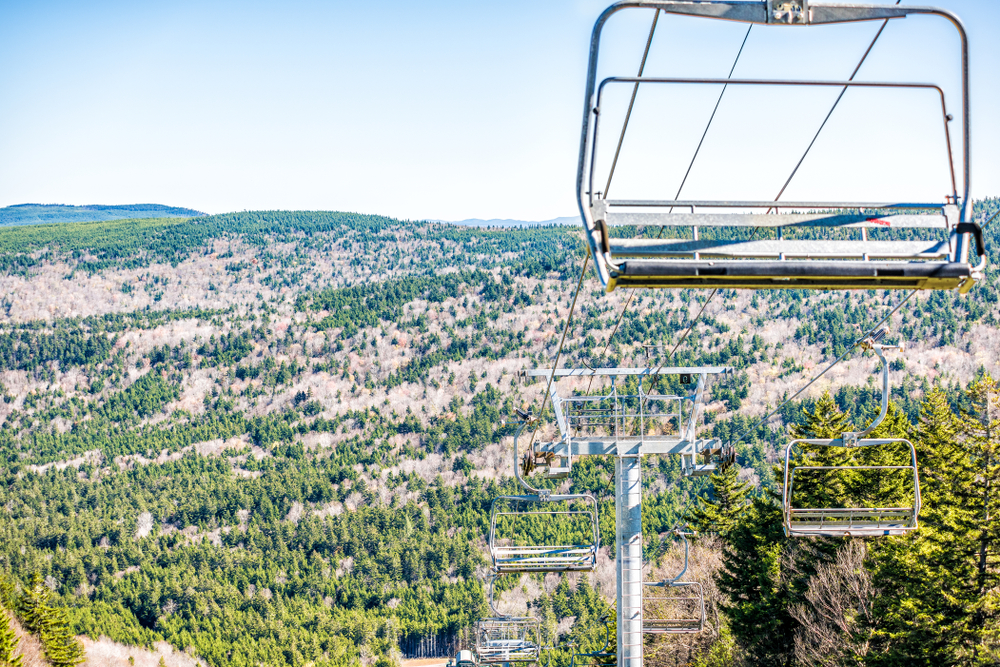
Beyond Olympic venues, the winter sports economy is feeling the squeeze. Across the United States, winter recreation generates roughly $3.4 billion in local spending, $4.5 billion in GDP, and 57,000 jobs each year. A low-snow year wipes out over $1 billion and 17,400 jobs. Average U.S. ski seasons between 2000 and 2019 ran 5.5 to 7.1 days shorter than those between 1960 and 1979, even with artificial snowmaking factored in. By the 2050s, seasons could contract by 14 to 62 days depending on emissions, with projected annual losses between $657 million and $1.352 billion.
Vail Resorts, North America’s largest mountain-resort operator, reported a 20% drop in visitors during the 2025–2026 season after western U.S. snowfall came in at just 50% of its 30-year historical average. In the Northeast, projections suggest only about half of ski areas will remain economically viable by 2050.
Searching for Solutions
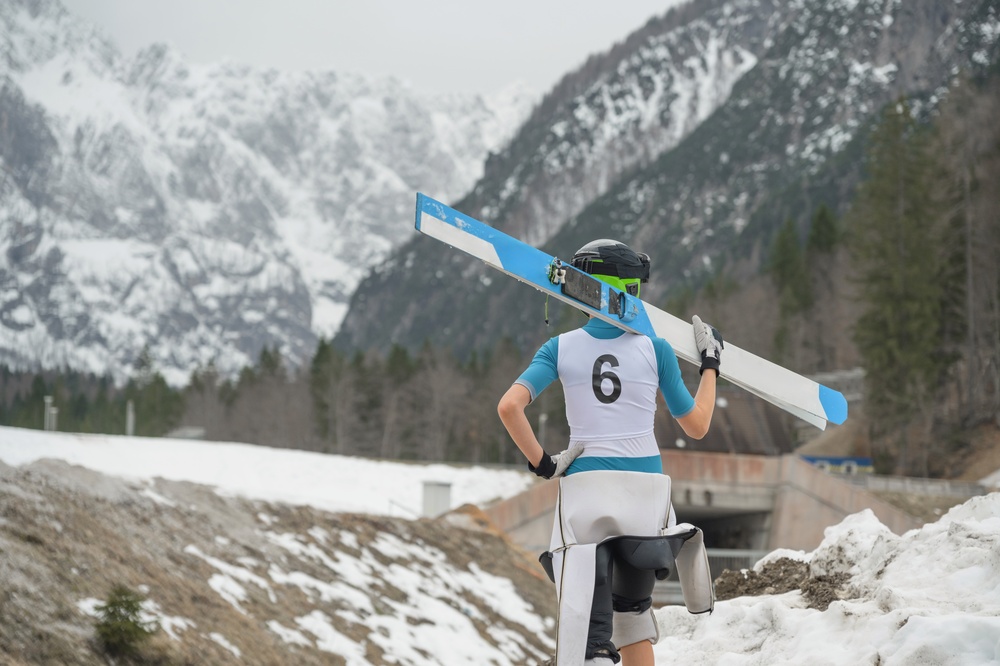
Organizers and policymakers are scrambling to adapt. Among the proposals for the Olympics, ideas range from merging the Olympic and Paralympic events into a single competition to moving events earlier in the season to rotating among a permanent pool of climate-resilient host cities. Starting in 2030, the IOC will require climate action as a contractual obligation for all hosts, mandating that organizing committees go beyond carbon neutrality toward lasting, zero-carbon outcomes.
At the industry level, state programs like Efficiency Vermont’s investments across nearly all 20 of the state’s ski areas project savings of over $177 million and a reduction of 1.8 billion pounds of greenhouse gas emissions. Resort operators like Aspen Skiing Company have lobbied their local utilities toward 100% renewable energy targets. Federal agencies, including the U.S. Forest Service, which partners with more than a quarter of the nation’s ski resorts on national forest land, continue to support adaptation strategies and infrastructure planning.
Protecting Winter Itself
Conversations about the future of the Winter Olympics are really conversations about the future of winter. Olympic skier Jessie Diggins put it in terms that extend well beyond medal counts. “Climate change isn’t theoretical; it’s happening on our racecourses and in our training every day,” she told CNN. “It’s not just about winter sports, it’s about protecting winter itself.”
Justin Mankin, a Dartmouth climate scientist whose children love cross-country skiing, sees the stakes in deeply personal terms. Whether his kids might one day follow a competitive path remains unknown, but the conditions that would allow them to try are eroding season by season. For billions of people worldwide who depend on snow for water, agriculture, and energy, the losses carry weight that no Olympic ceremony can capture. What happens on the slopes of Cortina in February 2026 is not just a sporting event. It is a preview of a world still deciding how much of winter it is willing to lose.