
Your cart is currently empty!
The Strange Reason Your Fingers Turn Pruney In Water
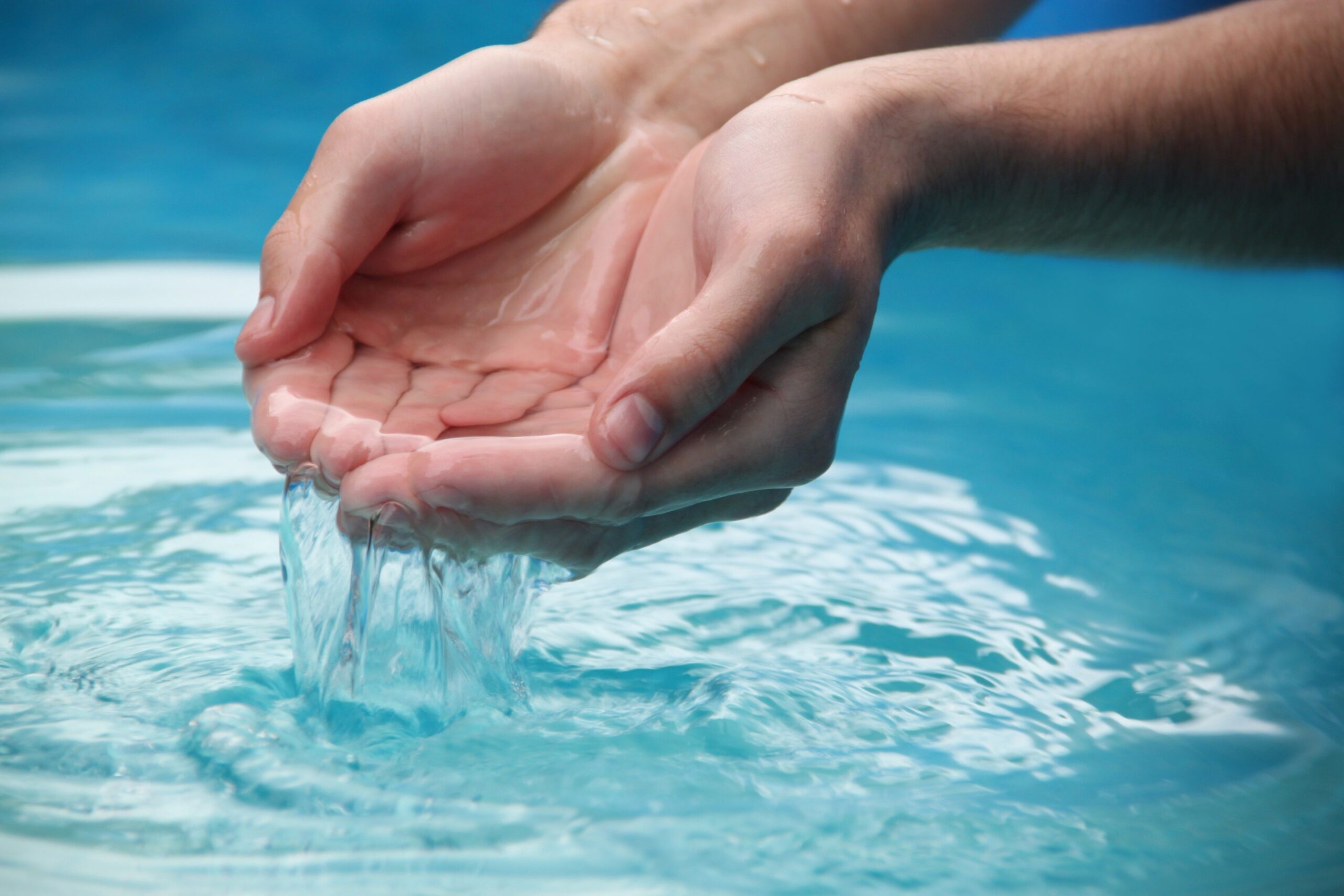
Spend a few minutes in a bath, swimming pool, or even washing dishes, and your fingertips can suddenly look like they belong to someone three decades older.
Contents
show
Those deep ridges seem like an unavoidable side effect of soaking in water. But scientists have discovered that the transformation is far more interesting than simple waterlogged skin.
Your fingers actively change shape because your nervous system responds to the conditions around you. Even more surprisingly, those temporary wrinkles appear to give you a better grip on wet objects.
And researchers have found that the pattern of those wrinkles can repeat itself, while changes in the way fingers wrinkle may also provide clues about certain health conditions.
Your Fingers Do Not Simply Absorb Water
For years, the obvious explanation seemed to be that water simply soaked into the outer layer of the skin.
The idea was straightforward. Water enters the skin, the outer cells swell, and the surface buckles into wrinkles.
That explanation does account for some changes in waterlogged skin. However, it does not explain why people with certain nerve injuries can fail to develop the familiar pruning effect.
Researchers eventually found evidence that something much more active is happening.
When fingers remain submerged, water enters through the sweat ducts. This changes the salt concentration in the outer layer of the skin, which is detected by nerve fibers.
Those nerves then signal the body to constrict tiny blood vessels in the fingers.
As those vessels shrink, the tissue beneath the surface loses volume. The overlying skin is pulled downward, producing the grooves and ridges that make fingertips look pruned.
Dermatologist Alok Vij described the process as an “active, adaptive process controlled by your sympathetic nervous system.”
That nervous system controls many automatic processes in the body. It is also involved in the familiar fight-or-flight response.
The discovery helps explain something that seems strange at first. If water merely caused the skin to swell, nerve damage should not prevent wrinkles from appearing.
Yet it can.
Scientists Found That The Wrinkles Follow A Pattern
The latest research adds another strange detail to the story.
Biomedical engineer Guy German from Binghamton University and colleague Rachel Laytin recruited three volunteers for an experiment. Each participant soaked their fingers for 30 minutes.
The researchers then photographed the resulting wrinkles.
Twenty-four hours later, the volunteers repeated the process.
The wrinkles did not simply appear randomly across the fingertips. Their patterns mostly repeated themselves.
“Blood vessels don’t change their position much,” German explained. “They move around a bit, but in relation to other blood vessels, they’re pretty static.”
That offered a possible explanation for the recurring patterns.
If the blood vessels beneath the skin occupy largely consistent positions, their movement during water exposure can pull the surface skin into similar shapes each time.
“That means the wrinkles should form in the same manner, and we proved that they do,” German said.
It adds another curious feature to a part of the human body already known for highly individual patterns.
Your fingerprints are distinctive. The temporary topology created by your wet fingers appears to have its own degree of consistency too.
The finding also came from an unexpectedly simple question.
German said the research was prompted after children reading The Conversation’s Curious Kids series asked whether water wrinkles always formed in the same way.
One question in particular caught his attention: “Do the wrinkles always form in the same way?”
His answer at the time was simple.
“And I thought: I haven’t the foggiest clue!”
That childlike question eventually led to an experiment that provided a much more satisfying answer.
Those Wrinkles May Give You Better Grip
The strangest part of the story may be why the body does this at all.
The temporary grooves appear to change the way your fingers interact with wet surfaces.
Think about the tread on a tire. Grooves create channels that help move water away from the contact area.
Wrinkled fingertips can produce a somewhat similar effect.
When researchers tested people’s ability to handle wet objects, wrinkled fingers performed better than wet, unwrinkled fingers in certain situations.
One study asked volunteers to transfer glass marbles and fishing weights from one container to another. Some objects were dry, while others were submerged in water.
Participants took 17% longer to transfer submerged objects with wet, unwrinkled fingers than they did with dry fingers.
Once their fingers had become wrinkled, however, they could transfer the submerged objects 12% quicker than when their hands were wet but unwrinkled.
There was no comparable advantage when the objects themselves were dry.
That distinction is important.
The wrinkles appear particularly useful when the environment is wet.
Another study involving 500 volunteers examined how much force people needed to grip a plastic object. When their hands were wet and wrinkled, the grip force fell between the levels recorded for dry hands and wet, unwrinkled hands.
Neuroscientist Nick Davis, who has studied fingertip wrinkling, said the wrinkles increased friction between the fingers and the object.
He also suggested that needing less force could reduce muscle fatigue during more demanding tasks in wet conditions.
That could have been useful long before humans had swimming pools, bathtubs, and dishwashing gloves.
Evolution May Have Had A Hand In It

The grip advantage has raised an obvious question: did humans evolve water-induced finger wrinkles for this exact reason?
Scientists do not have a definitive answer.
One possibility is that wrinkled fingertips helped our ancestors handle slippery food, plants, or objects in wet environments.
Another is that the adaptation helped with movement across wet surfaces.
Tom Smulders, an evolutionary neuroscientist at Newcastle University, suggested that better grip underwater could have been useful for locomotion or manipulating objects.
That could mean getting across wet rocks more securely or gripping branches in rainy conditions.
It could also have helped people gather food from streams.
The idea is plausible, but it remains a hypothesis rather than an established evolutionary fact.
Researchers have not yet determined when this response developed or whether it provides a major survival advantage.
There are other clues, too.
Fingertip wrinkling is less pronounced in saltwater and can take longer to develop than in freshwater. One possible explanation is that the difference in salt concentration between the skin and surrounding water is smaller in saltwater.
That could fit with an adaptation to freshwater environments.
But there is a problem.
Scientists have not found enough evidence to settle the evolutionary question.
Wrinkling has been observed in Japanese macaque monkeys after prolonged immersion, but it has not been clearly documented in some of our closest primate relatives.
That does not prove they lack the ability. Researchers simply may not have looked closely enough.
For now, the evolutionary story remains unfinished.
The Same Wrinkles Can Reveal Something About Your Health

The phenomenon gets even more interesting when doctors look at how people wrinkle rather than simply whether they wrinkle.
Researchers have known for decades that certain nerve injuries can prevent the response.
People with damage to the median nerve, which runs through the arm into the hand, may fail to develop normal water-induced wrinkles.
German encountered an example of this during his research.
“We’ve heard that wrinkles don’t form in people who have median nerve damage in their fingers,” he said. “One of my students told us, ‘I’ve got median nerve damage in my fingers.’ So we tested him. No wrinkles!”
That observation reflects how closely the process is connected to the nervous system.
Doctors have even investigated water immersion as a simple way of assessing certain nerve functions.
Other research has linked unusual wrinkling patterns with several medical conditions.
These reported associations include:
- Psoriasis and vitiligo, which can delay the development of wrinkles.
- Cystic fibrosis, which has been associated with excessive wrinkling of the palms and fingers.
- Type 2 diabetes, where reduced wrinkling has sometimes been observed.
- Cardiovascular problems, including reports involving reduced wrinkling after water immersion.
- Nerve injuries, which can interfere with the response entirely.
Asymmetrical wrinkling has also been investigated as a possible sign of changes involving the sympathetic nervous system, including in research involving Parkinson’s disease.
These observations do not mean that unusual finger wrinkles diagnose any of these conditions.
They show that the response is connected to several systems inside the body, particularly the nerves and blood vessels.
So Why Aren’t Our Fingers Permanently Wrinkled?
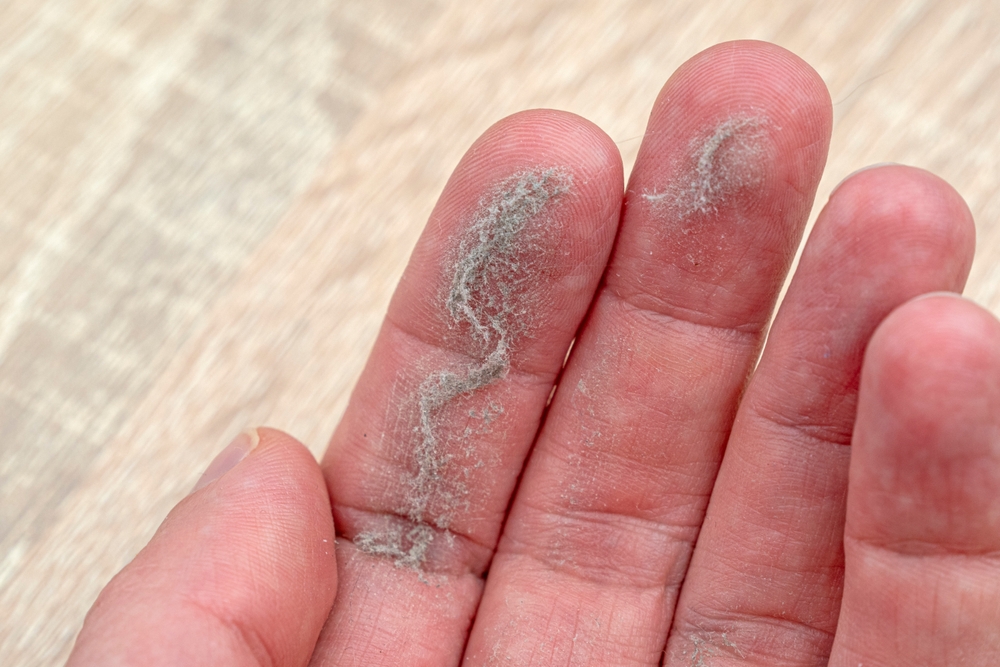
If wrinkled fingers can improve grip in wet conditions, there is one obvious mystery left.
Why does the body bother switching them back?
The wrinkles disappear after leaving the water, generally as the skin returns to its normal condition.
Scientists have suggested several possible explanations.
Permanent wrinkles could alter sensation. Fingertips contain a dense network of nerves, and changing the shape of the skin could change how touch information reaches those receptors.
There may also be other disadvantages that researchers have not fully identified.
Davis noted that some people find the sensation of wrinkled fingers unpleasant. That could be linked to changes in the position or behavior of skin receptors, although the precise reason remains unclear.
The body therefore seems to be making a temporary trade-off.
When the surroundings are wet, the fingers change in a way that may improve handling and grip. Once that condition disappears, the skin returns to its usual form.
That temporary response is what makes the phenomenon so intriguing.
The Prune Effect Is More Complicated Than It Looks
The next time your fingers emerge from a bath looking dramatically older, there is a little more going on than water soaking into your skin.
Your nerves have detected a change. Your blood vessels have responded. The surface of your skin has shifted into a repeating pattern.
And those strange grooves may be helping you hold onto wet objects with less effort.
The mystery is not completely solved. Scientists still do not know exactly why humans evolved the response, why some people wrinkle faster than others, or why the effect disappears when the fingers dry.
But one thing is becoming increasingly clear.
Those ridiculous-looking pruney fingers are not simply a sign that you stayed in the bath too long. They are evidence of an active biological response that may have been helping humans deal with wet environments for a very long time.