
Your cart is currently empty!
Why Is the Kennedy Center Still Hidden Behind Tarps a Week After the Court Order?
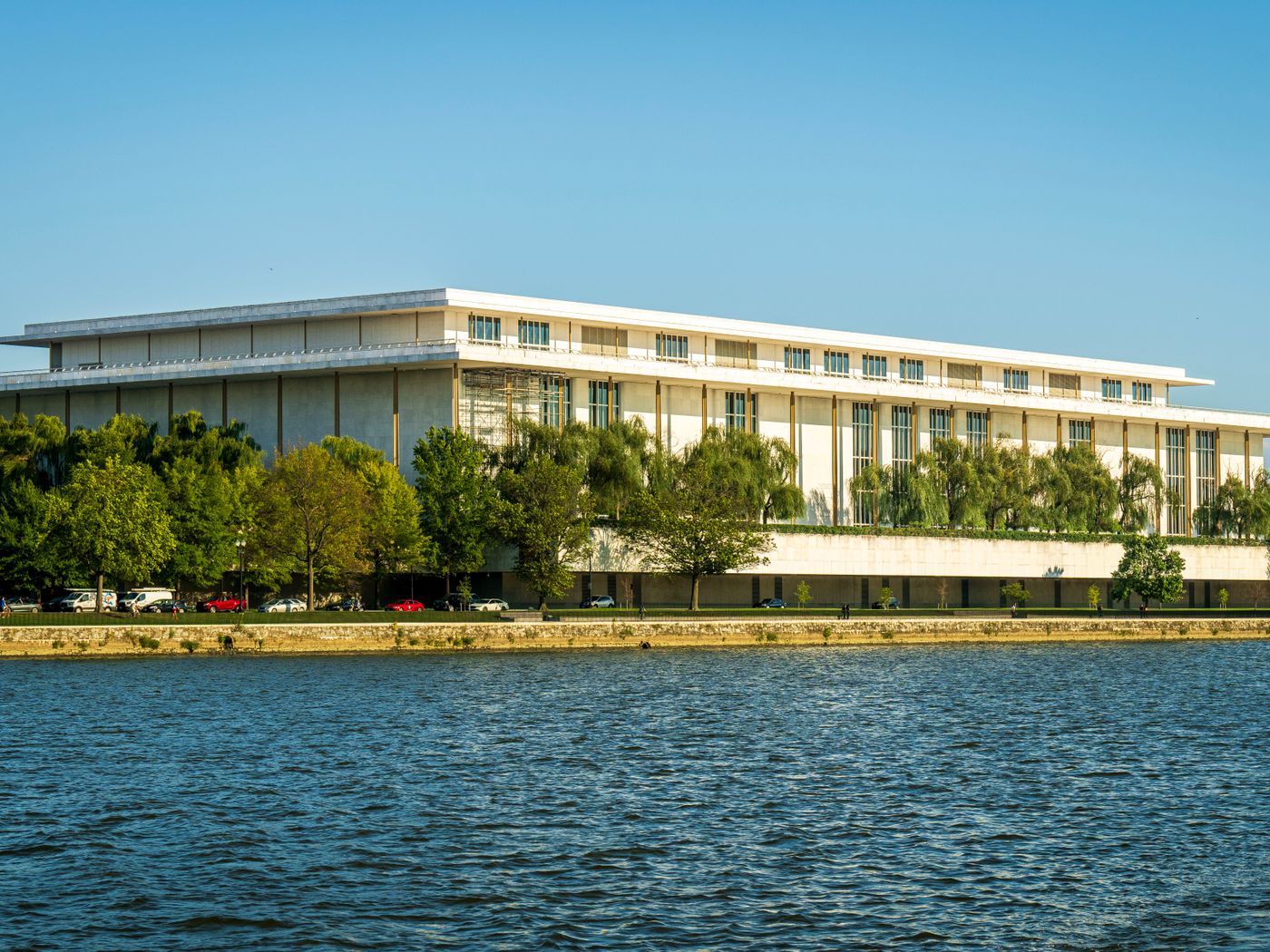
For more than a week now, one of the most recognizable cultural landmarks in the United States has worn a strange disguise. Massive tarps hang across the front of the John F. Kennedy Center for the Performing Arts, draped over scaffolding and pulled tight against the marble, concealing whatever lies beneath them from the thousands of people who pass by each day. The institution has explained the covering, but that explanation has done little to quiet the question now circulating in Washington and well beyond it.
Contents
show
What, exactly, is behind those tarps? The arts center maintains that President Trump’s name was stripped from the building’s facade under court order. Yet with the wrapping still firmly in place days later, no one outside the scaffolding can say for certain what the wall now reads, and into that gap of uncertainty has rushed a torrent of speculation, suspicion, and political point-scoring from every direction.
What Happened In The Early Hours Of June 13
The events that set all of this in motion unfolded before dawn on June 13, in an action that quickly became news around the world. Workers hung the enormous tarps from scaffolding across the front of the Kennedy Center and, acting under a court order, set about removing President Trump’s name from the marble facade. That much is established, and there is documentation to support it.
The center’s operations chief, Matt Floca, filed a sworn declaration with a federal court later that day stating that Mr. Trump’s name had indeed been removed. A New York Times photographer captured evidence through an opening in the tarp showing that the letter “A” had come off, and another photographer recorded the removal of a “D.” Taken together, these pieces form the verifiable core of the story, the part that can be confirmed rather than merely assumed.
Why No One Can Confirm What’s Behind The Tarps
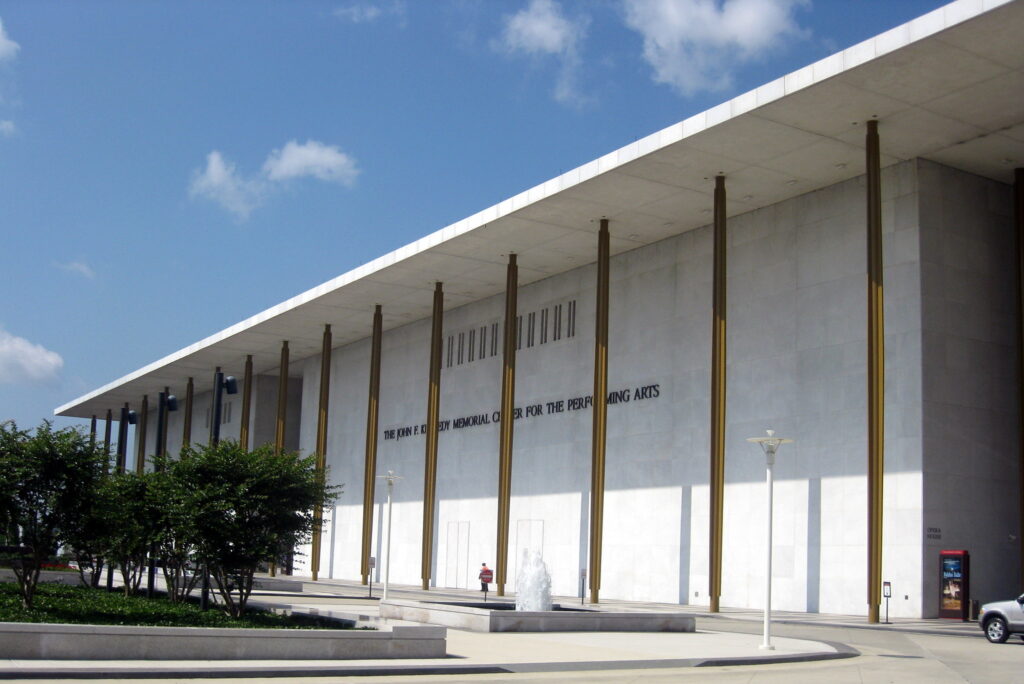
Where the certainty ends, the mystery begins. A full week after the removal, the tarps remain in place, and there is no visual evidence that the building’s lettering has been restored to its original form, “The John F. Kennedy Memorial Center for the Performing Arts.” That absence of confirmation has led some observers to wonder whether at least a few of the letters might still be up there, hidden from view.
Seeing behind the covering has proven impossible because the tarps now lie tight against the front of the building, leaving no gap to peer through. The frustration is shared even by those with a clear vantage point. Luna Woo, a violinist visiting from Portland, Oregon, as part of the National Symphony Orchestra’s Summer Music Institute, has tried, along with other young musicians in the program, to glimpse the facade from a practice room overlooking the scaffolding. They have had no success. “I don’t know if they took down the sign, because I can’t see it,” she said, summing up the predicament facing anyone trying to verify what has happened.
The Kennedy Center’s Official Explanation
The institution itself has offered a reason for why the tarps remain, though the explanation has been brief. Asked directly when the covering would come down, Kennedy Center spokeswoman Roma Daravi responded by email with a terse statement. “The scaffolding and tarp will remain up as crews address maintenance needs of the marble and soffit panels,” she wrote, signing off simply, “Best, Public Relations.”
That is the center’s official account: routine maintenance, nothing more. Whether the explanation satisfies the public is another matter entirely, and in the days since it was offered, a great many people have made clear that it does not. The doubts have come from several quarters, some rooted in politics and others in more practical observations about how the building has been maintained in the past.
Two Camps, Two Interpretations
Predictably, the situation has split observers along familiar lines, with each side reading the tarps as confirmation of what it already believed. To the president’s supporters, the entire affair amounts to a great deal of fuss over very little. One theatergoer, who declined to give her name, dismissed it this week as “a lot of hoopla over nothing,” a sentiment shared by those who see the controversy as manufactured outrage.
To the president’s critics, the tarps represent something far less innocent. Representative Joyce Beatty, an Ohio Democrat and an ex officio member of the Kennedy Center board who had sued to block the name change, offered a pointed interpretation. “Donald Trump is embarrassed,” she said in a statement. “He lost in court, his name came down, and now he is trying to hide the result from the public.” Other Democratic lawmakers piled on through social media, with Representative Jamie Raskin of Maryland calling the situation “a literal coverup, to add to all the others,” and Representative Mike Levin of California deriding it as petty and absurd while celebrating the removal of the name as a significant victory. These are, it should be noted, the characterizations of the president’s political opponents, offered in the heat of an ongoing dispute rather than as fact.
The Skeptics’ Practical Doubts
Beyond the partisan back-and-forth, some of the skepticism rests on more concrete observations about the building itself. Critics have pointed out that the Kennedy Center’s many other maintenance projects, including previous repairs to the very same marble facade, were not shielded by tarps in this manner, which has led some to question why this particular round of upkeep requires such elaborate concealment.
Among those raising an eyebrow is Tommy Gedrich, an actor currently appearing in “Moulin Rouge! The Musical” at the center. “I think it doesn’t take that long to preserve marble, but also what do I know about preserving marble?” he said, capturing the mix of suspicion and self-aware uncertainty that many seem to feel. For the cast, the tarps are more than a curiosity. The covering blocks two backstage entrances, forcing the “Moulin Rouge” performers to circumnavigate the entire center, a structure roughly two football fields wide, simply to reach the Opera House stage. The inconvenience has given those working inside the building a daily reminder of the standoff playing out on its facade.
Beatty’s Legal Move
For at least one figure in the dispute, public speculation has not been enough, and the question of the tarps has now moved into the courtroom. In a filing late Friday, Representative Beatty asked the court overseeing the case to order the Kennedy Center to provide a sworn declaration explaining the purpose of the tarps and specifying when they would come down.
The request effectively transforms the swirling public curiosity into a formal legal demand for answers. Rather than waiting for the center to lift the covering on its own timeline, Beatty has asked a judge to compel an explanation under oath, a step that could finally pin down what has so far been left deliberately, or at least conveniently, vague.
How The Name Got There In The First Place
To understand why the removal of a name has become such a charged affair, it helps to trace how that name came to adorn the building at all. Mr. Trump seized control of the Kennedy Center’s board in February 2025, installing loyalists who in turn named him chairman. The following December, the board voted to rename the center in his honor, and a crew rolled a cherry picker up to the facade to add “The Donald J. Trump and” atop the center’s original name.
The decision proved deeply divisive. The renaming accelerated boycotts by performers, ticket buyers, and donors, draining the institution of both audiences and goodwill. By February, with attendance dwindling, Mr. Trump announced that the center would close for a two-year renovation project beginning in early July. The board approved that plan, but Beatty, one of the few Democrats remaining among its members, objected to it in court, setting the stage for the legal battle that would ultimately strip the president’s name from the wall.
The Court Battle That Forced The Removal

The legal fight reached a decisive point in late May, when Judge Christopher R. Cooper of the U.S. District Court for the District of Columbia ordered the removal of Mr. Trump’s name from the building and all official branding by June 12. He further directed the board to re-examine its decision to close the center in July, though the status of those closure plans remains uncertain as the litigation continues.
The center did not go quietly. In court filings, Floca had argued that removing Mr. Trump’s name would be fundamentally destabilizing to the center’s fundraising efforts and would cause irreparable harm, framing the name not as a vanity project but as a financial necessity. The court was unpersuaded, and the deadline stood, leaving the institution to comply whether it wished to or not.
The Night The Tarps Went Up
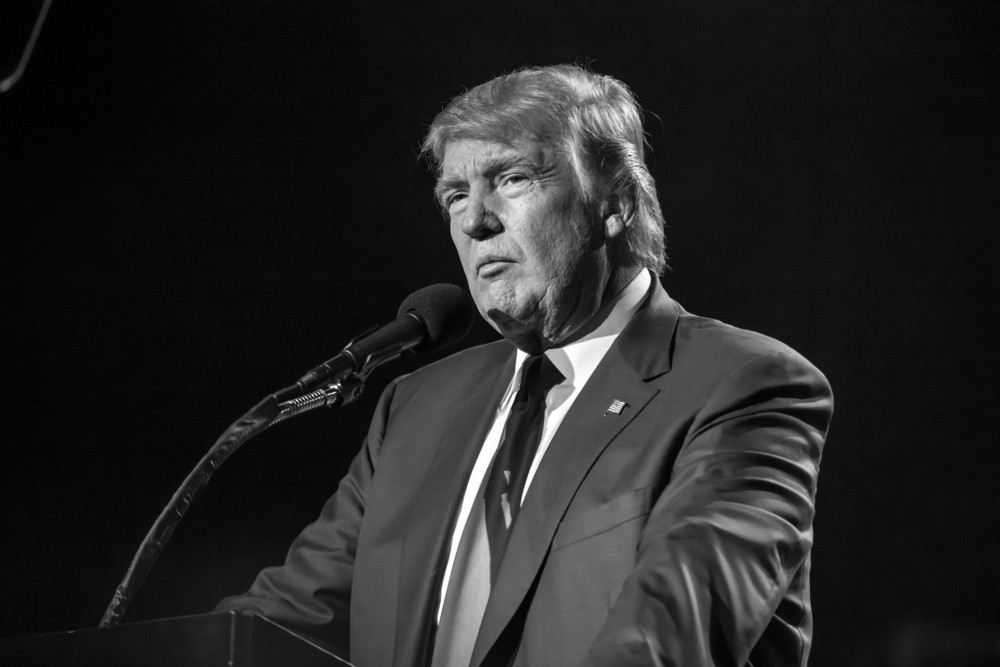
The final hours before the deadline produced a scene worthy of the drama that preceded it. Mr. Trump reacted to the order with visible irritation online, writing on Truth Social that “the Radical Left Democrats care more about opposing your favorite President, ME, than saving a dying Performing Arts Center.” He vowed to cease his involvement with the Kennedy Center altogether, and for a time it appeared he would not fight to keep his name on the building.
As the deadline approached, news photographers and a webcam maintained by fired Kennedy Center employees kept watch, ready to document the moment. Then, in the final hours, the board moved to block the removal after all. It lost, and by nightfall on June 12, a festival-like crowd of several hundred people had gathered on the plaza in front of the center. Workers began draping the building with tarps around 2 a.m. Saturday, accompanied by shouts of “Don’t do it!” from the assembled crowd. Later that day, disappointed spectators sat across from the covered signage in hopes the tarps would come down, and some squatted beneath the sign to peer through a gap between the tarps and the building front, where photographers had earlier glimpsed the letters. Before long, the tarps were adjusted to seal off even that narrow view.
A Question Still Hidden From View
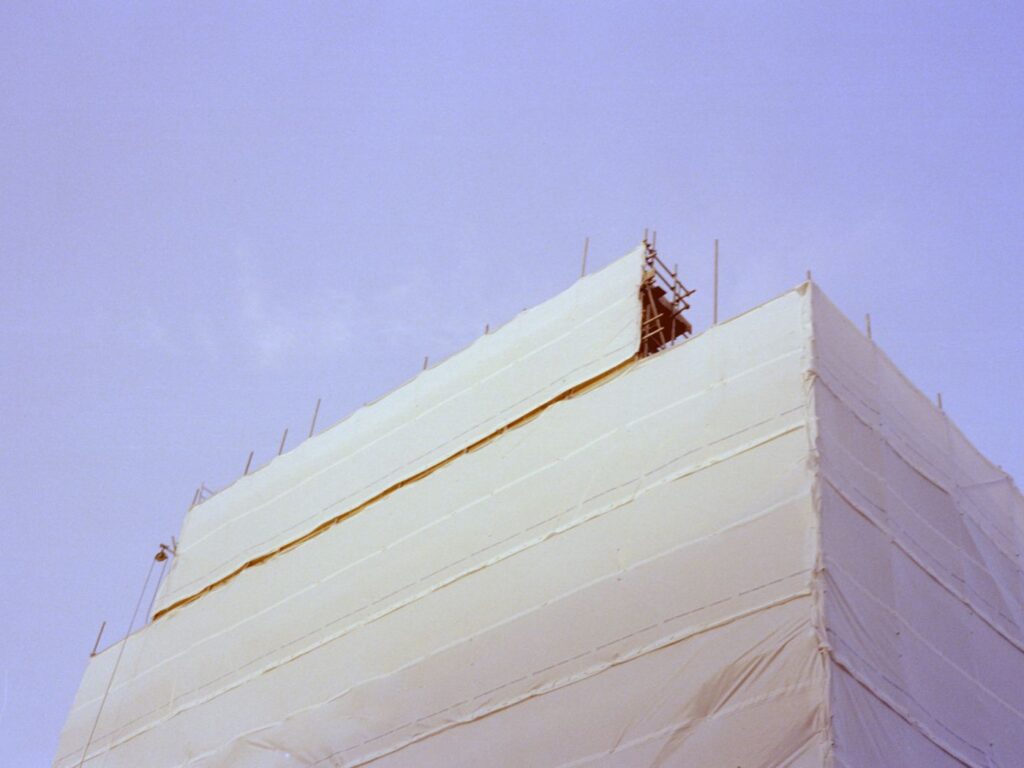
A week on, the situation remains exactly as unresolved as the day the covering went up. The Kennedy Center points to marble maintenance, its critics point to wounded pride, and the only people who truly know what the facade now looks like are the ones working behind the scaffolding. Everyone else is left to guess, peering at an opaque sheet of fabric and reading into it whatever they are already inclined to believe.
For now, the answer stays concealed, quite literally, from public view. Whether it emerges when the tarps finally come down on the center’s own schedule, or sooner because a court orders an explanation under oath, remains to be seen. Until then, the mystery of what the Kennedy Center is hiding behind those tarps endures, a small but stubborn standoff over a name, a wall, and the question of who gets to decide what the public is allowed to see.
arts controversy, building facade, court order, cultural institution, Donald Trump, federal court, Jamie Raskin, John F. Kennedy Center, Joyce Beatty, Judge Christopher Cooper, Kennedy Center, Kennedy Center board, marble facade, Moulin Rouge musical, National Symphony Orchestra, performing arts center, political controversy, Trump name removal, Truth Social, washington dc