
Your cart is currently empty!
The Real Reason Time Speeds Up With Age

When we are young, time feels expansive. Summers stretch endlessly, school years feel long, and waiting for birthdays or holidays can feel almost unbearable. As adults, many of us experience the opposite sensation. Weeks blur into months, years seem to collapse into one another, and we often find ourselves wondering how quickly time has slipped away. This feeling is so common that it has become a shared cultural experience, frequently discussed in conversations, social media posts, and moments of quiet reflection.
Contents
show
The unsettling part is that this sensation is not just emotional nostalgia or the result of adult stress. Research across psychology, neuroscience, and even mathematics suggests that our perception of time genuinely changes as we age. The clock on the wall moves at the same pace, but the clock in our minds tells a very different story. Understanding why this happens reveals not only how our brains work, but also how we might reclaim a richer sense of time in our lives.
The Universal Experience of Time Speeding Up
Across cultures and generations, people report the same phenomenon. Childhood feels slow and full, while adulthood feels rushed and compressed. This is not simply a matter of having more responsibilities or busier schedules. Studies show that even when external pressures are removed, older adults still perceive time as moving more quickly than younger people.
In one well known experiment, younger adults and older adults were asked to silently count what they believed to be three minutes. On average, younger participants stopped almost exactly at the three minute mark. Older participants, however, continued counting for significantly longer, suggesting that their internal sense of time was running faster. This type of finding has been replicated in various forms, reinforcing the idea that age alters our perception of duration itself.
What makes this experience so powerful is that it shapes how we reflect on our lives. When time feels compressed, it can create a sense of urgency, regret, or even anxiety. Understanding the mechanisms behind this sensation can help us see it less as a personal failing and more as a natural consequence of how the human brain develops over time.
Memory and the Role of New Experiences

One of the most widely supported explanations for why time seems to speed up as we age focuses on memory. The brain does not store time directly. Instead, it reconstructs our sense of duration based on the number and richness of memories created during a given period.
When we experience something new, the brain works harder. It pays closer attention, processes unfamiliar information, and stores more detailed memories. These dense memory records make the period feel longer when we look back on it. This is why a short vacation to a new place can feel much longer in hindsight than several routine weeks spent at home.
In childhood, almost everything is new. Children are constantly learning how the world works, forming new mental models, and encountering unfamiliar situations. Each day is filled with experiences that demand attention and cognitive effort. When children look back, their memories are rich and numerous, making time feel expansive.
As adults, much of life becomes routine. Commutes follow the same routes, days are structured around familiar tasks, and environments change very little. The brain no longer needs to devote as much energy to processing these experiences, so fewer detailed memories are formed. When we later reflect on this period, the lack of distinctive memories makes time feel as though it passed quickly.
Why Routine Compresses Time

Routine is efficient, but it comes at a psychological cost. When days are similar, the brain groups them together. Instead of storing each day as a separate, memorable event, it compresses them into a single mental category. This process helps us function efficiently, but it also makes weeks, months, and even years feel like they disappear.
This effect explains why certain periods of life seem to vanish when we look back. A year filled with repetitive workdays may feel much shorter in memory than a single year marked by major life changes. It is not that the year contained fewer hours, but that it contained fewer memorable distinctions.
Interestingly, this compression happens primarily in hindsight. In the moment, routine days may feel long or even tedious. But when we reflect on them later, they collapse into a blur. This distinction helps explain why older adults might feel that time is both dragging in the present and racing by in retrospect.
The Biological Clock Inside the Body
Another explanation for the speeding up of time involves biology. As we age, our bodies slow down. Heart rates decrease, metabolism slows, and breathing becomes more measured. Some researchers suggest that these biological rhythms act as internal timekeepers.
In childhood, faster heartbeats and higher metabolic rates mean that the body experiences more internal events within a given span of clock time. These frequent biological signals may contribute to the sensation that more time has passed. As these rhythms slow with age, fewer internal markers occur, potentially making time feel shorter.
Neurochemistry may also play a role. Dopamine, a neurotransmitter involved in learning and motivation, is released when we encounter novel stimuli. Dopamine levels tend to decline after early adulthood. With less dopamine signaling, the brain may process time differently, contributing to the sensation that it is passing more quickly.
While biological factors alone do not fully explain the phenomenon, they likely interact with memory and experience to shape how we perceive the passage of time.
Why Intense Moments Feel Slow

Most people have experienced moments when time seems to slow down, such as during an accident or a highly emotional event. During these moments, perception can feel almost cinematic, with heightened awareness and vivid detail.
Research suggests that time itself does not actually slow down in these situations. Instead, the brain records an unusually large amount of information in a short period. When we later recall the event, the dense memory record makes it feel as though the moment lasted longer than it actually did.
This phenomenon supports the idea that memory density shapes our sense of time. The more information the brain captures, the longer a moment feels in retrospect. As life becomes more predictable with age, these high density memory moments occur less frequently, contributing to the overall sense that time is accelerating.
The Mathematical Perspective on Aging and Time
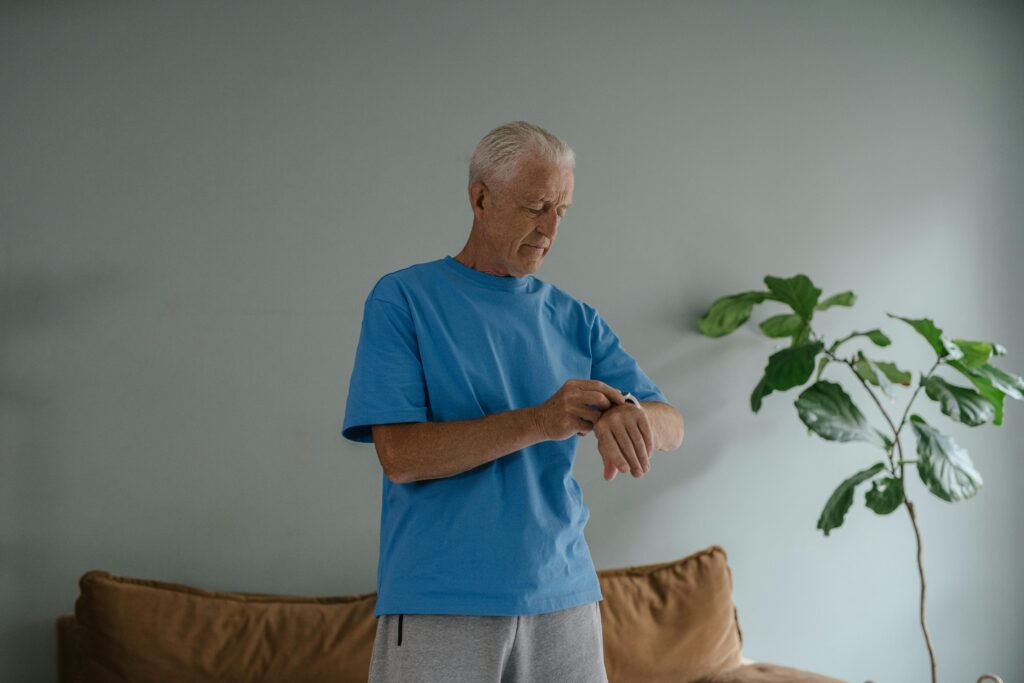
Beyond psychology and biology, mathematics offers another compelling explanation. Some researchers argue that we perceive time on a proportional scale rather than a linear one. In other words, we judge the length of a period based on how large it is relative to the time we have already lived.
For a child, one year represents a significant portion of their entire life. Waiting a year for a birthday can feel enormous. For an adult, that same year is a much smaller fraction of lived experience. As a result, it feels shorter.
This proportional model suggests that perceived time follows a logarithmic or exponential pattern. Each additional year represents a smaller percentage of our total lifespan, making it feel increasingly compressed. Under this view, large stretches of adulthood may feel subjectively similar in length to much shorter periods of childhood.
This mathematical framing aligns with the common habit of dividing life into decades. While decades are equal in calendar time, they are not equal in perceived time. Early decades feel rich and expansive, while later decades can feel surprisingly brief.
Looking Back Versus Living in the Moment
An important distinction in time perception is the difference between experiencing time and remembering it. Studies suggest that older adults may feel time passing more slowly in the moment, especially during quiet or routine days. However, when they look back on those same periods, time appears to have flown by.
This difference arises because memory plays a stronger role in retrospective judgments. If a period lacks memorable events, it will seem shorter in hindsight regardless of how it felt at the time. Children, by contrast, accumulate many distinctive memories, making their past feel longer and more detailed.
This insight helps explain why people often feel that years are disappearing even though individual days can feel long. The compression happens not during the experience, but during recall.
Why Novelty Matters at Every Age
The good news is that the factors influencing time perception are not entirely outside our control. Novelty can stretch our sense of time at any age. Learning new skills, visiting unfamiliar places, or changing routines can all increase memory density.
Adults who introduce variation into their lives often report that time feels fuller and more expansive. A year that includes new hobbies, relationships, or challenges tends to stand out more clearly in memory. In contrast, years dominated by routine tend to fade together.
This does not mean constantly seeking extreme experiences. Even small changes can make a difference. Taking a new route to work, trying a different cuisine, or engaging deeply with a creative project can add texture to time.
Mindfulness and Attention
Attention also plays a critical role in how we experience time. When we are distracted or multitasking, experiences blur together. When we are fully present, moments become more vivid and memorable.
Mindfulness practices encourage focused attention on the present moment. Research suggests that such practices can stretch subjective time by enhancing awareness and memory formation. By engaging fully with what we are doing, we create richer mental records that later expand our sense of duration.
This approach does not slow the clock, but it changes how we experience and remember our days. Over time, this can influence how long our lives feel when we look back on them.
Technology and the Modern Pace of Life

Modern technology may amplify the sensation of time speeding up. Constant notifications, rapid information consumption, and fragmented attention reduce the depth of our experiences. When days are filled with shallow interactions and rapid task switching, fewer lasting memories are formed.
Social media, in particular, can distort time perception. Endless scrolling creates the illusion of activity without meaningful engagement. Hours may pass quickly in the moment and leave little behind in memory, contributing to the sense that time has vanished.
Balancing technology use with deeper, more immersive activities may help counteract this effect. Choosing experiences that demand focus and presence can restore some of the richness that routine and distraction erode.
The Emotional Side of Time Perception
Time perception is not purely cognitive. Emotions shape how we experience duration. Periods of anxiety or stress can feel rushed in retrospect, while emotionally significant moments often stand out more clearly.
As people age, emotional priorities tend to shift. Many become more selective about how they spend their time, focusing on meaningful relationships and activities. While this selectivity can enhance well being, it may also reduce the number of varied experiences, contributing to time compression.
Recognizing this tradeoff allows for more intentional choices. Seeking emotional depth does not have to mean sacrificing novelty. The two can coexist and enrich one another.
Can We Really Slow Time Down
We cannot change the speed at which time passes objectively. But we can influence how it feels. The research points to several practical strategies that can help time feel fuller and less fleeting.
Introducing novelty, breaking routines, engaging deeply with activities, and cultivating mindfulness all contribute to richer memory formation. Over time, these practices can expand our retrospective sense of duration.
The goal is not to fight aging, but to adapt to it with awareness. Understanding why time seems to accelerate allows us to respond thoughtfully rather than passively.
A Different Way of Measuring a Life

If perceived time truly follows a proportional or logarithmic pattern, then large portions of adulthood may feel surprisingly brief. This idea can be unsettling, but it can also be clarifying.
Rather than measuring life purely in years, we might measure it in moments of meaning, learning, and connection. A shorter felt duration does not necessarily mean a lesser life. What matters is the richness within that time.
By focusing on experience quality rather than quantity, we can reshape how our lives feel in retrospect. Even as years pass more quickly, they can remain full.
What Time Is Really Asking of Us

The sensation that time speeds up as we age is not an illusion, nor is it a personal failure. It is a natural result of how our brains process memory, novelty, biology, and proportion. Childhood feels long because it is filled with new experiences and rich memories. Adulthood feels brief because routine compresses time and reduces memory density.
Yet this understanding offers hope. By embracing novelty, paying attention, and living deliberately, we can influence how time feels. We may not be able to slow the clock, but we can make our days more memorable and our years feel fuller.
In the end, time does not simply happen to us. How it feels is shaped by how we live. And that means we have more influence over our experience of time than we might think.