
Your cart is currently empty!
Woman Ends Marriage After Husband Repeatedly Leaves Dogs Outside In The Cold

When a woman returned early from a work trip to find her two beloved dogs missing, the shock did not come only from what had happened to them, but from what the situation revealed about her marriage. What began as a simple agreement about feeding and basic care quietly evolved into a test of trust, empathy, and shared responsibility. Her decision to file for divorce over how her husband treated the dogs has divided opinion online, yet it touches on something many couples face: how far values can stretch before they finally break, and whether love is enough when one partner does not protect what the other holds most dear.
Contents
show
A Test of Trust, A Failure of Care

A two-week work trip was meant to be routine. The woman, 34, had organised her life carefully around a demanding travel schedule and two dogs she had owned long before marriage. The arrangement at home was clear: she would handle most of the daily care, and her husband, 36, agreed to feed the dogs in the evenings and look after them while she was away.
Shortly after she left, a message from her mother signalled that something was wrong. Stopping by the house, her mother found the dogs tied up on the front porch in the cold. Concerned, she sent photos and took the animals with her for their safety.
When the woman returned home, she found her husband on the phone, sounding alarmed. He claimed the dogs were missing. Only later did he admit he had locked them outside because they were making too much noise and he did not believe they should be his responsibility.
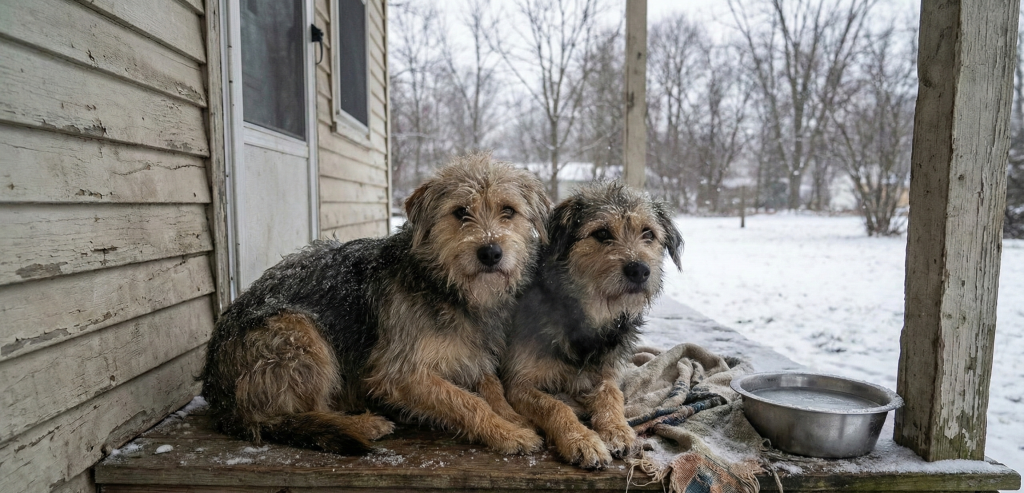
The issue was no longer just about one bad decision. It was about a broken agreement, disregard for the dogs’ welfare, and an attempt to cover it up. She packed a bag and went to her mother’s house to think.
As calls and messages came in from her husband and mother-in-law accusing her of being “dramatic” and “selfish,” one conclusion became clearer to her: the problem was not only what he had done to the dogs, but what his actions revealed about respect, responsibility, and trust inside the marriage.
Your Partner’s View of Your Pet Is a View of You

For many people, especially those who live alone or travel frequently for work, pets are not background companions but central figures in daily life. Dogs, in particular, are often spoken of as “fur babies” or chosen family, which reflects more than casual affection. Psychologists describe pets as attachment figures that offer comfort, routine and emotional stability, especially during stress or transition.
Research in human–animal interaction has repeatedly found that strong bonds with companion animals can buffer loneliness, support mental health and even regulate physiological stress responses. When a partner understands and respects that bond, it can deepen intimacy and trust. When they dismiss it, it can have the opposite effect.
Within a relationship, how each partner treats the animals in the home becomes a stand-in for how they handle vulnerability and responsibility. If one person views the dogs as family members and the other sees them as a nuisance or an unwanted duty, the gap is not just practical but deeply emotional. In this case, the husband’s claim that the dogs “should not be his responsibility” did not only refer to feeding or letting them out. It signaled a refusal to share in something his spouse holds sacred.
Differing attitudes toward animals are not inherently a moral failing. Plenty of couples navigate one partner being more “pet-centric” than the other. The difference is that successful couples usually confront that mismatch honestly. When those values are glossed over or minimized, a moment of neglect or carelessness with a pet can suddenly reveal a much larger incompatibility, as happened here.
The Real Risks Of “Just Locking Them Outside”

On the surface, the husband’s decision might sound like a moment of irritation: the dogs were “making too much noise,” so he locked them outside and went back to his day. In reality, that choice carried serious welfare and safety risks that go far beyond a simple disagreement over pet rules.
Tethered dogs are vulnerable. Left outside in cold weather without proper shelter, they are at risk of hypothermia, frostbite, and dehydration. Being tied up also restricts movement, making it harder for them to escape danger, find warmth, or access clean water. In many places, animal welfare guidelines strongly discourage, or even legally restrict, prolonged tethering in extreme temperatures because the risk of harm is considered significant, not hypothetical.
There is also the risk of theft or intentional harm. One commenter responding to the woman’s story described not letting their dog into the garden unattended because dog thefts are common in their area. For many owners, leaving an animal tied up and unsupervised at the front of a property would be unthinkable, particularly when the animal is known to be a beloved member of the household.
What makes the situation more troubling is the apparent lack of concern from the husband. Rather than acknowledging a mistake, he framed the dogs as a burden that should not be his responsibility and tried to hide his actions by claiming they had been “taken.” For the woman, the issue was not only emotional loyalty to her pets, but the knowledge that, had her mother not visited, the dogs could have been left in danger for days.
Broken Promises And The Blame Game

After the incident, the conflict quickly shifted from what happened to the dogs to how the woman was being portrayed. Her husband called her overdramatic, and his mother labelled her selfish for leaving and considering divorce. This reaction highlights a dynamic many readers recognised immediately: minimising harm and questioning the emotional response rather than addressing the behaviour that caused it.
At the core of their agreement was trust. They had discussed her travel schedule in advance, agreed on a manageable level of responsibility for him, and built a routine around that plan. Ignoring that agreement was one breach. Lying about the dogs being taken, when he had knowingly tied them outside, was another. When trust is undermined twice in quick succession, it becomes less about a single mistake and more about a pattern of disregard.
The online response to her story reflects a broader cultural shift. Rather than dismissing her attachment to the dogs, many commenters focused on his deception and indifference. Some suggested that if he was willing to lie about something so important to her, it raised questions about how he might handle other crises or vulnerabilities in the relationship.
The accusation of overreacting, in this context, serves to obscure a key truth: for many people, emotional safety in a relationship depends on the belief that what they love will not be treated as disposable, especially by the person closest to them.
Choosing Partners Who Protect What Matters Most

This story is less about dogs and more about non-negotiables. Every relationship has them, even if they are never clearly named. For some, it is finances or parenting style. For others, it is faith, lifestyle, or how vulnerable beings in the home are treated. Here, the way the dogs were handled exposed a clash in values that had been quietly present all along.
When one partner sees an animal as family and the other treats that bond as optional or trivial, conflict is almost inevitable. It becomes about more than pet care. It touches on empathy, reliability, and the willingness to show up for what matters deeply to the other person, even when it feels inconvenient.
For readers, there are a few practical takeaways:
- Talk explicitly about pets early in a relationship. Who is responsible for what, and how are emergencies handled.
- Notice how a partner behaves around animals, children, and people with less power. These moments often reveal character more clearly than romantic gestures.
- If a partner repeatedly dismisses distress by labelling it dramatic or selfish, consider how safe it feels to bring up future concerns.
Not every disagreement over animals is grounds for separation. Many couples bridge differing levels of attachment with communication, compromise, or outside support such as pet sitters and boarding. But it is valid, not extreme, to treat cruelty, neglect, or deception involving a beloved animal as a serious breach.