
Your cart is currently empty!
Employee Wears Ridiculous Wigs After Company Rejects Pink Hair
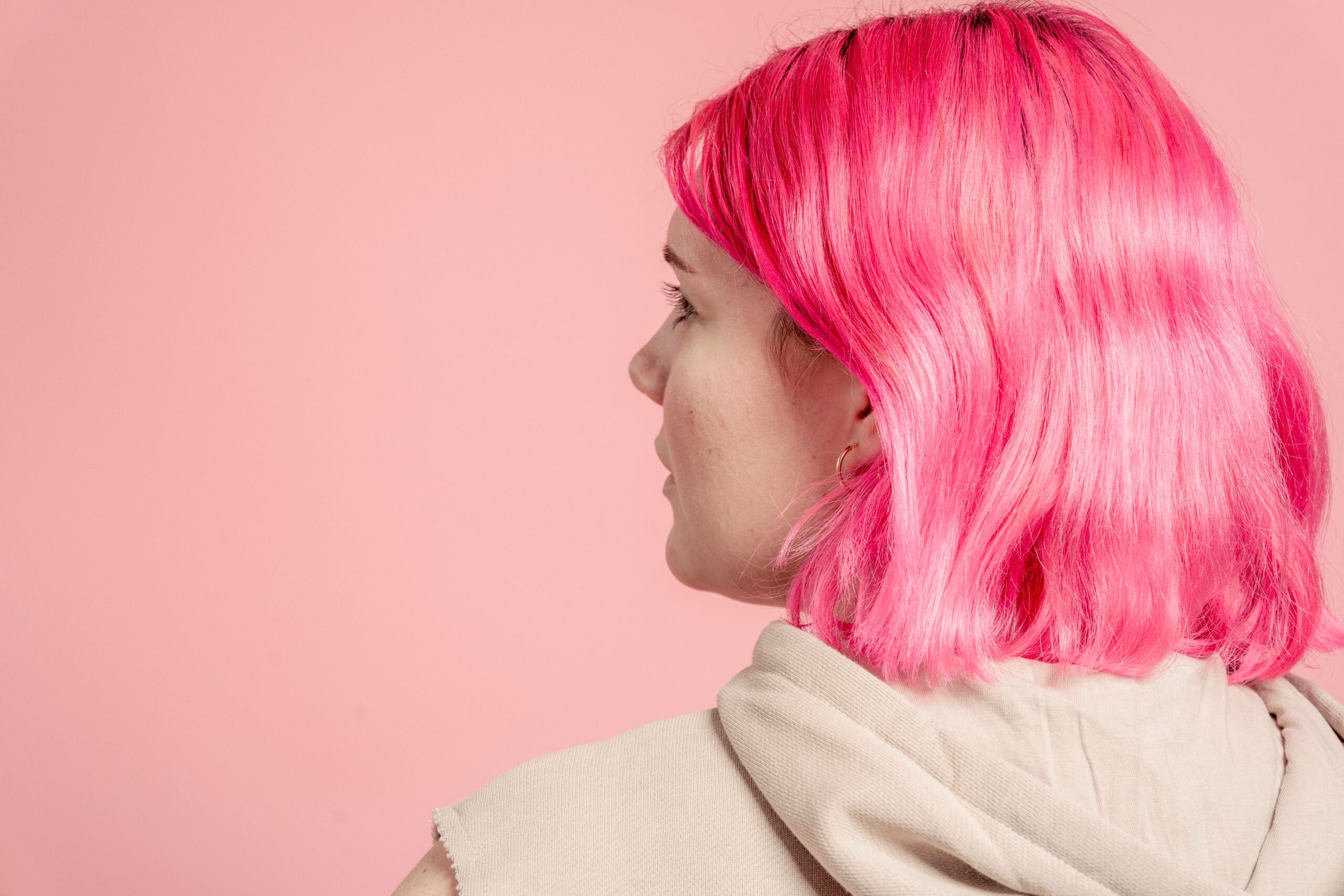
A new job usually comes with a few compromises. For one Georgia woman, that compromise turned into a viral internet spectacle after her employer told her that her signature pink hair was not appropriate for work.
Contents
show
Instead of reaching for a bottle of hair dye, Emily Benschoter found another way to comply with the rules. She showed up wearing wigs. Not sleek, natural-looking wigs designed to blend in, but deliberately outrageous ones that drew far more attention than her bright pink hair ever could.
The 29-year-old hospitality worker has since transformed a routine workplace dress code into a social media phenomenon, sparking conversations about individuality, professionalism, and whether appearance policies still belong in today’s workplace.
@anoraaaa01 Boss Banned Her Pink Hair So She Started Wearing Terrible Wigs #wig #corporatelife #hilarious #history #History ♬ original sound – Anora
A Simple Question Before Her First Shift Changed Everything
Emily Benschoter had already accepted a front-of-house hospitality position before the issue ever surfaced. Unlike many hiring processes, her interview took place over the phone rather than face to face, meaning her employer had never actually seen her distinctive hairstyle.
Knowing her waist-length black and pink hair might attract attention, she decided to check with management before arriving for her first shift. She wanted to avoid an awkward surprise on her first day.
The answer was clear. Pink hair was not permitted under the company’s appearance policy.
For many employees, that might have marked the end of the conversation.
Some would have dyed their hair back to a natural shade, while others might have looked for another job altogether.
Benschoter chose neither option.
“Dying my hair for a job I work at for 40 hours per week wasn’t an option,” she told Newsweek. “I am a self-expressive person and I feel very confident with pink hair so I came up with a solution to keep the job and my hair.”
Management suggested she cover her hair with a wig while working.
Technically, the proposal solved the company’s concern. Her pink hair would no longer be visible to customers.
What happened next was something no one in the workplace likely anticipated.
The More Ridiculous the Wig, the Better
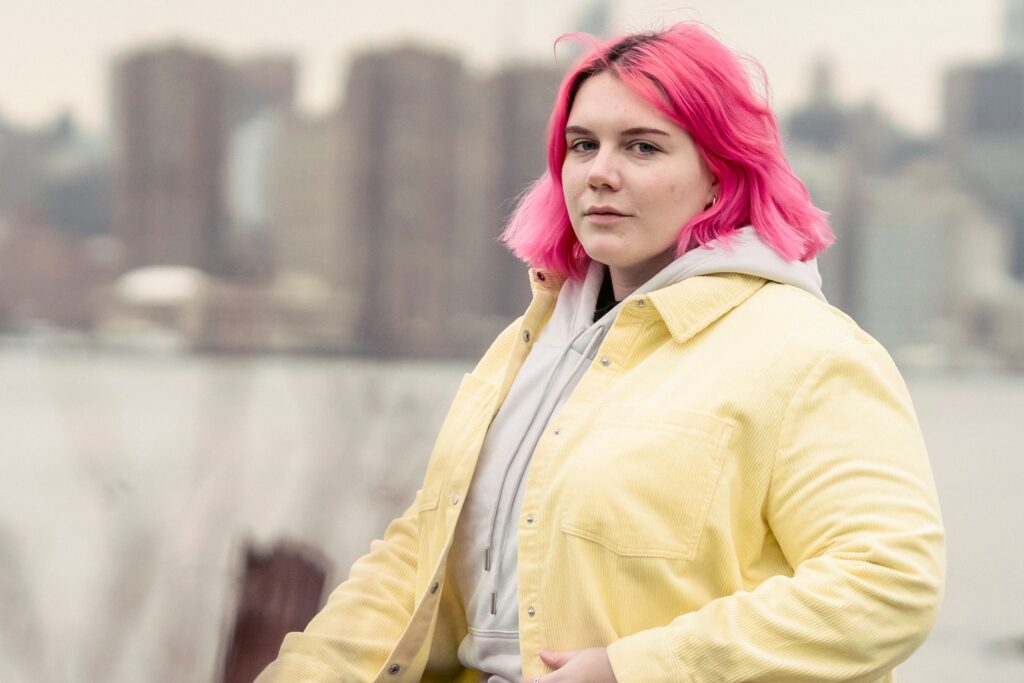
Rather than purchasing realistic wigs designed to mimic natural hairstyles, Benschoter deliberately headed in the opposite direction.
She searched for cheap, over-the-top wigs that looked almost theatrical. Messy curls, strange colors, exaggerated bangs, outdated hairstyles, and bizarre costume pieces all became part of her growing collection.
Her philosophy was surprisingly straightforward.
“The worse the wig, the better,” she explained.
Instead of quietly disappearing behind an ordinary hairstyle, she ensured that customers noticed the wigs immediately. In many cases, they attracted far more attention than pink hair ever would have.
Some of the wigs resembled hairstyles from entirely different decades. Others looked like they belonged in costume shops rather than workplaces.
One even resembled something worn by an American Founding Father.
Another featured oversized curls and an equally dramatic beard.
She also sported mullets, awkward shoulder-length cuts, and hairstyles that looked intentionally mismatched.
Each shift became an opportunity to introduce another unforgettable look.
Rather than hiding her personality, the wigs became an extension of it.
TikTok Couldn’t Get Enough
The unusual strategy quickly found an audience online.
Posting under the username @emuhleeebee, Benschoter began sharing videos documenting each new wig she wore to work.
One of her earliest videos featured a simple blonde shoulder-length wig with text across the screen reading:
“When you have pink hair but corporate does not approve so you wear terrible wigs.”
The clip exploded across TikTok.
It collected more than 950,000 views along with roughly 49,000 likes, introducing millions of viewers to her unusual form of what many described as “malicious compliance.”
The phrase refers to following instructions exactly as requested while exposing the flaws or unintended consequences of those rules.
Viewers immediately understood the joke.
Technically, Benschoter was following company policy.
She had covered her pink hair.
She simply never promised the replacement hairstyle would be flattering.
As more videos appeared, her audience continued to grow. Individual clips reached hundreds of thousands, and in some cases millions, of views.
Followers began looking forward to seeing what bizarre hairstyle would appear next.
Her TikTok account eventually attracted more than 34,000 followers, many of whom returned specifically for the next installment in what had become an ongoing workplace comedy series.
Customers Were Just as Entertained

The online response was only part of the story.
Benschoter says many customers also noticed the unusual wigs and often asked questions about them.
Rather than becoming embarrassed by the attention, she welcomed the conversations.
“It is a way to open up the conversation with the customers who think it is insane that I have to cover my pink hair,” she explained.
Those interactions became opportunities to explain why she had chosen such exaggerated disguises in the first place.
Many customers reportedly shared her disbelief that brightly dyed hair remained an issue in certain workplaces.
Instead of distracting from customer service, the wigs often acted as conversation starters.
People laughed, asked questions, and occasionally shared their own stories about workplace dress codes.
The irony was difficult to ignore.
The company hoped covering her pink hair would create a more conventional appearance.
Instead, customers found themselves talking about giant wigs, vintage hairstyles, and obvious costume pieces.
Why Pink Hair Matters So Much to Emily
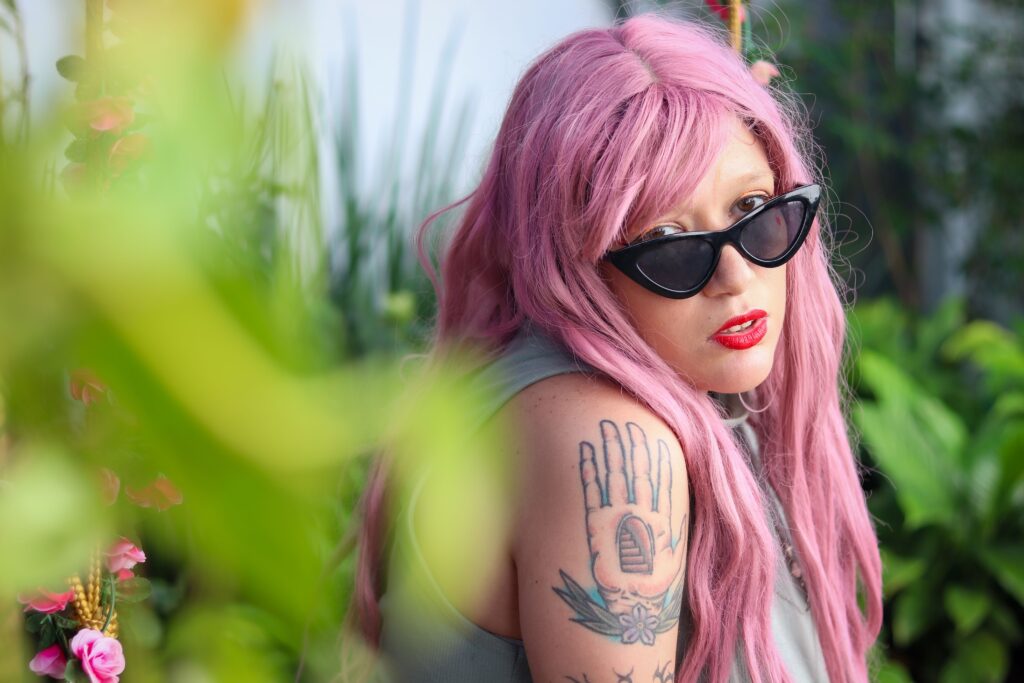
For Benschoter, the issue extends well beyond appearance.
She has repeatedly described her pink hair as an important part of her identity rather than a passing fashion choice.
“It’s dehumanising that I can’t be accepted at face value because my hair is a non-traditional colour,” she told Newsweek. “It’s so superficial that my hair colour is an obstacle.”
She went on to explain why changing it simply was not something she was willing to do.
“I prefer my pink hair, it’s me to my core.”
Those comments struck a chord with many people online who viewed colorful hair as another form of personal expression rather than a sign of professionalism or competence.
While employers often argue that appearance standards help present a consistent image to customers, critics question whether hair color has any meaningful connection to someone’s ability to perform their job.
For Benschoter, the wigs became less about rebellion and more about preserving something she considers central to who she is.
At the same time, they allowed her to continue working without directly violating the company’s policy.
The result was a compromise that satisfied the rule while encouraging thousands of people to question whether the rule made sense in the first place.
Online Viewers Called It the Perfect Example of “Malicious Compliance”
As Benschoter’s videos spread across TikTok, viewers quickly found a phrase that perfectly described her approach.
Many labeled it “malicious compliance,” a form of protest where someone follows instructions exactly as requested while exposing how unreasonable those instructions may be.
In this case, the company asked her to cover her pink hair. She did exactly that.
She simply chose wigs that attracted even more attention than her natural hairstyle.
The comment sections quickly filled with people applauding her creativity.
One user wrote, “They think this is better?”
Another joked, “Please tell me that the SECOND you clock out, you’re carrying your wig in your hand to make it SO CLEAR.”
Others admitted they looked forward to seeing each new hairstyle she debuted.
Rather than criticizing her decision, many viewers said the videos highlighted how outdated certain workplace appearance rules can feel.
Some followers even encouraged her to create an Amazon wishlist filled with increasingly outrageous wigs.
She accepted the idea.
Soon, supporters were purchasing wigs for her, making every new delivery another opportunity for fresh content.
One particularly memorable addition was a powdered Founding Father-style wig.
Reacting to the unexpected gift, Benschoter joked online that she could hardly believe someone had actually bought it.
The growing collection turned her workplace routine into an ongoing comedy series that thousands of people eagerly followed.
The discussion soon expanded beyond Benschoter’s pink hair.
Her videos encouraged hundreds of viewers to describe the appearance policies they had encountered in their own workplaces.
Some stories sounded just as unusual.
One commenter recalled having to hide blue hair while working at Applebee’s.
“I had to cover my blue hair at Applebee’s so I wore a jheri curl wig,” they wrote.
Another viewer described a similar policy inside a local hospital.
“Our local hospital has this rule. My friends wear Karen wigs that match. It’s unhingedly hilarious.”
Others shifted the conversation from hair to tattoos.
“We aren’t allowed to show our tattoos at work. My boss had a small, beautiful one she covered with a SpongeBob bandaid every day,” another commenter shared.
The flood of responses suggested that dress code debates remain surprisingly common across many industries.
For some employers, appearance standards are viewed as part of maintaining a professional brand.
For many employees, however, those same policies can feel disconnected from their actual ability to perform their jobs.
Benschoter’s experience became a catalyst for people to discuss where companies should draw the line between professionalism and personal expression.
Why Companies Still Regulate Hair Appearance
Although colorful hair has become increasingly common, many employers continue to enforce conservative appearance standards, particularly in customer-facing roles.
Organizational psychologist Gena Cox told Newsweek that these policies often stem from long-standing assumptions about what customers expect employees to look like.
“Companies focus disproportionately on employees’ visual characteristics when they have a preconceived notion of what the ‘ideal employee’ looks like and when they believe their clients and customers share that bias,” Cox explained.
She argued that those assumptions deserve closer examination.
“The bottom line is, rejection of employees’ coloured hair is a form of bias and a sign that the workplace is not inclusive.”
Companies generally defend dress codes by arguing they promote consistency, reinforce brand identity, and create a professional atmosphere.
Critics respond that professionalism should be measured through conduct, reliability, and customer service rather than hair color or personal style.
As younger generations enter the workforce, those differing views have become increasingly visible.
Many businesses have relaxed policies surrounding tattoos, facial hair, piercings, and unconventional hairstyles.
Others continue to maintain stricter standards, particularly within hospitality, finance, healthcare, and luxury retail.
The disagreement reflects a broader conversation about what professionalism actually looks like in modern workplaces.
Hair Discrimination Has Been Challenged Before
Questions surrounding workplace hair policies are not new.
Over the past decade, many employers have reconsidered appearance rules that critics argued unfairly targeted certain groups of workers.
One widely discussed example came in 2012 when Disney Parks in the United States ended a rule that had prohibited cast members from wearing beards for roughly 60 years.
The decision reflected changing attitudes toward workplace grooming standards and employee individuality.
The conversation has been even more significant regarding natural hairstyles worn by Black employees.
In 2019, California passed the CROWN Act, short for Creating a Respectful and Open World for Natural Hair.
The legislation protects workers against discrimination based on hair texture and protective hairstyles such as braids, twists, locs, and knots.
Since then, numerous other states have adopted similar protections.
However, those laws focus on hairstyles associated with racial identity rather than cosmetic hair colors.
Because Benschoter’s hair is dyed pink instead of representing a protected natural hairstyle, the legal protections provided under the CROWN Act do not apply to her situation.
That distinction highlights the difference between legally protected discrimination and employer dress code policies that remain largely within a company’s discretion.
A Viral Joke With a Bigger Message
Although Benschoter’s videos are filled with humor, she has made it clear that they are about more than simply collecting ridiculous wigs.
She hopes they encourage conversations about workplace expectations and whether employees should have to hide harmless forms of self-expression.
Her growing TikTok audience appears to understand that balance.
The videos remain funny because each wig seems more unbelievable than the last, yet the underlying question continues to resonate with viewers long after the laughter fades.
In one update, a follower asked whether anyone at work had commented on the increasingly outrageous hairstyles.
Her response hinted that management had remained mostly silent.
“Not yet… emphasis on yet. I feel it coming.”
In another update, she revealed that one person from human resources had acknowledged her unusual approach with a simple response.
“You know what. I respect it.”
Whether the company’s policy ever changes remains to be seen.
For now, Benschoter continues arriving at work in whichever bizarre wig happens to be next in the rotation.
Her pink hair remains underneath, waiting until the workday ends.
What began as a request to hide one hairstyle has instead created an online community discussing workplace culture, individuality, and the small acts of creativity people sometimes use to challenge rules without ever breaking them.
Ironically, the policy intended to make one employee stand out less has made her recognizable to millions.