
Your cart is currently empty!
Woman who ‘died for 17 minutes’ during gym session details exactly what she saw before being resuscitated
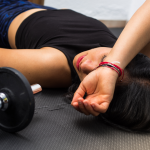
When we imagine cardiac arrest, we often picture an older adult with a long medical history or someone visibly unwell. Rarely do we associate it with a young, active woman in peak physical condition—much less one lifting weights in a gym or sprinting on a netball court. For Victoria Thomas, a 41-year-old mother and athlete, sudden cardiac arrest became the first shocking sign of an invisible battle she never knew she was fighting.
Contents
show
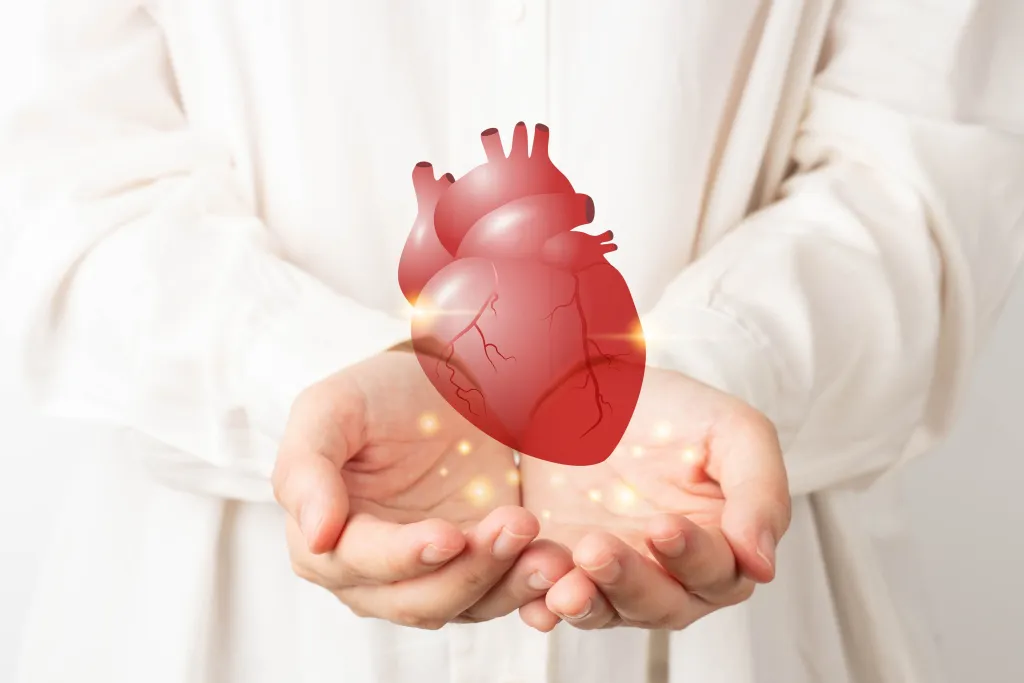
What began as a seemingly ordinary moment of dizziness during a workout quickly spiraled into a harrowing ordeal: 17 minutes without a heartbeat, an out-of-body experience, and a diagnosis of a rare, life-threatening genetic disorder that would go on to test every physical, emotional, and maternal limit she had. Her journey through collapse, recovery, and renewal shows both her personal resilience and the hidden vulnerabilities that can exist even in healthy bodies while also underscoring the profound gift of life made possible by organ donation.
When Fitness Meets Fragility – The Day Everything Changed
Victoria Thomas was the embodiment of good health. At 41, she was active, athletic, and fully immersed in the lifestyle of someone who prioritizes wellness, until the day her body collapsed under her at the gym floor with no prior diagnosis, no dramatic warning signs, just a whisper of unease. She was in the middle of a bootcamp session when she turned to a friend and said she felt drained and dizzy—an ordinary complaint, easily dismissed by most. Moments later, she was lying unresponsive on the gym floor. Her heart had stopped.
For 17 minutes, Victoria was technically dead.
Her near-death experience defied the familiar narratives of white lights and peaceful tunnels. “It went black and there was nothing,” she testified. She recalls floating above her own body, staring down with a strange detachment. The detail that stayed with her had nothing to do with the spiritual. It was surprisingly ordinary: she thought her legs looked swollen, a perception later confirmed by a photo taken minutes before the collapse.
What followed was a swift and relentless fight to bring her back. Paramedics arrived within minutes, initiating CPR and resuscitation efforts that lasted over a quarter of an hour. “They never gave up on me,” Victoria said. She was young, healthy, and had no known heart condition. That should have been enough to keep her safe—or so she thought.
She awoke three days later in a hospital bed with a defibrillator implanted in her chest—a device that would save her life multiple times in the coming months. Her body had shocked everyone, including the medical professionals, by revealing an invisible vulnerability: a rare genetic disorder that had lain dormant for decades.

The Unseen Enemy – A Rare Genetic Timebomb
After surviving a cardiac arrest and returning to a semblance of normal life, Victoria Thomas soon discovered her health battle was far from over. In early 2021, while 24 weeks pregnant with her first child, she received a diagnosis that would alter everything she thought she knew about her body. Doctors identified Danon disease, a rare and often fatal genetic disorder linked to mutations in the LAMP2 gene—an essential gene responsible for regulating autophagy, the cellular process that keeps tissues, including the heart, clean and functional. What made the news particularly jarring was the complete absence of family history. There were no warning signs, no hereditary breadcrumbs to trace. This disease had lurked silently within her for decades, manifesting only when her body was at its most vulnerable—during pregnancy.
Danon disease is astonishingly rare, affecting fewer than one million people worldwide, and carries an ominous prognosis. For women, the average life expectancy is just 24 years. For men, it’s even shorter. That Victoria had reached adulthood with no diagnosis and maintained an active lifestyle that included regular netball and gym workouts made her case unusual. But pregnancy imposed additional physiological strain, pushing her weakened heart to its limits. Despite doctors urging an early delivery at 24 weeks—a time when the survival of a premature baby is far from guaranteed—Victoria, already grappling with shock, begged for a few more weeks. Her plea was granted, but by 30 weeks her condition had deteriorated so rapidly that an emergency caesarean was unavoidable. Fluid retention from heart failure made it difficult to breathe, and the lives of both mother and child were at stake.
Tommy was born safely, but Victoria’s recovery was short-lived. Motherhood, while joyful, brought with it new physical demands that her compromised heart could barely meet. Just six months after giving birth, everyday actions like climbing stairs became daunting tasks. By April 2022, medical scans revealed a terrifying truth: her heart was functioning at only 11 percent. Such a low ejection fraction falls under the category of end-stage heart failure, and her doctors gave her only a few months to live. The joy of new motherhood was now entangled with the looming possibility of loss, not just for her, but for her newborn son.
Borrowed Time – The Desperation for a New Heart
Faced with a bleak prognosis, Victoria was urgently placed on the heart transplant list and admitted to hospital indefinitely. The hospital room became her world—its walls enclosing her during the most uncertain time of her life. There, she waited, not just for a new heart, but for a future with her son. Her sisters brought Tommy to visit as often as they could, and Victoria clung to those brief visits like lifelines. Each cuddle, each smile, each gurgled laugh was a moment suspended in time, memories being made with the unspoken fear that they might be their last. It was a reality no young mother expects to face, let alone one whose life had once revolved around sports, fitness, and forward momentum.
Organ donation is often spoken about in abstract terms, but in cases like Victoria’s, the urgency is immediate and visceral. Twice she received news that potential hearts had been found, and twice those hopes were dashed when compatibility tests revealed they were unsuitable. Each time, the emotional toll deepened. She described the crushing disappointment of preparing mentally for life-saving surgery, only to be told it wouldn’t proceed. “I didn’t know if they were ever going to find a heart in time. I’d given up all hope,” she said, her words reflecting the despair that many transplant patients silently endure. The statistics mirror her experience: in the UK alone, more than 7,000 people await organ transplants at any given time, and sadly, hundreds will die waiting.
But even in the face of such harrowing odds, Victoria’s resolve never wavered. Survival alone didn’t push her forward. What held her steady was the thought of Tommy’s first steps, his first words, and the life ahead of him. Her story serves as a deeply human illustration of the psychological and emotional dimensions of waiting for a transplant, a process that is not only physically taxing but mentally exhausting. It is a period defined by helplessness and hope, medical precision and emotional chaos, all coexisting within the sterile halls of a hospital ward.
A New Heart, A New Horizon
In April 2023, a match was finally found. The call that had once seemed impossibly far away had arrived, and Victoria underwent a heart transplant at Queen Elizabeth Hospital in Birmingham. The surgery marked the beginning of a new chapter, one that would be defined by recovery, gratitude, and, remarkably, a return to vitality. By May, she was discharged and back home, stepping through the door just in time for her son’s second birthday. The timing wasn’t lost on her. After nearly seven months in hospital, the reunion was not just with her son, but with life itself. For a woman who had hovered so close to death, simply being home was a miracle.
Yet Victoria didn’t just settle for surviving—she chose to thrive. In the year following her transplant, she gradually returned to sport, and now plays netball up to four times a week. She is also preparing to represent her country at the World Transplant Games in Germany, competing in both volleyball and basketball. What she achieved goes beyond her own story, pointing to the heights other transplant recipients can reach with care, community, and determination. Physical activity, when carefully reintroduced under medical supervision, has been shown to improve cardiovascular health and overall well-being in post-transplant patients. Victoria’s journey is an extraordinary example of how sport can play a role in both recovery and identity restoration after major health trauma.
Her story also highlights the ripple effects of organ donation, not just on the recipient but on their family and wider community. Thanks to the selfless decision of an anonymous donor and their family, Victoria now enjoys time with her son, the thrill of competition, and the ordinary joys that once seemed out of reach. She remains deeply grateful for the second chance she’s been given, using her platform to advocate for others who may still be waiting. “I feel like I’ve been given a second chance at life, and to be a mum. It’s the greatest gift I could ever have asked for,” she said, a sentiment that echoes the gratitude felt by thousands of transplant recipients around the world.
The Greater Gift – Awareness, Advocacy, and Action
Victoria Thomas’s experience compels us to look beyond the headlines and see the deeper implications of rare diseases, sudden cardiac events, and the critical importance of organ donation. Her story challenges the assumptions we make about health, particularly the belief that youth and fitness provide immunity from serious illness. It also reveals the harsh reality that genetic disorders can remain hidden for years, only to manifest when the stakes are highest. In Victoria’s case, it was pregnancy that revealed the underlying fragility of her heart, a stark reminder that even the most vibrant among us can harbor unseen threats.
But more than that, her journey serves as a call to action. It underscores the need for increased awareness around rare genetic disorders like Danon disease, which are often misdiagnosed or discovered too late. It highlights the importance of genetic screening, especially for women who experience unexplained symptoms during pregnancy or exercise. And perhaps most urgently, it illuminates the life-saving potential of organ donation. Victoria is here today not because of luck, but because someone chose to give the ultimate gift—a decision that transformed despair into possibility.
For readers moved by her story, there are tangible steps to take. Consider registering as an organ donor, educating others about the process, or supporting charities that fund research into rare diseases. Medical science can do extraordinary things, but it is generosity, awareness, and advocacy that often determine who lives long enough to benefit from it. Victoria’s life was saved not just by surgery, but by a system of care and kindness that extended far beyond the hospital walls. That system needs more champions. Her story reminds us that while we cannot control when tragedy strikes, we can shape how we respond and who we might save in the process.