
Your cart is currently empty!
Women Feel Pain Longer Than Men & Science Has Finally Found Out Why

For years, women who reported persistent, long-lasting pain were met with a frustrating response from the medical community. Too often, their suffering was attributed to low pain tolerance, emotional sensitivity, or a tendency to over-report discomfort. Doctors had little to offer beyond a shrug and a prescription. But a new study out of Michigan State University suggests that something far more concrete has been happening inside the female body all along, something hidden deep within the immune system, and something that science is only now beginning to understand.
Contents
show
What researchers found has the potential to change how medicine approaches chronic pain for millions of people. And at the center of it all is a tiny biological mechanism that, in women, appears to be running at a fraction of its full capacity.
Chronic Pain Has a Gender Problem

Chronic pain affects more than 100 million Americans, and the financial toll on the healthcare system runs into the hundreds of billions of dollars annually. Women bear a disproportionate share of that burden. Conditions like fibromyalgia, migraine, and musculoskeletal pain affect women at far higher rates than men. Women also take longer to recover from injuries that, on the surface, appear identical to those experienced by their male counterparts.
For decades, medicine struggled to explain this gap in any satisfying way. With no clear biological culprit, the disparity was frequently written off as a matter of perception. Women, the thinking went, simply experienced pain differently or reported it more readily. Pain gets measured on a scale of one to ten, and everyone’s ten looks a little different. When women consistently rated their pain higher and for longer periods, many clinicians assumed the gap was psychological rather than physiological.
New research published in Science Immunology by a team at Michigan State University offers a different answer entirely, and it has nothing to do with perception.
A Discovery That Almost Didn’t Happen
Geoffroy Laumet, an associate professor of physiology at Michigan State University, has spent six years running a lab dedicated to understanding pain at its most fundamental level. His graduate student, Jaewon Sim, was working on what the team considered a minor pilot project when something unexpected appeared in the data. Males were showing higher levels of a molecule called interleukin-10, commonly referred to as IL-10. When a second round of testing produced the same result, Laumet and Sim knew they were looking at something worth pursuing.
“That was the turning point for me,” Sim said. “I feel extremely fortunate that we trusted those early, uncertain findings and chose to pursue them further.”
IL-10 is a signaling molecule produced by immune cells. Its job, researchers already knew, included reducing inflammation. But what Laumet’s team discovered goes well beyond that. IL-10 also communicates directly with pain-sensing neurons, the specialized nerve cells that detect injury and relay those signals to the brain. When IL-10 levels are high, those neurons quiet down. Pain begins to fade. When IL-10 levels are low, those neurons keep firing. Pain persists.
In males, the data showed, IL-10 production was consistently and significantly higher than in females. And the reason had everything to do with a type of immune cell that scientists had largely overlooked.
Meet the Overlooked Cell

Monocytes are white blood cells that circulate through the body and rush to sites of injury or inflammation. For a long time, scientists treated them as something of a staging cell, a precursor to other, more active immune cells rather than a major player in their own right. Laumet’s research upends that assumption.
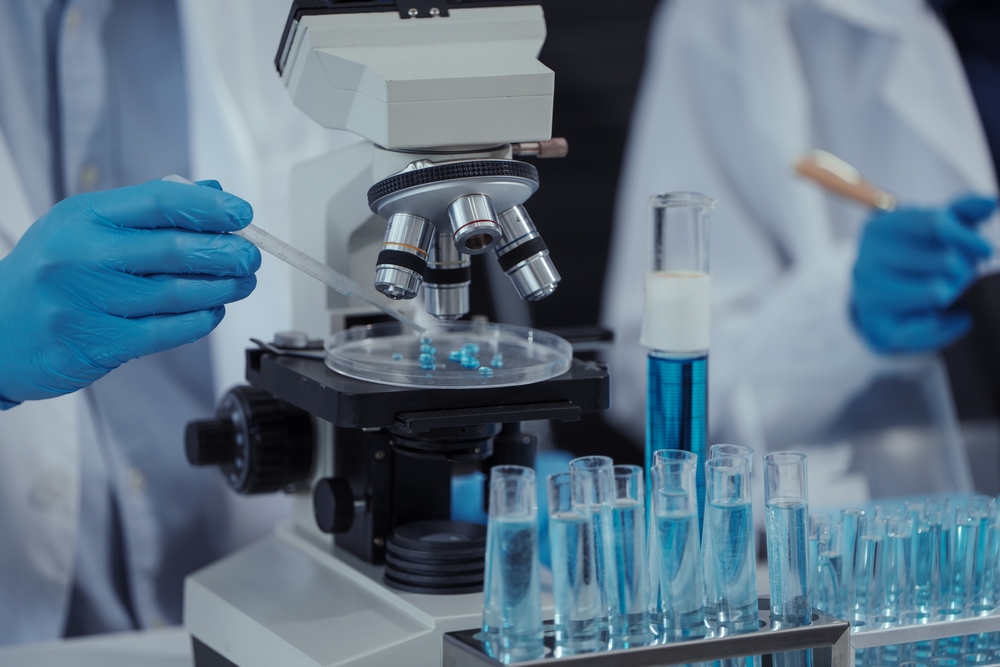
Using a highly precise laboratory technique called high-dimensional spectral flow cytometry, the MSU team found that monocytes play a direct and essential role in shutting down pain. When inflammation occurs, monocytes migrate to the affected area and produce IL-10, which then signals pain-sensing neurons in the skin to stand down. Without that signal, pain continues long after the initial injury has healed.
Male mice, the researchers found, had significantly more IL-10-producing monocytes in their inflamed skin than female mice. Males also resolved pain faster, sometimes weeks faster. Female mice, with fewer active IL-10-producing monocytes, stayed in a state of heightened pain sensitivity for far longer. Crucially, both sexes showed the same initial levels of pain and the same degree of inflammation. It was not how the pain started that differed it was how, but how and whether the body brought it to an end. “This study shows that pain resolution is not a passive process,” Laumet said. “It is an active, immune-driven one.”
Where Hormones Fit In
At this point, a natural question arises. If males consistently produce more pain-resolving monocytes, what drives that difference? Laumet’s team traced it to androgens, male sex hormones, with testosterone being the primary one.
Androgen receptors sit on the surface of monocytes. When testosterone binds to those receptors, it appears to ramp up IL-10 production. Males, with higher testosterone levels, benefit from monocytes that are more active at producing the molecule responsible for quieting pain. Females, with lower androgen levels, have monocytes that produce less IL-10, leaving their nervous systems in a more activated state for longer.
To test whether this was truly a hormonal effect rather than a coincidence of biology, the research team ran a revealing experiment. Female mice had their ovaries removed and then received testosterone supplementation. Within weeks, those females showed elevated IL-10-producing monocyte counts, and they resolved pain faster. When researchers went the other direction and blocked testosterone in male mice, their pain-resolving advantage disappeared. Pain lingered in the same way it does in untreated females.
Estrogen, it turned out, was not a factor. Removing ovarian estrogen without adding testosterone produced no change in pain resolution. Testosterone, and specifically its interaction with monocytes, appears to be what separates faster recovery from prolonged suffering.
To rule out any possibility of a fluke, Laumet’s team ran at least five different types of tests across two separate mouse models, one involving chemically induced inflammation, another simulating traumatic injury combined with psychological stress. Every test produced the same outcome.
The Human Connection
Animal studies are a starting point, not a conclusion. Laumet understood that the findings needed to hold up in humans before they could carry real weight. He reached out to Sarah Linnstaedt, a researcher at the University of North Carolina at Chapel Hill, who had been tracking pain and psychological recovery in people involved in motor vehicle accidents as part of a large longitudinal study called the AURORA study.
Linnstaedt’s data covered 245 trauma survivors who were enrolled in the immediate aftermath of their accidents and monitored over 84 days. When Laumet’s team analyzed that data through the lens of their own findings, the pattern held. Men resolved their pain faster than women over the course of three months. Men also showed higher circulating levels of IL-10 in their blood at the time of injury. Higher IL-10 correlated with lower pain severity 84 days later. Men also had a higher percentage of monocytes circulating in their bloodstream at the time of the accident.
Women, by contrast, showed slower recovery and lower IL-10 levels, mirroring precisely what the animal models had demonstrated. Formal statistical modeling further confirmed that IL-10 mediates the relationship between monocyte activity and how quickly pain resolves. It was not a correlation built on coincidence. It was a biological mechanism playing out in real people after real accidents.
A Molecule That Could Help Both Sexes

One of the more striking findings from this research involves a naturally occurring substance called resolvin D1, a lipid mediator that the body produces as part of its natural response to inflammation. When researchers injected resolvin D1 into the inflamed skin of mice, it increased the number of IL-10-producing monocytes in both males and females. Pain resolved faster. And in a particularly significant result, it eliminated the difference in recovery speed between the sexes.
Female mice treated with resolvin D1 recovered at the same rate as their male counterparts. That finding matters because it suggests the biological gap in pain resolution is not fixed. It can potentially be closed. Rather than leaving monocytes to work at whatever capacity hormones allow, future treatments might activate them more directly, telling them to produce more IL-10 regardless of a patient’s sex or hormone profile.
“Future researchers can build on this work,” Laumet said. “This opens new avenues for non-opioid therapies aimed at preventing chronic pain before it’s established.”
Any practical treatment built on this research remains years, if not decades, away. Getting from a mouse model to a clinical therapy involves extensive safety testing, human trials, and regulatory approval, a process that takes time even when the science is sound. But the direction it points matters enormously, particularly at a moment when the medical community is under pressure to move away from opioid-based pain management and toward approaches that help the body do more of the work itself.
More Than a Scientific Milestone
Beyond its implications for drug development, this research carries a human dimension that should not be overlooked. Women living with chronic pain have long faced a system that questioned the reality of their suffering. Conditions that disproportionately affect women are often underfunded, understudied, and undertreated. Patients who come forward with persistent pain are sometimes sent home with a diagnosis of anxiety or told to manage their stress.
What Laumet’s research offers, alongside its scientific findings, is a form of validation. Women do not experience longer-lasting pain because they are less resilient or more sensitive. They experience it because their immune systems, shaped by hormonal differences, are less equipped with the specific cellular machinery needed to switch pain off. That is a biological fact, not a character flaw.
Laumet has been direct about what he hopes the broader public takes from this work. Women who have spent years being told their pain is exaggerated deserve a clear answer, and this research provides one at a cellular level, in peer-reviewed science, confirmed across multiple species and hundreds of human patients.
Medicine has spent generations focused on where pain comes from. Laumet’s lab has redirected that question toward something that may prove far more important: understanding why, for so many people, pain refuses to leave.