
Your cart is currently empty!
Country Star Zach Bryan Criticized for Anti Ice Message in New Song

In the ever-charged atmosphere of American politics, even the strum of a guitar can ignite a national debate. Grammy-winning country star Zach Bryan, known for his unfiltered storytelling and rugged honesty, recently found himself at the center of controversy after sharing a snippet of an unreleased song that criticizes U.S. Immigration and Customs Enforcement (ICE). The short clip, posted to his Instagram, features lines that many have interpreted as a condemnation of recent immigration raids under President Donald Trump’s renewed administration. The lyrics, raw and confrontational, sparked an intense wave of reactions that stretched from country music fans to the upper echelons of government.
Contents
show
Bryan’s lyrics paint a stark image: frightened children, door-busting raids, and a fading sense of unity. “ICE is gonna come bust down your door / Try to build a house no one builds no more / Kids are all scared and all alone,” he sings, before concluding with a haunting refrain: “The fading of the red, white and blue.” Almost immediately, the post went viral. Within hours, government officials, fans, and critics were dissecting every line. Supporters saw the song as an act of conscience; detractors branded it as unpatriotic. But for Bryan, who served eight years in the U.S. Navy, the song was meant as a reflection, not an attack. He described it as an attempt to express love for his country while confronting the disunity he sees spreading across it.
How a Song Snippet Went National
When Bryan uploaded the 45-second clip, he likely knew it would spark conversation but perhaps not to this scale. The post came amid heightened ICE operations following Trump’s return to the White House for a second term in January. Reports of intensified raids across immigrant communities had already fueled anxiety and debate nationwide. Against this backdrop, Bryan’s decision to post lyrics critical of those raids struck a nerve, merging two of America’s most powerful forces: country music and politics.
Soon after the video began circulating, the Department of Homeland Security (DHS) responded publicly. Tricia McLaughlin, the department’s Assistant Secretary for Public Affairs, wrote on X (formerly Twitter): “Stick to ‘Pink Skies,’ dude,” referencing one of Bryan’s earlier chart-topping love songs.
DHS then escalated its response by releasing a video featuring ICE agents arresting migrants, set to Bryan’s 2020 hit, “Revival,” captioned, “We’re having an All Night Revival.” The post quickly went viral, drawing both criticism and mockery for its tone.
Bryan, unfazed but visibly shaken by the uproar, took to Instagram to clarify his stance. He emphasized that the song reportedly titled Bad News or The Fading of the Red, White and Blue was being misunderstood. “This song is about how much I love this country and everyone in it more than anything,” he wrote. “When you hear the rest of the song, you will understand the full context that hits on both sides of the aisle. Everyone using this now as a weapon is only proving how devastatingly divided we all are. We need to find our way back.”

Part of what makes the controversy surrounding Bryan so compelling is who he is. Unlike many of his peers, Bryan’s story begins not in Nashville’s glittering studios, but in the U.S. Navy. Born on Okinawa, Japan, where his parents were stationed, Bryan enlisted at 17 and spent eight years serving as an Aviation Ordnanceman. During deployments in Bahrain and Djibouti, he began writing songs in his downtime, posting rough performances to YouTube. Those early uploads intimate, plainspoken, and emotionally raw earned him a loyal fan base long before he signed a record deal.
In 2021, after receiving an honorable discharge to pursue music full-time, Bryan released his debut album DeAnn, named after his late mother. By 2022, his breakthrough album American Heartbreak had reached the top five of the Billboard charts. His subsequent releases cemented his reputation as an artist unafraid to mix patriotic imagery with deeply personal introspection.
That background complicates the public perception of his recent lyrics. Here is a man who has openly celebrated the U.S. military and spoken reverently about serving what he calls “the greatest country in the whole damn world.” His critique of ICE, then, does not come from an anti-American stance but from a tension between love of country and disillusionment with some of its policies. For many listeners, that nuance got lost amid the uproar.
From the White House to the Fanbase

If the song was meant to start a conversation, it succeeded beyond measure. The White House itself weighed in through spokesperson Abigail Jackson, who released a statement defending ICE and indirectly mocking Bryan’s lyrics: “While Zach Bryan wants to Open The Gates to criminal illegal aliens and has condemned heroic ICE officers, Something in the Orange tells me most Americans disagree and support President Trump’s great American Revival. Godspeed, Zach!” The statement’s reference to Bryan’s song titles underscored how political messaging now freely borrows from pop culture to shape narratives.
Meanwhile, DHS Secretary Kristi Noem, when asked about the song during a media briefing, responded bluntly: “Zach, I didn’t listen to your music. I’m happy about that today.” She later called the song “disrespectful to law enforcement and to every individual who has fought for our freedoms.”
The backlash extended into the country music community itself. Conservative singer John Rich compared Bryan to The Chicks (formerly the Dixie Chicks), whose criticism of the Iraq War in 2003 led to blacklisting by country radio. “Zach Bryan has every right to record a song bashing law enforcement,” Rich said, “and fans have every right to stop supporting him. That’s capitalism.”
Yet not all reactions were negative. Some industry figures praised Bryan’s courage to speak out. Political strategist Chris Jackson wrote, “When you’ve lost country music star Zach Bryan, it might be time for some self-reflection.” Michelle Kinney, CEO of the Seneca Project, lauded him for demonstrating “moral and artistic courage.” The divide reflected the broader polarization that has come to define both American politics and entertainment.
Fans, Free Speech, and the Fracture of Country Music

For decades, country music has been seen as one of the last bastions of conservative Americana, a genre where patriotism, faith, and small-town values dominate lyrical themes. But in recent years, that image has begun to shift. Artists like Kacey Musgraves, Maren Morris, and Mickey Guyton have pushed for inclusivity and social commentary within the genre. Zach Bryan’s critique of ICE now joins that growing movement of artists testing the limits of country’s political identity.
Online, reactions among fans were deeply split. Many of Bryan’s longtime followers defended his right to speak freely. “He served this country, he’s earned his right to say what he wants,” one commenter wrote on Instagram. Others, however, accused him of betraying his roots. Hashtags like #BoycottZachBryan began trending briefly on X, though they were soon overshadowed by counter-hashtags supporting him.
The debate reflects a larger question facing American culture: Can patriotism and criticism coexist? Bryan’s insistence that his song was meant to bridge divides, not deepen them, echoes a sentiment long embedded in American art, that love of country sometimes demands the courage to question it. His lyrics, though fiery, ultimately express a longing for unity: “Left wing or right wing, we’re all one bird and American,” he wrote in response to his critics.
The controversy also highlights how musicians now operate in a media environment where every line of a song can become a political statement. In the age of social media, art is instantly dissected, quoted, and weaponized. For Bryan, the uproar served as a real-time lesson in how art can slip out of an artist’s hands and take on a life of its own.
Ice Raids and the Backdrop of American Division
The timing of Bryan’s post was crucial. Since President Trump’s second inauguration in January, ICE operations have reportedly increased across several states, particularly in California, Texas, and Florida. Civil rights groups have accused the administration of aggressive tactics that instill fear among immigrant families. The administration, in turn, argues that it is merely enforcing existing laws.
For Bryan, the subject is both human and symbolic. His lyrics describe frightened children and homes torn apart, a powerful metaphor for what he sees as a country divided against itself. His choice to frame immigration enforcement as part of a broader moral fading of the “red, white and blue” resonates beyond politics. It speaks to a deeper anxiety about what America represents in an era of growing division.
Experts note that music has often played a role in national reckonings. From Bob Dylan’s protest anthems during the civil rights movement to The Chicks’ opposition to the Iraq War, artists have long used their platforms to challenge authority. What sets Bryan’s situation apart is the context: a genre historically aligned with conservatism now producing one of the most debated songs about government power in years.
What Bryan’s Song Reveals About America
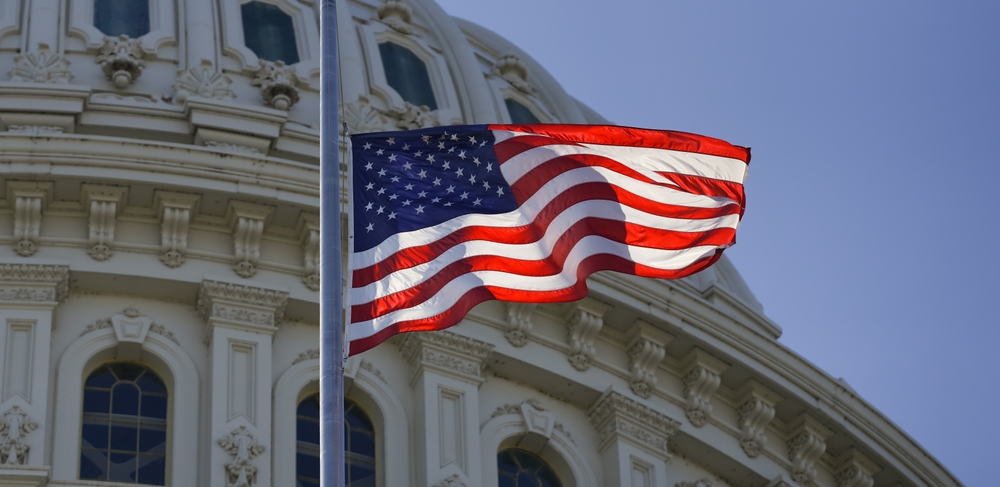
In his follow-up statements, Bryan made clear that Bad News was not meant as an anti-law enforcement song. Instead, it was a lament about the erosion of empathy and shared purpose in the United States. “I wasn’t speaking as a politician or some greater-than-thou a——,” he said, describing himself as “just a 29-year-old man who is as confused as everyone else.” The humility in his words contrasts sharply with the vitriol of the debate his song provoked.
That tension between artistic vulnerability and public expectation defines much of the controversy. Fans often look to country artists as moral anchors, voices of clarity in chaotic times. But Bryan’s work suggests something more complex: a recognition that patriotism can coexist with discomfort, that love of country can survive disillusionment. His song, rather than condemning America, mourns what he sees as its loss of unity.
For many listeners, that message has struck a chord. The clip of Bad News has amassed millions of views across platforms, and Bryan’s name has dominated both entertainment and political headlines for weeks. Some see it as a watershed moment the first time in years that a mainstream country artist has so directly challenged a government policy. Others see it as another flashpoint in America’s ongoing cultural divide, where every creative act is interpreted through partisan lenses.
Art, Division, and the Cost of Honesty
Whether one agrees with Bryan or not, the saga of Bad News reveals much about the state of modern America. A 45-second song snippet managed to provoke statements from the White House, ignite online boycotts, and reignite old wounds within country music. It underscores how thin the line has become between art and politics and how desperately Americans still look to their artists for moral guidance.
In the end, Zach Bryan stands not as a rebel or a hero, but as a reflection of the contradictions within the nation he loves. A Navy veteran turned superstar, he embodies both patriotism and protest, pride and pain. His song might be called Bad News, but it carries a familiar truth: the hardest conversations are often the ones worth having. And in an America that sometimes forgets how to listen, perhaps that’s exactly what his music is trying to remind us of.