
Your cart is currently empty!
22-Year-Old Engineer 3D Prints Dentures To Give Low-Income Americans Their Smiles Back
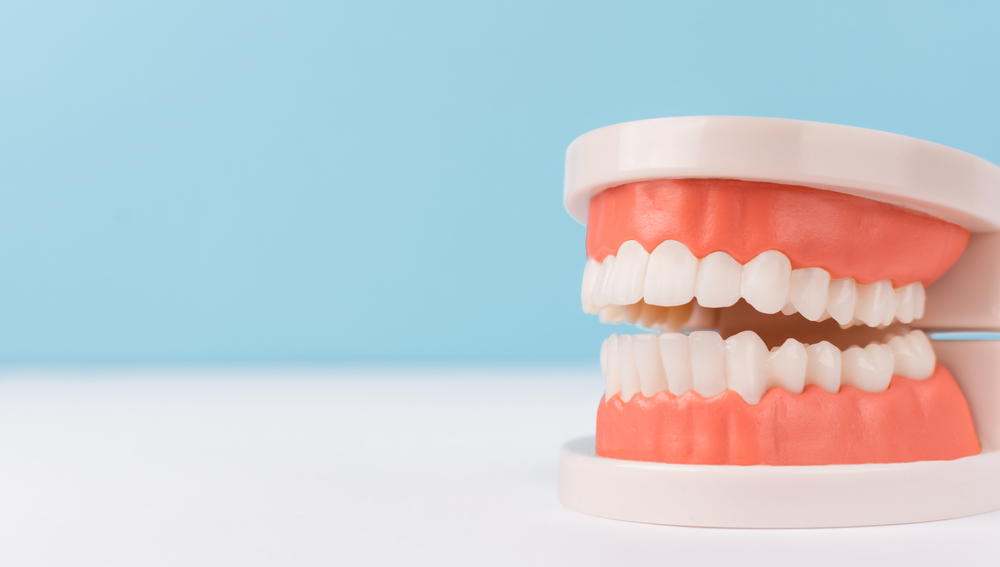
Some people arrive before dawn. Some wait in cars. Others stand in lines that can stretch long before the clinic opens, hoping the day will end with something they have lived without for years.
Contents
show
At a Remote Area Medical clinic, patients come for reasons that rarely make headlines. They need a tooth pulled, a pair of glasses, a blood pressure check, or a dental solution that once felt far beyond reach. Many have learned to speak without showing their teeth. Some cover their mouths when they laugh. Others have stopped smiling in photos, at work, or around family members who remember a different version of them.
Inside one mobile unit, a young engineer watches a different kind of moment unfold. A patient receives a set of dentures, turns toward a mirror, and sees a face that feels familiar again. For Connor Gibson, that instant has become the measure of a weekend’s work, even though he never expected engineering to lead him there.
At 22, Gibson has become part of a quiet effort to bring dentures to low-income Americans through a process that can cut months of waiting down to a single clinic weekend. His tools are not the ones people usually associate with dental care. His work begins on a computer screen and ends with a patient holding something far more personal than a medical device.
The Student Who Found A Problem To Solve
Gibson is the dental technology manager at Remote Area Medical, a nonprofit based in Rockford, Tennessee. RAM operates volunteer-powered mobile clinics that provide free dental, vision, and medical care across the United States. Gibson came to the organization before he had a formal role, while he was studying engineering at Walters State Community College.
At first, he volunteered in simple ways. He escorted patients from one clinic area to another and watched how the operation worked. He saw people moving through dental stations, eye exams, and medical care with a sense of urgency that made the need impossible to ignore.
Dentures caught his attention because the traditional process felt painfully slow for people who had already waited too long. Conventional dentures often require molds, casting, adjustments, and repeat visits. In RAM’s setting, that timeline could stretch up to three months, which created a problem for patients who might have traveled far, lacked reliable transportation, or had no way to return for later appointments.
Gibson did not enter RAM with dental training. He did not arrive as a 3D printing specialist either. What he had was a background in computer-aided design, the patience to study unfamiliar material, and a growing sense that engineering could serve people in ways he had not been taught to imagine. “Never, ever, in school did they say, ‘You can design something that could change someone’s life like a denture,’” Gibson told CNN.
A Need Hidden In Plain Sight

Dental access remains one of the quieter divides in American health care. According to the source material, about 72 million adults in the United States, roughly 27 percent of the population, do not have dental insurance. For many older Americans, Medicare does not solve the problem because the program often does not cover routine cleanings, fillings, dentures, or implants.
Numbers alone can make the issue feel distant. RAM clinics make it visible. People line up because the cost of care has placed ordinary treatment outside their reach. A missing tooth can affect eating, speech, job interviews, social comfort, and the simple act of smiling without thinking about it first.
Gibson has described patients who are down on their luck, then noted how thin the line can be between stability and need. One accident, one fall, one stretch without coverage, and a person can lose teeth that affect the way they move through the world.
RAM tries to meet patients where they are. Founded in 1985 by Stan Brock, the late British-born television figure who later devoted his life to free health care, the organization has served over 1 million patients. Its volunteers have provided nearly $240 million in care, according to the source material. In 2026, RAM plans to hold more than 90 full-scale medical, dental, and vision clinics. Gibson’s work now fits inside that larger mission, though his path began with a movie ticket.
A Documentary That Changed His Direction
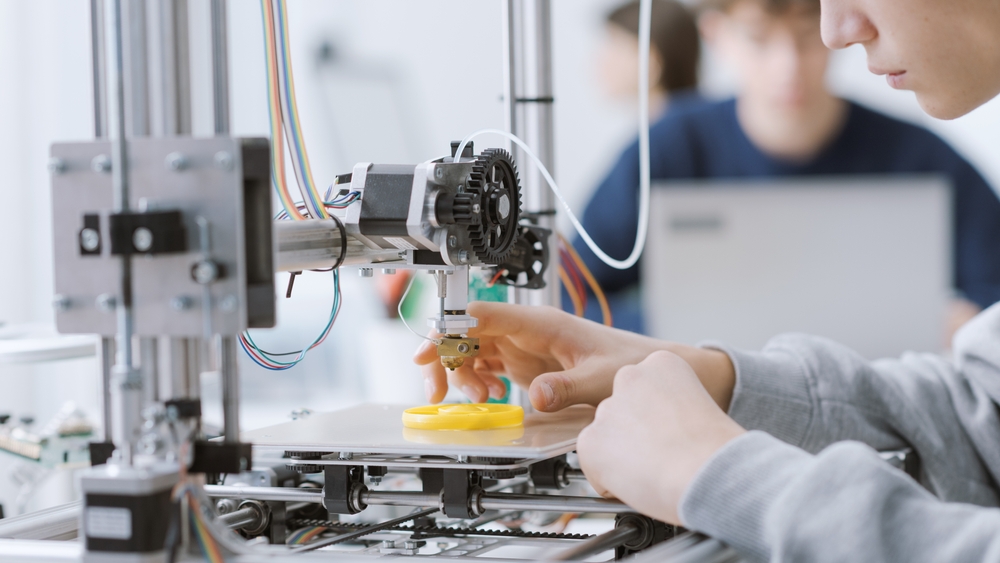
In 2023, Gibson watched a documentary about Brock with his father. He was from rural Seymour, Tennessee, yet he had not known that RAM was based so close to home. Seeing the film gave him a reason to look beyond classroom assignments and ask where his skills might be needed.
Soon after, he began volunteering. During his spare time, he asked questions around RAM’s dental teams and studied what he did not understand. Dental anatomy, denture design, clinical terms, and printing materials became part of his self-directed education.
Gibson already knew how to work with CAD software, though his training had pointed him toward designs such as blueprints rather than teeth. Dentures required a different kind of precision. They had to fit a living person, not a flat plan or a theoretical structure. A small error could mean pain, poor fit, or a patient walking away without the result they had hoped for.
He treated the challenge like a difficult exam. He watched videos, read documents, studied software, and learned enough dental language to ask better questions. Over time, that study became RAM’s Mobile Digital Denture Lab.
“I made it my mission and studied up like I was doing a test, studying up on videos and documents — anything I could find on how to make a denture using this specific software and how to 3D print it.” Gibson said.
How The Mobile Denture Lab Works
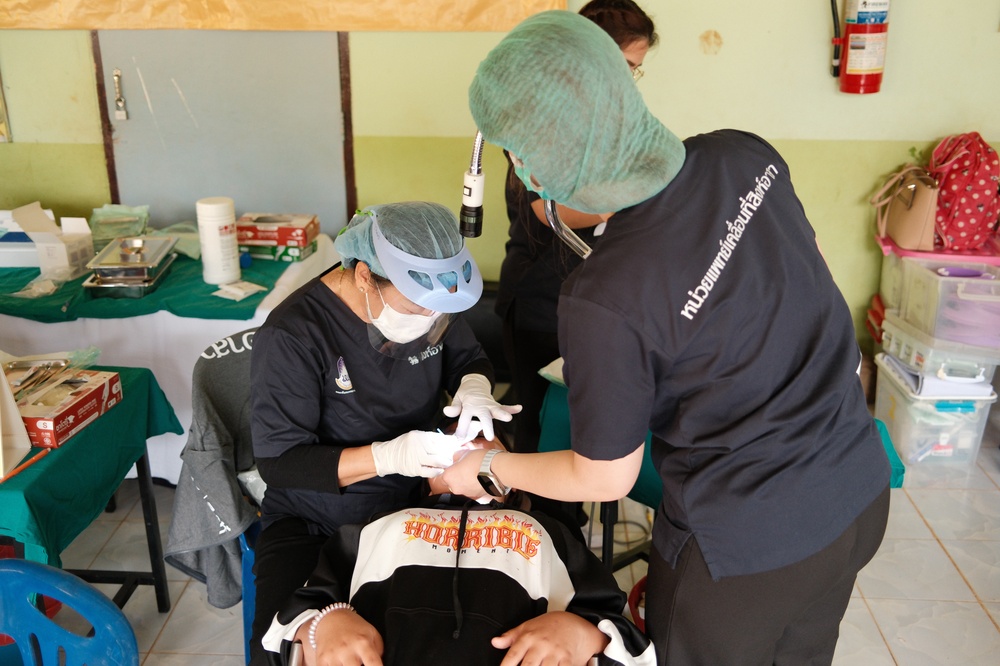
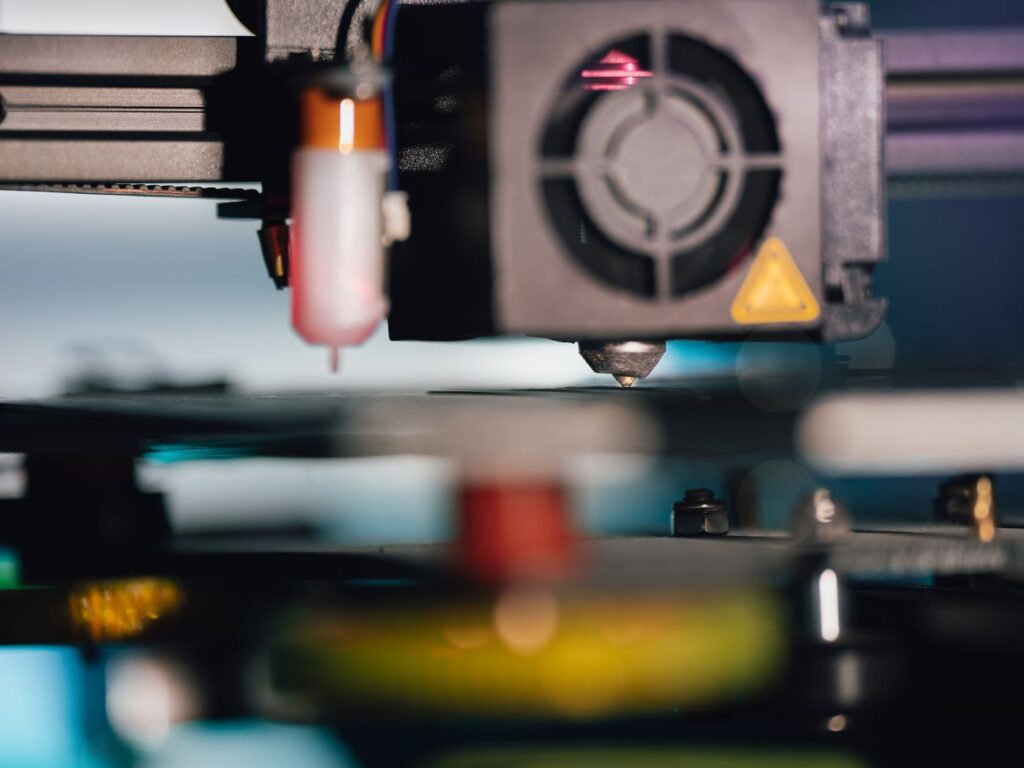
Gibson’s process begins with patient images. Once those images are uploaded into a digital file, he can design dentures on a computer, adjust them to the patient’s anatomy, and send the file to a 3D printer. After printing, he fits the teeth into the gum component and prepares the dentures for delivery.
For patients, the technical steps matter less than the time saved. A process that once could take months can now happen during the same weekend. Instead of leaving a clinic with another appointment and another wait, patients can receive dentures before RAM packs up and moves on.
Inside the mobile lab, the work can run almost nonstop. RAM’s two 3D printers have operated around the clock during busy weekends. Gibson has slept in the lab while printers kept humming, waiting for the next set to finish. He recently reached a personal record of 35 dentures in one weekend.
Such a number represents far more than output. Every denture requires a patient who may have spent years adjusting to loss, embarrassment, discomfort, or limited food choices. For RAM’s team, speed has value because it reduces the gap between care and relief.
Gibson also had to find a way to secure the equipment. Vendors were not always receptive when he first approached 3D printing conventions and asked about partnerships. He eventually obtained RAM’s first printers through grants, turning a practical idea into a working lab.
The Moment Patients Look In The Mirror
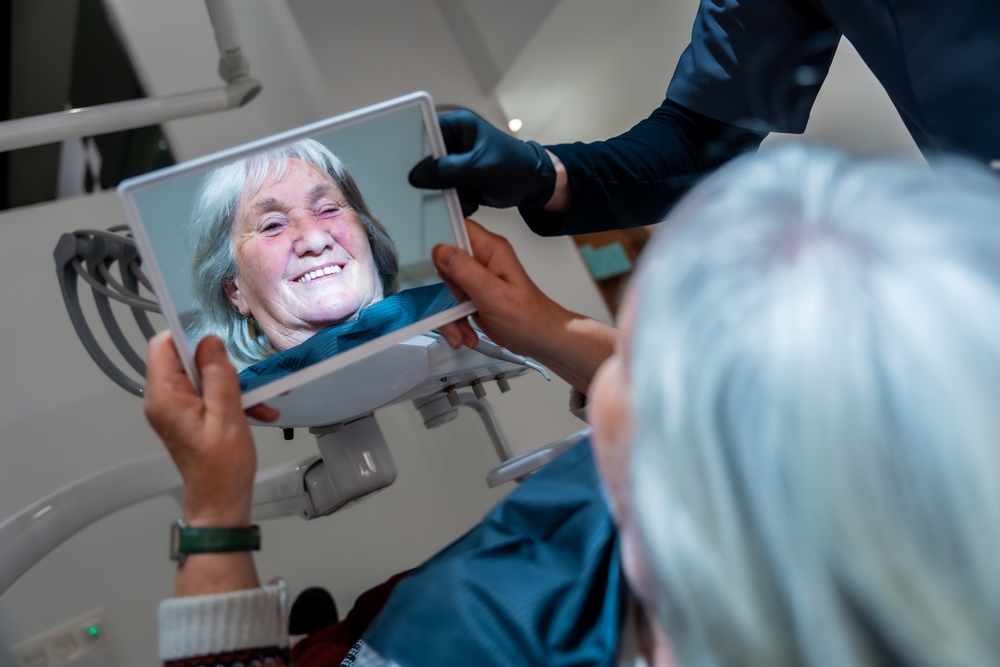
Gibson has helped outfit thousands of Americans with free dentures. His favorite part of the job comes after the files, printers, fittings, and long hours. Patients are handed a mirror, and the room changes.
He has seen large men with tattoos cry. He has watched elderly widows take in their reflection. Reactions differ, yet many carry the same kind of relief. A denture can restore function, but the first look in a mirror often reaches something deeper than function. “Something that I was able to have a hand in makes a grown man burst into tears,” Gibson said.
Gibson calls them mirror moments. He has said the first delivery humbled him, and the feeling has not worn off. For a young engineer who once thought CAD work might lead him toward buildings or plans, the emotional weight of a denture was unexpected.
Patients are not reacting to technology for its own sake. They are reacting to a version of themselves that has been missing. A smile can affect how someone greets a grandchild, speaks in public, applies for work, or accepts an invitation. Gibson’s work enters those private parts of life.
When Demand Moves Faster Than Help
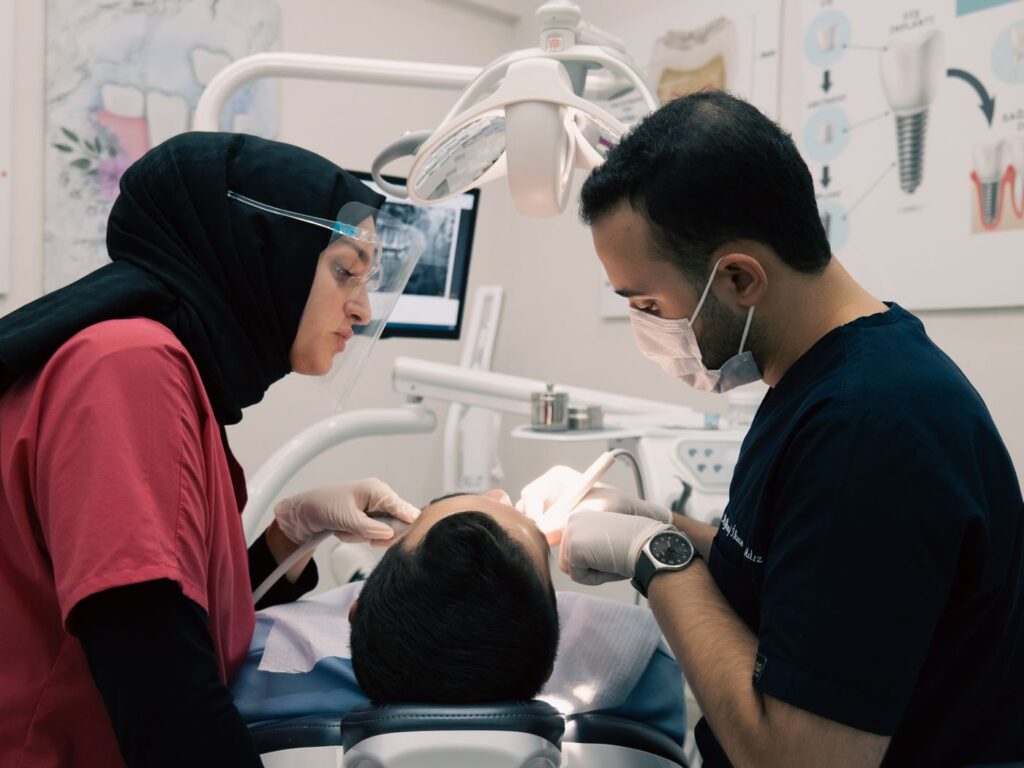
Gibson’s frustration comes from the same place as his motivation. RAM can help many people, yet the need keeps outpacing the capacity of one mobile denture lab. As word spreads before clinics, hundreds and sometimes thousands of people seek care. Some need glasses. Some need extractions. Some need dentures. Not everyone can be served.
That limit weighs on Gibson. A weekend record of 35 dentures can feel large until it sits beside a line of patients who still need help. Each person who leaves without care reminds the team that access depends on machines, volunteers, funding, time, and the number of clinic hours available.
Recent attention has brought new hope. After RAM’s work appeared on CBS’s 60 Minutes, donations and volunteer interest increased. A 3D printer manufacturer also reached out about donating newer machines. RAM’s CEO, Chris Hall, has said the added equipment could help create a fleet of three mobile dental units instead of the current single lab.
If that plan takes shape, RAM and Gibson could make over 100 dentures in one weekend. That would mean more patients receiving care before a clinic closes, more people seeing their smile again, and less pressure on a system trying to meet a vast need with limited tools.
The Engineer Who Never Expected This Work
Gibson’s story carries a quiet surprise because it does not follow the usual image of a young engineer’s career. He did not begin with a dental startup, a polished pitch, or years of specialized training. He began as a volunteer who noticed that patients needed a faster path to care. His age has become part of the story, partly because it makes the scale of his work feel unexpected. At a dental convention in Las Vegas, Hall said Gibson was recognized as a leading expert in the expansion of digital dentistry. Afterward, Hall joked that Gibson could not even stop in the casino because he was too young.
That contrast captures why RAM sees something special in him. Gibson brings technical skill, but he also brings the kind of attention that starts with watching patients move through a clinic and asking what could be better by the end of the same weekend. By the end of 2026, RAM hopes to expand the mobile lab model and bring more units into service. Gibson hopes those labs will create more mirror moments, the kind that make long nights beside humming printers feel worthwhile.
His work began with a problem that looked too slow and too expensive for the people RAM serves. It has grown into a model that can put dentures in patients’ hands within hours. For the people who receive them, the result is visible in the first smile, the first laugh, and the first time they look in a mirror without turning away.
3D Printed Dentures, 3D printing, community health, Connor Gibson, dental care, Dental Insurance, Denture Technology, Digital Dentistry, Free Dentures, Health Care Access, Low-Income Americans, Mobile Dental Clinic, Mobile Denture Lab, Nonprofit Healthcare, patient stories, RAM, Remote Area Medical, Stan Brock, Tennessee Engineer, Volunteer Medical Care