
Your cart is currently empty!
Meet the ‘NICU Grandpa’ Comforting the Hospital’s Most Fragile Patients
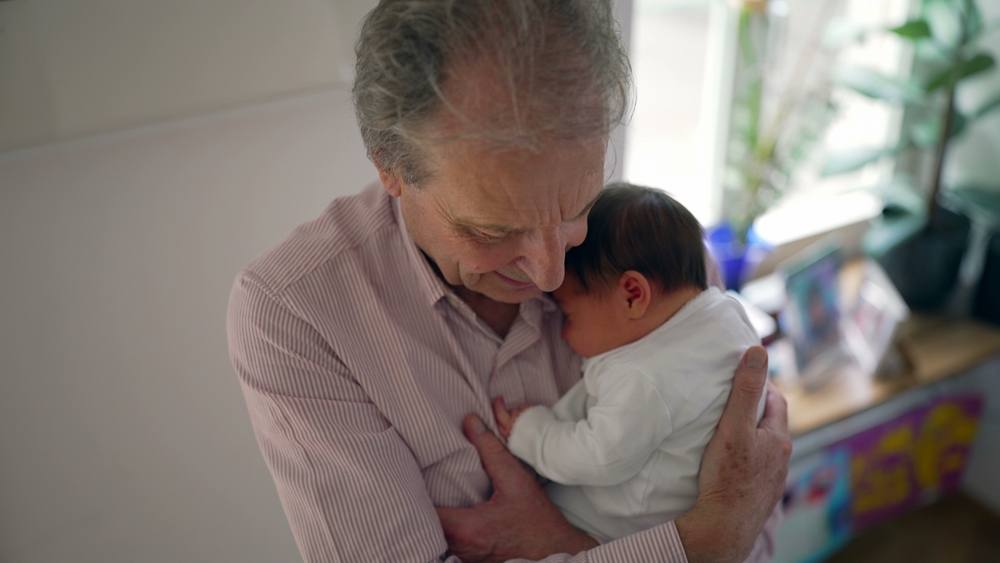
When Dave Whitlow retired in 2017, he closed the book on a 43-year career in local government management and ran straight into the problem nobody warns you about: a whole life’s worth of usefulness, and nowhere left to put it.
Contents
show
He tried the usual answers. He walked shelter dogs. He worked the pharmacy at a free health clinic, then a food pantry. “All that was good, but didn’t quite scratch the itch,” he said.
A self-described introvert, he wasn’t hunting for applause. He wanted a place where showing up mattered to someone, every single time, whether or not anyone ever knew.
He found it in a rocking chair at the Children’s Hospital of Richmond at VCU, in a unit where some patients weigh less than a bag of flour. And it’s the last few seconds of every cuddle, the part almost nobody sees, that tell you exactly who he is.
Retirement Left Whitlow Looking For Something That Mattered
When Whitlow retired in 2017 after 43 years in local government management, he quickly discovered that retirement came with an unexpected problem.
He had time. He also had a strong desire to keep doing something useful.
Whitlow tried volunteering at a number of places. He walked dogs at an animal shelter, worked at the pharmacy of a free health clinic and spent time at a food pantry.
The work was worthwhile, but something was missing.
“All that was good, but didn’t quite scratch the itch,” Whitlow said.
A self-described introvert, he wasn’t looking for recognition or a new social life. He wanted to be somewhere his presence could make a difference.
That eventually led him to a rocking chair inside a hospital’s NICU.
His Job Is Simple, But The Babies Are Extremely Fragile
Whitlow is now 73 and visits the neonatal intensive care unit twice a week.
He gowns up, puts on gloves and settles into the role he has quietly made his own: volunteer baby cuddler.
A typical visit means holding five or six babies. On a busy day, he can hold eight.
Some weigh less than 2 pounds.
Whitlow is already a father of two and grandfather of three. The babies in his arms, however, belong to families he may never meet.
Many were born too early or are too fragile to leave intensive care. Their parents may also be unable to stay beside them around the clock because of work, family responsibilities or other obligations.
Whitlow’s explanation for why he keeps coming back is remarkably straightforward.
“I pretty much just want to be with them,” he said.
He Doesn’t Pick Up A Baby Without Checking The Monitors
There is nothing casual about Whitlow’s routine.
If it seems strange that a hospital would treat cuddling as real medicine, the research says otherwise. Golisano Children’s Hospital in Rochester explains why programs like this exist at all: hospitals understand “the importance of infants being held,” and many parents “are unable to stay for extended periods of time with their infants due to work schedules and other obligations.”
Before he picks up a baby, he checks with the nurses about the child’s treatment and what they are receiving. He then studies the monitors above the bed.
“I watch the monitors first to see whether positionally there’s anything to do to improve,” he said.
The hospital’s NICU environment demands that kind of attention. These are critically ill newborns, and even something as simple as changing position requires care.
Whitlow understands that.
“There’s quite a reason this is called an intensive care unit,” he said in the hospital’s feature about his work.
His approach has also earned the trust of the staff.
Before cuddling a baby, he sometimes asks whether the child wants to sleep or stay awake. One of his regular weekly visits also falls on eye exam day.
When the ophthalmologist finishes an examination, Whitlow is there to settle the babies afterward.
Why Holding A Premature Baby Can Matter
The idea of cuddling as part of hospital care might sound surprisingly simple.
Research cited in the source story gives the practice more weight.
A 2023 meta-analysis published in the journal Midwifery examined 13 studies involving 891 infants. It found that kangaroo-style skin-to-skin contact helped babies maintain body temperature, stabilize heart rates and increase oxygen saturation.
The research also found mixed results for breathing rates.
Importantly, most of those studies involved parents holding their own babies. That means the findings should not be treated as proof that a volunteer cuddler produces identical effects.
Still, hospitals recognize that physical contact can be valuable for premature infants, particularly when parents cannot remain at the hospital for extended periods.
For Whitlow, that leaves him with a very simple role.
He can be there.
Nurses Say He Knows When The NICU Needs Him
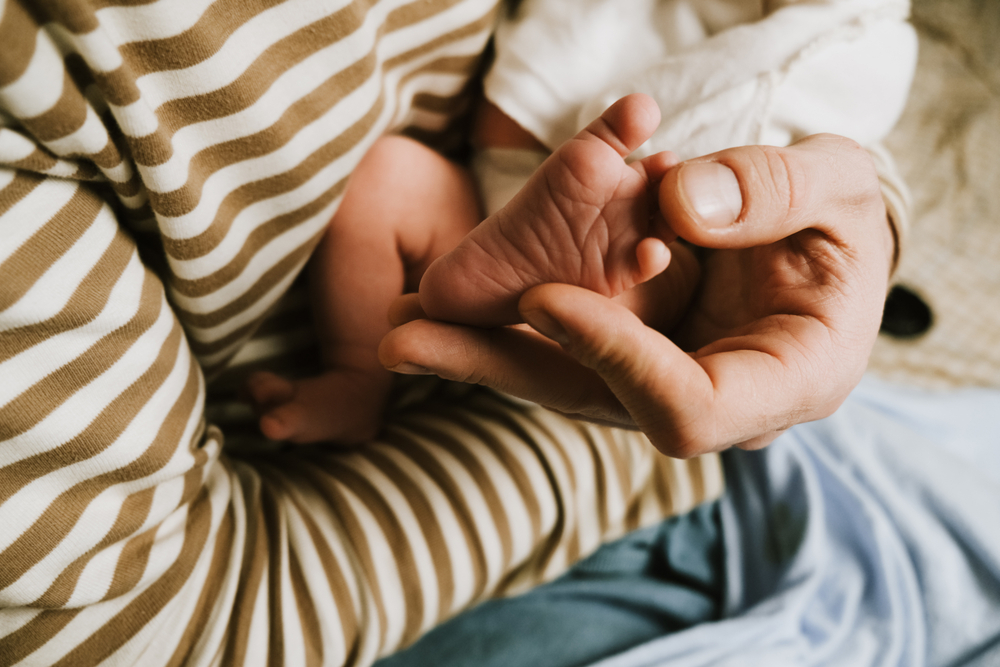
After eight years, Whitlow has become much more than a familiar volunteer passing through the unit.
The nurses describe him as part of the wider team caring for the babies.
“He’s such an important part of the interdisciplinary team in the NICU,” Elizabeth, a registered nurse, said.
Another nurse, Gabrielle, offered an even more personal description of what Whitlow brings into the unit.
“He knows when we need him the most and he just comes in with happy hands and heart,” she said.
His generosity extends beyond the babies, too.
According to Maya, the unit’s secretary, Whitlow often arrives with energy bars for the staff.
He originally came to the hospital to comfort newborns. Before long, he was also making sure the people caring for them had something to eat.
Whitlow himself seems slightly surprised by how closely he has become integrated into the hospital’s daily work.
“I interface with nurses, therapists and doctors. I didn’t realize how closely I’d be working with them,” he said.
And then there is the part of his routine that has turned eight years of visits into something far more memorable.
Every baby gets the same six words.
“Grow strong, grow smart, grow kind.”
The Six Words He Says Before Every Baby Leaves His Arms
There is one part of Whitlow’s routine that has stayed unchanged through thousands of hours in the NICU.
Before he puts a baby down, he leans in and whispers the same six words:
“Grow strong, grow smart, grow kind.”
He says them to every baby, every visit.
The words have become a quiet ritual at the end of each cuddle. The babies are far too young to understand them, and most will never remember the man who held them.
That does not seem to bother Whitlow.
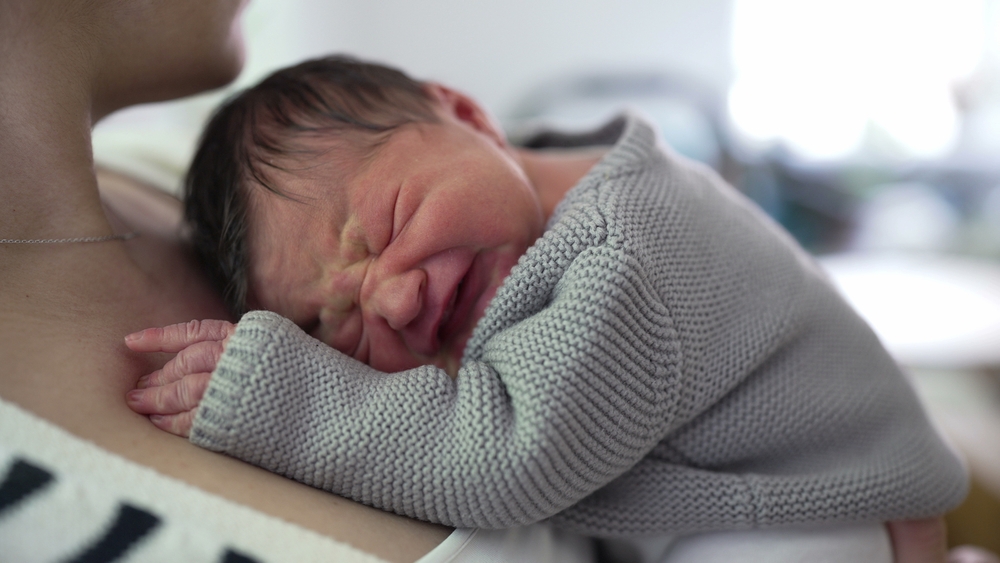
He Has Held More Than 500 Babies Over Eight Years
Whitlow began volunteering at the hospital by passing out books. His role eventually shifted toward cuddling infants experiencing withdrawal from substance exposure.
From there, he moved into the NICU.
By his own estimate, he has held more than 500 babies during his eight years at the hospital.
That means hundreds of children have spent time in the same rocking chair, against the same pair of steady arms, before heading back to their beds.
There is no way to know how many of those children will remember anything about those early days.
Whitlow doesn’t seem to expect them to.
His six-word message is less about creating a memory and more about giving each child the same hope.
The Babies Won’t Remember Him, And That’s The Point
There is something unusual about Whitlow’s role.
The people he helps are unlikely to know his name.
They won’t remember the rocking chair. They won’t remember his voice. They won’t grow up knowing that a 73-year-old volunteer once held them when they were small enough to fit against his chest.
Yet Whitlow keeps returning.
The source story notes that somewhere in Richmond, one of the children he once held could now be growing up without ever knowing the role he played during those first fragile days.
That anonymity seems fitting for a volunteer who never started doing this for attention.
He simply wanted his time to be useful.
His Retirement Story Became Something Much Bigger
Whitlow started retirement wondering where all his usefulness was supposed to go.
Eight years later, he has a very different answer.
Twice a week, he returns to the same hospital. He checks the monitors, talks with nurses and settles fragile newborns into his arms.
Then, before putting each baby back, he leans close and says six words.
“Grow strong, grow smart, grow kind.”
He has repeated that ritual more than 500 times.
The babies may never know who said those words to them. Whitlow knows exactly why he keeps saying them.
“It’s the best gig I’ve ever had,” he said. “It just feels right.”
For a man who spent 43 years managing local government, his most meaningful job may have turned out to be the one where the people he helps are too young to even know his name.