
Your cart is currently empty!
Archeologists Discover Prehistoric Dam Close to Pool Where Jesus ‘Healed a Blind Man’

Close to the Pool of Siloam, where the Bible tells of Jesus giving sight to a blind man, archaeologists have uncovered an immense structure: a dam that has rested underground for nearly 2,800 years. Its size and location make it more than a historical curiosity. It raises new questions about how ancient Jerusalem’s people lived, adapted, and built in response to the challenges around them. Was it constructed as a safeguard against nature’s extremes, or as part of a larger system that sustained life in the city? What makes this discovery compelling is not just its age but the way it connects faith traditions, human ingenuity, and environmental realities across time. Beneath the stones of Jerusalem, the past continues to reveal stories that shape how we understand both history and the present.
Contents
show
A Massive Structure Comes to Light
At the end of August, a joint team from the Israel Antiquities Authority (IAA) and the Weizmann Institute of Science announced an extraordinary find beneath the City of David in Jerusalem: the largest ancient dam ever identified in Israel, and the oldest known in the city. The exposed portion alone measures close to 39 feet in height, extends more than 69 feet in length, and is over 26 feet thick, with the rest continuing beyond the current excavation trench. Excavation director Itamar Berko described the discovery in straightforward terms: “Behind us is a monumental dam wall, enormous in size, over 11 metres high, dated to 2,800 years ago during the First Temple Period, in the time of Kings Joash and Amaziah.”
What distinguishes this dam is not only its scale but the level of precision with which it has been dated. Embedded in the mortar were delicate twigs and branches that gave archaeologists an unusually narrow construction window between 805 and 795 BC. As Johanna Regev and Elisabetta Boaretto explained, “Short-lived twigs and branches embedded in the dam’s construction mortar provided a clear date at the end of the 9th century BC, with extraordinary resolution of only about 10 years, a rare achievement when dating ancient finds.” The study, later published in the Proceedings of the National Academy of Sciences (PNAS), provided scientific confirmation to what might otherwise feel like a story belonging more to legend than to history.
Perhaps the most compelling part of the find is its connection to the Pool of Siloam, the site tied to the Gospel account of Jesus restoring sight to a blind man. Berko emphasized that archaeologists can now “point with certainty” to the structure that enabled the pool to exist, turning what had long been a narrative rooted only in scripture into a physical reality that can still be seen today.
The Pool of Siloam and Its Enduring Story
For centuries, the Pool of Siloam remained buried and unseen, remembered only in scripture and historical writings until it was rediscovered in 2004 within the Jerusalem Walls National Park. Identified as a basin supplied by the Gihon Spring, the site carried spiritual importance long before archaeologists confirmed its location and structure.
The Gospel of John gives the pool a central role in one of Jesus’ most personal miracles. When his disciples questioned why a man had been blind since birth, Jesus responded in a way that shifted the focus from blame to purpose: “Neither this man nor his parents sinned,” said Jesus, “but this happened so that the works of God might be displayed in him. As long as it is day, we must do the works of him who sent me. Night is coming, when no one can work. While I am in the world, I am the light of the world.”

The healing that followed was direct yet profound. Jesus mixed saliva with soil to make mud, placed it on the man’s eyes, and instructed him: “Go,” he told him, “wash in the Pool of Siloam.” The account concludes simply: “So the man went and washed, and came home seeing.”
This passage has long shaped the pool’s reputation, but what makes it particularly significant today is the connection with the newly unearthed dam. Archaeologists now identify this massive wall as the structure that made the Pool of Siloam possible. A story once confined to sacred text now rests on physical evidence, traced in stone and mortar.
Engineering Against the Elements
The newly uncovered dam near the Pool of Siloam is not regarded by archaeologists as a monument of grandeur, but rather as a carefully designed response to the environmental challenges of its time. Built almost 3,000 years ago, its purpose was grounded in survival, as it managed the unpredictable patterns of rainfall and drought that defined life in ancient Jerusalem. The excavation team explained its function clearly: “The dam was designed to collect waters from the Gihon Spring as well as floodwaters flowing down the main valley of ancient Jerusalem.”
By capturing the steady flow of spring water while also controlling sudden storm runoff, the dam provided both a stable supply and protection against destructive flooding. The City of David referred to this achievement as a “creative solution to a climate crisis.”
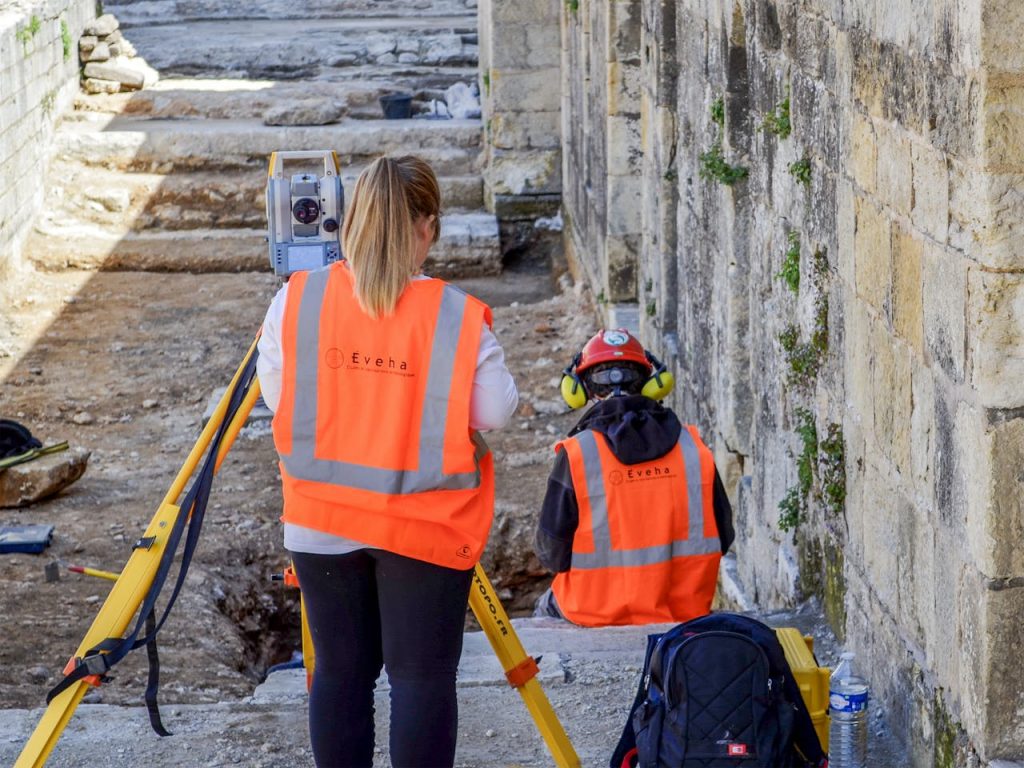
What makes this structure especially revealing is the precision with which its construction has been dated. Twigs and branches sealed within its mortar were analyzed and compared with broader climate records, pinpointing its origin between 805 and 795 BC. Researchers described the findings in detail: “To complete the climatic reconstruction, we integrated this dating with existing climate data. All the data pointed to a period of low rainfall, interspersed with short and intense storms that could cause flooding. It follows that the establishment of such large-scale water systems was a direct response to climate change and arid conditions that included flash floods.”
Seen in this context, the dam represents more than ancient construction. It demonstrates how early societies recognized the importance of adapting to their environment. Long before modern terms like “climate adaptation” existed, they were already shaping water into a resource that safeguarded their community against uncertainty.
Expert Perspectives on the Discovery
For the specialists leading the excavation, this dam is not simply another addition to Jerusalem’s archaeological record but a significant point of reference for understanding the First Temple period. Eli Escusido, Director of the Israel Antiquities Authority, emphasized its importance, calling it “one of the most impressive and significant First Temple-period remains in Jerusalem,” and noting that “in recent years, Jerusalem has been revealed more than ever before, with all its periods, layers and cultures and many surprises still await us.”
The value of the discovery extends beyond its physical presence. For archaeologists, the dam provides a fixed, datable landmark that allows them to piece together Jerusalem’s ancient water management system with greater precision. Instead of viewing trenches, retaining walls, and channels as isolated features, researchers can now interpret them as part of a broader network that directed water to the Pool of Siloam.
This clarity is crucial not only for scientific study but also for refining the way excavations are conducted. A securely dated structure enables archaeologists to cross-reference findings from different sites, reduce uncertainties in their interpretations, and develop more targeted strategies for future digs. Public institutions benefit as well, as the dam’s confirmation helps museums, guides, and educators share the history of the Pool of Siloam with greater accuracy. Visitors can now connect biblical accounts to physical evidence without the need for speculation.
From these expert perspectives, the dam is not an isolated structure but a central piece of Jerusalem’s early urban design. Its discovery provides the coherence needed to understand how ancient engineering supported both daily life and the traditions that continue to shape the city’s story today.
Why This Discovery Matters Today
The importance of the recently uncovered dam lies not only in its immense size but in the way it transforms a story into a place that can be visited, studied, and understood. The Pool of Siloam has moved beyond the pages of scripture. It now stands as a verified archaeological site, confirmed through scientific dating and physical evidence of stone and mortar. This intersection of text, archaeology, and science allows us to distinguish between tradition and invention, while also showing that many spiritual narratives have tangible roots in history.
For educators, historians, and visitors, the discovery provides a framework that makes the story of Jerusalem clearer and more accessible. Rather than relying on speculation, teachers and guides can point to the dam as the structure that directed water toward the pool, explain how it functioned in daily life, and highlight why it mattered to the people of the time. This creates a more authentic engagement with the past, heritage shaped not by interpretation alone, but by what the earth has preserved.
At the same time, the find carries a deeper meaning. The dam reflects themes of vision and understanding, much like the Gospel story in which sight was restored at the Pool of Siloam. On a cultural level, it links scholars, travelers, and people of faith. On a spiritual level, it invites us to consider how many stories we hold as sacred are grounded in physical spaces waiting to be rediscovered.
In this sense, the dam is more than an archaeological artifact. It acts as a mirror, showing us that truth is often layered and that science and spirituality can work together to illuminate both past and present. When we uncover the remnants of history, we often reveal something essential about ourselves as well.
Bridging Centuries Through Stone
The dam uncovered near the Pool of Siloam is not just an ancient wall. It is a messenger from nearly 3,000 years ago, carrying the voices of the people who built it and the stories that unfolded around it. For those who turn to scripture, its presence beside the pool grounds the Gospel account of restored vision in a tangible place, where a man once declared: “One thing I do know. I was blind but now I see!” (John 9:25). For archaeologists and historians, it is proof of advanced engineering and community foresight during the First Temple period. Because history endures in the ground beneath us, this discovery reminds us that the past is never truly distant.
The dam’s endurance through centuries of change tells us that the builders were not only constructing for their present but for generations they would never meet. They responded to the uncertainties of climate and the demands of survival with ingenuity and persistence, leaving behind a structure that still speaks with clarity today. Their choices, carved into stone, became part of the foundation of Jerusalem’s story.
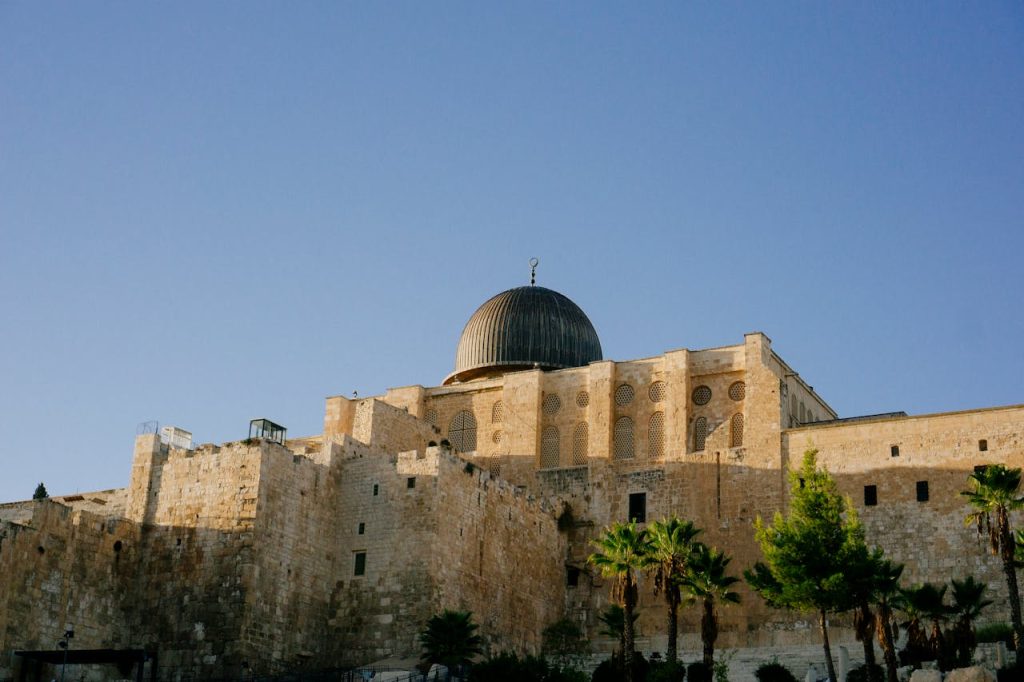
The question it poses to us now is unavoidable: what are we building that will last? Just as this wall carries forward the intentions of its makers, our actions, whether in how we shape our environment, preserve our heritage, or tell our stories, will one day become the record future generations study.
This discovery is more than a historical milestone. It is a striking reminder that the past does not fade; it waits. And when it emerges, it calls us to reflect on the legacies we are leaving behind.