
Your cart is currently empty!
Government Set to Phase Out Animal Testing and Replace It With Controversial Alternative
Science Minister Lord Vallance stood before cameras with a promise that would reshape British research labs forever. Animals currently used to test everything from life-saving vaccines to household chemicals would soon find themselves replaced by something very different. But as the details of his plan emerged, a question hung in the air: can microscopic chips and artificial intelligence really protect human health as well as living creatures have for decades?
Contents
show
A Nation of Animal Lovers Makes Its Move
Britain unveiled its roadmap to phase out animal testing on Tuesday, November 11, with £75 million in funding backing what officials call one of the most detailed plans of its kind worldwide. Science Minister Lord Vallance leads the strategy, which delivers on a Labour manifesto commitment to work with scientists, industry, and civil society toward ending animal experiments.
Animal welfare organizations erupted with cautious celebration. Researchers scrambled to understand new deadlines. Online forums were filled with heated debate about whether the plan would save lives or endanger them.
Current UK law already prohibits animal testing when viable alternatives exist. Yet millions of procedures still happen each year because scientists insist that no other methods can answer certain questions about how drugs behave in living systems.
What Takes the Place of Laboratory Animals
Vallance’s strategy hinges on three main replacement technologies that sound like science fiction but already exist in early forms.
Organ-on-a-chip systems sit at the heart of the plan. Picture tiny devices no bigger than a USB drive containing real human cells arranged to mimic how organs function. Researchers at Queen Mary University of London’s Centre for Predictive in vitro Models have developed versions that connect liver cells to brain cells, creating miniature biological networks. Prof Hazel Screen, the center’s co-director, explains that because scientists use human cells rather than animal tissue, the results should produce better quality science.
Artificial intelligence forms the second pillar. Machine learning algorithms will analyze massive datasets about molecular structures to predict whether new medicines will harm humans before any living creature touches them.
3D bioprinted tissues round out the trio. Scientists can now print realistic samples of human skin, liver, and other organs for testing. Government officials believe these will provide lifelike environments for checking whether substances are toxic without harming animals.
But here’s where skepticism enters. Can a chip holding a few cells really replicate the mind-boggling complexity of a whole organism where organs communicate through bloodstreams, nervous systems, and chemical signals?
Specific Deadlines Science Must Meet
Vallance’s plan doesn’t offer vague future promises. It sets hard targets that will force researchers to adapt or abandon certain experiments.
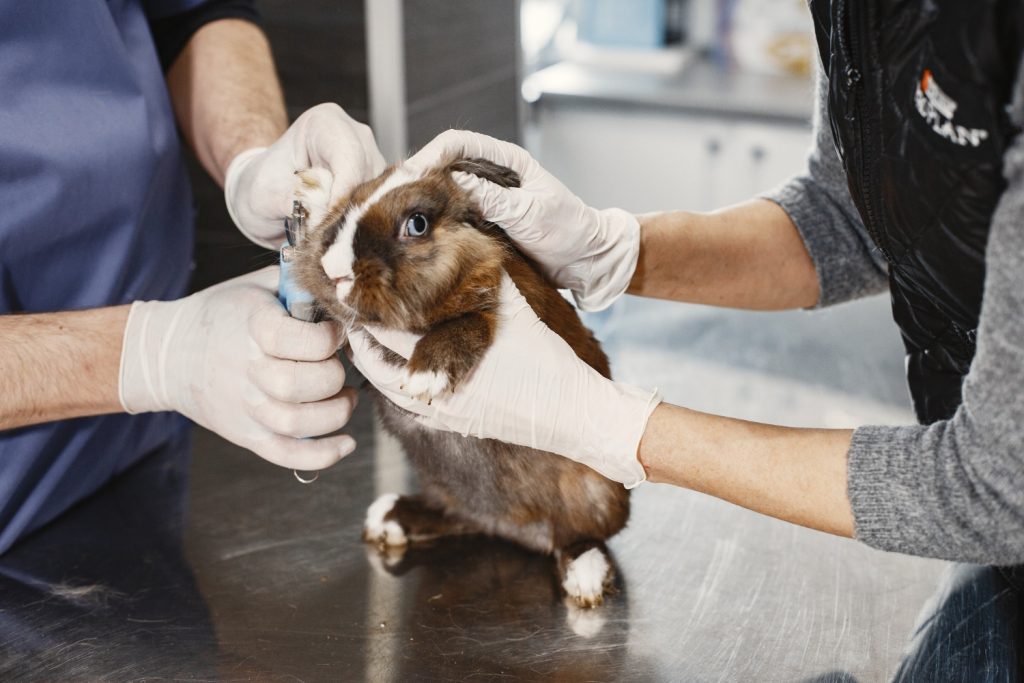
By the end of 2026, regulatory testing on animals to assess skin and eye irritation and skin sensitization must stop. Rabbits currently receive small doses of new drugs in pyrogen tests to check for dangerous reactions. Human immune cells in dishes will take over that work.
By 2027, scientists must end Botox strength testing on mice. DNA-based laboratory methods will replace all adventitious agent testing, the process that detects viruses or bacteria that might contaminate human medicines.
By 2030, pharmacokinetic studies on dogs and non-human primates must drop by at least 35%. Pharmacokinetic research tracks how drugs move through bodies over time, information deemed essential for understanding medication safety.
Each deadline raises the same question: what happens if replacement methods aren’t ready?
Online Backlash Splits Public Opinion
News of the strategy ignited fierce debate across social media platforms, with Reddit becoming a particular battleground for competing views.
“I know we all hate the idea of experimenting on animals but how do people expect things like vaccines to be produced?” one user wrote. “Do people just want to skip that incredibly important phase of testing and go straight to humans?”
Others worried about unintended consequences. “Doesn’t this just mean we will rely on overseas results which do use animal testing?” another commenter asked, raising concerns that Britain might simply outsource ethical dilemmas while accepting medications tested on animals abroad.
But not everyone shared these fears. Supporters argued that reducing suffering while maintaining scientific rigor represents progress. “If we can achieve the same results with less suffering and cruelty inflicted upon living creatures, that can only be a good thing,” one person countered.
Another added, “This actually sounds better as it’s closer to humans than rabbits are.”
Money and Infrastructure Behind the Change
Vallance backed his ambitious timeline with substantial funding. £60 million will establish a hub bringing together data, technology, and expertise to help researchers collaborate. A separate center will streamline regulatory approval for new alternative methods.
An additional £15.9 million comes from the Medical Research Council, Innovate UK, and the Wellcome Trust to advance promising human in vitro models. Five teams across Britain will focus on disease models of the liver, brain, cancer, pain, and blood vessels using organ-on-a-chip systems.
A new Centre for the Validation of Alternative Methods will help prove that emerging technologies work reliably enough to replace animal tests. Validation matters because regulators won’t accept alternatives until scientists can demonstrate consistent, trustworthy results.
Starting next year, early-career researchers will receive foundational training in alternative methods. Academic journals will increase visibility of available alternatives. Research priority lists will be published every two years beginning in 2026.
When Scientists Push Back Hard
But money and political will cannot overcome biological reality, according to some leading researchers who work daily with both animals and alternatives.
Prof Frances Balkwill of Barts Cancer Institute at Queen Mary University of London studies ovarian cancer using mice alongside non-animal approaches. She strongly supports developing alternatives but draws a firm line: “I very strongly believe that that is not possible for reasons of safety.”
Her work on stopping ovarian cancer recurrence requires watching how tumors grow within whole living systems. “These non-animal methods will never replace the complexity that we can see when we have a tumour growing in a whole organism, such as a mouse,” Balkwill explains.
Prof Robin Lovell-Badge raises similar concerns about premature elimination. “How about the brain and behaviour? How can you study behaviour in a petri dish? You just can’t,” he says. Complex areas of biology where no current non-animal model approaches real biological systems may suffer if the government forces the strategy too fast.
Even Vallance himself acknowledges limitations. When asked if he could envision a world where animal tests reach near zero, he responded: “I think that is possible, it’s not possible anytime soon, the idea that we can eliminate animal use in the foreseeable future, I don’t think is there.”
Numbers Tell the Story of Change
Animal experiments in Britain peaked at 4.14 million in 2015, driven mainly by a surge in genetic modification experiments on mice and fish. By 2020, that number had fallen sharply to 2.88 million as alternative methods developed. But the decline has plateaued since then, suggesting the easy replacements have already happened.
Vallance wants to reignite the downward trend. Whether his plan succeeds may depend on which perspective proves correct: the optimists who see transformative technology on the horizon, or the realists who insist certain questions demand whole living systems.
Animal Welfare Groups Celebrate Progress
Despite scientific concerns, animal welfare organizations welcomed the strategy as a major step forward.
Barney Reed, Science and Policy Manager for Animals in Science at the RSPCA, praised the momentum building in recent years. He noted that complex innovative technologies and new approaches enable better, more human-relevant science without harming animals. Reed stressed that if implemented effectively, the strategy should create a good foundation for accelerating the replacement of animals, benefiting animals, science, and society.
Dr Vicky Robinson, Chief Executive of the National Centre for the Replacement, Refinement and Reduction of Animals in Research, called the strategy ambitious and said it will ensure Britain maintains its world-leading position. She expressed excitement about turning ambitions into reality.
Life Sciences Industry Weighs In
Pharmaceutical companies, which conduct much of the animal testing in question, offered measured support. Richard Torbett, Chief Executive of the Association of the British Pharmaceutical Industry, welcomed the strategy while noting that patient safety relies on robust evidence. He acknowledged that while the science doesn’t yet exist to fully eliminate animal testing, industry has made significant strides in reducing, replacing, and refining animal use.
Medical research charities echoed similar themes. Nicola Perrin, Chief Executive of the Association of Medical Research Charities, praised the ambitious roadmap while stressing the continued need for animal research where no other options exist. She emphasized that animal research continues to contribute to medical advances that save and improve millions of lives.
Edith Heard, Director of the Francis Crick Institute, called the initiative timely and aligned with her institution’s commitment to new approaches and methodologies. She noted that while animal use remains necessary in many areas, particularly for studying complex physiological systems and developing treatments for cancer and Alzheimer’s, the Crick shares the clear ambition to reduce and replace animals wherever possible.
Reality Check on the Timeline
Perhaps Wendy Jarrett, CEO of Understanding Animal Research, best captured the tension in Vallance’s plan. She supported developing new non-animal technologies that will expand the toolbox available to researchers. But she also acknowledged the reality of current limitations.
Animals have been fundamental to discovering and developing most medicines available today, she noted. While new technologies show great potential for Britain to become a global leader, this remains a workable plan likely to yield advantages without undermining what already exists.
Jarrett looks forward to the day when science can phase out animals completely. But she knows that day won’t arrive in her lifetime. Animals will continue to be needed for many years to protect humans, animals, and the environment, to study how bodies work in health and disease, and to gauge how potential new medicines behave in whole living organisms.
Lord Vallance’s committee will oversee the strategy with key performance indicators to be published next year to monitor progress. Whether those indicators show Britain leading a global revolution in ethical science or struggling to maintain safety standards may depend on how quickly the chips, algorithms, and printed tissues can match the biological complexity they aim to replace.
For now, millions of laboratory animals await their fate while scientists, ethicists, and policymakers debate whether human ingenuity has finally found a way to answer medicine’s hardest questions without requiring living sacrifices.