
Your cart is currently empty!
A New Era for Animal Freedom in Canada

For decades, the quiet suffering of elephants and great apes in captivity has haunted Canada’s conscience. Behind the fences of roadside zoos and the glass walls of urban enclosures, some of the most intelligent and emotionally complex creatures on Earth have lived out their days in spaces far smaller than their spirits. The sight of an elephant swaying endlessly in a concrete pen or a chimpanzee pressing its palm against the glass became more than just a symbol of captivity it became a question of ethics. What does it say about a nation when the most sentient beings among us are treated as exhibits rather than individuals? That question has finally found its legislative answer in Bill S-15, a groundbreaking government bill that could redefine the future of animal welfare in Canada.
Contents
show
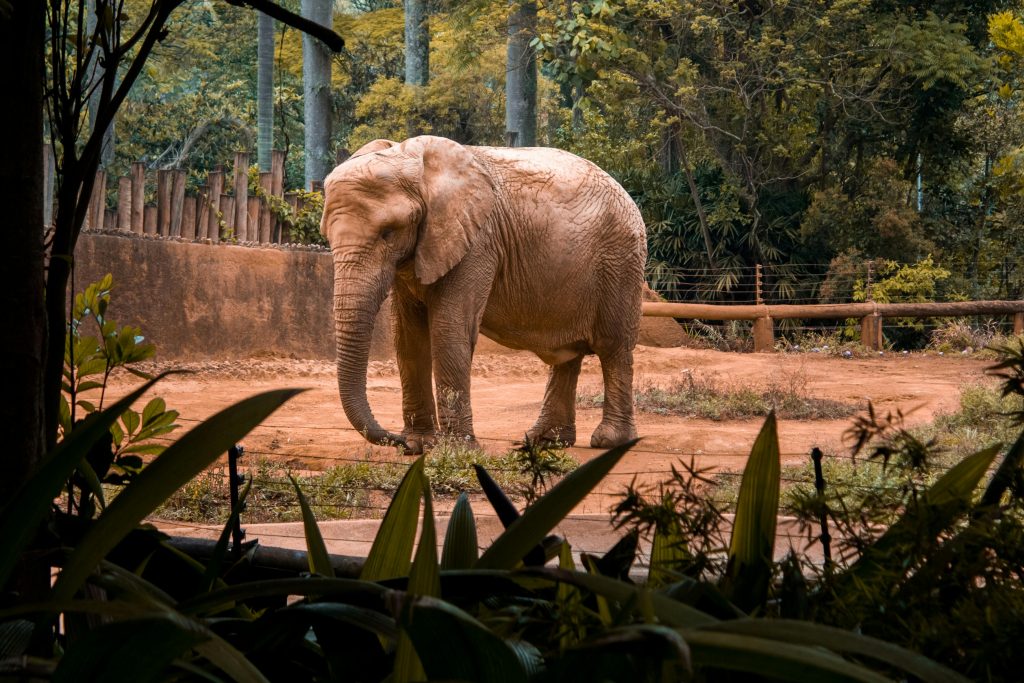
Bill S-15, which has passed its first Senate vote, seeks to prohibit the acquisition, breeding, and use of elephants and great apes for entertainment across the country. It represents one of the most progressive animal protection efforts in Canada’s history, building on the nation’s earlier ban on whale and dolphin captivity. For advocates, scientists, and compassionate citizens, the bill marks more than a legal shift it is the embodiment of a moral awakening. Should it pass into law, it will be the first national move to phase out elephant captivity entirely, setting a global precedent and positioning Canada as a leader in compassion-led governance.
A Turning Point in Canadian Animal Welfare
The passage of Bill S-15’s second reading in March 2024 marks a watershed moment in Canada’s approach to animal protection. For years, activists and legislators alike have campaigned to end the captivity of large, intelligent animals whose social and emotional complexity rivals our own. Elephants, gorillas, orangutans, chimpanzees, and bonobos are not merely exotic species they are self-aware beings capable of memory, empathy, and grief. Senator Marty Klyne, who introduced the bill, spoke passionately about the need for change, emphasizing that these animals are “very much like us.”
Canada has been slowly but steadily moving toward this recognition. The 2019 ban on cetacean captivity, informally known as the “Free Willy” law, ignited a broader national dialogue on the ethics of keeping wild animals confined for human amusement.
Bill S-15 continues that trajectory, recognizing that captivity for these species is incompatible with their biological and psychological needs. The legislation would allow captivity only in exceptional cases for genuine conservation, animal welfare, or scientific research and only under strict licensing conditions.
What makes this bill particularly historic is its potential to influence not only policy but public consciousness. It acknowledges that the emotional and cognitive capacities of elephants and apes demand a different kind of relationship one founded on respect rather than dominance. By codifying compassion into law, Canada is taking a definitive step toward a more humane coexistence with other sentient life.
The Science Behind the Sentience

The foundation of Bill S-15 rests upon decades of scientific research into animal cognition and emotion. Elephants have been observed mourning their dead, forming lifelong family bonds, and communicating through low-frequency rumbles that can travel miles. Great apes use tools, form political alliances, and demonstrate self-recognition in mirrors. These findings, once the realm of myth or anthropomorphism, are now well-documented realities of animal behavior.
In captivity, these same traits become the source of suffering. Elephants, deprived of space and social structure, often develop arthritis, foot disease, and severe psychological distress. In Canadian zoos, where harsh winters force them indoors for months, their physical and emotional health declines rapidly. Apes, meanwhile, exhibit symptoms of a condition known as “zoochosis” repetitive, purposeless behaviors like pacing, rocking, or self-harm that signal profound mental anguish. No amount of enrichment can substitute for the complexity of their natural environments.
The science is unambiguous: for animals evolved to roam vast landscapes and engage in rich social interactions, confinement is a form of deprivation. By grounding the bill in empirical evidence, lawmakers are affirming that empathy is not sentimental it’s scientifically justified. The move from compassion to codification is, in itself, a profound evolution of moral reasoning.
The Big Cat Question: Who’s Next?
While elephants and apes are the focus of Bill S-15, advocates are urging lawmakers to expand its protections to include big cats such as lions, tigers, and cheetahs. Animal Justice, a Canadian legal advocacy group, has long campaigned for stronger oversight of zoos and private ownership of exotic species. The group’s 2022 exposé of roadside zoos revealed lions pacing endlessly, tigers confined to cramped enclosures, and cougars being used as photo props. These images stirred national outrage, exposing not only the cruelty of captivity but the gaping holes in Canada’s animal protection laws.
Canada currently has no national framework regulating the welfare of animals in zoos, leaving provinces and municipalities to set their own standards. Ontario, where many roadside zoos operate, has particularly weak legislation zoos there don’t even require a license. This regulatory vacuum has allowed individuals, dubbed “Tiger Kings” by the media, to house dangerous exotic animals in substandard conditions. One such case involved Mark Drysdale, a roadside zoo owner charged with animal cruelty after a tiger was mauled to death by two lions. Despite the tragedy, no national law prevented him from relocating and continuing to operate elsewhere.
Expanding Bill S-15 to cover big cats would be a natural and necessary progression. These apex predators, like elephants and apes, suffer deeply in confinement. Their welfare, safety, and dignity deserve equal legislative protection. As the bill moves to the Committee on Legal and Constitutional Affairs, many hope senators will seize this moment to ensure all large, intelligent species are shielded from the exploitative captivity that has long defined their existence.
A Legacy of Compassion: From Jane Goodall to Today
The moral lineage of Bill S-15 can be traced back to the Jane Goodall Act, an earlier legislative effort named after the world-renowned primatologist who revolutionized our understanding of primate behavior. Goodall’s decades of research revealed that chimpanzees experience emotion, empathy, and community in ways strikingly similar to humans. Her work helped dismantle the false dichotomy between human and animal minds, showing that intelligence and emotion are shared across species lines.
The Jane Goodall Act sought to extend legal rights and protections to a broad range of species, granting them recognition as sentient individuals. Although that bill did not pass in its original form, its spirit endures in Bill S-15. The current legislation embodies the same principles respect for sentience, legal accountability, and moral evolution. It demonstrates how Goodall’s influence continues to ripple through policy and culture, reminding the world that true progress is measured not only in scientific achievement but in moral empathy.
Senator Murray Sinclair, who partnered with Goodall on the earlier bill, described this shift as a reconciliation with nature. He invoked the Indigenous teaching of “all my relations,” expressing that humanity’s fate is intertwined with that of all living beings. In this sense, Bill S-15 is more than an environmental or animal rights issue it is a reflection of our collective values. It asks Canadians to recognize that compassion is not a luxury but a responsibility.
Beyond Borders: Canada’s Global Example
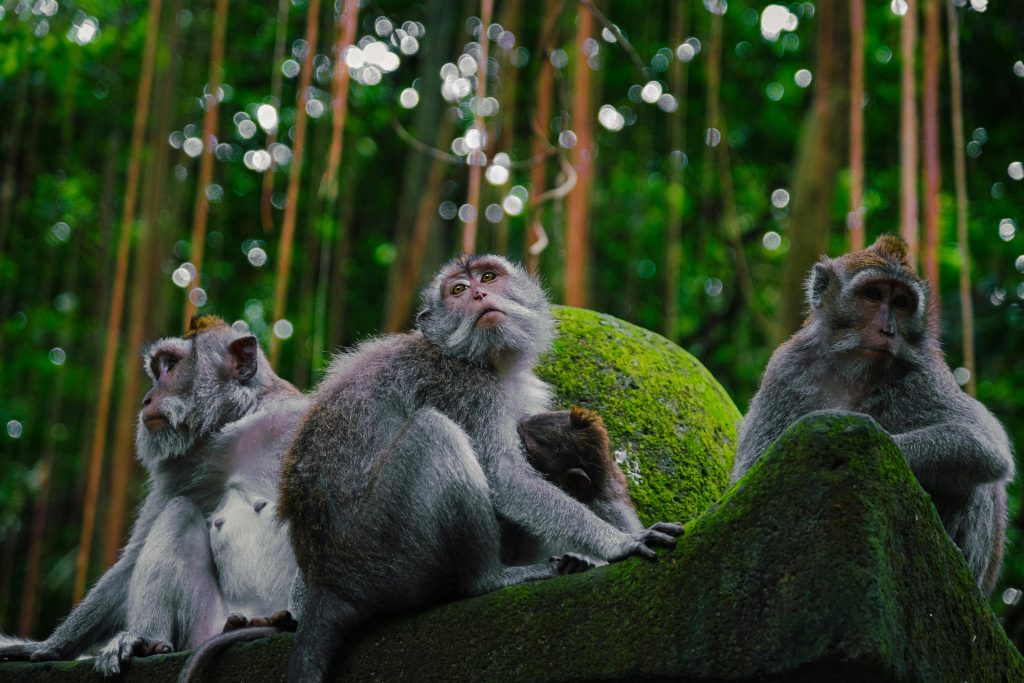
If passed, Bill S-15 will place Canada among the leading nations redefining their relationship with wildlife. Countries like Kenya, India, and Costa Rica have already taken bold steps to ban or limit wild animal performances and private ownership. Yet Canada’s proposal to phase out elephant and ape captivity entirely goes further it signals a global turning point. This is not merely about compliance with international norms but about leadership in shaping them.
The bill also carries powerful symbolic weight. By banning captivity for animals that most closely resemble us, it forces a reevaluation of humanity’s self-image. It compels us to confront the ways in which domination has long masqueraded as stewardship. The future envisioned by Bill S-15 is one where sanctuaries replace cages, and education replaces entertainment. It challenges zoos to transform into centers of genuine conservation and research, where the priority is not profit but the welfare of the creatures they claim to protect.
Global conservationists and scientists are already watching Canada’s legislative experiment closely. Should it succeed, it could inspire a wave of similar reforms worldwide. The idea of a “Noah Clause,” included in earlier drafts of related bills, would even allow for future extensions of protection to other species without requiring new legislation each time. The precedent could be revolutionary, embedding adaptability and empathy at the core of animal law.
A Future Rooted in Empathy
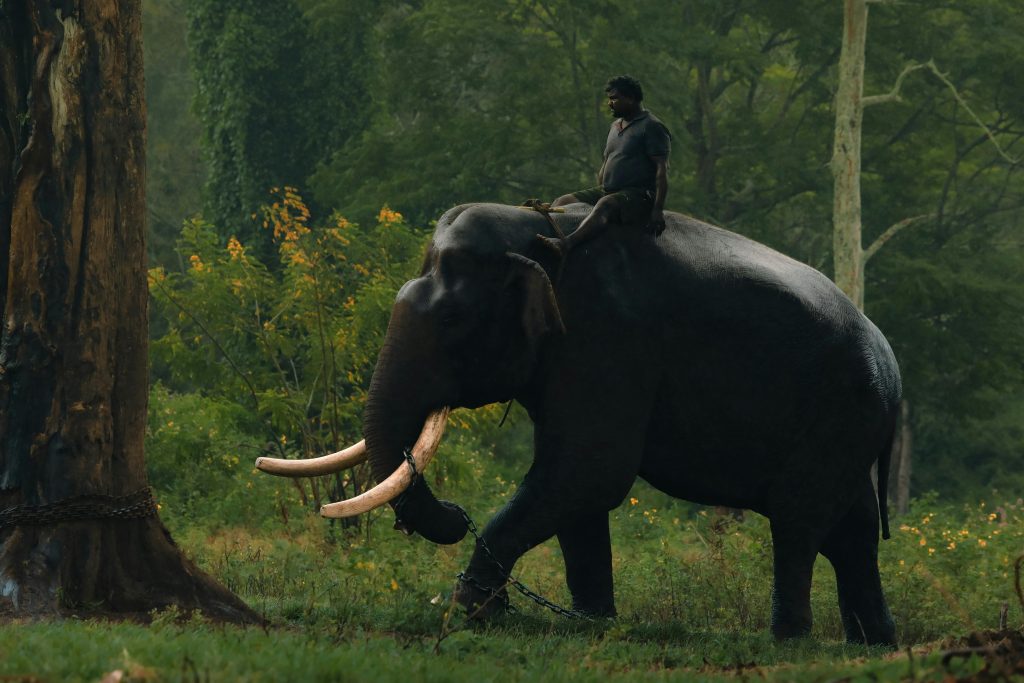
In many ways, Bill S-15 represents the moral maturity of a nation. It suggests that progress is not merely about technological or economic growth, but about the courage to act on compassion. The act of freeing animals from captivity is, paradoxically, an act of freeing ourselves from the outdated notion that the natural world exists solely for human use.
The story of Canada’s elephants and apes is ultimately a story about recognition. It’s about seeing in their eyes not difference but kinship. By ending their captivity, Canada is acknowledging that the boundary between species is not a wall but a mirror. When elephants mourn their dead or chimpanzees comfort the grieving, they remind us that empathy is not unique to humanity it is part of life’s shared language.
If Bill S-15 becomes law, the last of Canada’s captive elephants may one day walk under open skies, and the apes who once pressed their hands against glass might finally feel the texture of freedom. It will not erase the past, but it will redefine the future. And in that future, the measure of progress will not be how much we have conquered nature, but how gently we choose to walk alongside it.
Reflection: The Evolution of Compassion
Canada’s decision to legislate empathy is more than a political milestone it’s a moral reckoning. For centuries, humanity has placed itself at the center of existence, measuring worth by intelligence and utility. Yet the story of elephants and great apes teaches a humbler truth: that awareness and emotion are not the property of a single species. In recognizing this, Canada affirms that civilization is not defined by how much power it wields, but by how wisely it chooses to use it.
Bill S-15 is not just about ending captivity it’s about expanding consciousness. It asks every Canadian to look beyond fences and see the shared pulse of life that connects all beings. When compassion becomes law, it ceases to be an ideal and becomes a foundation. And perhaps, in freeing others, we find a freer version of ourselves.
As the bill moves toward final debate, its significance extends far beyond the Senate floor. It carries with it a vision of coexistence, dignity, and respect a vision that dares to ask what kind of world we wish to leave behind. In that answer lies the true spirit of progress: not dominance, but harmony; not ownership, but understanding. Canada’s journey toward ending elephant and ape captivity is, at its heart, a journey toward rediscovering what it means to be human.