
Your cart is currently empty!
After 40 Years Without a Sighting, Australia’s Only Shrew Is Now Officially Extinct
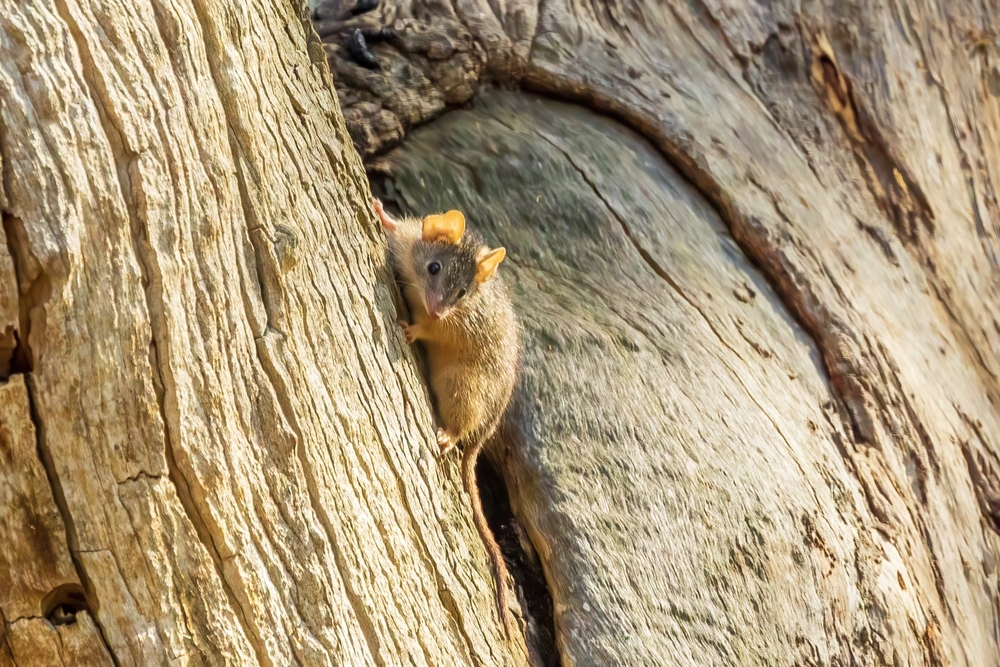
For more than four decades, the Christmas Island shrew existed in a strange state of uncertainty. It was not officially gone, but it was no longer truly present either. Scientists, conservationists, and locals shared the same uneasy awareness that something once common had quietly slipped out of view. Night after night passed without the sharp, bat-like squeaks that early naturalists once described filling the island’s darkness, yet the absence was difficult to prove. Small mammals are notoriously elusive, especially in dense forest and rugged terrain, and history has shown that premature declarations of extinction can sometimes erase the chance of rediscovery. As years turned into decades, the shrew hovered in that uncomfortable space between hope and loss, neither confirmed alive nor formally gone.
Contents
show
That long period of uncertainty ended with a decision that many had anticipated but few wanted to see made official. After more than 40 years without a confirmed sighting, the International Union for the Conservation of Nature moved the Christmas Island shrew into its Extinct category. The ruling was not sudden or careless. It followed decades of failed surveys, mounting ecological evidence, and the growing realization that silence had replaced what was once a living presence. Though the animal was small and largely unknown beyond scientific circles, its disappearance speaks to a far larger story unfolding across Australia, one defined by invasive species, delayed intervention, and a steady erosion of biodiversity.
A Species Once Heard Everywhere
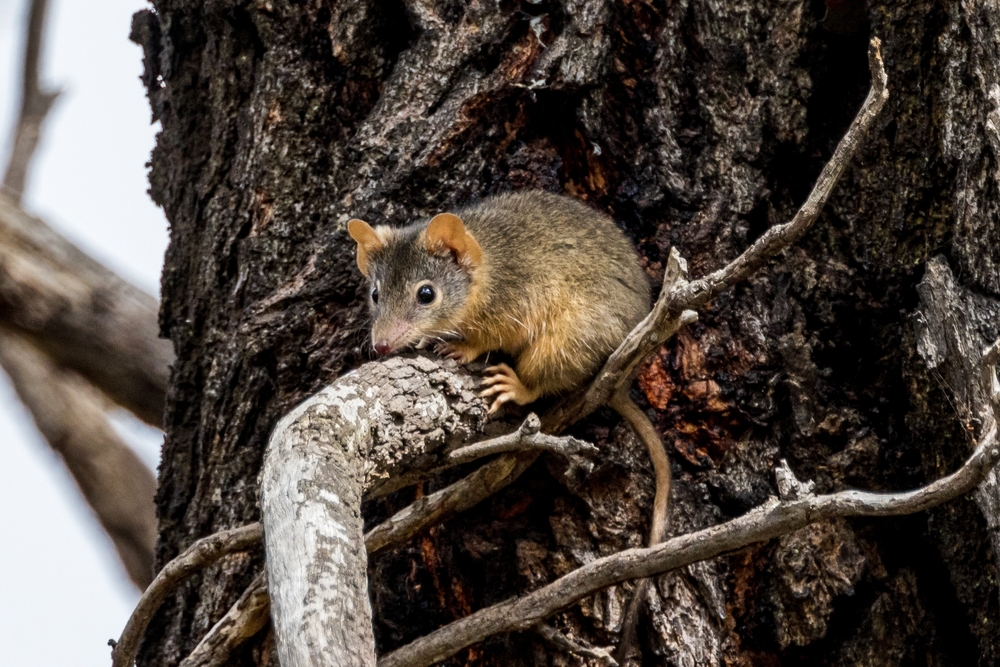
In the late 19th century, European naturalists arriving on Christmas Island encountered a soundscape that feels almost unimaginable today. The Christmas Island shrew was not rare, hidden, or confined to obscure habitats. It was abundant and familiar, so widespread that its presence became part of daily life after dark. One naturalist wrote that “this little animal is extremely common all over the island, and at night its shrill squeak, like the cry of a bat, can be heard on all sides.” Those words describe more than population size. They capture a sense of normalcy, of an animal so integrated into the environment that it barely warranted concern.
Ecologically, the shrew played a quiet but essential role. Feeding primarily on insects and other small invertebrates, it helped regulate populations that influence soil health, leaf litter breakdown, and nutrient cycling. These interactions were subtle and easy to overlook, yet they formed part of a complex ecological network shaped by isolation over thousands of years. The shrew did not dominate the ecosystem, but it helped stabilize it simply by performing its role day after day, night after night.
The disappearance of species like this rarely triggers immediate alarm. Small mammals decline quietly, without dramatic die-offs or visible spectacle. Their absence often becomes noticeable only in hindsight, when the processes driving extinction have already progressed too far to reverse. The Christmas Island shrew followed this familiar pattern, fading from common experience long before it vanished completely.
Christmas Island and Its Fragile Balance
Christmas Island occupies a unique position in Australia’s natural history. Isolated in the Indian Ocean, it evolved as a biological island in every sense, allowing species to develop without many of the pressures present on larger landmasses. Over time, this isolation produced animals that were highly specialized, filling narrow ecological roles with remarkable efficiency. The island’s famous red crab migration and rare seabirds often draw attention, but they exist alongside countless smaller species that collectively sustain the ecosystem.
This evolutionary isolation also created vulnerability. Species that develop without certain predators or competitors often lack the behavioral or physiological defenses needed to survive when new threats appear. When unfamiliar animals arrive, native species can struggle to adapt quickly enough. Christmas Island has repeatedly demonstrated how severe this mismatch can be, with several extinctions occurring in relatively short succession once invasive species gained a foothold.
The extinction of the Christmas Island shrew reflects this broader fragility. It was not wiped out by a single dramatic event, but by gradual destabilization. Each change on its own may have seemed manageable. Together, they reshaped the island in ways the shrew could not withstand.
Invasive Species and a Chain Reaction
The arrival of black rats roughly a century ago marked a turning point for Christmas Island’s native mammals. Likely transported by ships, the rats spread rapidly, exploiting food sources and habitats that local species relied upon. Their adaptability and aggressive behavior gave them an immediate advantage over animals that had evolved without such competitors.
Beyond direct competition and predation, black rats introduced parasites that proved especially destructive. Trypanosomes carried by the rats are believed to have played a significant role in the extinction of native mammals that had no prior exposure or resistance. The Christmas Island shrew is thought to be at least the third mammal species driven to extinction as a direct result of these introductions, joining the native bulldog rat and Maclear’s rat, both of which disappeared under similar pressures.
These losses illustrate how invasive species rarely cause isolated damage. Instead, they trigger cascading effects that continue long after their arrival. As native species vanish, ecosystems lose resilience, making them even more susceptible to additional threats. Extinction, in this sense, becomes a process rather than a single moment.
Added Pressure From New Predators

Ecological pressure on Christmas Island intensified further in the 1980s with the introduction of the Asian wolf snake. Accidental introductions like this are common on islands with shipping traffic, and their consequences are often underestimated until declines become impossible to ignore. The snake encountered prey species that had never evolved alongside such predators and were ill equipped to respond.
The Asian wolf snake is believed to have contributed to the extinction of the Christmas Island pipistrelle, a tiny bat species that disappeared with alarming speed. Several native reptiles also declined or vanished following the snake’s arrival. Each loss simplified the ecosystem further, stripping away layers of interaction that once helped maintain balance.
For the Christmas Island shrew, these added pressures likely eliminated any remaining chance of recovery. Even if small populations survived the initial impacts of black rats, the cumulative stress of new predators and ongoing competition would have made long term survival increasingly unlikely.
Forty Years Without Proof of Survival

Declaring a species extinct is one of the most serious decisions conservation authorities can make, particularly when dealing with animals that are small, nocturnal, and difficult to detect. For decades, scientists avoided formally declaring the Christmas Island shrew extinct, choosing instead to leave open the possibility that it persisted in isolated pockets of habitat.
Searches continued, surveys were repeated, and monitoring programs remained in place. Hope endured longer than many expected, fueled by the knowledge that absence of evidence is not always evidence of absence. Still, year after year passed without a confirmed sighting, and the list of unanswered questions grew shorter.
When the IUCN ultimately moved the species into the Extinct category, it reflected the weight of time rather than sudden certainty. More than 40 years had passed since the shrew was last recorded, making continued classification as extant increasingly difficult to justify.
Australia’s Broader Extinction Crisis
The loss of the Christmas Island shrew contributes to a troubling national pattern. Since 1788, Australia has lost at least 39 species, representing around 10 percent of its land mammal diversity. No other continent has experienced mammal extinctions at such a rapid rate, a statistic that underscores the scale of the crisis.
Habitat destruction, invasive species, and introduced predators remain the primary drivers of these losses, often compounded by delayed conservation responses. While island ecosystems experience the most rapid collapses, mainland species are increasingly facing similar pressures as landscapes become fragmented and climate conditions grow more extreme.
Each extinction narrows the margin for recovery. As biodiversity declines, ecosystems lose flexibility and resilience, reducing their ability to cope with future challenges. The disappearance of small mammals may seem incremental, but collectively these losses weaken ecological systems at every level.
A Warning From Conservation Scientists
Writing about the shrew’s disappearance, Professor of Conservation Biology at Charles Darwin University John Woinarski placed the loss in a wider context. “The shrew’s loss is a reminder of the enormity of the challenge of preventing further extinctions, of the diverse ways these losses can happen, of the need to seize opportunities to protect rare species, and of the importance of a national and political commitment to prevent extinction,” he wrote for The Conversation.
His words highlight that extinction is rarely inevitable. In many cases, opportunities for intervention exist, but they depend on early action, adequate resources, and political will. Delays and uncertainty often prove as damaging as the threats themselves.
Without sustained commitment at both national and local levels, similar stories are likely to repeat themselves. The Christmas Island shrew is not an exception, but a warning.
Holding Onto Hope, Even Now
Despite the official declaration, Woinarski also allowed room for cautious hope. “I hope the Christmas Island shrew is not extinct; after all it has defied previous calls of its demise. Perhaps somewhere, a small furtive family of shrews are hanging on, elusive survivors, secure in the knowledge of their own existence and waiting to prove the pessimists wrong.”
Such hope reflects both scientific humility and a deeply human resistance to finality. Rare rediscoveries have happened before, and the possibility, however slim, still exists. Yet hope alone cannot replace proactive conservation.
By the time hope becomes the only remaining option, the opportunity to act has often already passed.
A Quiet Loss With Lasting Meaning
The extinction of the Christmas Island shrew did not unfold with spectacle or widespread public attention. There were no dramatic final sightings and no viral images to mark its disappearance. Instead, it faded quietly, defined by absence rather than event.
Its loss, however, carries lasting meaning. Each species represents millions of years of evolution and a unique contribution to its ecosystem. When one disappears, the consequences extend beyond what can be immediately measured.
The silence left behind by the Christmas Island shrew is a reminder that extinction is not just about what is lost today, but about what future generations will never have the chance to hear, see, or understand.
Australia extinction crisis, Australian wildlife, Biodiversity Loss, Christmas Island shrew, Christmas Island wildlife, conservation science, endangered species, Environmental News, invasive species Australia, island ecosystems, IUCN Red List, mammal extinction, species extinction, wildlife conservation