
Your cart is currently empty!
Wall Street Law Firm Leadership Rocked by Epstein Email Revelations

The sudden resignation of one of Wall Street’s most powerful legal figures has reignited uncomfortable questions about power, proximity, and accountability among America’s elite. When emails connecting Brad Karp, the longtime chairman of the prestigious law firm Paul Weiss, to the late financier Jeffrey Epstein became public, the fallout was swift and impossible to contain.
Contents
show
Although the messages themselves did not accuse Karp of criminal conduct, their tone, timing, and context proved deeply damaging. They surfaced at a moment when the public, the legal profession, and political institutions remain intensely sensitive to any association with Epstein, whose crimes and network of influence continue to cast a long shadow. Within days of the release of the documents by the Department of Justice, Karp stepped down from his leadership role, bringing an abrupt end to an 18 year tenure that helped shape modern corporate law.
What followed was not merely a personnel change at a major law firm, but a broader reckoning with how elite institutions navigate scandal, political pressure, and public trust.
The Emails That Sparked the Fallout
The emails released as part of a massive disclosure of Epstein related documents showed Brad Karp maintaining cordial and at times enthusiastic correspondence with Epstein years after the financier had pleaded guilty in 2008 to soliciting prostitution from a minor and registered as a sex offender.
Among the most widely cited messages was a 2015 email in which Karp thanked Epstein for hosting what he described as a once in a lifetime evening at Epstein’s New York mansion. In another exchange from 2016, Karp asked Epstein whether he could help secure a job for his son on an upcoming Woody Allen film project. The tone of the messages, while not illegal, struck many observers as jarringly warm given Epstein’s well documented criminal history.
The documents also included correspondence suggesting discussions around Epstein’s prior plea deal, raising further concerns about the blurred boundaries between professional obligation, social familiarity, and moral judgment. Paul Weiss has consistently maintained that neither the firm nor Karp ever represented Epstein personally, and that Karp attended only two group dinners and engaged in limited email contact, all of which he later said he regretted.
Nevertheless, the release of the emails shifted public focus squarely onto Karp, making his position as chairman increasingly untenable.
A Legal Titan Under Pressure

Brad Karp’s influence within the legal and political establishment extended far beyond his firm’s offices. As chairman of Paul Weiss since 2008, he oversaw a dramatic expansion of the firm’s revenues and prestige, growing it into a multibillion dollar enterprise representing some of the world’s most powerful corporations and financial institutions.
At the same time, Karp cultivated a reputation as a civic minded lawyer who supported social justice initiatives and pro bono work, while also acting as a major fundraiser for Democratic Party causes. He played a visible role in mobilizing legal support during the 2024 presidential campaign, which ultimately ended in defeat for Vice President Kamala Harris against Donald Trump.
That dual identity as both Wall Street defender and progressive donor made the Epstein revelations particularly disruptive. Critics argued that the emails undermined the moral authority Karp had projected for years, while supporters emphasized that proximity to Epstein was common among elite circles during the period in question.
Inside Paul Weiss, however, the reaction was more complex. According to reports from within the firm, some lawyers expressed anger and embarrassment, not only about the emails themselves but about what they symbolized: a perceived disconnect between the firm’s stated values and the behavior of its leadership.
The Shadow of Epstein and Elite Accountability

The controversy surrounding Karp is part of a much larger and ongoing reckoning over Jeffrey Epstein’s connections to powerful figures across business, politics, and academia. Since Epstein’s arrest in 2019 and his death later that year while awaiting trial, successive document releases have continued to expose the breadth of his social and professional network.
Each new disclosure has raised the same fundamental question: how did so many influential individuals maintain relationships with Epstein long after his crimes were publicly known, and what responsibility do they bear for that association?
In Karp’s case, the emails became emblematic of a broader discomfort with elite insulation. While appearing in Epstein related documents does not imply criminal wrongdoing, public tolerance for such associations has eroded sharply. In an era defined by heightened scrutiny and digital permanence, reputational damage can move faster than institutional processes designed to manage it.
The legal profession, in particular, occupies a delicate position. Lawyers are often required to engage with unsavory clients or figures as part of their work, yet they are also expected to uphold ethical standards that reinforce public trust in the justice system. When those lines blur, confidence in the profession itself can suffer.
Political Context and the Trump Factor
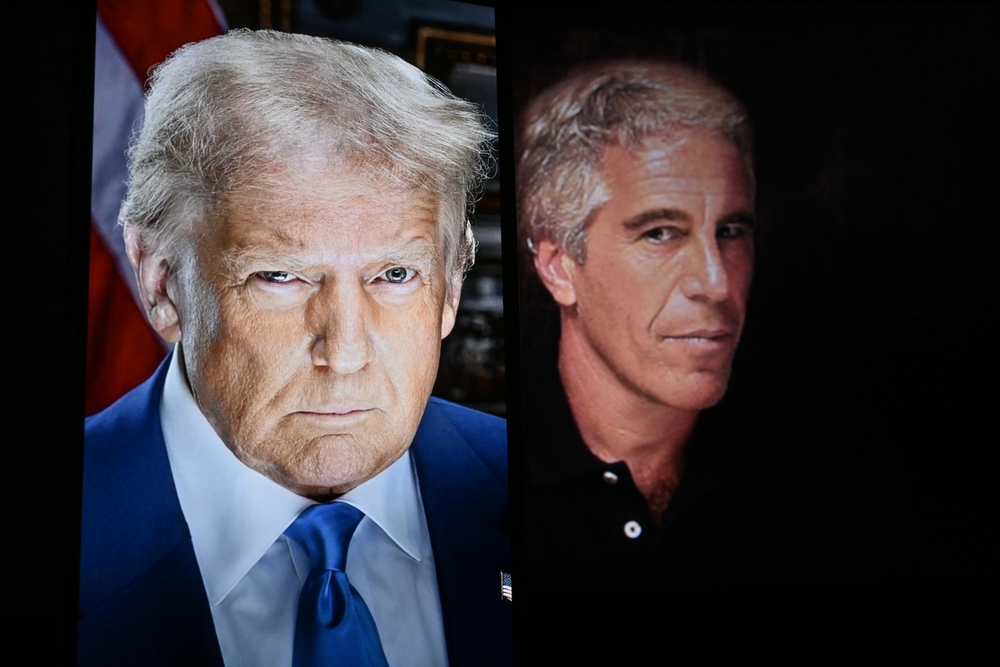
Karp’s resignation cannot be fully understood without examining the political backdrop against which it unfolded. Less than a year earlier, Paul Weiss had been at the center of a highly controversial agreement with President Donald Trump.
In that episode, the firm agreed to provide tens of millions of dollars in free legal services to causes supported by the White House. In return, Trump rescinded an executive order that had threatened to limit the firm’s access to federal buildings, security clearances, and government contracting work. The order cited the firm’s connections to political adversaries and its diversity initiatives.
Karp defended the decision internally and publicly, arguing that the executive order posed an existential threat to the firm and that compromise was necessary to protect its clients and employees. The deal, however, was widely criticized within the legal community as a capitulation to political pressure. Several prominent partners reportedly left the firm in protest.
The controversy deepened when other law firms faced similar executive orders. Some chose to challenge the administration in court and ultimately won rulings that struck down the measures. That outcome fueled criticism of Paul Weiss’s decision to settle, with detractors arguing that resistance, not accommodation, would have prevailed.
When the Epstein emails surfaced months later, they reopened wounds that had not fully healed. For critics, the combination of the Trump deal and the Epstein correspondence painted a portrait of leadership too willing to compromise ethical clarity in the face of power.
Inside Paul Weiss: Transition and Tension
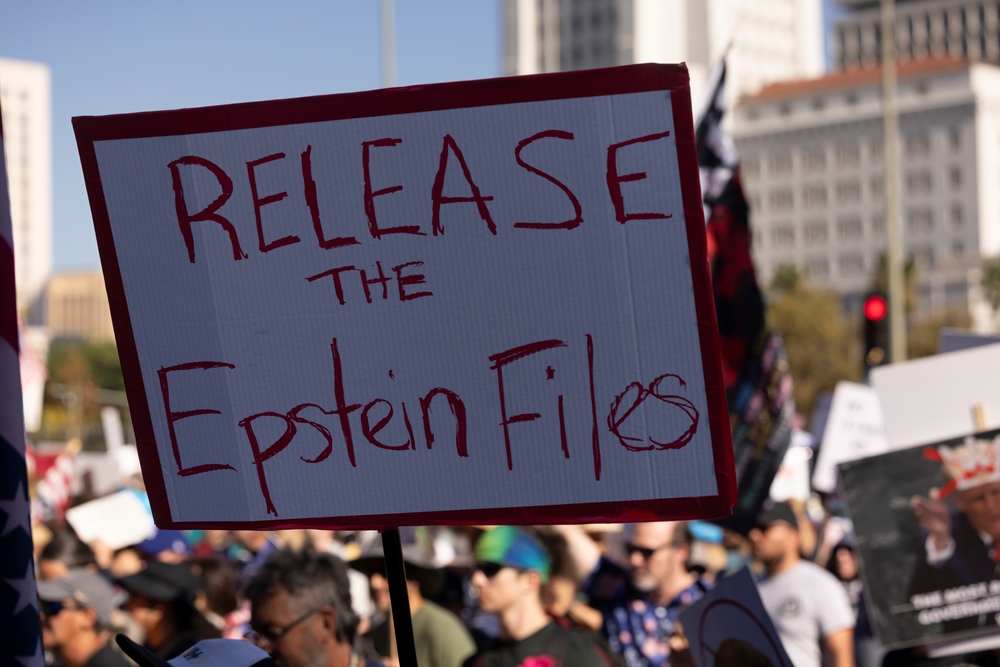
The announcement of Karp’s resignation was carefully worded. The firm emphasized that he was stepping down solely from his leadership role and would remain at Paul Weiss, continuing to serve clients. Scott Barshay, the longtime head of the firm’s corporate department, was named as his successor.
Barshay’s appointment signals an ongoing shift within the firm toward corporate deal making and away from its historic identity as a litigation powerhouse. His ascent also reflects internal dynamics that had already been reshaped by the Trump executive order episode, which exposed divisions between litigators eager to challenge government overreach and corporate partners focused on risk management.
In statements following the transition, Barshay praised Karp’s contributions and expressed confidence in the firm’s future. Yet the underlying tension remains. Paul Weiss must now navigate how to rebuild internal cohesion while managing external perceptions shaped by months of negative headlines.
The firm’s response illustrates how elite institutions often attempt to draw a line between individual accountability and organizational continuity. Whether that separation is persuasive to clients, employees, and the public remains an open question.
The DOJ Releases and Public Transparency

The Department of Justice’s decision to release millions of Epstein related documents has been framed as a commitment to transparency, but it has also produced unpredictable consequences. The sheer volume of material, much of it containing partial or contextualized information, has created a complex landscape where public interpretation often moves faster than formal analysis.
For individuals named in the files, the impact can be immediate and severe, regardless of whether wrongdoing is alleged. Careers, reputations, and institutions can be destabilized by association alone.
Supporters of the disclosures argue that sunlight is necessary to expose patterns of power that allowed Epstein to operate for decades. Critics counter that the release of raw communications risks conflating social contact with complicity, potentially discouraging cooperation in future investigations.
Karp’s resignation highlights this tension. While no legal action has been taken against him, the reputational cost proved high enough to force a leadership change. It is a reminder that in the modern information environment, accountability is no longer mediated solely by courts or regulators, but by public judgment.
Law, Power, and Moral Proximity

At the heart of the episode lies a more philosophical question about moral proximity. To what extent are powerful individuals responsible not only for their actions, but for the company they keep?
In elite professional circles, relationships are often justified as transactional or unavoidable. Yet Epstein’s case has challenged that logic. His criminal history was publicly known, and his continued acceptance in high society has become one of the most troubling aspects of the scandal.
Karp’s emails, particularly their warmth and familiarity, collided with a public that increasingly demands ethical distance from known abusers. Even if such relationships were once normalized within certain circles, they are no longer tolerated in the same way.
This shift reflects broader changes in how society evaluates leadership. Authority is no longer conferred solely by success or expertise, but by perceived integrity and judgment.
Broader Implications for the Legal Establishment
The resignation sends a signal that the legal establishment is not immune to the cultural recalibration underway across institutions. Corporate law firms, universities, media organizations, and political bodies are all grappling with how past behavior is reassessed through contemporary standards.
For younger lawyers and professionals, the episode serves as a cautionary tale. Career achievement does not insulate one from scrutiny, and decisions made years earlier can resurface with amplified consequences.
For firms, it underscores the importance of ethical leadership not only in compliance terms, but in symbolic ones. The values an institution claims must be reflected in the conduct of those at the top, or risk being dismissed as performative.
A Moment of Reckoning
Brad Karp’s resignation marks the end of a significant chapter for Paul Weiss and adds another name to the long list of prominent figures whose reputations have been reshaped by the Epstein disclosures. It also illustrates how power, politics, and accountability intersect in unpredictable ways.
The episode does not resolve the deeper questions raised by Epstein’s network, nor does it offer simple answers about guilt or innocence. What it does reveal is a changing landscape in which elite institutions are increasingly compelled to respond to public expectations that extend beyond legal culpability.
As more documents continue to surface and debates over transparency and fairness persist, the legal and political establishment will be forced to confront uncomfortable truths about proximity, privilege, and responsibility.
In that sense, Karp’s departure is not just a story about one man or one firm. It is part of a broader national conversation about how power is exercised, how trust is earned, and how accountability is defined in an age when silence and distance are no longer options.