
Your cart is currently empty!
From Texas to the Capitol: Buddhist Monks Arrive in Washington After 15-Week Peace Walk
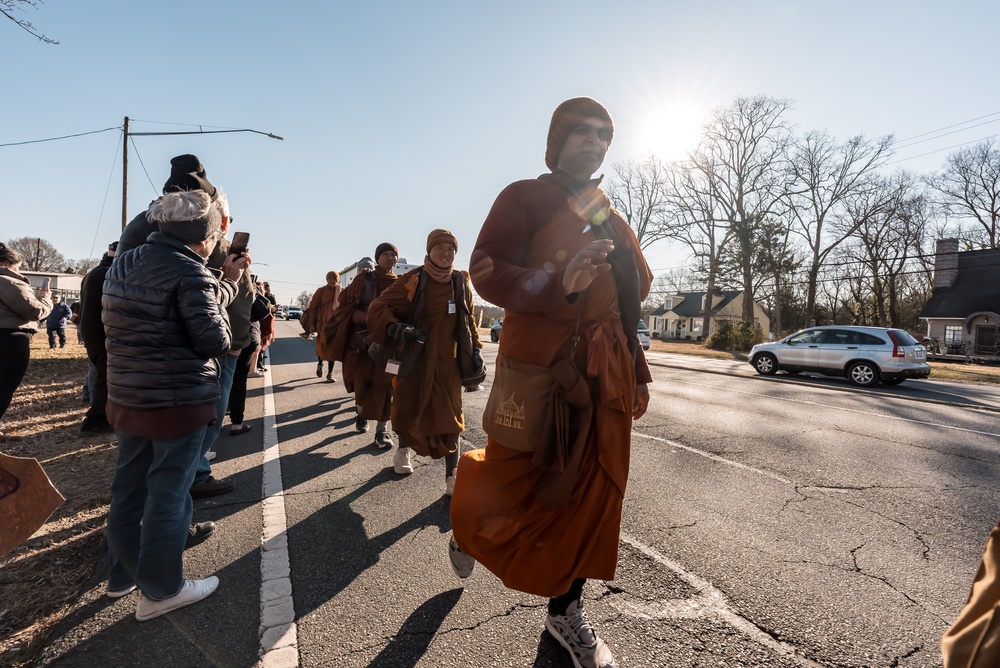
For 108 days, a quiet line of Buddhist monks walked mile after mile across highways, through small Southern towns, along rural backroads, and into major American cities carrying a message that felt both ancient and urgently modern: peace begins within. What started on October 26, 2025, at the Huong Dao Vipassana Bhavana Center in Fort Worth, Texas, slowly grew into something far greater than a symbolic pilgrimage. As they moved forward step by deliberate step, the monks became a steady presence on social media feeds and roadside gatherings, drawing attention not through spectacle or confrontation but through stillness, discipline, and unwavering intention. By the time they approached Washington, D.C., after traveling roughly 2,300 miles, their journey had already touched communities across multiple states and captured the attention of millions who saw in their walk a rare image of unity in a divided time.
Contents
show
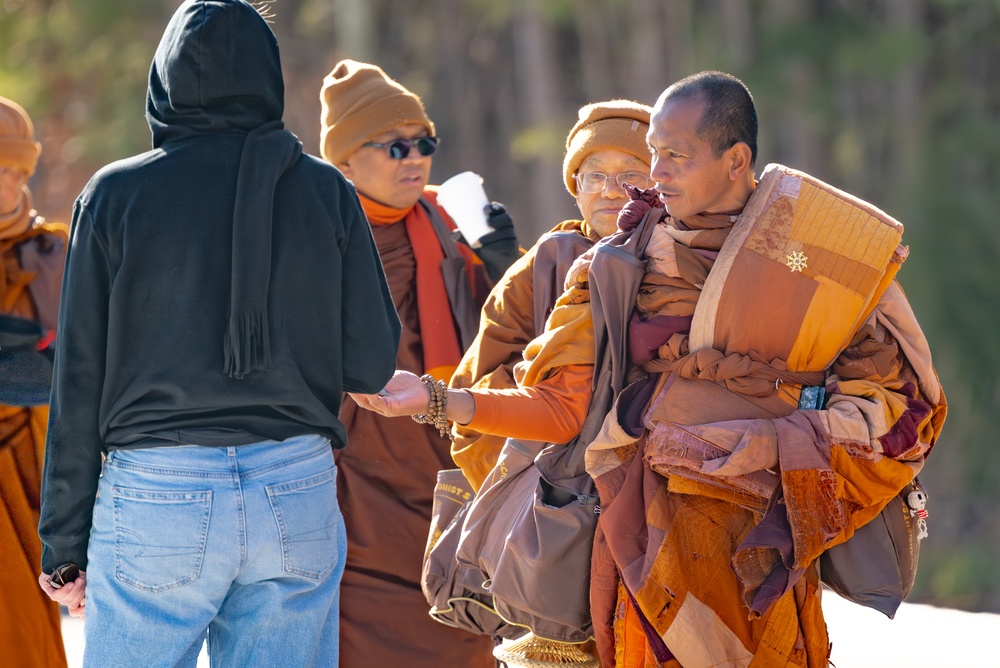
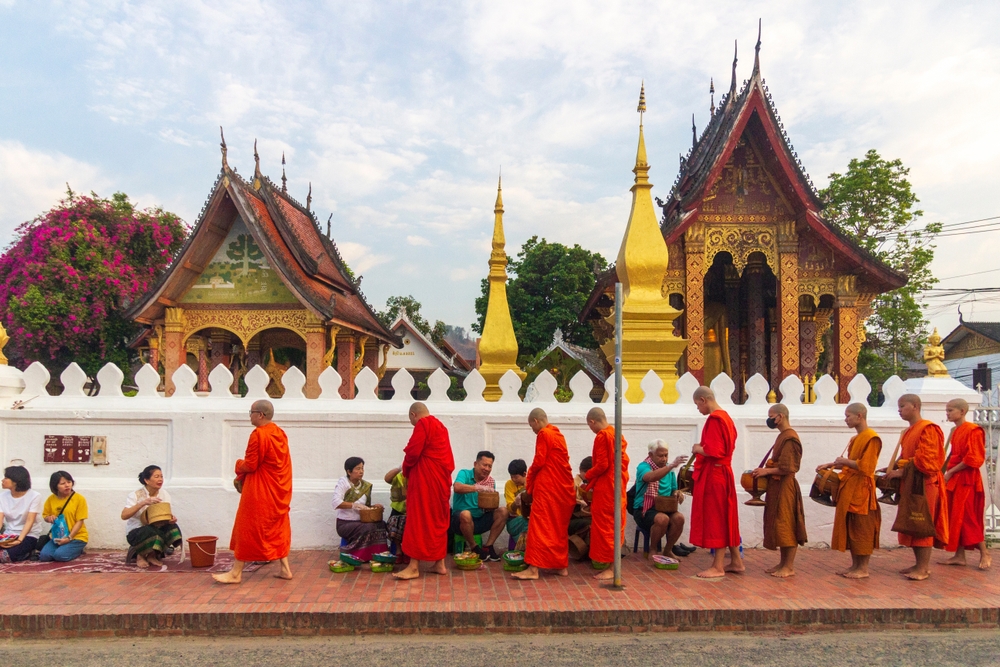
When they finally crossed the Chain Bridge over the Potomac River and entered the nation’s capital shortly after 8 a.m., the symbolism was unmistakable. Washington is often described as the center of political power, partisan debate, and national tension, yet on this cold winter morning the dominant sound was not protest or argument but the soft rhythm of footsteps. Dressed in saffron and maroon robes, walking single file with heads gently lowered, the monks advanced with calm focus as crowds gathered along icy sidewalks to witness their arrival. There were cheers, but also gentle reminders from onlookers to maintain silence out of respect. In a city accustomed to noise, urgency, and confrontation, the atmosphere felt like a collective pause.
A Capital City Meets a Quiet Procession
After spending the previous night in Arlington, Virginia, the monks entered Washington under police escort, with rolling road closures issued to protect both the walkers and the thousands who came to see them. Spectators lined the streets despite the cold, some raising phones to record the moment, others simply standing with hands folded. When voices did rise above the quiet, they often called out “Sadhu!” a Buddhist expression meaning well done. The word echoed briefly before fading back into stillness, reinforcing the unusual blend of celebration and reverence that defined the morning.
Nearly 3,500 people later filled American University’s Bender Arena for the monks’ first major public appearance in the city, yet the atmosphere bore little resemblance to a typical packed venue. Instead of applause and roaring cheers, the crowd remained silent as the monks entered the arena floor in a single line. Their rescue dog, Aloka, rested on a blanket placed on the basketball court, drawing gentle smiles from onlookers who had followed the journey online. The silence in the arena was not empty but attentive, as if thousands had collectively agreed that quiet itself was part of the message.
Standing before the crowd, Venerable Bhikkhu Pannakara addressed the audience in a calm and steady voice that carried across the still arena. “This walk is very meaningful. This walk could change our life. How many of us are willing to walk to bring world peace?” he asked, allowing the question to settle deeply rather than rushing to fill the space. His words did not demand agreement or applause, yet they invited reflection in a way that felt personal rather than abstract. For many in attendance, the moment felt less like an event and more like a shared meditation.
Later that afternoon, the monks made their way to the Washington National Cathedral, where they were joined by more than 100 additional Buddhist monks and nuns as well as faith leaders from different traditions. Standing before thousands on the cathedral steps, Pannakara appeared visibly moved by the turnout and the interfaith solidarity surrounding him. “It is overwhelming for us,” he said. “This is the moment I will remember for the rest of my life. And I hope you do the same.” The gathering reflected not political alignment but shared human longing for calm and connection.
A 2,300 Mile Journey Rooted in Intention
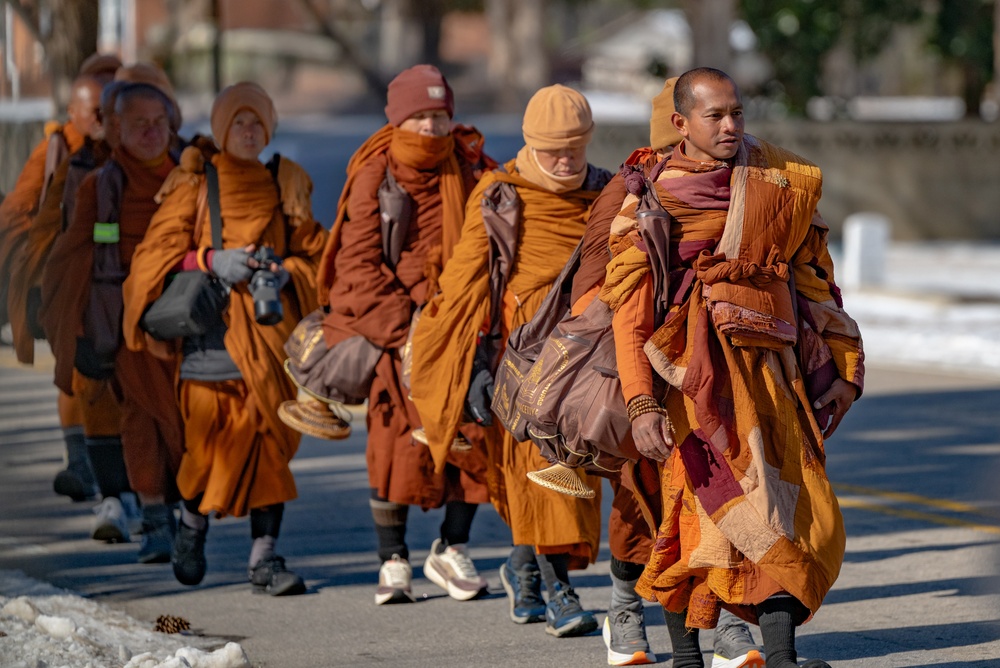
The walk began months earlier at the Huong Dao Vipassana Bhavana Center in Fort Worth, where nineteen monks representing Theravada Buddhist monasteries from around the world committed to traveling the entire distance on foot. Peace walks are a long standing tradition in Theravada Buddhism, and for these monks each step served as both spiritual practice and public message. Over 15 weeks, they crossed state lines and climate shifts, moving through humid Southern days, brisk autumn mornings, and eventually winter chill as they continued toward the capital without altering their core intention.
Communities along the route responded in ways that surprised even the organizers. Crowds gathered at churches in Opelika, Alabama, and at City Hall in Richmond, Virginia, while smaller groups waited patiently along highways simply to watch the procession pass. Social media amplified these moments, transforming daily updates into a widely followed narrative that transcended geography. Millions tracked the monks’ progress online, sharing photos and live streams that introduced the practice of mindful walking to audiences who may never have encountered it before.
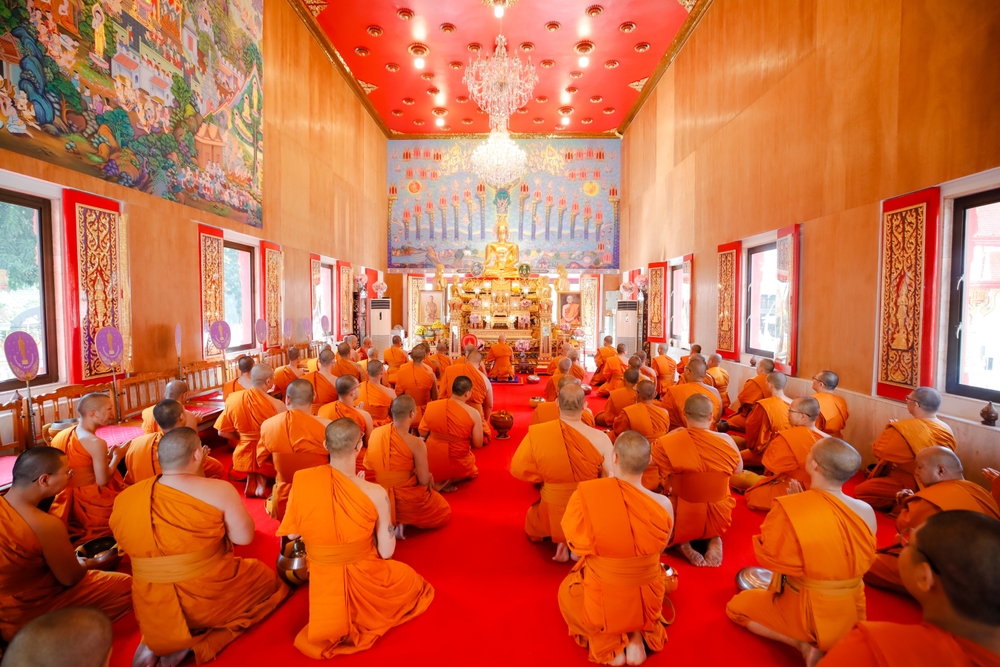
The monks practice and teach Vipassana meditation, an ancient technique taught by the Buddha that emphasizes awareness of breath and physical sensation as a path to understanding impermanence and suffering. Throughout the journey, Pannakara encouraged listeners to step away from constant digital stimulation and reconnect with their own minds and bodies. He urged audiences to slow down, observe their breath, and respond thoughtfully rather than react impulsively to the tensions of daily life. The walk itself became a living demonstration of those teachings.
The journey concluded on the 108th day, a number regarded as sacred in Buddhism because it represents spiritual completion, cosmic order, and the wholeness of existence. Completing the trek in exactly 108 days was intentional, reinforcing that the walk was not simply about covering distance but about fulfilling a spiritual arc. The number added another layer of meaning to an already symbolic arrival.
Hardship, Loss, and a Powerful Return
The road to Washington was not without danger. In November, outside Houston, the monks were walking along a highway when their escort vehicle was struck by a truck. Two monks were injured in the collision, and the seriousness of the incident shook supporters who had been following the journey closely. One of the injured monks, Venerable Maha Dam Phommasan, an abbot from Snellville, Georgia, suffered injuries so severe that his leg had to be amputated.
For many observers, the accident could have signaled the end of the walk. Instead, it became one of its most defining chapters. Weeks later, Phommasan rejoined the group near Washington, arriving at American University in a wheelchair as the crowd looked on with deep emotion. His presence carried a quiet strength that underscored the resilience behind the monks’ calm exterior, demonstrating that peace is not the absence of suffering but the response to it.
Among those moved by his return was Jackson Vaughn, 33, who has used a wheelchair since 2024 and began traveling alongside the monks after they passed through his hometown of Fredericksburg, Virginia. Reflecting on the experience, Vaughn said, “There are many things happening in the world. To see people gathering peacefully and setting an example, I think, is a wonderful thing.” He also spoke candidly about his own journey, adding, “I have been on this journey of trying to find my independence. But this really shows how connected we really are.” His words echoed the broader theme of the walk, that interdependence is not weakness but strength.
The accident and the emotional reunion in Washington revealed the vulnerability behind the discipline. The monks continued despite injury and hardship, not to prove endurance but to honor intention. In doing so, they offered a powerful reminder that peace is often tested in moments of difficulty.
A Spiritual Offering, Not a Political Movement
As the monks entered Washington, some observers questioned whether their walk carried a legislative or political objective. While they plan to submit a request encouraging lawmakers to declare Vesak, Buddha’s birthday, a national holiday, leaders have consistently clarified that the primary purpose of the journey was not political advocacy. The setting may have been political, but the message remained personal and inward.
Long Si Dong, a spokesperson for the temple, explained the intention clearly. “It’s a spiritual offering, an invitation to live peace through everyday actions, mindful steps and open hearts,” he said. “We believe when peace is cultivated within, it naturally ripples outward into society.” His words reinforced that the monks were not calling for partisan change but for individual transformation that could influence society organically.
The message appeared to resonate across ideological lines. More than 20,000 people tuned in to watch a live feed of the Washington arrival, logging in from countries including Jamaica, Germany, Sri Lanka, and Thailand. Even when occasional criticism surfaced in online comment sections, many viewers responded not with hostility but by wishing critics peace. In an era where online interactions often escalate quickly, the tone surrounding the walk felt noticeably different.
Why This Story Struck a National Nerve
The United States has experienced years of political polarization, cultural conflict, and public fatigue, and against that backdrop the image of monks walking quietly across the country offered something unexpectedly comforting. There were no slogans or confrontations, no demands shouted through megaphones, only the steady discipline of movement and silence. For many Americans, that contrast alone made the story compelling.
Parents brought children to watch the procession, hoping to expose them to an example of peaceful gathering. One mother said she wanted her children to witness “the power of coming together,” a sentiment that captured why so many people felt drawn to the walk. The simplicity of the act, people standing side by side without argument, carried weight precisely because it felt rare.
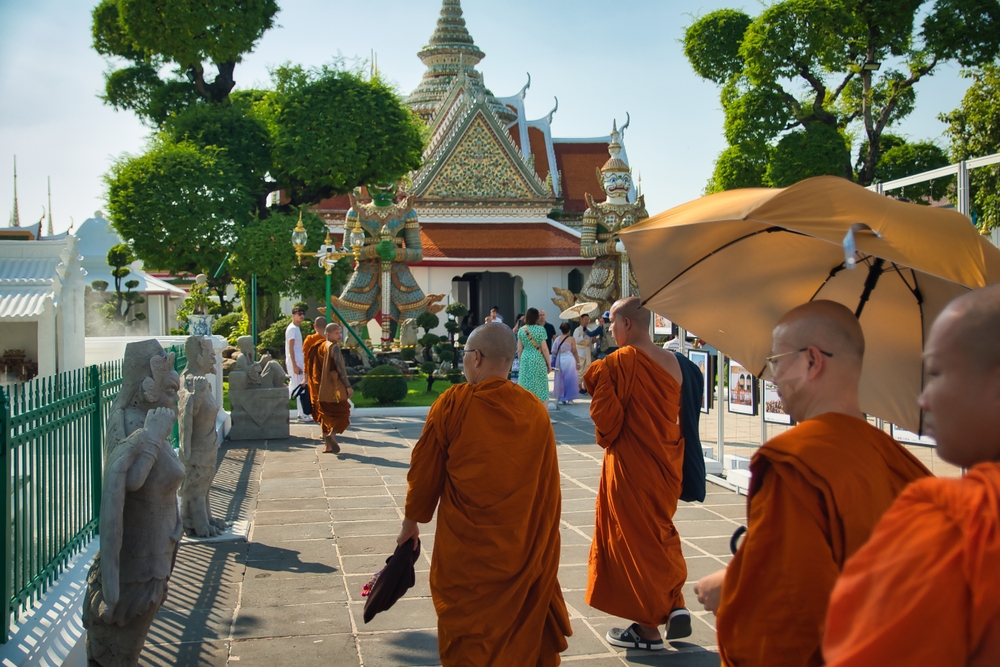
Some monks walked barefoot or in socks for much of the journey in order to remain present and connected to the ground beneath them, only putting on winter boots when temperatures demanded it. The physical commitment underscored the symbolic message that peace requires awareness, endurance, and consistent practice. Each step was small, but together they carried the group across 2,300 miles and into the national spotlight.
When Pannakara asked, “How many of us are willing to walk to bring world peace?” he was not only referring to a cross country trek. The question challenged individuals to consider whether they are willing to examine their own reactions, habits, and daily choices. It suggested that peace begins not in grand declarations but in ordinary decisions repeated over time.
The Final Miles and the Question They Leave Behind
After appearances at the Washington National Cathedral and the Lincoln Memorial, the monks plan to travel by bus back to Texas. Yet even their return reflects the spirit of the journey. Once back in Fort Worth, they will walk the final six miles together to the temple where their pilgrimage began, completing the circle with the same mindful intention that carried them across the country.
Their 15 week trek did not introduce sweeping policy reforms or dramatic headlines filled with confrontation. Instead, it created moments of silence in crowded arenas, emotional reunions after tragedy, and conversations about mindfulness in homes and online spaces around the world. In a fast paced era defined by constant reaction, the act of walking slowly became a powerful statement.
For 108 days, they walked. Now that the journey has reached its symbolic peak in Washington, the lingering question belongs to everyone who watched. What might change if more people chose to slow down, listen carefully, and take even one deliberate step toward peace in their own daily lives?